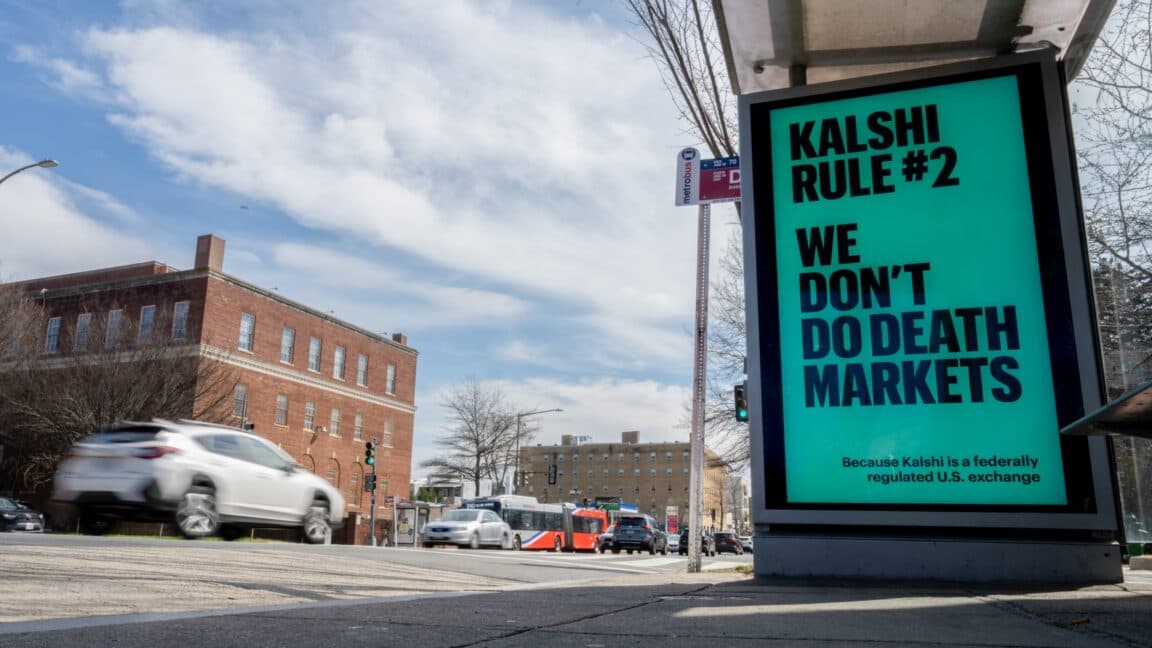
A federal appeals court has delivered a landmark decision that federal oversight trumps state laws when it comes to sports wagers on prediction markets, handing a major victory to the Chicago-based company Kalshi. In a 2-1 ruling issued Tuesday, the U.S. Court of Appeals for the 3rd Circuit in Philadelphia upheld a lower court’s preliminary injunction blocking New Jersey from enforcing its gambling laws against Kalshi’s sports-related event contracts. The court found that the Commodity Futures Trading Commission (CFTC) has exclusive jurisdiction over such contracts because they qualify as ‘swaps’ under the Commodity Exchange Act — a conclusion that sets a powerful precedent for the booming prediction market industry and intensifies a growing regulatory clash between Washington and state capitals.
Key Takeaways: What the Court Decision Means for Prediction Markets and Sports Betting Regulation
- A federal appeals court ruled the CFTC has exclusive jurisdiction over Kalshi’s sports-related event contracts, preempting New Jersey’s gambling laws.
- The 3rd Circuit upheld a lower court injunction preventing New Jersey from regulating Kalshi, affirming that prediction markets listed as ‘swaps’ fall under CFTC oversight.
- Judge Jane Roth dissented, arguing Kalshi’s offerings are functionally indistinguishable from illegal sports betting and should be regulated at the state level.
- CFTC Chairman Michael Selig announced lawsuits against three states last week, asserting federal authority over prediction markets and seeking public input on new rules.
- Congress is considering bipartisan legislation to prohibit CFTC-registered entities from listing prediction contracts resembling sports bets or casino games.
How the Federal Court’s Ruling Reshapes the Legal Landscape for Prediction Markets
The 3rd Circuit’s decision marks the first appellate ruling on the regulatory status of sports-related prediction markets, a sector that has grown rapidly since the Supreme Court struck down the federal ban on sports betting in 2018. Kalshi, a prediction market platform registered with the CFTC as a Designated Contract Market (DCM), had sued New Jersey after the state issued a cease-and-desist letter in early 2025 alleging that Kalshi was operating unauthorized sports wagers in violation of the New Jersey Sports Wagering Act. The state’s law requires licenses for sports wagers and explicitly bans betting on college sports.
The Core Legal Question: Swaps vs. Sports Betting
At the heart of the dispute is whether Kalshi’s ‘sports-event contracts’ qualify as financial instruments known as swaps — a classification that would place them under the CFTC’s exclusive jurisdiction under the Commodity Exchange Act. The majority opinion, written by Judge David Porter and joined by Chief Judge Michael Chagares, concluded that the contracts fall within the statutory definition of swaps because their payouts depend on the outcome of future events, such as the winner of a football game or the number of points scored. The court rejected New Jersey’s argument that the contracts were merely sports wagers disguised as financial products.
“New Jersey frames the issue broadly (regulating all sports gambling) rather than narrowly (regulating trading on federally designated contract markets). The federal law’s text suggests that the narrow framing is the better reading. It thus preempts state laws that directly interfere with swaps traded on DCMs.” — U.S. Court of Appeals for the 3rd Circuit, Kalshi, Inc. v. New Jersey Division of Gaming Enforcement
Dissenting Opinion: The Functional Reality of Gambling
Judge Jane Roth vehemently disagreed, arguing in her dissent that Kalshi’s contracts are functionally identical to traditional sports betting and should be regulated as such. In vivid detail, she described the Kalshi interface for a January 2026 NFL game between the Carolina Panthers and Tampa Bay Buccaneers, where users could bet on the game outcome, point spreads, total points, and even whether a specific player would score a touchdown.
“I could have bet on the winner (game outcome). I could have also bet on whether I believed Tampa Bay would win by more than 2.5 points (point spread), whether the two teams would collectively score 45 or more points (game props), or whether former Tampa Bay wide receiver Mike Evans would score a touchdown (player props). These offerings are virtually indistinguishable from the betting products available on online sportsbooks, such as DraftKings and FanDuel.” — Circuit Judge Jane Roth, dissenting in Kalshi, Inc. v. New Jersey Division of Gaming Enforcement
Judge Roth argued that Kalshi’s attempt to rebrand sports betting as ‘event contracts’ or ‘swaps’ was a legal and semantic sleight of hand designed to evade state gambling laws. She warned that accepting Kalshi’s argument would lead to absurd results, such as rendering every casual bet — from a neighborhood ping pong match to a charity raffle — a federally regulated swap, potentially making such activities felonies if conducted outside a CFTC-licensed market.
The Legal Foundation: Dodd-Frank, the Commodity Exchange Act, and the Rise of Prediction Markets
The court’s decision hinges on the Commodity Exchange Act, as amended by the Dodd-Frank Wall Street Reform and Consumer Protection Act of 2010. That legislation expanded the CFTC’s jurisdiction to include ‘swaps’ — a broad category that includes event contracts like those offered by Kalshi. Under Dodd-Frank, the CFTC has exclusive authority over trades conducted on designated contract markets (DCMs), which are regulated exchanges where standardized financial instruments are traded.
What Is a Swap? The CFTC’s Expansive Definition
The Commodity Exchange Act defines a swap as a contract in which payment is dependent on the occurrence, nonoccurrence, or extent of an event or contingency associated with a potential financial, economic, or commercial consequence. This definition is intentionally broad, encompassing everything from interest rate swaps to credit default swaps to, in Kalshi’s case, sports-event contracts. The law also grants the CFTC discretionary power to review and prohibit up to six categories of contracts if they violate the public interest, including gaming contracts.
Despite this authority, the CFTC has not yet moved to prohibit any sports-related event contracts. The agency has, however, indicated a willingness to explore new regulations. In a statement on Thursday, CFTC Chairman Michael Selig announced that the agency had filed lawsuits against Arizona, Connecticut, and Illinois to challenge their attempts to regulate prediction markets. ‘The CFTC will continue to safeguard its exclusive regulatory authority over these markets and defend market participants against overzealous state regulators,’ Selig said.
Kalshi’s Journey: From District Court Victories to National Implications
Kalshi, founded in 2018 and headquartered in Chicago, has spent years positioning itself as a legitimate financial platform rather than a sportsbook. The company is registered with the CFTC as a DCM and describes its offerings as financial instruments tied to real-world events, not bets. In 2025, Kalshi secured a preliminary injunction in New Jersey federal court blocking the state from enforcing its gambling laws against its platform. That ruling was upheld by the 3rd Circuit, reinforcing Kalshi’s legal argument that its contracts are swaps, not sports wagers.
Mixed Legal Fortunes Across the Country
While Kalshi has prevailed in New Jersey and Tennessee, it has faced setbacks in other states. The company lost cases in Maryland and Nevada, where courts ruled that its prediction contracts were subject to state gambling laws. The legal fragmentation has created a patchwork of regulation, with platforms like Kalshi, Polymarket, and others navigating inconsistent rules across 50 states. ‘With nearly 50 active cases addressing the oversight of event contracts — involving multiple platforms across jurisdictions from New York to Nevada to Tennessee — courts at every level are now grappling with fundamental questions of federalism, preemption, and statutory interpretation,’ wrote attorneys from Holland & Knight in a February 2026 legal brief.
Congressional Action Looms: Schiff-Curtis Bill Seeks to Close the ‘Backdoor’
In response to the growing uncertainty and concerns about consumer protection, two members of Congress introduced bipartisan legislation on March 23, 2026, that would prohibit CFTC-registered entities from listing prediction contracts resembling sports bets or casino-style games. The proposed bill, introduced by Senator Adam Schiff (D-Calif.) and Senator John Curtis (R-Utah), directly challenges the CFTC’s current approach and seeks to reassert state authority over such markets.
Why Lawmakers Are Stepping In
Schiff and Curtis argue that prediction markets are merely sports betting in a different guise, a claim echoed by gambling addiction advocates and state regulators. ‘Sports prediction contracts are sports bets — just with a different name,’ Schiff said in a statement. ‘And yet, these contracts have been offered in all fifty states in clear violation of state and federal law. Rather than enforce the law, the CFTC is greenlighting these markets and even promoting their growth.’ Curtis echoed concerns about youth exposure to addictive gambling-like products, stating that such contracts ‘belong under state control, not under federal regulators.’
The Broader Implications: Federalism, Consumer Protection, and the Future of Prediction Markets
The 3rd Circuit’s decision is more than a legal footnote — it raises profound questions about the balance of power between federal and state regulators in the digital age. Prediction markets, which allow users to bet on everything from election outcomes to natural disasters, have exploded in popularity since 2020. Platforms like Kalshi and Polymarket have attracted millions of users and billions in trading volume, raising concerns about financial stability, market manipulation, and consumer protection.
Tribal Sovereignty and State Revenue at Stake
States have a vested interest in regulating gambling because it generates significant tax revenue. New Jersey alone generated over $8 billion in sports betting revenue in 2025, with tax proceeds funding education and infrastructure. By allowing prediction markets to operate under CFTC jurisdiction, critics argue, the federal government is siphoning off potential state revenue and undermining state-level consumer protections designed to prevent fraud, underage gambling, and addiction.
The CFTC’s Balancing Act: Innovation vs. Oversight
The CFTC faces a delicate task: fostering financial innovation while protecting consumers. The agency has taken a relatively hands-off approach to prediction markets so far, but that may change as the industry grows. In addition to filing lawsuits against three states, the CFTC has launched a public comment period to gather input on how it should regulate event contracts. The agency is particularly interested in feedback on market integrity, price manipulation, and the potential for prediction markets to be used for insider trading or illegal activity.
What Happens Next? A Multifront Legal and Legislative Battle
The 3rd Circuit’s decision is likely to be appealed to the U.S. Supreme Court, which has not yet weighed in on the regulatory status of prediction markets. Meanwhile, the CFTC’s lawsuits against Arizona, Connecticut, and Illinois could set the stage for a Supreme Court showdown over federal preemption in financial regulation. At the same time, the Schiff-Curtis bill could gain traction in Congress, potentially reshaping the legal landscape for years to come.
For now, Kalshi and other prediction market platforms are operating under a cloud of uncertainty. While the 3rd Circuit has sided with Kalshi, other courts may reach different conclusions, and Congress may step in to clarify the rules. One thing is clear: the outcome of this legal and legislative battle will have far-reaching consequences for the future of prediction markets, the regulation of gambling, and the balance of power between Washington and the states.
Frequently Asked Questions About Prediction Markets and the Kalshi Ruling
Frequently Asked Questions
- What is a prediction market?
- A prediction market is a platform where users can trade contracts based on the outcome of future events, such as sports games, elections, or natural disasters. Platforms like Kalshi and Polymarket allow users to buy and sell contracts tied to real-world outcomes, with payouts based on whether those outcomes occur.
- Why did New Jersey sue Kalshi?
- New Jersey sued Kalshi in early 2025 after the state’s Division of Gaming Enforcement issued a cease-and-desist letter alleging that Kalshi was operating unauthorized sports wagers in violation of the New Jersey Sports Wagering Act. The state argued that Kalshi’s contracts were functionally identical to illegal sports betting.
- What does the CFTC do?
- The Commodity Futures Trading Commission is a federal agency that regulates the U.S. derivatives markets, including futures, options, and swaps. It oversees designated contract markets (DCMs) like Kalshi and has exclusive jurisdiction over trades conducted on these exchanges.