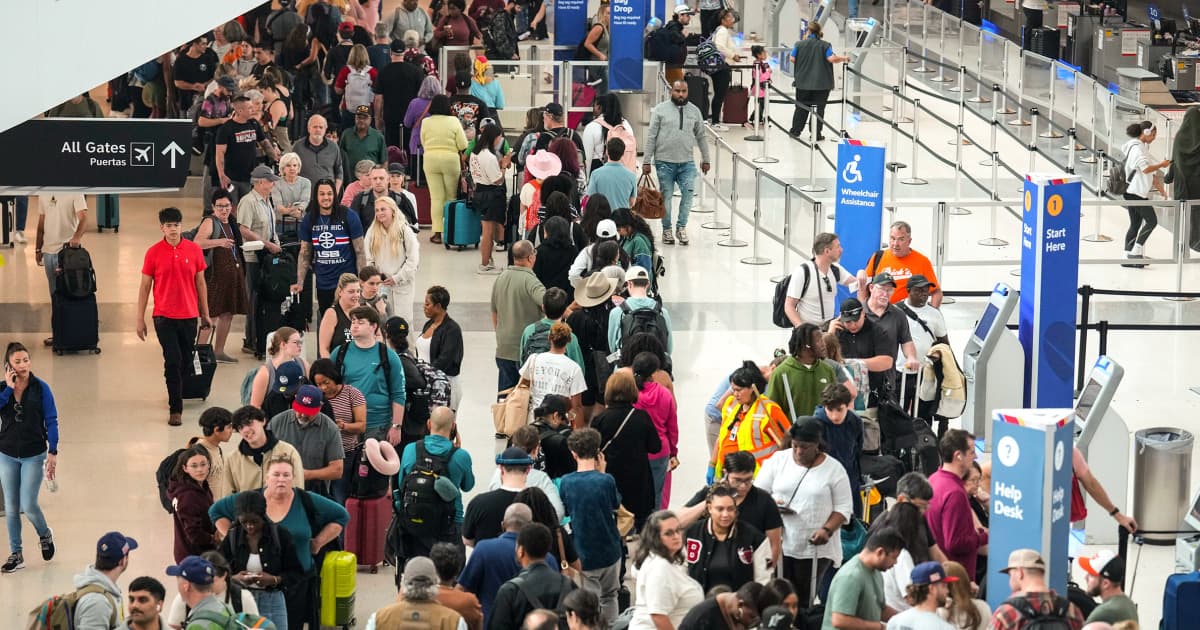
The escalating war in the Middle East is sending shockwaves through the airline industry, not only by driving up jet fuel prices but also by threatening the very availability of the fuel needed to keep aircraft in the air. Since the United States and Israel launched airstrikes against Iran on February 28, jet fuel prices in the U.S. have nearly doubled—jumping from $2.50 per gallon on February 27 to $4.88 per gallon on April 2, according to industry tracking. The disruption is far more acute in other regions, where airlines are grappling with shortages and skyrocketing costs. The crisis stems from the near-total closure of the Strait of Hormuz, a critical chokepoint through which roughly 20% of the world’s oil supply passes. With refined products like jet fuel caught in the supply crunch, carriers are now racing to reassess their schedules, raise fares, and brace for a potential summer travel season marred by both cost pressures and operational constraints. Industry executives warn that if the conflict persists, widespread flight reductions and financial strain could follow. "This isn’t just about higher prices anymore—it’s about whether we can even get the fuel we need," said Scott Kirby, CEO of United Airlines, in a March 28 press briefing. His remarks underscore a growing sense of urgency as airlines confront a convergence of geopolitical instability, refining bottlenecks, and consumer demand that may no longer be able to absorb the added costs.
Why the Attack on Iran Triggered a Jet Fuel Crisis
The February 28 U.S.-Israel strikes on Iran marked a turning point in a conflict that had simmered for decades. Iran, a major oil producer, sits at the heart of the Strait of Hormuz, a 21-mile-wide waterway that connects the Persian Gulf to the Gulf of Oman. Nearly one-third of the world’s seaborne oil exports—roughly 20 million barrels per day—travel through this chokepoint, making it the most critical maritime oil route on the planet. The strait is flanked by Iran on one side and Oman and the United Arab Emirates on the other, and its closure would effectively sever the flow of crude to global markets. While the U.S. and its allies have not yet imposed a full blockade, the threat of retaliatory strikes and regional escalation has prompted shipping companies to reroute tankers or delay deliveries. This has created a domino effect: reduced crude shipments to refineries mean less jet fuel production, even as demand from airlines remains steady.
The Strait of Hormuz: A Global Supply Chain Under Siege
The Strait of Hormuz is not just a geographic feature—it’s the linchpin of the global energy system. According to the U.S. Energy Information Administration, about 20% of the world’s oil supply transits through the strait daily. For jet fuel, which is a refined product derived from crude oil, the shockwaves are immediate. Refineries in Europe and Asia, which rely heavily on Middle Eastern crude, are particularly vulnerable. European airlines, already grappling with high energy costs from the Ukraine war and sanctions on Russian oil, now face even steeper price hikes. For example, jet fuel prices in Rotterdam, a major European hub, have surged by over 70% since the Iran strikes, according to data from S&P Global Platts. In contrast, U.S. refiners have more domestic crude supply—thanks to shale production—but even American airlines are not immune. Domestic flights may be less exposed, but international routes, especially to Asia and Europe, are at risk.
Airlines Respond: Flight Cuts, Fare Hikes, and Contingency Plans
Faced with soaring fuel costs and supply uncertainty, airlines are taking swift action. United Airlines, the largest U.S. carrier by international service to Asia, has already signaled plans to reduce flights to the region. Scott Kirby told reporters on March 28, "It’s not impossible that collectively, airlines may need to pull back service in certain long-haul markets." The carrier is also preparing for oil prices to remain above $100 per barrel through 2027, a scenario that could force more aggressive capacity reductions. Kirby’s internal memo to employees, dated March 20, was blunt: "There’s no point in burning cash on flying that can’t absorb these fuel costs." United is not alone. Germany’s Deutsche Lufthansa has assembled a crisis team to develop contingency plans, including the potential grounding of aircraft if jet fuel supplies dwindle or demand collapses. Lufthansa CEO Carsten Spohr acknowledged the dual threat in a webcast to employees, stating, "We are preparing for multiple scenarios, including a lack of jet fuel or a sharp drop in demand." These moves reflect a broader industry trend. According to a March 20 report by UBS, U.S. airline capacity growth for the second quarter has been revised downward from 2.4% to 1.1%, with domestic capacity now expected to rise by just 2.1% instead of 2.3%. The report warned, "We expect more capacity cuts in the coming weeks."
Regional Vulnerabilities: Why the West Coast Is Most Exposed
While the U.S. is the world’s largest oil producer, its refining infrastructure is unevenly distributed—and the West Coast is particularly exposed. Unlike the Gulf Coast, which has vast pipeline networks linking refineries to oil fields, the West Coast relies on imports of crude oil, much of it from the Middle East. When global supply chains tighten, West Coast refiners struggle to secure enough crude, leading to higher jet fuel prices. United’s Kirby highlighted this vulnerability in his remarks, noting that "there’s not enough refining capacity" on the West Coast to buffer supply shocks. "Fuel price prior to this and going forward is more susceptible to supply weakness on the West Coast than anywhere else in the country," he said. The situation is compounded by the Jones Act, a 1920s-era law requiring that goods shipped between U.S. ports be carried on American-built ships, which are typically more expensive to operate. This further inflates costs for West Coast airlines, making international flights from airports like Los Angeles or San Francisco especially vulnerable to price spikes.
How Airlines Are Passing Costs to Passengers—And Why It May Not Be Enough
Jet fuel is the second-largest expense for airlines after labor, and the recent price surge has forced carriers to rethink their pricing strategies. Delta Air Lines, which operates its own refinery in Trainer, Pennsylvania, stands to benefit from higher jet fuel prices by selling excess production to other airlines. However, most carriers are simply raising fares and fees to offset costs. Delta raised checked bag fees on April 2, joining JetBlue Airways and United, which implemented similar hikes in late March. Industry analysts warn that these incremental fee increases may not be sufficient if fuel prices remain elevated. "The positive commentary on demand is still holding, but fuel at $4 to $4.50 per gallon for longer isn’t something airlines can pass through," said Savanthi Syth, an airline analyst at Raymond James. "If fuel stays high, you’ll just see capacity being cut." Investors are taking note. As airline earnings season begins with Delta’s report on April 3, all eyes will be on how the industry balances higher costs with consumer demand. Analysts at Fitch Ratings are already sounding the alarm. "We're watching the airlines very closely right now," said Joseph Rohlena, senior director at Fitch Ratings. "This doesn’t have to go on too terribly long at these [fuel price] levels before you start to see potential for ratings pressures."
The Broader Economic Ripple Effect: Consumer Spending and Industry Stability
The airline industry’s struggles are symptomatic of deeper economic pressures. Higher jet fuel prices translate directly into higher airfare, which could dampen consumer spending on travel—especially for leisure trips. The U.S. economy has shown resilience in recent months, but inflation remains a persistent concern. The consumer price index (CPI) rose 3.5% year-over-year in March, driven in part by energy costs. If airline ticket prices climb further, households may cut back on discretionary spending, including vacations. This could have a cascading effect: weakened demand could force airlines to cut more flights, leading to reduced revenue and potential job losses. The situation is reminiscent of the early 2000s, when a combination of high fuel prices and economic uncertainty led to a wave of airline bankruptcies. While the industry is far more consolidated today—thanks to mergers and improved balance sheets—analysts caution that prolonged stress could still strain weaker carriers. "If higher gasoline prices and other pressures on consumers cause a pullback in spending, we could see a ripple effect across the entire travel ecosystem," Rohlena said. The stakes are high, not just for airlines but for the broader economy, where travel and tourism account for nearly 9% of U.S. GDP.
Key Takeaways: What Travelers and Investors Need to Know
- Jet fuel prices in the U.S. have nearly doubled since the U.S.-Israel strikes on Iran, jumping from $2.50 to $4.88 per gallon as of April 2.
- Airlines are cutting international flights, particularly to Asia, due to fuel shortages and high costs. United Airlines has already signaled reductions, with other carriers considering similar moves.
- The West Coast is the most vulnerable region in the U.S. due to limited refining capacity and reliance on imported crude, exacerbating price spikes.
- Airlines are raising fares and fees to offset costs, but analysts warn these measures may not be enough if fuel prices remain elevated through 2027.
- The economic ripple effect could weaken consumer spending on travel, potentially leading to further capacity cuts and financial strain for airlines.
What’s Next? Balancing Profitability, Demand, and Geopolitical Risk
The airline industry’s immediate future hinges on three critical variables: the duration and escalation of the Iran conflict, the resilience of consumer demand, and the ability of refiners to adapt to supply disruptions. If the strait remains a flashpoint, jet fuel prices could climb higher, forcing airlines to make deeper cuts. However, if demand remains strong—as it has in recent weeks—carriers may be able to weather the storm through fare increases and operational efficiencies. For now, the industry is in a holding pattern. Delta’s refinery gives it a unique advantage, but most airlines are focusing on short-term survival. "To be clear, nothing changes about our longer-term plans for aircraft deliveries or total capacity for 2027 and beyond," Kirby noted in his March 20 memo. "But there’s no point in burning cash in the near term on flying that just can’t absorb these fuel costs." The coming months will reveal whether the industry can navigate this crisis—or if the combination of high fuel prices, geopolitical instability, and economic uncertainty will force a reckoning.
Frequently Asked Questions
Frequently Asked Questions
- How much have jet fuel prices increased since the U.S.-Israel attack on Iran?
- Jet fuel prices in the U.S. have nearly doubled, rising from $2.50 per gallon on February 27 to $4.88 per gallon on April 2. In some international markets, the increases have been even sharper.
- Which airlines are most affected by the jet fuel shortage?
- Airlines with significant international routes, particularly to Asia, are most affected. United Airlines, which has the most service to Asia among U.S. carriers, has already announced plans to cut flights in the region. European airlines, such as Lufthansa, are also facing severe shortages.
- Why is the West Coast more vulnerable to jet fuel shortages?
- The West Coast relies heavily on imported crude oil, much of it from the Middle East, and has limited refining capacity compared to the Gulf Coast. This makes it more susceptible to supply disruptions and price spikes when global oil markets tighten.