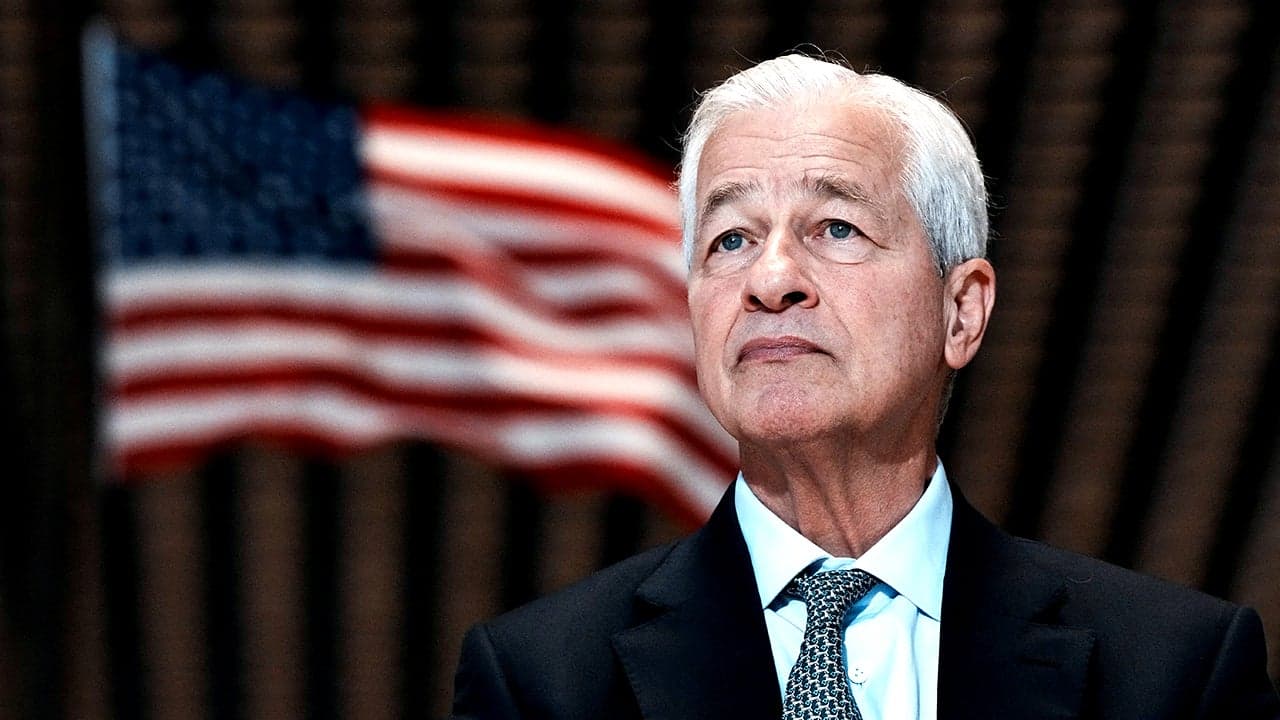
JPMorgan Chase & Co. CEO Jamie Dimon delivered a stark assessment of America’s economic and social trajectory in a recent interview on FOX & Friends , warning that high taxes, crumbling infrastructure, and regulatory burdens in blue states are accelerating a mass exodus of businesses and individuals to more business-friendly red states. Speaking amid growing concerns over inflation, geopolitical instability, and the disruptive force of artificial intelligence, Dimon framed the challenges not as insurmountable crises but as solvable policy failures requiring urgent federal and state-level action. His remarks came as corporate titans like Playboy Enterprises, Uber, and ExxonMobil announced plans to relocate headquarters or operations from high-cost states such as California and New Jersey to lower-tax jurisdictions like Texas, Florida, and Georgia—a trend that underscores the widening economic divide between states governed by divergent fiscal philosophies.
The Great Migration: Why Businesses and Residents Are Fleeing Blue States
Dimon did not mince words when describing the forces propelling the exodus from blue states, which he argued are increasingly defined by what he called a ‘self-defeating’ combination of high taxes, poor public services, and political rhetoric that alienates both workers and employers. ‘Everyone’s got to compete—including cities,’ Dimon asserted, pointing to the stark contrasts between states like California and Nevada, or New York and Florida. ‘For a city to compete, of course it’s quality of life, it’s your subways, it’s your hospitals. But it’s also individual taxes, state taxes, corporate taxes—and it drives people out.’
The Corporate Flight: Who’s Leaving and Where Are They Going?
Since August 2025 alone, a wave of high-profile corporate relocations has underscored the trend. Playboy Enterprises is set to depart California for Miami, Florida; Yamaha Motor Co. plans to move from California to Georgia; Public Storage and Uber are both relocating to Texas; Palantir confirmed a move from Denver, Colorado, to Miami; and ExxonMobil announced it would shift operations from New Jersey to Texas. The moves reflect more than just cost-cutting—they signal a broader rejection of states perceived as hostile to business growth, with Florida and Texas positioning themselves as havens for economic dynamism. Tax Foundation data consistently ranks Florida and Texas among the top states for business tax climate, while California and New York frequently appear at the bottom due to their progressive tax structures and regulatory environments.
The Human Cost: What the Exodus Means for Workers and Local Economies
The departure of businesses isn’t merely an accounting shift—it carries real consequences for local economies and labor markets. When corporations relocate, they take jobs, tax revenue, and consumer spending with them, leaving behind hollowed-out downtowns and strained municipal budgets. Dimon emphasized that the phenomenon is not merely a matter of ‘taxing people’ into compliance but a structural issue where ‘people vote with their feet.’ For example, California’s net domestic outmigration reached nearly 538,000 people between 2020 and 2022, according to U.S. Census data, with the majority citing affordability and tax burdens as primary reasons. The exodus has forced blue-state policymakers to confront a harsh reality: punitive taxation may yield short-term revenue but ultimately undermines long-term prosperity.
Inflation, Geopolitics, and the Iran Factor: How Global Tensions Could Worsen Rising Prices
Dimon’s warnings about inflation extended beyond domestic policy, touching on the geopolitical flashpoints that threaten to destabilize global supply chains and drive up costs for American consumers. He specifically cited the escalating tensions between Israel and Iran as a potential catalyst for higher fuel prices and broader economic disruption. ‘What the Iran war means for your wallet’ is no rhetorical flourish, Dimon noted, pointing to the interconnected nature of global oil markets. A sustained conflict in the Middle East could disrupt shipping lanes, spike energy costs, and reignite inflationary pressures not seen since the post-pandemic era. The Federal Reserve’s battle to tame inflation—measured by the Consumer Price Index (CPI), which rose 3.5% year-over-year in March 2025—remains fragile, with geopolitical risks adding another layer of uncertainty to the central bank’s calculus.
AI and the Future of Work: Job Displacement or Transformation?
The rise of artificial intelligence represents one of the most seismic shifts in the modern economy, and Dimon’s perspective on its impact is nuanced. While acknowledging that AI has already led to some job losses within JPMorgan Chase—though he emphasized that most affected employees were offered alternative roles—he framed the technology as a net positive for productivity and living standards. ‘AI in the long run is going to be unbelievable,’ Dimon predicted, envisioning a future where ‘our grandkids will be working three and a half days a week, they’ll live to 100, they won’t have all of our diseases.’
The Double-Edged Sword of Automation
Dimon’s optimism about AI’s long-term benefits contrasts with the immediate disruptions it poses to certain sectors, particularly white-collar jobs in finance, customer service, and administrative roles. JPMorgan, which employs over 300,000 people globally, has invested heavily in AI-driven tools like contract analysis software and fraud detection systems—technologies that streamline operations but also reduce headcount in specific functions. The bank’s approach to workforce transition includes reskilling programs, early retirement packages, and geographic relocations to align talent with demand. However, Dimon cautioned that without a coordinated federal strategy, the transition could leave many workers stranded.
A Federal Plan for Reskilling: Dimon’s Call to Action
Dimon did not limit his critique to technological disruption; he also criticized the lack of a cohesive national policy to address workforce transitions. ‘Jobs will be lost. The system will adjust. If it just goes too fast, we should have a plan to fix it,’ he stated. His proposal aligns with bipartisan efforts in Congress to expand the Workforce Innovation and Opportunity Act (WIOA) and create new tax incentives for companies that invest in employee upskilling. Meanwhile, JPMorgan has pledged to spend $350 million over five years on workforce development initiatives, including partnerships with community colleges and coding bootcamps to prepare workers for AI-augmented roles.
The American Dream in Peril? Dimon’s Message to Young Workers
Amid debates over inequality and opportunity, Dimon offered a clarion call to the next generation of American workers, urging them to cultivate independence, critical thinking, and adaptability. Speaking directly to young people beginning their careers, he advised: ‘Learn how to think. Be independent and have a little grit, have a little courage. Read everything. Don’t get weaponized by the left or the right. Be smart. Have a heart. Be part of a team.’ His message was a counterpoint to the narrative that the American Dream is fading, suggesting instead that economic mobility remains achievable—but only if individuals take ownership of their skills and career trajectories.
Dimon Backs Trump’s ‘Trump Accounts’ as a Path to Financial Inclusion
In a surprising endorsement of a policy proposal from President Donald Trump, Dimon praised the administration’s ‘Trump accounts’—a new type of tax-advantaged savings vehicle designed for American children under 18. These accounts, introduced as part of Trump’s broader ‘One Big Beautiful Bill,’ allow families to contribute up to $1,000 annually with tax benefits, with additional incentives for employers and philanthropists to contribute. ‘I think it’s a great idea,’ Dimon said, noting that JPMorgan Chase would participate and contribute $1,000 to each account. The accounts are modeled after similar programs in the UK and Australia, where they have been credited with boosting long-term savings rates among low- and middle-income families.
Fighting the ‘Fair Share’ Fallacy: Dimon’s Rebuke of Bernie Sanders
Dimon took aim at progressive lawmakers like Sen. Bernie Sanders (I-Vt.) who advocate for higher taxes on the wealthy, arguing that such rhetoric obscures the real drivers of economic inequality and mobility. ‘I don’t know what he means by fair share,’ Dimon responded when asked about Sanders’ frequent calls for higher taxes on billionaires. ‘I’ve listened to that my whole life, and I don’t know what he means.’ Instead, Dimon advocated for policies that stimulate growth, including merit-based immigration reform, regulatory streamlining, and an expansion of the Earned Income Tax Credit (EITC).
The Case for Pro-Growth Tax Policy and Social Safety Nets
Dimon’s alternative vision prioritizes policies that put money directly into the hands of working Americans. He proposed doubling the EITC for individuals earning between $14,000 and $15,000 annually, arguing that such measures would reduce poverty, increase homeownership, and lower crime rates by providing a ‘first rung’ on the economic ladder. ‘The money would be spent in their local communities,’ he noted, emphasizing that targeted fiscal policy could achieve social outcomes without resorting to punitive taxation or bureaucratic redistribution. His stance reflects a long-standing belief in supply-side economics tempered by a recognition of the need for targeted social supports.
Key Takeaways: What Dimon’s Remarks Reveal About America’s Economic Future
- High taxes, poor infrastructure, and regulatory burdens in blue states are accelerating a corporate and individual exodus to red states like Florida and Texas, with major companies such as Uber, Playboy, and ExxonMobil relocating operations since mid-2025.
- Geopolitical tensions, particularly involving Iran, pose a growing threat to inflation stability, potentially driving up energy costs and disrupting global supply chains.
- AI is reshaping the workforce, with JPMorgan experiencing some job losses but also investing in reskilling programs to transition employees into new roles—Dimon urges a federal strategy to mitigate disruption.
- Dimon dismisses progressive calls for higher taxes on the wealthy, instead advocating for pro-growth policies like EITC expansion, merit-based immigration, and regulatory reform to restore upward mobility.
- Trump’s ‘Trump accounts’ for child savings receive rare bipartisan praise from Dimon, who sees them as a tool to promote financial inclusion and long-term economic participation.
The Broader Implications: Can America Reverse the Decline in Economic Mobility?
Dimon’s warnings come at a pivotal moment for America’s economic narrative. The U.S. has long been celebrated as a land of opportunity, but recent data suggests that upward mobility is stagnating. A 2024 study by the Pew Charitable Trusts found that only 50% of children born in the bottom income quintile remain there as adults, down from 70% in the 1970s. Meanwhile, the cost of living has outpaced wage growth in many urban centers, particularly in blue states where housing, healthcare, and education expenses are surging. Dimon’s call for a ‘path to citizenship’ for immigrants, coupled with his emphasis on education and skill development, reflects a recognition that America’s competitive edge depends on its ability to harness human capital effectively.
The Role of the Federal Reserve and Monetary Policy in Shaping the Outlook
While Dimon’s comments focused primarily on fiscal and structural issues, the Federal Reserve’s role in managing inflation and economic stability remains a critical backdrop. The central bank has maintained a restrictive monetary policy since 2022, with the federal funds rate hovering around 5.25% to 5.50% as of spring 2025—a level designed to curb inflation but which also risks chilling economic growth. Dimon, whose bank is highly sensitive to interest rate movements, has previously stressed that prolonged high rates could exacerbate fiscal imbalances, particularly for heavily indebted corporations and households. His perspective underscores the interconnectedness of fiscal and monetary policy in addressing America’s economic challenges.
A Call for National Unity on Economic Policy
Dimon’s remarks transcend partisan divides, positioning him as a rare voice advocating for pragmatic solutions over ideological purity. His critique of blue-state policies does not imply an endorsement of red-state absolutism; rather, it reflects a belief that competition between states should be based on tangible outcomes—quality of life, economic opportunity, and fiscal responsibility—rather than political posturing. As the 2026 midterm elections approach, his warnings about the consequences of inaction carry particular weight, especially in states like California and New York where budget deficits and outmigration are testing the limits of progressive governance.
Frequently Asked Questions
- Which major companies have relocated from blue states to red states in 2025?
- Since August 2025, Playboy Enterprises, Public Storage, Yamaha Motor Co., Uber, Palantir, and ExxonMobil have announced plans to move from high-tax states like California and New Jersey to lower-tax jurisdictions such as Florida, Texas, and Georgia.
- How is artificial intelligence affecting jobs at JPMorgan Chase?
- JPMorgan has experienced some job losses due to AI-driven automation, particularly in administrative and customer service roles. However, the bank reports that most affected employees have been offered alternative positions through reskilling and redeployment programs.
- What are ‘Trump accounts’ and how do they work?
- ‘Trump accounts’ are tax-advantaged savings vehicles introduced by former President Donald Trump as part of his ‘One Big Beautiful Bill.’ They allow families to contribute up to $1,000 annually for children under 18, with tax benefits and additional employer contributions available.