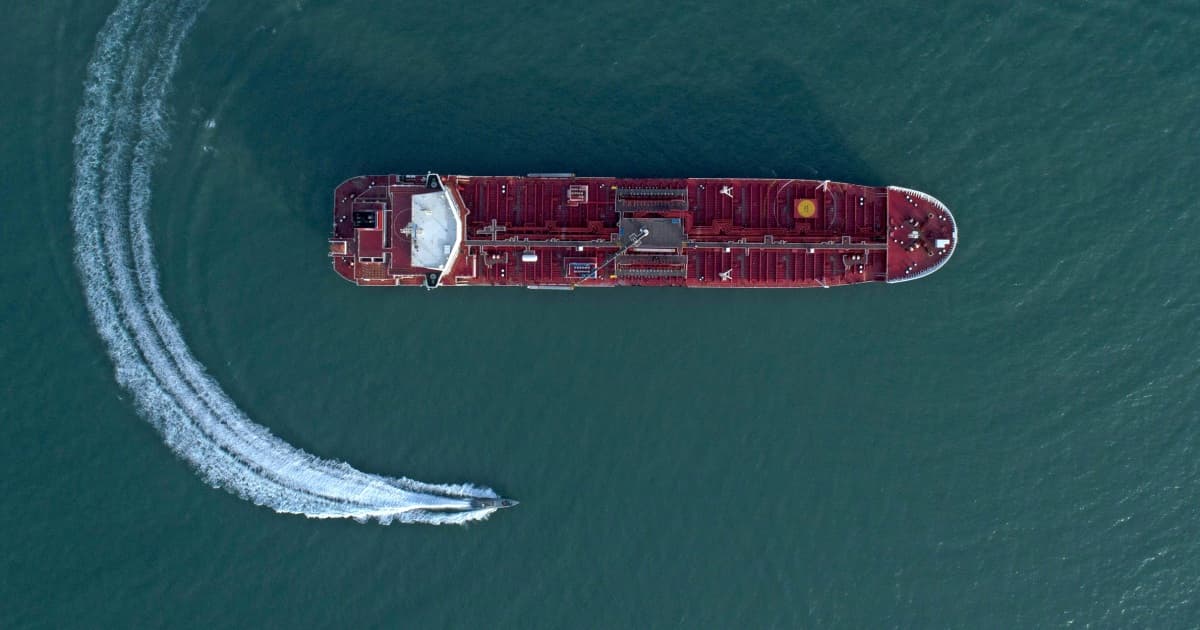
Global oil markets roiled Tuesday as President Donald Trump’s self-imposed 8 p.m. ET deadline for Iran to reopen the Strait of Hormuz approached without a clear resolution, sending crude prices surging past $117 per barrel and stocks on a wild ride. The benchmark U.S. West Texas Intermediate (WTI) crude oil futures spiked as high as $117.63 per barrel before pulling back to around $112 by mid-afternoon, marking the highest settlement price since June 2022. International Brent crude similarly jumped to $111.80 per barrel before stabilizing near $109. The rally reflected mounting fears that a prolonged conflict in the region could disrupt one of the world’s most critical oil chokepoints, where roughly 20% of global maritime oil shipments transit daily.
The geopolitical flashpoint sent shockwaves through U.S. equity markets, which saw dramatic intraday swings. The S&P 500 and Nasdaq Composite initially shed more than 1% of their value, erasing gains from earlier in the session, before closing fractionally higher. The Dow Jones Industrial Average, however, succumbed to the pressure, ending the day down 85 points—despite having fallen as much as 455 points at its lowest intraday point. The turbulence underscored how closely Wall Street is tethered to the ebb and flow of Middle Eastern tensions, particularly those involving Iran, a major oil producer and proxy battleground for regional and global powers.
How the Strait of Hormuz Crisis Drove Oil Markets to 2022 Highs
The Strait of Hormuz, a narrow waterway between Oman and Iran, is the world’s most strategically vital oil transit route. An estimated 21 million barrels of oil—nearly one-fifth of the globe’s daily supply—pass through the strait each day, according to the U.S. Energy Information Administration (EIA). Iran has repeatedly threatened to close the strait in retaliation for U.S. and Israeli military actions, including a series of airstrikes in February that escalated the conflict. Trump’s ultimatum, set in a series of tweets and official statements, warned that failure to reopen the strait by 8 p.m. ET would trigger unspecified consequences, heightening fears of a direct military confrontation.
Crude Oil Futures Hit Multi-Year Peaks Amid Supply Fears
The surge in oil prices reflects deepening concerns that even a temporary closure of the Strait of Hormuz could severely constrict global oil supplies. WTI crude oil futures for May delivery surged past $117 per barrel in intraday trading, the highest level since the post-pandemic recovery era of 2022. Brent crude, the international benchmark, mirrored the gains, climbing to $111.80 before settling near $109. The spike was driven by a combination of geopolitical risk premiums and existing tightness in oil markets, where inventories remain below historical averages despite efforts by OPEC+ to stabilize prices through production cuts.
Analysts at Goldman Sachs noted in a Tuesday research brief that the risk of a prolonged disruption to Hormuz flows could add as much as $10 to $15 per barrel to oil prices in the short term. Such a scenario would echo past crises, including the 1987 "Tanker War" during the Iran-Iraq conflict and the 2019 attacks on Saudi oil facilities at Abqaiq, which briefly pushed Brent crude above $70 per barrel. The current rally also comes amid broader supply constraints, including voluntary production cuts by Saudi Arabia and Russia, which have kept a floor under prices even as global demand growth slows.
Stock Market Volatility Reflects High-Stakes Diplomacy and Economic Anxiety
Wall Street’s dramatic reversal Tuesday—from steep losses to near-flat closes—highlighted the precarious balance between geopolitical risk and economic fundamentals. The S&P 500, which had fallen more than 1% at its lows, managed to pare losses to finish essentially unchanged. The Dow, however, closed down 85 points, a modest decline compared to its intraday drop of 455 points. The Nasdaq Composite, heavily weighted toward tech stocks sensitive to interest rates and growth outlooks, also saw sharp swings but ended the session marginally higher.
Pakistan’s Prime Minister Intervenes Amid Rising Global Pressure
The day’s most consequential market-moving event occurred late in the trading session when Pakistan’s Prime Minister Shehbaz Sharif took to social media to urge Trump to extend the deadline by two weeks and called on Iran to temporarily reopen the Strait of Hormuz. Sharif’s post, which came as global leaders scrambled to avert a wider conflict, added a new diplomatic wrinkle to the crisis. In a statement, White House Press Secretary Karoline Leavitt said, "The President has been made aware of the proposal, and a response will come." The administration has not yet indicated whether it would accept the offer, but the delay of a potential escalation appeared to provide temporary relief to markets.
Sharif’s intervention underscored the broader geopolitical stakes of the crisis, which has drawn in regional players beyond the U.S. and Iran. Pakistan, a nuclear-armed nation with close ties to both Washington and Tehran, sits at a critical nexus of energy flows and military strategy. The country’s role in the crisis reflects how even non-combatant nations are being forced to navigate the fallout of a potential conflict that could destabilize global energy markets and supply chains.
Gas Prices Seen Rising Further as Crude Oil Volatility Persists
For American consumers already grappling with elevated fuel prices, the surge in oil markets threatens to deliver another blow. The national average retail gasoline price stood at $4.14 per gallon on Tuesday, according to AAA data, while diesel fuel averaged $5.64 per gallon—nearing its all-time high of $5.82 per gallon set in 2022 during the post-pandemic inflation surge. The Trump administration has repeatedly asserted that gas prices would decline "quickly" once the fighting in Iran stops and the Strait of Hormuz reopens, a claim that analysts and economists increasingly view as overly optimistic.
EIA Forecasts Peak Gas Prices in April Amid Ongoing Tensions
In its latest Short-Term Energy Outlook, released Tuesday, the U.S. Energy Information Administration (EIA) projected that retail gasoline prices would peak at a monthly average of nearly $4.30 per gallon in April. The federal agency also warned that diesel prices could exceed $5.80 per gallon by the same month, levels not seen since the inflationary pressures of 2022. The EIA’s outlook assumes that current geopolitical risks persist without a sudden de-escalation, meaning that even a temporary resolution might not bring immediate relief to pump prices.
Tom Kloza, global head of energy analysis at the Oil Price Information Service, told CNBC Tuesday that the trajectory of gas prices would depend heavily on whether Iran takes retaliatory action against oil shipping in the Persian Gulf. "If there’s any disruption to Hormuz, even for a few days, we could see prices spike to $4.50 or higher within a week," Kloza said. Such a scenario would further strain household budgets, particularly for lower- and middle-income families who have seen transportation costs remain stubbornly high despite recent declines in other inflation measures.
Market Analysts Warn of Protracted Conflict with Far-Reaching Consequences
The geopolitical landscape has increasingly split into two divergent paths, according to analysts at Société Générale, who described the situation as hardening into "two divergent paths"—either a "fragile détente" characterized by controlled escalation and gradual supply recovery, or a "protracted conflict" involving boots on the ground and structurally higher risk premia across energy markets. "U.S. signalling now leans toward the latter," the analysts wrote in a Tuesday note, suggesting that markets are pricing in a longer-term disruption to global oil flows.
“The strategic picture has hardened into two divergent paths—either we get a fragile détente—no ground war, controlled escalation, gradual supply recovery—or a protracted conflict with boots on the ground and structurally higher risk premia as countries respond with extreme stockpiling.”
The warning from Société Générale echoes concerns raised by other financial institutions, including Bespoke Investment Group, which cautioned that investors would remain risk-averse ahead of Trump’s deadline. "Barring any movement on the diplomatic front, it’s going to be hard for investors to take on much risk ahead of the President’s 8 p.m. deadline," the firm wrote in a note. They added, with a touch of dark humor, "At no time would a Taco Tuesday be more welcome than today, but the President has shown no signs of backing down," referencing the Wall Street acronym "TACO"—short for "Trump Always Chickens Out."
Broader Economic Implications: Inflation, Growth, and the Fed’s Dilemma
The surge in oil prices comes at a delicate moment for the U.S. economy, which has shown signs of cooling inflation but remains vulnerable to energy price shocks. The Federal Reserve has signaled plans to cut interest rates later this year, but a sustained rise in oil prices could complicate those efforts by reigniting inflationary pressures. Higher fuel costs tend to ripple through the economy, increasing transportation expenses for businesses and reducing disposable income for consumers. This dynamic could force the Fed to reconsider the pace of its monetary easing, particularly if oil prices breach key resistance levels.
Goldman Sachs economists estimate that every $10 increase in oil prices could shave roughly 0.2 percentage points off U.S. GDP growth in the second quarter, assuming the shock persists. The bank also noted that a prolonged conflict could exacerbate supply chain disruptions, particularly for industries reliant on diesel-powered logistics, such as trucking and agriculture. Meanwhile, emerging markets—especially in Asia—would face heightened pressure from rising energy import bills, potentially destabilizing fragile economic recoveries in countries like India and Indonesia.
- Oil prices surged past $117 per barrel Tuesday as Trump’s Strait of Hormuz deadline approached, the highest level since 2022.
- Stocks saw extreme volatility, with the Dow falling 85 points after a 455-point intraday drop as geopolitical risks spooked investors.
- Gas prices are projected to peak at $4.30 per gallon in April, with diesel nearing $5.80, according to the EIA.
- Analysts warn of two possible outcomes: a fragile détente or a protracted conflict with higher long-term energy risk premia.
- The crisis threatens to derail the Fed’s plans for interest rate cuts and reignite inflationary pressures.
What Happens Next: Deadline, Diplomacy, and Market Reactions
As the 8 p.m. ET deadline looms, the path forward remains highly uncertain. Trump has a history of extending deadlines or pausing military strikes just before they take effect, a pattern that has kept markets on edge. The White House has emphasized that its primary concern is the global price of crude oil and the cost of gasoline for American drivers, but the administration’s calculus is complicated by the broader strategic implications of a conflict with Iran. A miscalculation or unintended escalation could trigger a broader regional war, with consequences for global energy markets and U.S. foreign policy.
For now, energy traders and investors are bracing for further volatility. The CBOE Crude Oil ETF Volatility Index (OVX), a measure of expected price swings in oil futures, surged to its highest level since 2022, reflecting heightened uncertainty. Meanwhile, the U.S. Navy has maintained a robust presence in the Persian Gulf, including the deployment of the USS Abraham Lincoln carrier strike group, as a deterrent against Iranian aggression. The military posture underscores the stakes: any disruption to Hormuz would not only spike oil prices but also force the U.S. to confront the logistical and strategic challenges of protecting a critical global chokepoint.
Key Takeaways: What Investors and Consumers Need to Know
- Oil prices are at their highest since 2022 as the Strait of Hormuz deadline approaches, with WTI crude nearing $118 per barrel and Brent over $111.
- Stock markets experienced extreme volatility, with the Dow Jones ending down 85 points after a 455-point intraday drop, as traders weighed geopolitical risks.
- Gasoline prices are projected to average $4.30 per gallon in April, while diesel could exceed $5.80, according to the U.S. Energy Information Administration.
- Analysts warn that the conflict could escalate into a protracted war with structurally higher energy risk premiums, rather than a quick resolution.
- The crisis threatens to undermine the Federal Reserve’s plans for interest rate cuts and reignite inflationary pressures, complicating economic policy.
Frequently Asked Questions
Frequently Asked Questions
- Why is the Strait of Hormuz so important to global oil markets?
- The Strait of Hormuz is the world’s most critical oil chokepoint, with roughly 21 million barrels of oil—nearly 20% of global supply—passing through it daily. Any disruption, even temporary, could send oil prices soaring and trigger widespread economic disruptions.
- What could happen if Iran closes the Strait of Hormuz?
- A closure would severely constrict global oil supplies, likely pushing crude prices past $120 per barrel and causing gasoline prices in the U.S. to spike to $4.50 or higher within days. It could also trigger military responses from the U.S. and its allies.
- How will higher oil prices affect the U.S. economy?
- Higher oil prices could derail the Federal Reserve’s plans for interest rate cuts, reignite inflationary pressures, and reduce U.S. GDP growth by as much as 0.2% in the second quarter for every $10 increase in oil prices, according to Goldman Sachs.