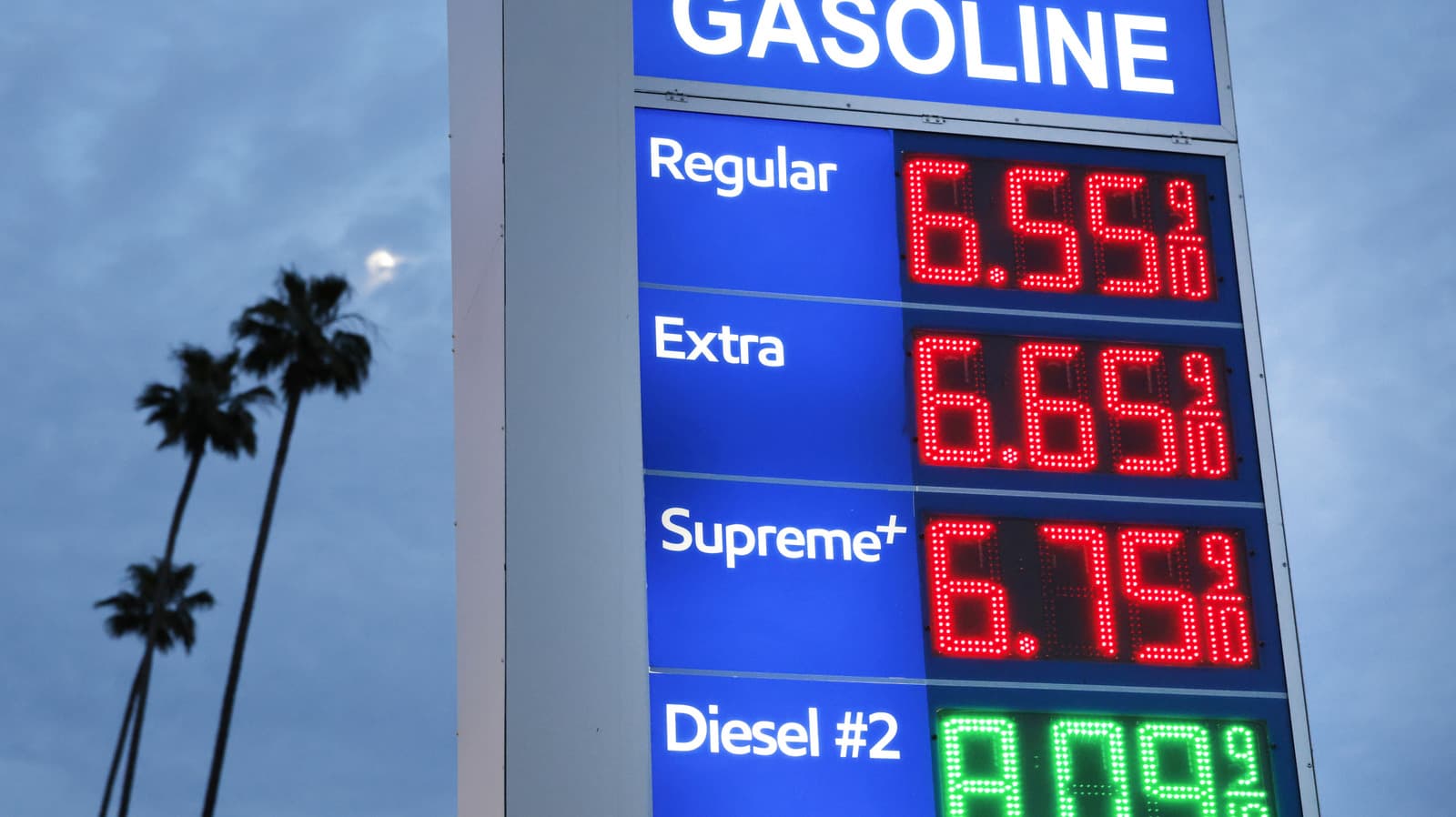
Americans are paying an average of $3.87 per gallon for gasoline in 2024, a price level not seen since the pre-pandemic era, and driving up the cost of operating large vehicles like SUVs and trucks. On May 15, the U.S. Environmental Protection Agency reported that SUVs now account for 62% of all new vehicle registrations—a figure that has tripled since 1990—while the average fuel economy of cars on American roads has stagnated at 27.2 miles per gallon. In California, where stricter emissions rules and higher gas taxes converge, the average fuel economy reaches 33.5 mpg, offering a glimpse of what’s possible when efficiency becomes a priority. The convergence of geopolitical instability in oil-producing regions, tightening corporate average fuel economy (CAFE) standards, and rising household costs is creating the perfect conditions for a reconsideration of America’s love affair with the SUV—and a potential renaissance for the oft-overlooked station wagon.
The SUV Boom: How America’s Love Affair with Big Vehicles Became the Norm
The modern SUV era traces its roots to a regulatory loophole. In 1978, the U.S. government reclassified light trucks—originally intended for off-road and work use—as passenger vehicles for CAFE compliance purposes. This allowed automakers to meet fuel economy standards by producing larger, heavier vehicles under less stringent rules. While the Jeep XJ Cherokee, introduced in 1983, is often credited with popularizing the modern SUV, it was AMC’s strategic pivot that set the industry on a new course. By the late 1990s, automakers like Ford, GM, and Toyota had fully embraced the SUV as a high-margin alternative to sedans and hatchbacks, shifting advertising budgets and production lines to cater to consumer demand for space, perceived safety, and rugged image.
The CAFE Standards Loophole: Why SUVs Became So Profitable
Under the Corporate Average Fuel Economy (CAFE) standards, automakers must meet fleet-wide fuel economy targets. Initially designed to reduce oil consumption, the regulations inadvertently created a perverse incentive: building larger, less efficient vehicles could be offset by selling more small cars. However, a loophole in the classification of "light trucks"—which includes SUVs—allowed automakers to sell vehicles with lower fuel economy without penalty. This loophole was expanded in 2007 when the National Highway Traffic Safety Administration (NHTSA) increased the weight threshold for light trucks, further incentivizing the production of SUVs and crossovers. According to the International Council on Clean Transportation, this regulatory arbitrage has cost American consumers an estimated $300 billion in fuel expenses since 2000.
Consumer Behavior: Why Americans Chose SUVs Over Wagons
The decline of the station wagon in the U.S. market is as much a cultural story as it is an economic one. In the 1980s and 1990s, minivans briefly captured the family vehicle market but were quickly stigmatized as "uncool" and associated with suburban monotony. SUVs, on the other hand, were marketed as adventurous, versatile, and aspirational—even when used primarily for school runs and grocery trips. Automakers like Jeep, Ford, and GM poured billions into advertising campaigns that framed SUVs as symbols of freedom and status. Meanwhile, wagons were dismissed as outdated or impractical, despite offering comparable cargo space, better handling, and lower operating costs. A 2023 study by Kelley Blue Book found that only 0.6% of new car buyers in the U.S. purchased a wagon, down from 12% in 1980.
The High Cost of Driving: Why Gas Prices Could Reverse the Trend
The average price of regular gasoline in the U.S. has fluctuated between $3.50 and $4.20 per gallon in 2024, a level that has eroded the total cost of ownership advantage of SUVs. According to AAA, the average SUV costs $1,500 more per year to fuel than a midsize sedan. For drivers who commute over 15,000 miles annually, the difference can exceed $2,000. In California, where gas prices average $5.10 per gallon, the savings are even more pronounced. "When fuel prices rise, consumers become hyper-aware of every mile they drive," said Jessica Caldwell, executive director of insights at Edmunds. "We’re already seeing a slight uptick in interest for fuel-efficient vehicles, particularly among younger buyers who are more sensitive to operating costs."
The Case for Wagons: Efficiency, Practicality, and Driving Pleasure
Station wagons offer a compelling alternative to SUVs, combining the cargo capacity of a truck with the handling and fuel efficiency of a sedan. A 2024 Volvo V60, for example, delivers 28 mpg combined while offering 30 cubic feet of cargo space behind the rear seats—comparable to a midsize SUV like the Toyota RAV4 but with a lower center of gravity and better aerodynamics. The Subaru Outback, a crossover-wagon hybrid, achieves 29 mpg combined and provides 32.5 cubic feet of cargo space, making it one of the most practical vehicles in its class. "Wagons are essentially SUVs without the unnecessary bulk," said automotive journalist and historian Robert Cumberford. "They offer the same utility without the weight penalty, which translates to better braking, sharper handling, and lower running costs."
Safety and Environmental Benefits
From a safety perspective, wagons have a lower risk of rollover accidents due to their lower center of gravity. According to the Insurance Institute for Highway Safety (IIHS), vehicles with a higher center of gravity—like SUVs—are three times more likely to roll over in a single-vehicle crash. Additionally, wagons typically have better pedestrian visibility and lower front-end designs, reducing the severity of collisions in urban areas. Environmentally, the average wagon produces 15-20% fewer greenhouse gas emissions than an equivalent SUV, according to the Union of Concerned Scientists. "The shift from SUVs to wagons could have an outsized impact on reducing carbon emissions," said Dr. Margo Oge, former director of the EPA’s Office of Transportation and Air Quality.
The Practical Advantages: Easier Loading, Lower Costs, and a Smoother Ride
One of the most overlooked benefits of wagons is their lower load floor. Unlike SUVs, which often require stepping up into the cargo area, wagons have a flat floor that sits closer to the ground, making it easier to load heavy items like groceries, luggage, or home improvement supplies. The BMW 5 Series Touring, for example, offers 21.5 cubic feet of cargo space behind the rear seats and 59.6 cubic feet with the seats folded—a capacity that rivals many SUVs. "For families and DIYers, the practical advantages of a wagon are hard to ignore," said Lauren Fix, a certified automotive journalist and consumer advocate. "You’re not paying a premium for extra height that you rarely use."
Can Automakers Reboot the Wagon? Challenges and Opportunities
Despite the clear advantages, automakers have been slow to reintroduce wagons to the U.S. market. In 2023, only 11 wagon models were available for sale in the U.S., down from 27 in 1995. Most are European brands like Volvo, Audi, and Mercedes-Benz, which cater to niche audiences. American manufacturers, including Ford and GM, have largely abandoned the segment, citing low demand and higher development costs. However, the rising cost of fuel and growing consumer interest in sustainability may force a reconsideration. "We’re seeing a generational shift in what consumers value," said Sam Abuelsamid, principal analyst at Guidehouse Insights. "Younger buyers are more open to wagons if they’re marketed as efficient, eco-friendly alternatives."
The Role of Electrification
The rise of electric vehicles (EVs) presents both a challenge and an opportunity for wagons. While EVs like the Tesla Model S, Audi e-tron GT, and Porsche Taycan have focused on sedans and SUVs, wagon variants could offer a compelling middle ground. The Ford Mustang Mach-E, for example, is available as a liftback, blending the practicality of a wagon with the performance of an SUV. "The next generation of electric wagons could be a game-changer," said Car and Driver editor-in-chief Mark Rechtin. "They could combine the efficiency of an EV with the space and versatility of a wagon."
Key Takeaways: What Drivers Need to Know
- SUVs now make up 62% of new vehicle sales in the U.S., up from just 20% in 1990, thanks to regulatory loopholes and aggressive marketing.
- Gasoline prices averaging $3.87 per gallon in 2024 are pushing drivers to reconsider the total cost of ownership of large vehicles.
- Station wagons offer comparable cargo space to SUVs but with better fuel efficiency, lower operating costs, and safer handling.
- Only 0.6% of U.S. buyers purchased a wagon in 2023, but interest in fuel-efficient vehicles is rising among younger demographics.
- The revival of the wagon may depend on automakers reintroducing models and marketing them as practical, eco-friendly alternatives.
What’s Next for the U.S. Auto Market?
The next phase of the U.S. auto market could hinge on a convergence of economic pressure, regulatory changes, and shifting consumer preferences. The EPA’s 2024 CAFE standards require automakers to achieve an average of 49 mpg for passenger cars and 38 mpg for light trucks—a target that will be increasingly difficult to meet without selling more fuel-efficient vehicles. Additionally, the Inflation Reduction Act’s clean vehicle tax credits favor EVs and hybrids, many of which could be configured as wagons. "We’re at a tipping point," said John Bozzella, president and CEO of the Alliance for Automotive Innovation. "The market is evolving, and automakers that adapt quickly will be the ones that thrive."
Frequently Asked Questions
Frequently Asked Questions
- Why did SUVs become so popular in the U.S.?
- SUVs gained popularity due to a regulatory loophole in CAFE standards that classified light trucks as passenger vehicles, allowing automakers to sell larger, less fuel-efficient vehicles while meeting fuel economy targets. Marketing campaigns also framed SUVs as adventurous and status-symbol vehicles.
- Are station wagons really more fuel-efficient than SUVs?
- Yes. On average, station wagons achieve 5-10 mpg higher fuel economy than comparable SUVs due to their lower weight, better aerodynamics, and smaller engines. For example, a Volvo V60 wagon gets 28 mpg combined, while a Volvo XC60 SUV gets 25 mpg combined.
- Are there any new wagon models available in 2024?
- Yes. In 2024, European brands like Volvo (V60), Audi (A4 Avant), and Mercedes-Benz (E-Class Estate) continue to offer wagons. Subaru also sells the Outback, a crossover-wagon hybrid. However, American manufacturers have largely exited the segment.