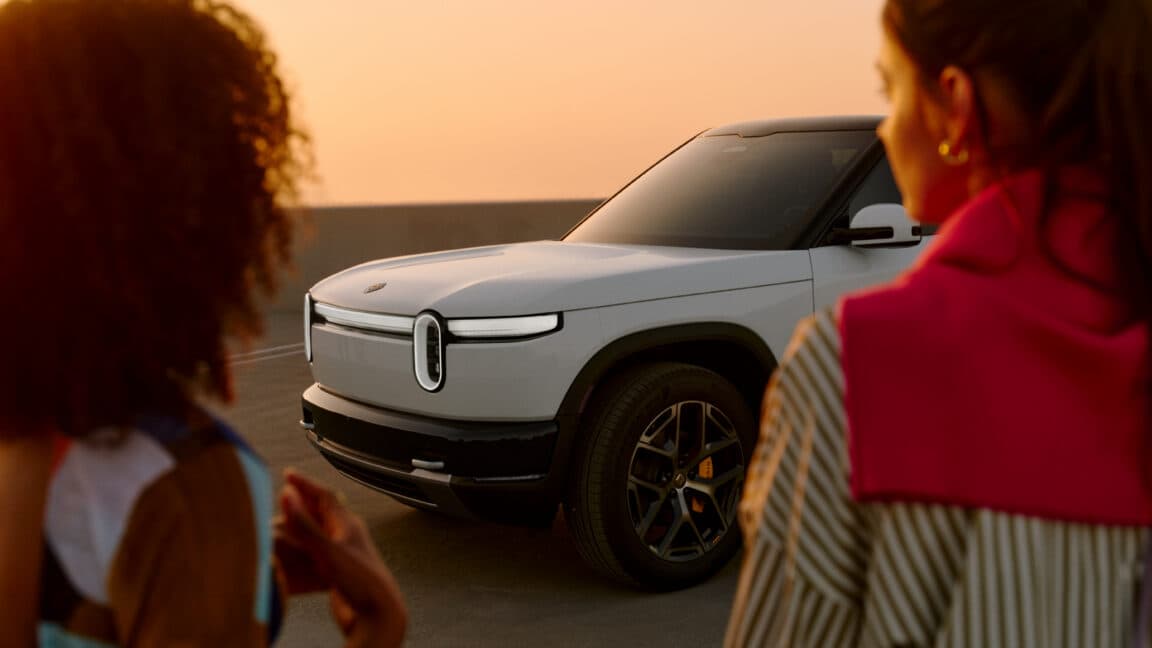
Rivian is poised to revolutionize the electric vehicle (EV) market once again with the launch of its R2 SUV, a more affordable and accessible model designed to compete in the burgeoning midsize SUV segment. The company, which made waves with its premium R1T truck and R1S SUV, is now shifting gears to target a broader audience. Leaked Environmental Protection Agency (EPA) certification documents, shared on the Rivian Forums, reveal that the R2 will deliver up to 335 miles of range on its highest trim when equipped with 21-inch wheels—a figure that underscores Rivian’s commitment to balancing performance with practicality. However, the range plunges to 314 miles when outfitted with all-terrain tires, highlighting the trade-offs between capability and efficiency in electric vehicles. These details, along with battery specifications, charging speeds, and trim configurations, provide the clearest picture yet of what consumers can expect from Rivian’s latest offering, slated for a late 2026 release.
- The Rivian R2 achieves an EPA-estimated 335 miles of range with 21-inch wheels in its highest trim.
- All-terrain tires reduce the R2’s range to 314 miles, despite smaller 20-inch wheels typically improving efficiency.
- The R2’s battery capacity is listed at 86.8 kWh in EPA documents, slightly lower than Rivian’s published 87.9 kWh spec.
- The R2 will launch in September 2026 with a $57,990 Performance trim, followed by a $53,990 Premium trim later that year.
- Standard charging includes 210 kW DC fast charging and 11.5 kW Level 2 AC charging, with a heat pump as a standard feature.
Why the Rivian R2’s Range Matters for the EV Market
The Rivian R2’s EPA-certified range of 335 miles places it in direct competition with other long-range electric SUVs, such as the Tesla Model Y Long Range (330 miles) and Ford Mustang Mach-E Extended Range (320 miles). For a company that has historically catered to the luxury segment with its R1 vehicles, the R2 represents a strategic pivot toward affordability and mass-market appeal. Priced starting at $57,990 for the Performance trim before incentives, the R2 is positioned to attract buyers who want premium features without the six-figure price tag of the R1S or R1T. Industry analysts argue that the R2’s range—and its ability to maintain efficiency with larger wheels—could reassure consumers wary of range anxiety, a persistent barrier to EV adoption. Rivian’s decision to prioritize range in its midsize SUV also reflects broader trends in the EV industry, where automakers are increasingly focusing on optimizing battery efficiency to meet consumer demands for longer driving distances between charges.
The Role of Wheels and Tires in EV Range
One of the most surprising revelations from the leaked EPA documents is the impact of all-terrain tires on the R2’s range. Typically, smaller wheels improve an EV’s efficiency because they reduce aerodynamic drag and rotational mass. However, the R2’s 20-inch wheels paired with knobby all-terrain tires actually decrease its range to 314 miles, compared to 335 miles with 21-inch wheels and standard tires. This counterintuitive outcome highlights the complex interplay between tire design, vehicle weight, and rolling resistance in electric vehicles. All-terrain tires, while beneficial for off-road capability, create more friction and turbulence, which saps battery life more aggressively than the drag from larger wheels alone. Rivian’s data underscores a key challenge for EV manufacturers: balancing the desire for rugged, capable vehicles with the need to maximize range and efficiency.
Battery Specs, Charging Speeds, and Thermal Management
The R2’s battery system is a critical component of its performance, and the leaked EPA documents provide granular details about its specifications. The battery pack has a gross capacity of 87.9 kWh, as previously announced by Rivian, but the usable capacity is listed as 86.8 kWh in the EPA certification. This slight reduction is likely due to safety margins and thermal management protocols required for optimal battery health. The R2 also comes equipped with a heat pump as a standard feature, a notable upgrade from the R1’s climate control system. Heat pumps are more energy-efficient than traditional resistive heaters, which can drain an EV’s battery quickly in cold weather. In addition to the heat pump, the R2 supports DC fast charging at up to 210 kW and Level 2 AC charging at 11.5 kW, positioning it as a competitive option for long-distance travel and daily commuting.
Charging Infrastructure and Real-World Performance
Rivian’s 210 kW DC fast-charging capability means the R2 can replenish approximately 10-15% of its battery in about 10 minutes under ideal conditions, assuming access to a compatible charging network. This is particularly relevant as Rivian expands its proprietary Adventure Network of fast chargers, which currently includes over 1,000 locations across the U.S. and Canada. However, real-world charging speeds can vary based on factors such as temperature, battery state of charge, and the specific charging station’s power output. Rivian has also partnered with Tesla to enable R2 owners to use Tesla’s Supercharger network via an adapter, further enhancing the vehicle’s charging flexibility. For drivers who rely on home charging, the R2’s 11.5 kW Level 2 charging capability means a full recharge overnight, provided they have a compatible home charger installed.
Trim Levels and Pricing: What Buyers Need to Know
Rivian’s pricing strategy for the R2 is designed to appeal to a wide range of buyers, with the Performance trim launching first at $57,990. This version features a dual-motor all-wheel-drive system, a 0-60 mph acceleration time of 3.5 seconds, and the 335-mile EPA range. The Premium trim, priced at $53,990, is slated for a late 2026 release and will likely include additional luxury and convenience features, though Rivian has not yet disclosed specifics. Analysts anticipate that a base model with a smaller battery and reduced range could arrive as early as late 2027, potentially priced around $45,000. This tiered approach allows Rivian to cater to both performance enthusiasts and budget-conscious buyers, a strategy that mirrors the pricing models of legacy automakers like Ford and General Motors.
The Broader Implications for Rivian and the EV Industry
The R2’s launch is a pivotal moment for Rivian, which has faced financial challenges amid intense competition in the EV market. The company, which went public in November 2021 at a valuation of $66 billion, has struggled to meet production targets and profitability goals. However, the R2 represents Rivian’s best chance to achieve mass-market success. By targeting the midsize SUV segment, Rivian is competing directly with established automakers like Tesla, Ford, and Volkswagen, all of which have launched or announced long-range electric SUVs. The R2’s range and pricing could help Rivian capture a significant share of the market, particularly among buyers who prioritize practicality and affordability. Additionally, the R2’s battery and charging specifications demonstrate Rivian’s ability to innovate in areas critical to EV adoption such as thermal management and charging infrastructure.
What’s Next for the Rivian R2?
With EPA certification now confirmed, Rivian is one step closer to delivering the R2 to customers. The company has announced that the first deliveries will begin in September 2026, with the Performance trim available immediately and the Premium trim following later that year. Rivian has also hinted at additional trim levels and variants, including a potential base model with a smaller battery pack in late 2027. In the meantime, prospective buyers can expect Rivian to continue refining the R2’s specifications and features through its official channels. The company’s focus on range, charging capability, and thermal management suggests that the R2 may set a new standard for midsize electric SUVs, particularly in terms of real-world usability and efficiency. As Rivian prepares for the R2’s launch, industry watchers will be closely monitoring its reception in the market and its impact on the broader EV landscape.
FAQ: Common Questions About the Rivian R2
Frequently Asked Questions
- When will the Rivian R2 be available for purchase?
- Rivian plans to begin delivering the R2 to customers in September 2026, with the Performance trim available at launch. The Premium trim is expected to go on sale in late 2026.
- How does tire choice affect the R2’s range?
- The R2’s range drops from 335 miles with 21-inch wheels to 314 miles when equipped with all-terrain tires on 20-inch wheels, according to EPA certification documents. This is due to the increased rolling resistance of all-terrain tires.
- What charging options are available for the Rivian R2?
- The R2 supports up to 210 kW DC fast charging and 11.5 kW Level 2 AC charging. It also has a standard heat pump for improved efficiency in cold weather and compatibility with Tesla’s Supercharger network via an adapter.