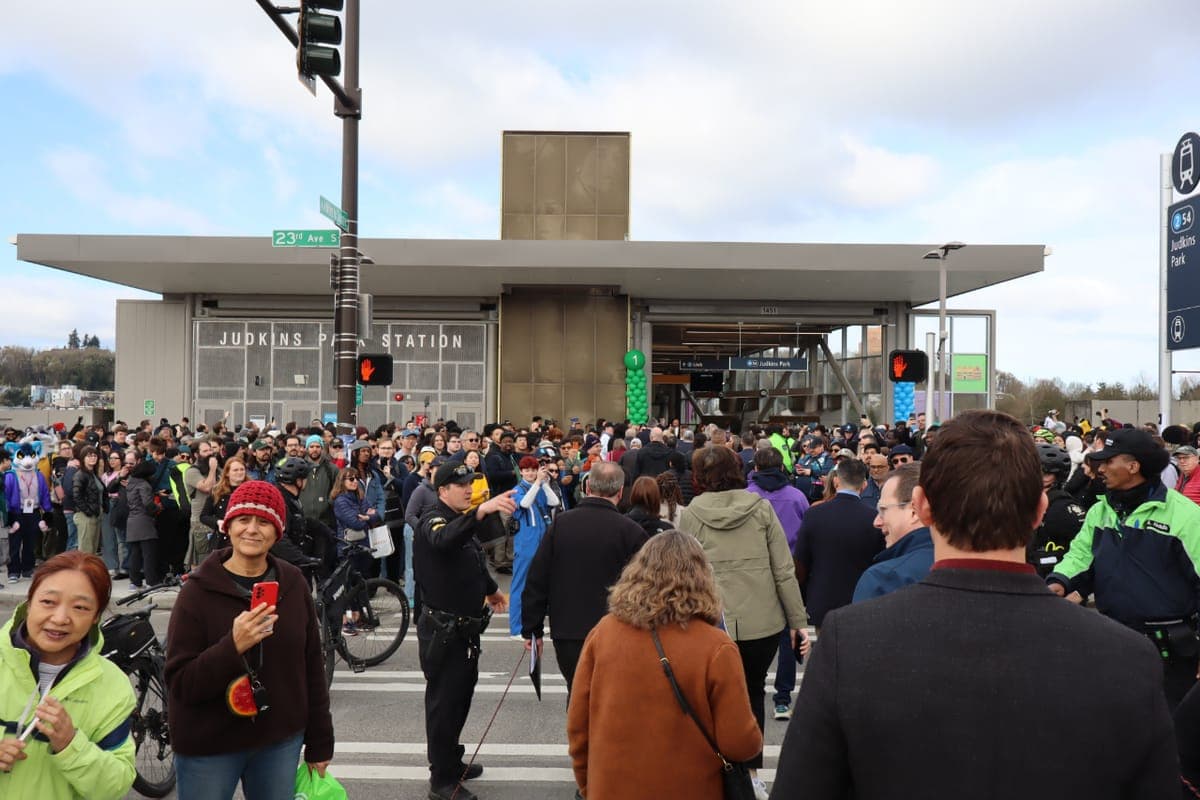
On March 28, Sound Transit’s new 2 Line light rail service across Lake Washington shattered records, drawing 205,000 riders—making it the second-busiest transit day in the agency’s 25-year history. The milestone capped a weekend of unprecedented celebration, as thousands lined up for hours to be among the first to ride the cross-lake connection between Seattle and the Eastside. Only the Super Bowl victory parade in early March drew more riders, underscoring the pent-up demand for reliable, high-capacity transit in the Puget Sound region.
How the 2 Line’s Record-Breaking Opening Day Unfolded
The 2 Line’s inauguration was more than just a transit launch—it was a cultural moment for the Seattle metro area. Crowds overwhelmed Judkins Park Station in Seattle’s Central District, where riders waited in lengthy lines to board the first trains across the new 2.4-mile submerged tunnel beneath Lake Washington. Speeches from local officials, including King County Executive Dow Constantine—who also serves as Sound Transit’s CEO—delayed the ribbon-cutting ceremony, pushing back the first departure from 10 a.m. to nearly noon. By then, the platform was packed, and the demand for seats was palpable.
A Historic Turnout Fueled by Community Events
The 2 Line’s opening day coincided with several major regional events, including a high-profile "No Kings" rally in downtown Seattle, which drew thousands of additional riders. Constantine later reflected on the day’s significance, telling the Sound Transit board’s executive committee, "It was a historic day, and I know we will remember it for years to come. The thousands of community members who came out to celebrate and ride the trains, I think, only reinforce what we’ve long known—people in our region love transit, and they want more of it."
“The thousands of community members who came out to celebrate and ride the trains, I think, only reinforce what we’ve long known – people in our region love transit, and they want more of it.” — Dow Constantine, Sound Transit CEO
Fleet Challenges and Overcrowding Threaten Smooth Operations
Despite the enthusiasm, the 2 Line’s first weekend exposed operational vulnerabilities. Trains on the new line have been running with just two or three cars—compared to the four-car trains on the 1 Line—due to maintenance demands and a limited fleet. Riders reported consistently full trains, with some expressing frustration over cramped conditions. Sound Transit’s latest monthly operations report revealed that neither the aging Kinkisharyo trains (primarily serving the 2 Line) nor the newer Siemens vehicles are meeting their availability benchmarks. This has raised concerns among board members about whether the agency can sustain service without additional fleet expansions.
Sound Transit’s Fleet Expansion Plans: A Race Against Overcrowding
To address the immediate overcrowding crisis, Sound Transit took proactive steps in 2024 to accelerate its vehicle procurement process. The agency has ordered 10 additional Siemens trains—originally slated for deployment in the early 2030s—to arrive by 2028, and possibly sooner. These new cars will help alleviate pressure on the 2 Line, but their delayed arrival means riders will likely face crowded conditions for at least the next three years. Transportation advocates argue that this underscores the need for long-term investment in transit infrastructure to keep pace with Seattle’s rapid growth.
Construction Delays and Operational Hurdles Complicate the Rollout
While the 2 Line’s opening was a cause for celebration, operational hiccups have already surfaced. Early in the week following the launch, the 1 Line experienced delays when a "false presence" detection system erroneously flagged debris on the tracks north of Tukwila International Boulevard Station. The incident disrupted service for half a day, pushing headways to 20 minutes. Meanwhile, 2 Line riders were met with another surprise: trains were temporarily terminating at Northgate Station due to ongoing construction at Pinehurst Station, which is slated to open this summer. The single-tracking required for final construction tasks has limited service, leaving some Eastside commuters searching for alternative routes.
The $34.5 Billion Funding Gap: Sound Transit’s Looming Fiscal Crisis
Behind the fanfare of the 2 Line’s debut lies a sobering financial reality. Sound Transit projects a staggering $34.5 billion shortfall through 2046, a deficit that could derail future expansion projects if not addressed. The agency’s board is currently debating which initiatives to defer, with parking projects emerging as the most likely candidates for indefinite delays. However, no light rail extensions are yet on the chopping block, though board members acknowledge that tough decisions lie ahead. These deliberations are expected to reach a critical juncture in May, as the agency grapples with how to balance fiscal responsibility with the region’s growing transit needs.
What’s Next for the 2 Line and Puget Sound Transit?
With the 2 Line’s record-breaking opening day fresh in the public’s mind, Sound Transit now faces the challenge of maintaining momentum. The agency’s leadership has emphasized that the cross-lake connection is just the beginning of a broader expansion plan that includes new stations, fleet upgrades, and potential service increases. However, the funding gap looms large, and without additional revenue streams or state support, the agency may be forced to scale back ambitions. For now, riders can expect a summer 2024 opening for Pinehurst Station, followed by a phased approach to addressing overcrowding. The 2 Line’s success has proven that Seattle-area commuters are eager for a robust transit network—but whether Sound Transit can deliver remains an open question.
Key Takeaways: What the 2 Line’s Opening Day Means for Seattle
- The 2 Line’s opening day drew 205,000 riders, the second-busiest day in Sound Transit history, highlighting strong regional demand for transit.
- Overcrowding on the 2 Line is already a concern, with trains running at reduced capacity due to fleet limitations and maintenance issues.
- Sound Transit’s $34.5 billion funding shortfall threatens future expansion, with parking projects likely to be deferred first.
- Construction delays at Pinehurst Station and single-tracking have temporarily reduced 2 Line service to Northgate.
- The 2 Line’s success sets the stage for future expansions, but fiscal challenges could limit the agency’s ability to meet demand.
Frequently Asked Questions About Sound Transit’s 2 Line
Frequently Asked Questions
- When will the 2 Line’s full service begin?
- The 2 Line is currently operating with temporary service to Northgate, but Pinehurst Station is set to open in summer 2024, expanding full service. However, overcrowding may persist until additional train cars arrive by 2028.
- Why are 2 Line trains shorter than those on the 1 Line?
- Sound Transit’s fleet is limited by maintenance demands and availability. The 2 Line primarily uses older Kinkisharyo trains, while the 1 Line uses newer Siemens vehicles. Sound Transit has ordered 10 additional Siemens trains to address this issue.
- How is Sound Transit addressing its $34.5 billion funding gap?
- The agency’s board is evaluating which projects to defer, likely starting with parking expansions. No light rail extensions are currently planned for delay, but the agency has not ruled out future cuts if the shortfall isn’t resolved.