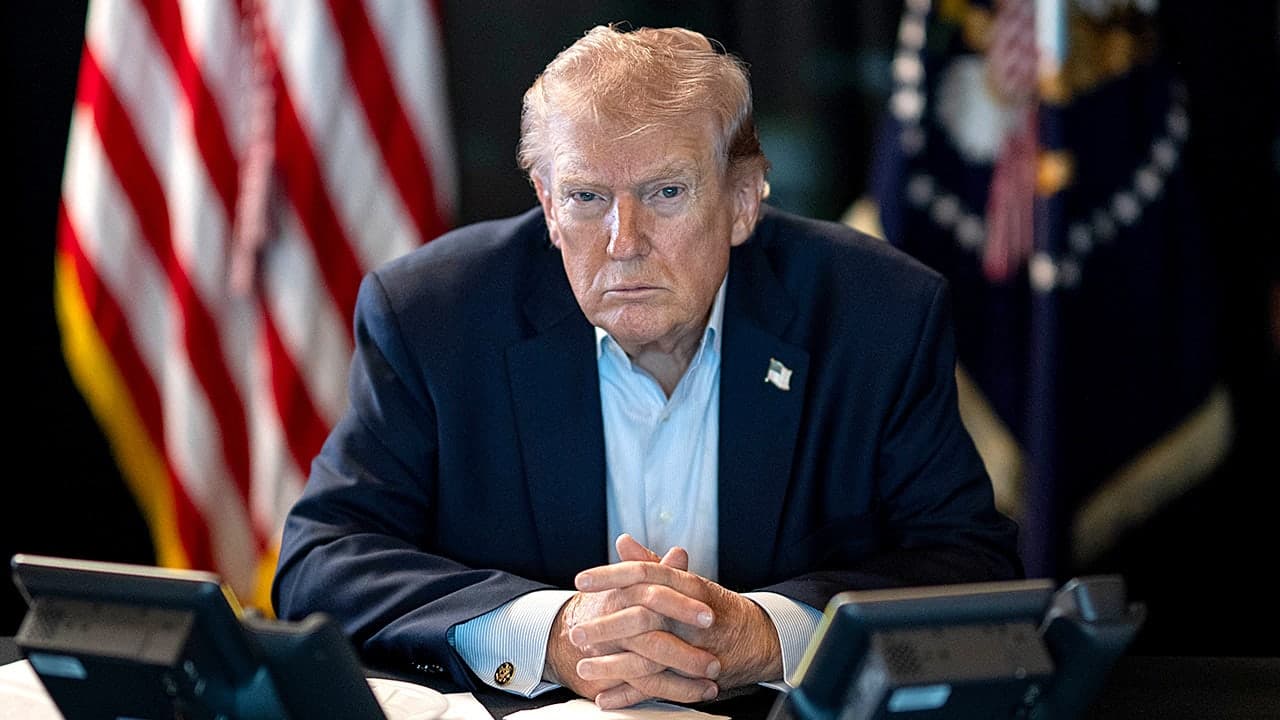
U.S. officials have reported that a 15-point plan to end the war with Iran is in the works, as President Trump claims negotiations are ongoing. The plan, delivered through Pakistan, faces uncertainty in its implementation, while military operations continue. The U.S. and Iran's diplomatic efforts could reshape the conflict's trajectory, but the path to peace remains fraught with challenges. The White House has emphasized that 'Operation Epic Fury' will continue, even as the President claims the U.S. and Iran are in 'negotiations right now.'
The 15-Point Plan: A New Approach to Iranian Diplomacy
The 15-Point Plan's Key Provisions
The 15-point plan, first reported by The New York Times, is a U.S. effort to broker a peace deal with Iran, though its details remain classified. The plan, delivered through Pakistan, includes measures to address the 'war on Iran' and prevent the Islamic Republic from acquiring a nuclear weapon. The U.S. has not yet confirmed the plan's full scope, but officials have noted that it 'contains 15 points of agreement' between the two nations. The plan's success depends on whether Iran is willing to engage in direct talks, a question that remains unclear.
Challenges in Implementation
The 15-point plan's effectiveness is uncertain, as it has not been widely circulated among Iranian officials. The U.S. has not confirmed whether Israel, a key ally in the region, would support the plan, adding to the complexity of the negotiations. The plan's potential to de-escalate the conflict is also in question, given the ongoing military operations in the Middle East. The U.S. and Iran's relationship, already tense, may be further strained if the plan fails to address key security concerns.
Trump's Public Statements and the War Effort
The President's Public Diplomacy
President Trump has repeatedly emphasized that the U.S. and Iran are 'in negotiations right now,' a claim that has been met with skepticism. The President has also stated that the 'main goal' of the war is to 'ensure that Iran cannot have a nuclear weapon,' a message that has been echoed by U.S. officials. However, the President's public statements have been contrasted with the White House's assertion that 'Operation Epic Fury' will continue, as the U.S. 'has all military options at its disposal.'
The War on Iran's Continuation
Despite the 15-point plan, the U.S. has not abandoned its military strategy in the region. The Pentagon is reportedly preparing to deploy 3,000 soldiers from the 82nd Airborne Division to the Middle East, a move that could intensify the conflict. The White House has also not backed off from plans to pass a $200 billion war-related funding bill, a step that could further escalate the war. The President's public claims of 'victory' in the war are at odds with the reality of ongoing military operations.
The Role of Pakistan in Mediating U.S.-Iran Talks
Pakistan's Involvement in Diplomacy
Pakistan's Prime Minister, Shehbaz Sharif, has been a key player in the U.S.-Iran negotiations, as the country has been a 'facilitator' in the talks. The U.S. has not yet confirmed whether the 15-point plan is being shared with Iran, but the White House has acknowledged that 'sensitive diplomatic discussions' are being handled 'through the news media.' The U.S. has also not confirmed whether the plan is being shared with other regional players, including Israel, which is a key ally in the region.
The Geopolitical Implications
The U.S. and Iran's negotiations are part of a broader effort to de-escalate the conflict, but the success of the 15-point plan is uncertain. The U.S. has not yet confirmed that the plan is being shared with Iran, and the role of Pakistan in the talks remains unclear. The U.S. and Iran's relationship, which has been marked by tension, is at a critical juncture, as the 15-point plan could either end the war or further entrench the conflict.
Military Operations and the War on Iran
The Ongoing Conflict in the Middle East
The U.S. and its allies have been engaged in military operations in the Middle East, with the 15-point plan being a 'new approach' to the conflict. The U.S. has not yet confirmed that the plan is being shared with Iran, but the White House has stated that 'Operation Epic Fury' will continue, as the U.S. 'has all military options at its disposal.' The U.S. has also not confirmed that the 15-point plan is being shared with other regional players, including Israel, which is a key ally in the region.
The Role of the Pentagon in the War
The Pentagon is reportedly preparing to deploy 3,000 soldiers from the 82nd Airborne Division to the Middle East, a move that could intensify the conflict. The U.S. has not yet confirmed that the 15-point plan is being shared with Iran, but the White House has stated that 'Operation Epic Fury' will continue, as the U.S. 'has all military options at its disposal.' The U.S. has also not confirmed that the 15-point plan is being shared with other regional players, including Israel, which is a key ally in the region.
Funding and the Path to Peace
The $200 Billion War-Related Funding Bill
The U.S. is reportedly preparing to pass a $200 billion war-related funding bill, a move that could further escalate the conflict. The U.S. has not yet confirmed that the 15-point plan is being shared with Iran, but the White House has stated that 'Operation Epic Fury' will continue, as the U.S. 'has all military options at its disposal.' The U.S. has also not confirmed that the 15-point plan is being shared with other regional players, including Israel, which is a key ally in the region.
The Implications of the Funding Bill
The $200 billion war-related funding bill is a key part of the U.S. strategy in the region, but it has not been confirmed that the 15-point plan is being shared with Iran. The U.S. has not yet confirmed that the 15-point plan is being shared with other regional players, including Israel, which is a key ally in the region. The bill's passage could further entrench the conflict, as the U.S. continues to 'have all military options at its disposal.'
- The 15-point plan is a U.S. effort to end the war with Iran, but its success is uncertain.
- President Trump has claimed that the U.S. and Iran are in negotiations, but the White House has not confirmed the plan's details.
- The U.S. and Iran's negotiations are part of a broader effort to de-escalate the conflict, but the path to peace remains unclear.
Frequently Asked Questions
- Is the 15-point plan a real offer to end the war with Iran?
- The 15-point plan, reported by The New York Times, is a U.S. effort to broker a peace deal with Iran, but its details remain classified. The U.S. has not confirmed that the plan is being shared with Iran, and its success is uncertain.
- What is Operation Epic Fury, and how does it relate to the 15-point plan?
- Operation Epic Fury is a U.S. military operation in the Middle East, which the White House has stated will continue even as the U.S. and Iran are in 'negotiations right now.' The 15-point plan is a separate diplomatic effort, but the two are not directly linked.
- What is the role of Pakistan in the U.S.-Iran negotiations?
- Pakistan's Prime Minister, Shehbaz Sharif, has been a key player in the U.S.-Iran negotiations, as the country has been a 'facilitator' in the talks. The U.S. has not yet confirmed whether the 15-point plan is being shared with Iran, but the White House has acknowledged that 'sensitive diplomatic discussions' are being handled 'through the news media.'