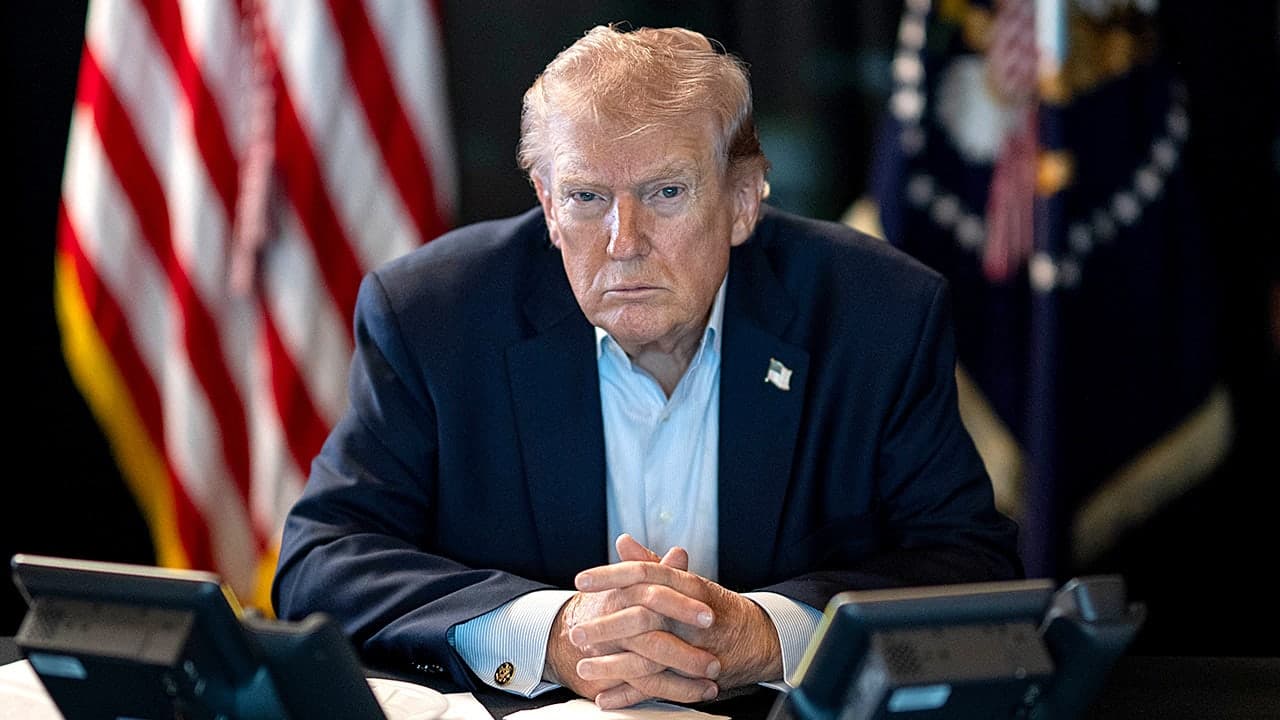
President Donald Trump announced plans to intensify military operations against Iran, claiming that nearly 90 percent of the Iranian regime's missile arsenal has already been destroyed during the ongoing campaign known as Operation Epic Fury. In remarks delivered Friday during an interview on the "Brian Kilmeade Show," Trump outlined an aggressive strategy moving forward, asserting that American military forces have exceeded operational expectations and signaling additional strikes in the coming days. The declaration comes amid escalating regional tensions, with disruptions to global shipping routes and rising energy prices creating significant economic ramifications worldwide.
Trump's Assessment of Military Campaign Progress and Operational Achievements
During his Friday interview, Trump provided specific details about the scope of damage inflicted on Iranian military capabilities. "We had no idea it would be this far ahead. We've knocked out close to 90% of their missiles," Trump stated, emphasizing the rapid pace of the military operation. The president further elaborated that American forces have successfully targeted the majority of Iran's missile and drone manufacturing infrastructure, fundamentally degrading the regime's ability to produce advanced weapons systems. According to Trump's assessment, the military campaign represents an unprecedented level of destruction against a nation's military infrastructure, with the president claiming that the U.S. military is "hitting them harder than anybody's been hit since World War II."
Trump's characterization of the operation's success reflects a significant shift in military strategy compared to previous conflicts in the region. The speed of the campaign, which Trump described as "ahead of schedule," suggests that military planners achieved their initial objectives more rapidly than anticipated. The president did not specify a definitive end date for the military operations, referring to the campaign as an "excursion" rather than a fully concluded conflict. However, Trump emphasized American military capacity, stating that the United States possesses "virtually unlimited ammunition" and can sustain operations indefinitely if necessary.
Destruction of Iranian Leadership and Strategic Military Infrastructure
Death of Supreme Leader Ayatollah Ali Khamenei and Succession
The military campaign has resulted in the elimination of Iran's Supreme Leader Ayatollah Ali Khamenei, marking a historic development in the conflict. Following Khamenei's death, Iranian officials moved swiftly to establish continuity in the regime's leadership structure by naming his son, Mojtaba Khamenei, as the new supreme leader. Trump has publicly criticized this succession decision, characterizing it as an illegitimate attempt to maintain the regime's grip on power. The transition represents a significant moment of vulnerability for Iran's government, as the new leadership faces the challenge of managing an ongoing military conflict while consolidating internal authority.
Targeting of Military Manufacturing and Naval Capabilities
Beyond the elimination of senior leadership, American military operations have systematically targeted Iran's military production capabilities and naval assets. Trump's statements indicate that drone manufacturing facilities, missile production centers, and naval vessels have all been destroyed or severely damaged during the campaign. The destruction of these facilities undermines Iran's ability to reconstitute its military forces in the near term. Trump emphasized this point, stating: "We've already damaged them so badly it would take years for them to ever rebuild."
Iran's Response and Control of the Strait of Hormuz
Despite the extensive damage to its military infrastructure, Iran's new Supreme Leader Mojtaba Khamenei released a statement Thursday that signaled continued defiance and regional assertiveness. In his statement, Khamenei vowed that the Strait of Hormuz, one of the world's most critical shipping routes, will remain closed until the military conflict concludes. The statement also included a warning to neighboring countries, demanding the removal of U.S. military bases from the region. These declarations underscore Iran's determination to maintain leverage despite its military losses, using control of critical maritime chokepoints as a negotiating tool.
The Iranian Navy has claimed responsibility for a series of strikes targeting commercial vessels transiting the Strait of Hormuz, creating significant disruptions to international shipping and global energy markets. In response, Trump indicated that the United States would be prepared to escort commercial vessels through the strait if necessary to protect oil shipments and maintain freedom of navigation. "We're prepared to escort the vessels if we needed to," Trump said, adding that American pressure on Iran would intensify during the week following his remarks. The potential need for American naval escorts reflects the ongoing maritime security challenges created by the conflict.
Economic Impact: Rising Oil Prices and Global Energy Markets
The military campaign against Iran has created substantial disruptions to global energy markets, with oil prices rising significantly in response to the conflict and threats to shipping through the Strait of Hormuz. The disruptions stem from multiple factors: strikes on Iranian oil infrastructure, threats to commercial shipping routes, and broader geopolitical uncertainty about the conflict's duration and scope. These rising energy costs affect consumers and businesses worldwide, creating inflationary pressures across numerous economic sectors dependent on stable fuel prices. The potential need for American naval escorts to maintain shipping through the strait adds another layer of complexity to global energy security.
Origins of Conflict: Failed Nuclear Negotiations and Operation Epic Fury
The military campaign, formally designated Operation Epic Fury, was launched by the United States and Israel following the failure of nuclear negotiations with Tehran. Trump cited the breakdown of diplomatic efforts as justification for the military campaign, suggesting that diplomacy had been exhausted before military action commenced. The operation represents a significant escalation in U.S.-Iran tensions, moving from diplomatic engagement to direct military confrontation. The decision to launch coordinated military operations with Israel reflects a broader regional strategy aimed at addressing what the administration views as existential security threats posed by Iran's military capabilities and nuclear ambitions.
Trump's Statements on Future Military Action and American Military Capacity
Trump has made multiple public statements indicating that military operations will continue and potentially intensify in the near term. In a post on Truth Social Friday, the president declared: "Iran's Navy is gone, their Air Force is no longer, missiles, drones and everything else are being decimated, and their leaders have been wiped from the face of the earth." He continued with additional remarks emphasizing American military superiority and resolve: "We have unparalleled firepower, unlimited ammunition, and plenty of time - Watch what happens to these deranged scumbags today."
These statements reflect Trump's confidence in American military capabilities and his apparent determination to sustain the campaign until Iranian military infrastructure is completely neutralized. The president's characterization of unlimited ammunition and unparalleled firepower suggests a commitment to overwhelming force and the elimination of Iran's ability to threaten American interests or regional allies. The emphasis on future strikes indicates that the campaign remains in an active phase, with additional operations planned for the immediate future.
American Military Casualties and Domestic Political Implications
While Trump emphasizes military successes and Iranian losses, the campaign has also resulted in American casualties. The death of U.S. Army Reserve soldier Sgt. 1st Class Nicole Amor of White Bear Lake, Minnesota, who was killed in a drone strike at a command center in Kuwait, represents one documented American loss during the operation. Amor's remains were transferred at Dover Air Force Base on Saturday, March 7, with President Trump present during the casualty return ceremony. The presence of American casualties adds a domestic political dimension to the conflict, as public support for military operations often correlates with the level of American losses sustained.
- President Trump claims nearly 90% of Iran's missile arsenal has been destroyed during Operation Epic Fury, with the campaign progressing faster than anticipated
- Iran's Supreme Leader Ayatollah Ali Khamenei has been killed, with his son Mojtaba Khamenei named as successor; the new leader vows the Strait of Hormuz will remain closed until the war ends
- Military strikes have targeted Iranian leadership, the Islamic Revolutionary Guard Corps (IRGC), naval vessels, and oil infrastructure, causing significant damage to military manufacturing capabilities
- Global oil prices have risen substantially due to disruptions to shipping through the Strait of Hormuz and threats to commercial vessels in the region
- Trump signals continued and intensified military operations in coming days, emphasizing American military capacity and commitment to degrading Iranian capabilities
Frequently Asked Questions
- What percentage of Iranian missiles has the U.S. destroyed according to Trump?
- President Trump stated that American military forces have destroyed close to 90% of Iran's missile arsenal during Operation Epic Fury. Trump emphasized that this level of destruction was achieved faster than anticipated and that the U.S. military is hitting Iranian targets harder than any nation has been struck since World War II.
- Why has Iran closed the Strait of Hormuz and what does this mean for oil prices?
- Iran's new Supreme Leader Mojtaba Khamenei vowed that the Strait of Hormuz will remain closed until the military conflict ends, and the Iranian Navy has struck commercial vessels in the region. This disruption to one of the world's most critical shipping routes has caused oil prices to rise significantly, affecting global energy markets and creating inflationary pressures worldwide.
- What triggered Operation Epic Fury and the military campaign against Iran?
- The United States and Israel launched Operation Epic Fury after nuclear negotiations with Tehran failed. President Trump cited the breakdown of diplomatic efforts as justification for the military campaign, indicating that diplomacy had been exhausted before military action was undertaken.