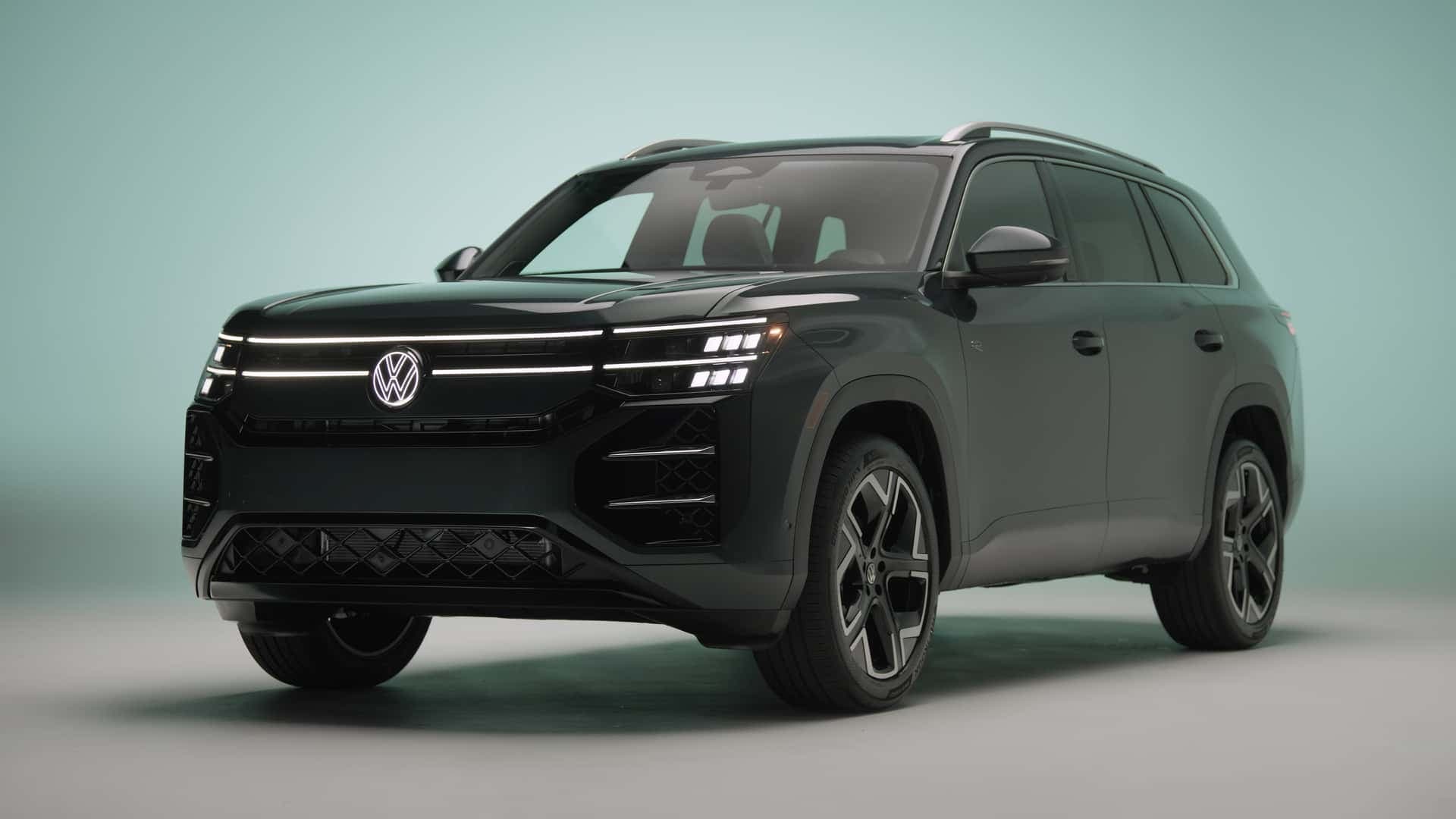
Volkswagen has officially unveiled the second-generation Atlas, a full-size three-row SUV set to arrive in U.S. dealerships by fall 2026 as a 2027 model. The refreshed Atlas delivers a more powerful engine, a fully redesigned interior with premium materials, and shared styling cues with its Chinese-market sibling, the Teramont Pro. With SUVs now accounting for 80% of Volkswagen’s U.S. sales—of which the Atlas represents a significant portion—this update arrives as competition in the large three-row SUV segment intensifies, demanding a bolder, more refined offering.
- The 2027 Atlas introduces a 282-horsepower turbocharged 2.0-liter four-cylinder engine, a notable upgrade over its predecessor.
- Interior refinements include a 12.9-inch standard touchscreen, Nappa leather upholstery, real wood accents, and available massaging front seats.
- Exterior design is nearly identical to the China-market Teramont Pro, with minor differences including physical door handles on the Atlas.
- Pricing is expected to start in the mid-$40,000 range, with top trims potentially reaching near $55,000.
- Despite these upgrades, the Atlas faces market challenges including a lack of hybrid option and Volkswagen’s controversial haptic touch controls.
Why Volkswagen’s Atlas Redesign Matters in the Crowded Three-Row SUV Market
The three-row SUV segment has exploded over the past decade, with nearly every major automaker offering a large, family-friendly crossover. Models such as the Toyota Highlander, Honda Pilot, Ford Explorer, and Hyundai Palisade dominate showroom traffic, while premium brands like the Volvo XC90 and BMW X7 target buyers seeking luxury and technology. Volkswagen’s original Atlas, launched in 2017, quickly became a sales anchor, helping the brand compete in a segment long dominated by Japanese and American manufacturers.
SUV Sales Dominance at Volkswagen
According to Volkswagen Group’s 2024 U.S. sales data, SUVs accounted for 80% of all vehicles sold in the country, up from 53% in 2015. The Atlas, as one of the brand’s largest offerings, plays a crucial role in this transition. It competes directly with the Ford Explorer, Chevrolet Traverse, and Kia Telluride, all of which have seen strong demand due to their spacious cabins, towing capacity, and family-oriented features. The 2027 Atlas must not only refresh its aging platform but also justify its position as a European alternative in a segment where American and Asian brands dominate consumer preference.
Exterior Styling: Shared DNA with China’s Teramont Pro
The most visible change in the 2027 Atlas is its exterior design, which is nearly identical to the Teramont Pro—a model sold exclusively in China. This is part of Volkswagen’s global strategy to streamline design language across markets, reducing development costs and accelerating time-to-market. While the two vehicles share a front fascia, grille pattern, and rear light bar setup, Volkswagen has made subtle but important distinctions. The Atlas features physical door handles, while the Teramont Pro uses flush-mounted electronic handles—a design choice that prioritizes practicality in markets like the U.S., where harsh weather and frequent use demand durability.
A Familiar Silhouette with Modern Refinements
Despite the shared design language, Volkswagen has maintained the Atlas’s recognizable profile. The SUV rides on an updated version of the MQB platform—a modular architecture used across the Volkswagen Group that underpins models such as the Tiguan, Audi Q3, and Skoda Kodiaq. This platform upgrade improves ride comfort, structural rigidity, and crash safety ratings. Three new exterior colors have been introduced: Sacramento Green, Blackberry, and Sandstone. The Sacramento Green, which Motor1 described as a solid color choice, offers a deep, earthy tone that stands out in a sea of neutral hues.
Interior Transformation: From Plastics to Premium Finishes
Walking into the 2027 Atlas’s cabin is a study in contrast. Volkswagen has completely overhauled the interior, shifting from the first-generation’s utilitarian plastic-heavy design to one that emphasizes luxury and technology. The centerpiece is a 12.9-inch touchscreen display standard on base models, with an optional 15-inch center screen available on higher trims. This screen is identical to the one used in the Tiguan and features Volkswagen’s signature haptic touch sliders for volume and climate control—a design that has drawn criticism for being unintuitive and prone to smudging.
Tech and Comfort Upgrades
To offset the touch slider concerns, Volkswagen includes a physical volume knob on the center console that also controls drive modes and interior lighting. The materials have been upgraded significantly: upper-trim models feature real wood accents on the dashboard, while Nappa leather upholstery is available in two colors—Black and Mocha. The door cards and passenger-side dashboard panel are adorned with embedded LEDs that can change color to match interior lighting themes. Additional comfort features include two wireless MagSafe charging pads in the front, USB-C ports in all three rows, and available heated, ventilated, and massaging front seats. The second row also offers optional ventilation, addressing a common complaint in long family road trips.
Powertrain: A Familiar Engine with More Power
The 2027 Atlas continues to be powered by Volkswagen’s 2.0-liter turbocharged four-cylinder engine, the same unit found in the Tiguan. However, thanks to software and tuning updates, power output has been increased to 282 horsepower and 253 pound-feet of torque—up from 235 hp and 258 lb-ft in the previous generation. This extra power is crucial for a vehicle of the Atlas’s size, which can weigh up to 4,600 pounds depending on configuration. Buyers can choose between front-wheel drive as standard or Volkswagen’s 4Motion all-wheel-drive system, which improves traction and stability in adverse conditions.
Pricing and Market Positioning: Can the Atlas Compete?
Volkswagen has not yet announced official pricing for the 2027 Atlas, but industry analysts expect the base model to start in the mid-$40,000 range, with top-tier trims potentially reaching close to $55,000. This positions the Atlas competitively against the Toyota Highlander ($37,000–$48,000), Honda Pilot ($39,000–$54,000), and Hyundai Palisade ($37,000–$48,000). However, the Atlas must contend with perceptions of Volkswagen’s reliability and resale value, which have historically lagged behind Japanese and Korean brands in the three-row segment.
Lack of Hybrid Option a Potential Weakness
One notable omission from the 2027 Atlas’s technical specifications is a hybrid powertrain option. In an era where nearly every major automaker is electrifying its lineup—even in traditional SUV segments—Volkswagen’s decision to offer only a gasoline engine may limit its appeal to eco-conscious buyers. The company has emphasized its commitment to fully electric vehicles under its “New Auto” strategy, but for families seeking fuel efficiency without going fully electric, a plug-in hybrid or hybrid variant of the Atlas could have been a compelling differentiator.
User Interface and Driver Experience: A Familiar Pain Point
Volkswagen’s infotainment system has long been criticized for its counterintuitive layout and reliance on haptic touch controls. The 2027 Atlas continues this trend, using a touch-sensitive slider system for volume and climate control—features that have drawn accusations of being gimmicky and difficult to use, especially while driving. The system runs on Volkswagen’s MIB3 infotainment platform, which powers multiple models across the brand. While the touchscreen itself is responsive and modern, the tactile feedback from the sliders lacks precision, and the lack of physical buttons can be frustrating during quick adjustments.
“Volkswagen’s reliance on touch sliders in the Atlas reflects a broader trend in the industry toward digital minimalism, but it sacrifices usability for aesthetics. In a segment where families prioritize ease of use, this could be a dealbreaker for some buyers.” — Motor1 Review, 2025
Safety and Practicality: What Families Need to Know
The 2027 Atlas is expected to meet or exceed current safety standards, including top ratings in crashworthiness from the National Highway Traffic Safety Administration (NHTSA) and the Insurance Institute for Highway Safety (IIHS). Standard safety features are likely to include automated emergency braking, lane-keeping assist, blind-spot monitoring, and adaptive cruise control. The SUV offers seating for up to seven passengers, with the third row best suited for children or occasional use. Cargo space behind the third row is 17.7 cubic feet, expanding to 42.5 cubic feet with the third row folded and 96.8 cubic feet with all rows folded—a practical advantage in carpool-heavy households.
Volkswagen’s Broader Strategy and the Atlas’s Role
The Atlas is a cornerstone of Volkswagen’s U.S. sales strategy, particularly as the company transitions toward electric vehicles. While the ID.4 and upcoming ID. Buzz are central to its EV push, the Atlas helps maintain profitability and brand presence in the highly lucrative ICE (internal combustion engine) SUV segment. Volkswagen’s decision to refresh the Atlas rather than launch an all-new model reflects cost-conscious engineering and a focus on incremental improvement—a strategy that has worked for rivals like Hyundai and Kia.
Competitive Landscape: How the Atlas Stacks Up
In the crowded three-row SUV market, the 2027 Atlas faces stiff competition. The Toyota Highlander remains a benchmark for reliability and resale value, while the Hyundai Palisade offers a longer warranty and more standard features. The Kia Telluride has redefined the segment with its upscale interior and strong performance, and the Ford Explorer benefits from brand loyalty and towing capacity. Volkswagen’s European styling and driving dynamics may appeal to buyers tired of the traditional American or Asian designs, but it must overcome perceptions of higher maintenance costs and slower dealer service.
Expected Availability and What Comes Next
Volkswagen has announced that the 2027 Atlas will begin arriving at dealerships in fall 2026, with full availability by early 2027. As part of the rollout, the brand is expected to launch a marketing campaign emphasizing the Atlas’s refined design, advanced tech, and family-friendly features. Longer-term, Volkswagen has hinted at electrified versions of its larger SUVs, though no official timeline has been provided. For now, the focus is on solidifying the Atlas’s position as a premium three-row option in a competitive landscape.
Final Verdict: A Refined SUV with Room to Grow
The 2027 Volkswagen Atlas represents a meaningful step forward for a model that had grown stale in a rapidly evolving market. With a more powerful engine, upscale interior materials, and modern tech features, it addresses many of the criticisms leveled at the first-generation model. However, the absence of a hybrid option and the continued reliance on Volkswagen’s finicky touch controls may limit its appeal to some buyers. As SUVs continue to dominate U.S. sales, the Atlas’s success will depend on whether Volkswagen can convince consumers that a European-designed three-row SUV can deliver the same practicality and value as its Japanese and Korean rivals.
Frequently Asked Questions
- When will the 2027 Volkswagen Atlas be available?
- The 2027 Atlas is expected to arrive in U.S. dealerships by fall 2026, with full availability by early 2027. Volkswagen has not yet announced an exact on-sale date.
- How much will the 2027 Volkswagen Atlas cost?
- Pricing has not been officially announced, but industry analysts expect the base model to start in the mid-$40,000 range, with top trims potentially reaching near $55,000.
- Does the 2027 Atlas come with a hybrid powertrain?
- No, the 2027 Atlas is powered solely by a 2.0-liter turbocharged four-cylinder engine with 282 horsepower. Volkswagen has not announced a hybrid or plug-in hybrid version for this generation.