
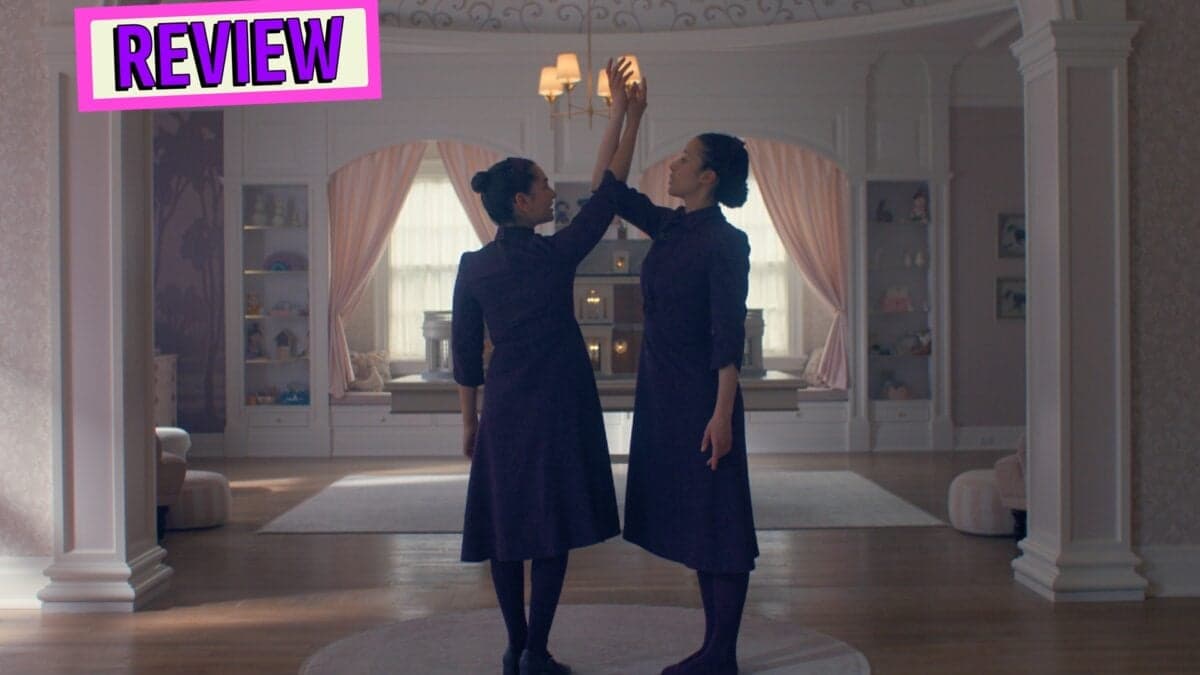
On April 8, Hulu will unveil the first three episodes of *The Testaments*, the long-awaited sequel to *The Handmaid’s Tale*, continuing Margaret Atwood’s haunting exploration of Gilead—a totalitarian regime that seized control of the former United States through a violent coup led by far-right religious extremists. The series, co-created by Bruce Miller and Atwood herself, shifts perspective from June Osborne (Elisabeth Moss) to the daughters of Gilead’s elite, offering a chilling new lens into the regime’s machinery of control and indoctrination. With a stellar cast led by Ann Dowd as the formidable Aunt Lydia, Chase Infiniti as Agnes, and Rowan Blanchard as Shunammite, *The Testaments* promises to deepen the mythology of Atwood’s universe while delivering sharp social commentary on oppression, resistance, and the lingering scars of extremism.
- Hulu’s *The Testaments* premieres April 8, expanding Margaret Atwood’s dystopian universe with a focus on the next generation of Gileadean girls.
- The sequel stars Ann Dowd returning as Aunt Lydia, who now oversees the indoctrination of elite girls at the Aunt Lydia School, a facility where education is replaced by obedience training.
- Chase Infiniti, Rowan Blanchard, and Mattea Conforti lead a standout cast portraying the "Plums," girls groomed to become Gilead’s next generation of wives, forced into marriages with older men.
- The series explores themes of resistance, surveillance, and the psychological toll of living under a totalitarian regime, weaving in historical parallels to modern extremism.
- Produced with input from Margaret Atwood, *The Testaments* bridges the gap between *The Handmaid’s Tale*’s revolution and its aftermath, offering a nuanced look at whether change is possible.
From Handmaids to ‘Plums’: How The Testaments Shifts the Narrative in Gilead’s Dystopia
While *The Handmaid’s Tale* centered on June Osborne’s harrowing journey from resistance fighter to fugitive, *The Testaments* deliberately avoids her perspective. Instead, the sequel thrusts viewers into the lives of the regime’s most privileged yet most vulnerable group: the daughters of Gilead’s Commanders and elite families. These girls, known as "Plums" for their purple attire, are the next generation of wives, groomed from birth to embody obedience, piety, and domestic perfection. Their world is one of opulent mansions and carefully curated lives, where even their clothing—purple dresses, school buses, and matching accessories—serves as a reminder of their status and the rigid hierarchy they occupy.
The Aunt Lydia School: Indoctrination as Curriculum
At the heart of this new narrative is the Aunt Lydia School, a facility where elite girls receive their "education." Unlike traditional schools, the curriculum consists of needlepoint, music, scripture, and "domestic management," all designed to reinforce Gilead’s values of subjugation and gender roles. The school’s namesake, Aunt Lydia (Ann Dowd), is a familiar yet transformed figure. No longer the sadistic overseer of the Red Center, she now wields power through psychological manipulation, teaching obedience as the ultimate virtue. Her methods are as chilling as they are effective, ensuring that even the most rebellious instincts are snuffed out before they can take root.
The girls’ lives are meticulously controlled, from the color of their clothing to the phrases they’re allowed to speak. Punishments for infractions are swift and brutal, reflecting Gilead’s culture of fear. The secret police, known as "the Eyes," loom over every interaction, ensuring that no one dares to step out of line. Yet, despite the regime’s iron grip, moments of humanity peek through—shared secrets, pinky promises, and fleeting glances of camaraderie among the girls. These glimpses of normalcy make their eventual awakening all the more poignant.
Marriage, Motherhood, and the Illusion of Choice
The most chilling aspect of the Plums’ lives is the inevitability of their futures. Once they reach menarche—a milestone celebrated with ritualistic fervor—they are married off to men chosen by Aunt Lydia. These marriages are not about love or compatibility but about social standing and genetic purity. The girls, aged around 15 or 16, are often paired with men decades their senior, a practice justified by the regime’s twisted logic. The girls have been indoctrinated to believe this life is their destiny, and any deviation is unthinkable. Yet, as the series unfolds, cracks begin to form in their carefully constructed worldview, hinting at the possibility of rebellion.
“You don’t get to choose your life here. You don’t get to choose anything. But you can choose how you carry yourself. And if you carry yourself with dignity, maybe—just maybe—you can survive.” — Aunt Lydia (Ann Dowd)
The Arrival of Daisy: A Disruptor in Gilead’s Perfect World
The fragile equilibrium of Gilead’s elite society is shattered by the arrival of Daisy (Lucy Halliday), a refugee from Toronto, Canada, who brings forbidden knowledge of the outside world. Daisy’s presence disrupts the carefully constructed lies the girls have been fed, exposing them to the horrors of the regime in ways they’ve never imagined. Her story intertwines with those of Agnes, Becka, and Shunammite, revealing that Gilead’s illusion of perfection is built on a foundation of violence, deception, and systemic oppression. Daisy’s outsider perspective serves as a catalyst for the girls’ awakening, forcing them to question the world they’ve been told is normal.
Visual Storytelling and the Aesthetic of Oppression
*The Testaments* employs a striking visual language to underscore the duality of Gilead’s society. On the surface, the regime’s mansions, manicured gardens, and formal greetings—"Blessed day," "Under his eye"—create an illusion of order and civility. Yet, this veneer of perfection is constantly undermined by the regime’s brutality. Executed bodies displayed as warnings, the ever-present surveillance of the Eyes, and the girls’ meticulously enforced dress codes all serve as reminders of Gilead’s true nature. The contrast between beauty and horror is intentional, highlighting how totalitarian regimes use aesthetics to mask their cruelty.
The Cost of Resistance: Does Change Come Too Late?
One of the most compelling questions *The Testaments* raises is whether June Osborne’s revolution in *The Handmaid’s Tale* achieved any lasting change. The sequel’s narrative, told through alternating voice-overs from Agnes, Daisy, and Aunt Lydia, suggests that while Gilead’s grip on power remains unbroken, the seeds of resistance have been planted. The girls’ gradual realization that their thoughts and desires matter is a slow burn, but it’s a critical step toward reclaiming agency. However, the series also acknowledges the immense cost of defiance—survivors are haunted by trauma, and the regime’s machinery of control is resilient.
Standout Performances Elevate The Testaments’ Emotional Depth
The cast of *The Testaments* delivers powerhouse performances that bring Gilead’s nightmare to life. Ann Dowd’s Aunt Lydia is a masterclass in nuance, shifting seamlessly from cold authority to moments of vulnerability. Chase Infiniti, in her breakout role, embodies Agnes’s journey from indoctrinated obedience to reluctant rebellion with raw emotion. Rowan Blanchard (Shunammite) and Mattea Conforti (Becka) round out the core trio of Plums, each portraying the complexities of living under a regime that demands perfection while offering no mercy. Even the adult characters, though often one-dimensional, serve a purpose in highlighting the regime’s dehumanizing effects.
A Fairytale Nightmare: Why The Testaments Feels Both Timeless and Urgent
There’s a fairytale quality to *The Testaments* that makes its horrors all the more disturbing. The girls’ lives are structured like a dark fable, where every detail—from their clothing to their lessons—is designed to reinforce their subjugation. Yet, like the best fairytales, the story is not without hope. The girls’ friendships, their moments of defiance, and their growing awareness of the world outside Gilead all suggest that change is possible, even if it’s slow and painful. This duality makes *The Testaments* a standout in the dystopian genre, blending social commentary with emotional resonance.
What Fans Can Expect from the Premiere and Beyond
The first three episodes of *The Testaments* drop on April 8, followed by a weekly release schedule on Hulu and Hulu on Disney+. Given the show’s deliberate pacing, fans expecting the explosive action of *The Handmaid’s Tale*’s later seasons may find the beginning slow. However, the series is designed to build momentum, with the girls’ awakening unfolding gradually. Creator Bruce Miller has hinted that *The Testaments* is intended as the first season of a longer narrative, though details about future seasons remain under wraps. For now, the focus is on establishing the new characters and their struggles, setting the stage for potential upheaval.
The Broader Implications: Gilead as a Mirror to Modern Extremism
At its core, *The Testaments* is more than a dystopian drama—it’s a searing critique of extremism, misogyny, and the dangers of unchecked power. Gilead’s rise mirrors real-world trends, from the erosion of women’s rights to the weaponization of religion and the normalization of surveillance. The regime’s tactics—indoctrination, forced marriages, and the suppression of dissent—are echoes of historical and contemporary oppressive regimes. By exploring these themes through the eyes of young girls, *The Testaments* forces viewers to confront uncomfortable questions about complicity, resistance, and the cost of survival in an unjust world.
The Future of Atwood’s Universe: What’s Next for Gilead?
With *The Testaments* premiering to strong early reviews and a dedicated fanbase eager for more, the future of Gilead’s story remains uncertain. Margaret Atwood has been involved in the adaptation process, ensuring that the sequel aligns with the themes of her original novel, *The Testaments*, published in 2019. While the show’s first season focuses on the immediate aftermath of *The Handmaid’s Tale*’s revolution, there’s ample room to explore the regime’s long-term survival, the resistance movements still operating in secret, and the psychological toll on those who lived—and died—under its rule. For now, audiences can dive into *The Testaments* with the knowledge that this sequel is both a love letter to Atwood’s vision and a bold new chapter in her dystopian legacy.
Frequently Asked Questions
- Is it necessary to watch The Handmaid’s Tale before The Testaments?
- While *The Testaments* is designed to stand on its own, familiarity with *The Handmaid’s Tale* enhances the viewing experience. The sequel assumes knowledge of major events, such as June Osborne’s revolution and the fall of Gilead’s first regime, which are referenced throughout.
- How does The Testaments differ from The Handmaid’s Tale in tone and storytelling?
- *The Testaments* shifts focus from resistance to indoctrination, exploring the next generation of Gileadean girls. The tone is more introspective, with a slower build that emphasizes psychological tension over action. The visual language also leans into the regime’s aesthetic of controlled beauty masking brutality.
- Will there be more seasons of The Testaments?
- As of now, *The Testaments* is planned as a multi-season series, though official confirmation about the number of seasons or renewal has not been announced. Creator Bruce Miller has hinted at a long-term narrative, suggesting that future seasons will explore the regime’s evolution and the resistance’s efforts.


