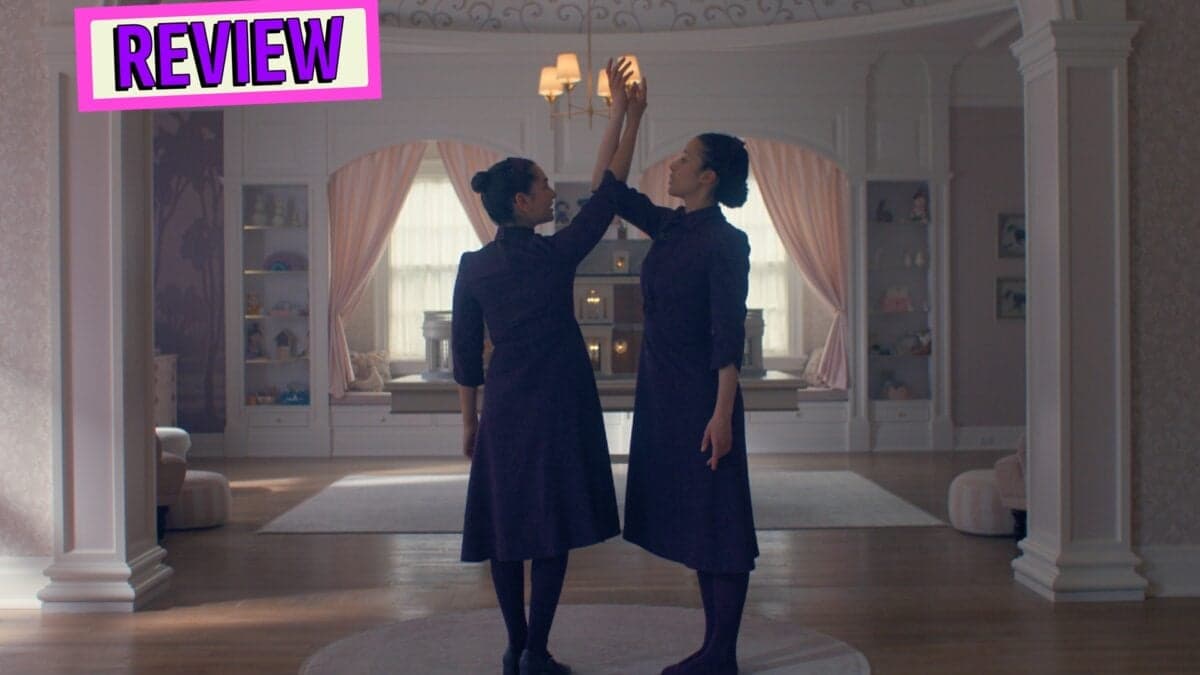
Four years after the harrowing events of *The Handmaid’s Tale*, Hulu’s highly anticipated sequel series *The Testaments* plunges audiences back into the oppressive theocracy of Gilead. Premiering April 8 with its first three episodes, the 10-part drama expands the franchise’s haunting universe by shifting focus from June Osborne’s survival story to the lives of three women navigating the regime’s rigid hierarchies. Adapted from Margaret Atwood’s Booker Prize-winning novel of the same name, the series explores girlhood, rebellion, and the psychological toll of authoritarian control through the perspectives of Agnes MacKenzie, Aunt Lydia, and Daisy, a Pearl Girl smuggled from Canada. With its chilling portrayal of indoctrination, resistance, and the dehumanizing effects of power, *The Testaments* stands as both a masterful adaptation and a searing commentary on modern misogyny and systemic oppression.
Why ‘The Testaments’ Matters: A Sequel That Deepens the Dystopia and Expands the Story
Atwood’s *The Testaments*, published in 2019, was written as a direct response to the cultural and political shifts that mirrored many of Gilead’s themes—rising authoritarianism, attacks on reproductive rights, and the erosion of women’s bodily autonomy. The novel won the Booker Prize, cementing its place as a literary cornerstone of feminist dystopian fiction. For Hulu, adapting the book into a television series was an opportunity to revisit the world of *The Handmaid’s Tale* with fresh urgency, especially as debates over gender, power, and justice continue to dominate global discourse. By centering young women who have grown up within Gilead’s elite but are beginning to question its foundations, the series forces viewers to confront uncomfortable truths about complicity, resistance, and the cost of survival in a society stripped of empathy.
From Handmaids to Daughters: The Evolution of Gilead’s Social Hierarchy
In Gilead, social status is meticulously codified through color-coded uniforms, each denoting a woman’s role and perceived value. Agnes MacKenzie, the 16-year-old protagonist, is a ‘Plum’—a teenager who has not yet begun menstruating and is being groomed for the marriage market. Her life is a carefully curated illusion of privilege; her father is a high-ranking Commander, and her Marthas (domestic servants) provide warmth and stability. Yet, beneath the surface, Agnes’s world is a minefield of performative piety and hidden cruelty. Her stepmother, Paula, is a tyrant who wields emotional abuse as a tool of control, while Aunt Lydia—a figure now synonymous with both terror and quiet defiance—oversees the Plums’ moral and intellectual conditioning at the elite preparatory school.
The Education of a Generation: Indoctrination and the Illusion of Choice
The Plums’ education is a paradox: they are forbidden from reading or writing, yet subjected to rigorous, clandestine tutoring by Aunt Lydia and her fellow Aunts. Tender Aunt Estee and even-keeled Aunt Gabbana attempt to instill humanity, while vicious Aunt Vidala enforces Gilead’s dogma with unrelenting severity. The goal is clear: mold these girls into obedient wives who will perpetuate the regime’s cycle of oppression. Yet, as Agnes’s best friend Becka—who has already begun menstruating and is thus closer to marriage—demonstrates, the cracks in Gilead’s facade are already forming. Becka’s agitation at the prospect of her impending fate hints at the rebellion simmering beneath the surface of compliance.
“Get her before she gets you.” — Shu, Agnes’s friend, warning her about Daisy, a Pearl Girl who arrives at the school as a potential disruptor.
Pearl Girls like Daisy, who are trained outside Gilead before being sent in as missionaries, represent both a threat and an opportunity to the regime. Their outsider status makes them suspicious to the Plums, who view them as untrustworthy interlopers. Yet Daisy’s true allegiance remains a mystery, one that unfolds across the series as she grapples with the trauma of her past and the horrors of her new reality. Her arrival forces Agnes to confront the fragility of her own privilege and the moral compromises required to survive in a society where humanity is secondary to ideology.
The Three Pillars: Agnes, Aunt Lydia, and Daisy as Gilead’s Unlikely Rebels
*The Testaments* structures its narrative around three women whose lives intersect in unexpected ways: Agnes, a sheltered elite teenager; Aunt Lydia, the regime’s most feared enforcer; and Daisy, a spy embedded from the outside world. Each woman embodies a different form of resistance—Agnes through naivety that slowly gives way to defiance, Lydia through the duality of her power and her hidden compassion, and Daisy through calculated infiltration. Their stories weave together to expose the rot at the heart of Gilead, revealing a regime far more fragile than it appears.
Agnes: The Girl Who Doesn’t Know She’s Trapped
Agnes’s journey is one of awakening. At the series’ outset, she is a model Plum—eager for her first menstrual cycle, which will mark her transition into the marriage market. Her desire to please her father and stepmother blinds her to the brutality around her, though small rebellions, like her secret admiration for Garth, a kind young Guardian, hint at her burgeoning self-awareness. Agnes’s sheltered existence is a stark contrast to the horrors Daisy witnesses daily, such as the row of hanged bodies that nearly unravels her on arrival. For Agnes, the revelation comes gradually: the parties of the elite are built on the backs of the enslaved, the hanged are not anomalies but policy, and her own future is a cage disguised as a gift.
Aunt Lydia: The Architect of Gilead’s Moral Machinery
Ann Dowd’s reprised role as Aunt Lydia is the series’ emotional core, offering a complex portrait of a woman who wields power with both ruthlessness and reluctant empathy. Lydia’s origin story—revealed through flashbacks—shows her early complicity in Gilead’s rise, but also her quiet resistance. She cares for the girls under her charge, yet her affection is laced with manipulation, a survival tactic in a system that rewards brutality. Lydia’s internal conflict is palpable: she clings to her humanity while reveling in the control that keeps her alive. Her relationship with Agnes and the other girls is a delicate dance between mentor and jailer, a dynamic that forces viewers to question whether any form of power within Gilead can be wielded without complicity.
Daisy: The Outsider Who Brings the Truth to Light
Daisy’s arrival in Gilead is a catalyst for chaos. Having lived freely in Toronto before her abduction, she struggles to suppress her emotions and instincts, making her an immediate target for the Plums’ distrust. Yet her outsider status allows her to see the regime’s weaknesses in ways the insiders cannot. Daisy’s arc is one of trauma and transformation: she is forced to adopt the persona of a model Pearl Girl while secretly gathering intelligence to dismantle Gilead from within. Her story is a reminder that resistance often begins with those who have nothing to lose—and everything to expose.
Gilead’s Horrors: A Society Built on Fear, Violence, and Performative Piety
*The Testaments* is unflinching in its depiction of Gilead’s brutality, from the public hangings that punctuate daily life to the psychological warfare waged against women by their own peers. Paula’s cruelty toward Agnes and the Plums—beating them for perceived indiscretions—illustrates the regime’s reliance on internalized oppression. The elite’s palatial homes and lavish parties are a grotesque facade, masking the suffering of the Handmaids, Marthas, and Unwomen. Episode 5, titled “Ball,” is particularly chilling, as the Plums are introduced to their prospective suitors—Commanders and their sons—amidst a backdrop of forced smiles and simmering resentment. The scene underscores the transactional nature of marriage in Gilead, where girls are commodities to be traded rather than individuals with agency.
Themes of Rebellion and Female Resilience: Why This Story Resonates Today
At its heart, *The Testaments* is a story about sovereignty—the fight to reclaim one’s body, mind, and future from a system designed to erase it. The series draws eerie parallels to contemporary struggles, from the erosion of reproductive rights in the U.S. to the global backlash against women’s autonomy. The Plums’ quiet rebellions—Agnes’s growing defiance, Becka’s reluctance to marry, the Plums’ whispered conversations—mirror the real-world movements that challenge authoritarianism. The series also highlights the power of female connection, showing how bonds between women—whether mentorship like Aunt Lydia’s or camaraderie among the Plums—can become acts of resistance. In Gilead, where isolation is a tool of control, these connections are revolutionary.
The Creative Team Behind the Series: From Atwood’s Novel to Hulu’s Vision
*The Testaments* is co-produced by MGM Television and Warner Bros. Television, with Bruce Miller—creator of *The Handmaid’s Tale*—returning to helm the series as an executive producer. The adaptation reunites him with key collaborators, including director Mike Barker (*The Handmaid’s Tale*’s first season) and a cast led by Ann Dowd, whose nuanced portrayal of Aunt Lydia earned critical acclaim. The series also introduces new talent, such as Lucy Halliday as Daisy and Chase Infiniti as Agnes, both of whom bring depth and vulnerability to their roles. The creative team’s challenge was to honor Atwood’s novel while expanding its visual and narrative scope, a task they accomplish through meticulous world-building and a commitment to the source material’s feminist ethos.
What to Expect: A Schedule, Tone, and Legacy
The first three episodes of *The Testaments* premiere on Hulu on April 8, with subsequent episodes released weekly on Fridays. The series is expected to run for 10 episodes, delivering a blend of suspense, psychological drama, and dystopian horror that fans of *The Handmaid’s Tale* will recognize. Tonally, *The Testaments* balances the oppressive dread of its predecessor with moments of unexpected tenderness, particularly in the relationships between the women. The show’s legacy will likely hinge on its ability to stand alone for newcomers while rewarding longtime fans with Easter eggs and deeper lore. Given the novel’s literary acclaim and the original series’ cultural impact, *The Testaments* is poised to spark conversations about power, complicity, and the resilience of the human spirit.
- The series expands the *Handmaid’s Tale* universe by exploring Gilead through the eyes of three women, offering a fresh perspective on the regime’s inner workings.
- *The Testaments* blends dystopian horror with coming-of-age themes, highlighting the psychological toll of authoritarianism on young women.
- Agnes, Aunt Lydia, and Daisy’s stories intersect to reveal the fragility of Gilead’s power and the quiet rebellions that threaten its foundations.
- The show’s parallels to modern struggles—such as attacks on reproductive rights and systemic misogyny—lend it timely urgency.
- Premiering April 8 on Hulu, with new episodes weekly, the series is a must-watch for fans of literary adaptations and feminist dystopian fiction.
Frequently Asked Questions
Frequently Asked Questions
- Is *The Testaments* a direct sequel to *The Handmaid’s Tale*?
- Yes, the series is set four years after the events of *The Handmaid’s Tale* and continues the story of Gilead, though it focuses on new characters and perspectives. It is based on Margaret Atwood’s 2019 novel of the same name.
- Do I need to watch *The Handmaid’s Tale* before *The Testaments*?
- While *The Testaments* can stand alone, watching *The Handmaid’s Tale* provides essential context for Gilead’s world and its themes. The sequel expands the lore and references events from the original series.
- How many episodes will *The Testaments* have?
- The first season consists of 10 episodes. The first three premiere April 8, with new episodes released weekly on Fridays. The season finale is expected in early June.