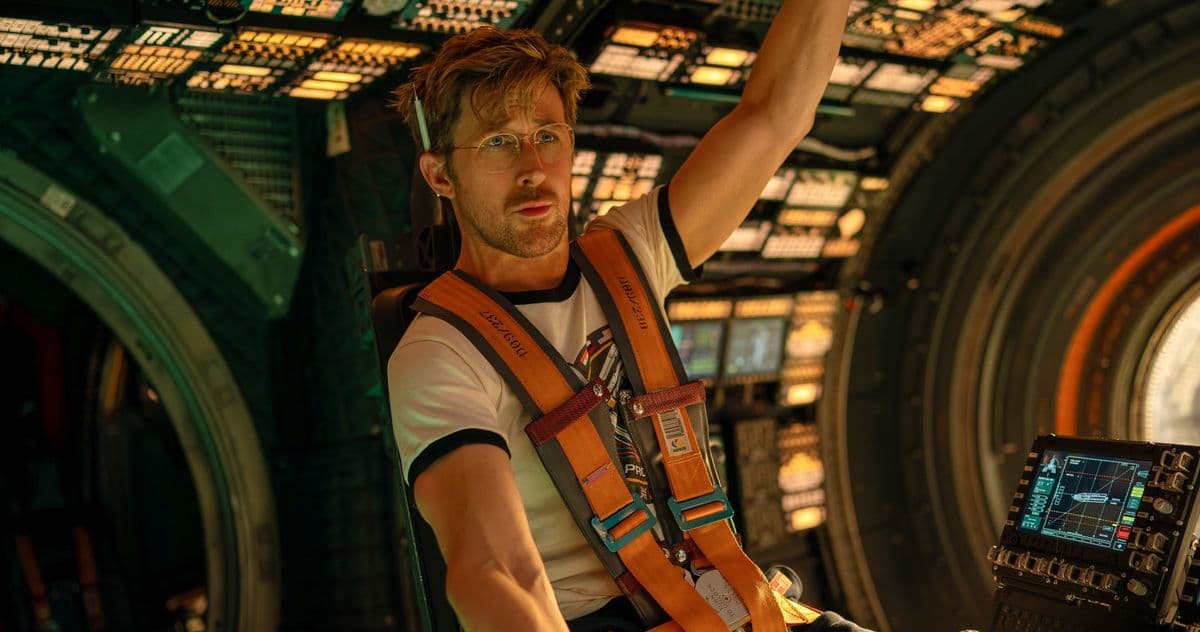
When Drew Goddard first read Andy Weir’s *Project Hail Mary*—a gripping tale of a lone human scientist and a crab-like alien teaming up to save Earth—he hesitated. The Oscar-nominated screenwriter had already crafted the blockbuster *The Martian* from Weir’s work, and the pressure to replicate that success loomed large. But as Goddard pored over the manuscript in his Manhattan hotel room, three days after the film’s world premiere, he realized this wasn’t just another adaptation. It was a chance to push boundaries, blending hard science fiction with deep emotional resonance. Now, with *Project Hail Mary* poised to dominate the box office starring Ryan Gosling and directed by Phil Lord and Christopher Miller, Goddard is reflecting on a six-year journey that tested his craft, his instincts, and his ability to navigate Hollywood’s tumultuous landscape—one that includes a high-stakes reboot of *The Matrix* and a slate of ambitious new projects.
From 'The Martian' to 'Project Hail Mary': The Challenges of Adapting Andy Weir’s Vision
Goddard’s hesitation wasn’t unfounded. *The Martian*, his adaptation of Weir’s debut novel, became a cultural phenomenon in 2015, earning seven Oscar nominations and grossing over $630 million worldwide. The film’s blend of scientific rigor and humor, anchored by Matt Damon’s charismatic performance, set a high bar for future adaptations. When Amazon Studios approached Goddard about writing *Project Hail Mary*, he admitted the weight of the comparison. “‘The Martian’ was such a magical experience,” Goddard recalled in a recent interview, “but there’s something about going back to the well. You worry you’re just trying to do an imitation of a previous movie.”
Why the Scope of 'Project Hail Mary' Demanded a Different Approach
What Goddard discovered, however, was that *Project Hail Mary* wasn’t merely a spiritual successor—it was a story that demanded a fresh perspective. Unlike *The Martian*, where Damon’s character was constantly documenting his survival efforts, the protagonist of *Project Hail Mary*, Ryland Grace, is a high school science teacher thrust into a dire interstellar mission with no prior training. For the first half of the film, he’s utterly alone, grappling with amnesia and the sheer absurdity of his situation. “Ryan [Gosling] rightfully pointed out that his character isn’t going to take the time to document everything,” Goddard explained. “He’s just trying to survive.” This realization forced Goddard to rethink his approach, stripping away the “crutches” he’d used in *The Martian*—such as voiceovers—to embrace a raw, almost documentary-style realism.
The emotional core of *Project Hail Mary* also presented a unique challenge. While *The Martian* thrived on humor and human ingenuity, *Project Hail Mary* leans into a quieter, more introspective dynamic between Ryland and Rocky, the alien he teams up with. Rocky, a rock-like creature with no face or traditional expressions, required Goddard to reimagine how to convey emotion without conventional dialogue. “Andy [Weir] wanted to do something different with this alien,” Goddard said. “He doesn’t speak our language. He doesn’t even have a face. How do you dramatize that? It scared me to death—and that’s where I like to live.”
Hollywood’s Sci-Fi Resurgence: How 'Project Hail Mary' Fits Into a Bigger Picture
The success of *Project Hail Mary*—and its alignment with the current wave of sci-fi blockbusters like *Dune*, *Avatar*, and *Interstellar*—reflects a broader shift in Hollywood. Audiences are once again flocking to big-budget, cerebral science fiction, a genre that had waned in the 2000s after the *Star Wars* prequels and *The Matrix* sequels underperformed. Goddard, who has spent his career navigating this ebb and flow, sees *Project Hail Mary* as part of a “renaissance” for the genre. “When I look back, I see James Cameron’s influence on structure,” he noted. “For big event movies, there’s nobody better at structure than Cameron. Look at *Titanic*—we meet two kids, they fall in love, we root for them, then the ship hits the iceberg. *The Abyss* is about a couple trying to put their marriage back together amid chaos. Both are deeply emotional stories set against wildly complicated backdrops.”
This emotional depth is a hallmark of Weir’s work, and Goddard’s adaptation ensures it translates to the screen. The film’s humor, too, plays a crucial role in balancing the heavier themes. Phil Lord and Christopher Miller, known for their work on *21 Jump Street* and the *Spider-Verse* films, brought a playful yet precise touch to the material. Their iterative, animation-inspired process—where they constantly refine and experiment—contrasted sharply with Goddard’s more formal approach to storytelling. “Ridley Scott storyboards himself six weeks out,” Goddard explained. “Phil and Chris come from animation, where they’re constantly trying things. Neither approach is wrong. You just have to do what’s right for the movie.”
The Highs and Lows of Goddard’s Career: From Blockbusters to Near-Misses
Goddard’s career is a testament to both the triumphs and frustrations of Hollywood. Before *The Martian*, he co-wrote *Cloverfield* and wrote *World War Z*, proving his versatility across genres. But he’s also weathered his share of setbacks. He revealed that a planned *Spider-Man* film centered on the Sinister Six was derailed by the 2014 Sony hack, which exposed internal studio communications. “My office was right on the lot, and I saw the FBI swarm in and helicopters fly over the studio,” he recalled. “It was sad, but there was literally nothing I could do. I suppose it was better than if they hadn’t liked the script.”
Amazon’s greenlight of *Project Hail Mary* was a rare bright spot in an industry where projects often stall or get shelved. Goddard’s experience underscores the volatility of Hollywood, where even the most promising scripts can languish in development hell. Yet, his relentless focus on storytelling—rooted in his TV background, where he had to churn out scripts under tight deadlines—has kept him grounded. “I’ve honed a very chaotic process,” he said. “In TV, you might have to generate 60 pages in eight days. I’ll do 50 drafts of outlines, then when it’s time to write, I handwrite every script. It’s about tricking your brain to think you’re not working.”
Taking on 'The Matrix 5': Respecting the Legacy While Forging a New Path
Now, Goddard is stepping into perhaps the most daunting role of his career: writing and directing *The Matrix 5*, the first installment in the franchise’s revival after a 14-year hiatus. The original *Matrix* films, directed by the Wachowskis, revolutionized sci-fi cinema with their philosophical themes and groundbreaking visual effects. For Goddard, who has cited the series as a profound influence on his creative voice, the challenge is twofold: honoring the legacy while carving out his own identity. “I take this responsibility very seriously,” he said. “I want to do right by the fans, the creators, and myself as a fan. They mean so much to me.”
The stakes are high, not just for Goddard but for Warner Bros. Discovery, which is betting big on the franchise’s return. The first *Matrix* film, released in 1999, grossed over $460 million worldwide and spawned two sequels, both of which performed well but lacked the cultural impact of the original. The fifth film, expected in 2025, will face intense scrutiny from fans and critics alike. Goddard, however, seems undeterred by the pressure. “I feel the weight of wanting to do right by the fans,” he said, “but I also need to give myself space to find the best story.”
The Creative Process: How Goddard Balances Chaos and Precision
Goddard’s approach to *The Matrix 5*—and his other projects—is a study in contrasts. On one hand, he embraces a “very chaotic process,” a trait he attributes to his TV training, where deadlines are brutal and creativity must thrive under pressure. On the other hand, he’s meticulous about structure, often spending months refining outlines before committing to a full draft. “I’m not a person that wants to do 18 drafts to find the story,” he explained. “I’ll do 50 drafts of outlines, then handwrite the script. It’s about making it feel playful.” This balance between chaos and control is evident in his work, from the improvisational energy of *Project Hail Mary* to the disciplined storytelling of *The Martian*.
Key Takeaways: Drew Goddard’s Career and the Future of Sci-Fi
- Drew Goddard adapted Andy Weir’s *Project Hail Mary* after initial hesitation, recognizing its potential to expand on Weir’s signature blend of science and emotion—proving that even Oscar-nominated screenwriters face creative doubts.
- *Project Hail Mary*’s success reflects a broader resurgence in sci-fi cinema, with films like *Dune* and *Avatar* proving audiences crave high-concept, intellectually engaging blockbusters.
- Goddard’s process—balancing chaotic creativity with disciplined structure—has defined his career, from *The Martian* to *The Matrix 5*, highlighting the importance of adaptability in Hollywood.
- His upcoming reboot of *The Matrix* carries immense pressure to honor the franchise’s legacy while introducing fresh ideas, a challenge Goddard approaches with both reverence and ambition.
- Hollywood’s volatility—from the Sony hack to projects stalled by studio changes—has shaped Goddard’s resilience, underscoring the unpredictability of the film industry.
Goddard’s Influences and the Films That Shaped His Vision
For Goddard, the films that have resonated with him most share a common thread: emotional depth disguised as spectacle. He cites Ridley Scott’s *The Terminator* as a prime example—a film often reduced to its action but, in reality, a deeply personal story about a woman confronting chaos. “It’s not just about a robot who shows up to kill people,” Goddard said. “It’s about Sarah Connor and how she deals with this chaos.” This theme of humanity in the face of the extraordinary is central to Goddard’s work, whether he’s adapting Weir’s novels or reimagining *The Matrix*.
He also points to James Cameron’s structural genius, particularly in films like *Titanic* and *The Abyss*, as a guiding force. “Cameron is unparalleled when it comes to big event movies,” Goddard noted. “He sets up emotional stakes first, then layers on the spectacle. That’s the approach I try to emulate.”
What’s Next for Drew Goddard? A Multifaceted Career in Flux
Beyond *Project Hail Mary* and *The Matrix 5*, Goddard is juggling multiple projects, each reflecting his diverse interests. He’s executive producing Netflix’s supernatural drama *Pagans*, created by Joshua Zetumer (*Say Nothing*), and his crime series *High Potential* was recently renewed for a third season on ABC. These ventures demonstrate Goddard’s ability to pivot between genres and mediums, from big-budget sci-fi to gritty television.
Yet, for all his success, Goddard remains grounded in the craft. He speaks fondly of films that have inspired him, like *Weapons* and *Sinners*, which he describes as “thrilling” in their unpredictability. “There was a point in *Weapons* where I realized I couldn’t even blink,” he recalled. “I didn’t know what was about to happen. It was thrilling.” This appetite for the unknown—whether in storytelling or the filmmaking process—is what keeps Goddard pushing boundaries, even as Hollywood’s landscape shifts beneath him.
The Broader Implications: How 'Project Hail Mary' and 'The Matrix 5' Reflect Hollywood’s Future
The simultaneous release of *Project Hail Mary* and the upcoming *Matrix 5* highlights a pivotal moment for sci-fi in Hollywood. Studios are increasingly betting on franchise reboots and original big-budget films, a strategy that has paid off for franchises like Marvel and *Star Wars* but remains risky for standalone epics. Goddard’s work on these projects underscores the genre’s potential to evolve while staying true to its roots. “Andy Weir takes this seriously,” Goddard said of *Project Hail Mary*. “He comes from a reality-based approach to sci-fi. If first contact were to happen, what would it look like? This is his answer—and it’s grounded in science.”
For *The Matrix 5*, the challenge is even greater: reviving a franchise that redefined cinema 25 years ago while appealing to modern audiences. Goddard’s involvement suggests a commitment to the material’s philosophical depth, a trait that could set this reboot apart from other franchise restarts. As he prepares to take the director’s chair for the first time on a film of this magnitude, Goddard’s journey reflects not just his personal growth as a storyteller but the evolving priorities of an industry grappling with its past and future.
Frequently Asked Questions
Frequently Asked Questions
- Who directed 'Project Hail Mary' and what is it about?
- 'Project Hail Mary' was directed by Phil Lord and Christopher Miller, known for their work on '21 Jump Street' and the 'Spider-Verse' films. The movie follows Ryland Grace, a high school science teacher who wakes up from a coma to discover he’s the sole survivor on a spaceship tasked with saving Earth—with the help of an alien named Rocky.
- What is Drew Goddard’s role in 'The Matrix 5'?
- Drew Goddard is writing and directing 'The Matrix 5,' taking over from the Wachowskis, who directed the original trilogy. He will be responsible for crafting the story and vision of the highly anticipated reboot, which is expected to release in 2025.
- How did Andy Weir’s 'Project Hail Mary' differ from 'The Martian' in terms of adaptation challenges?
- Unlike 'The Martian,' where the protagonist was constantly documenting his survival, 'Project Hail Mary's' Ryland Grace is alone for much of the film and lacks the scientific background. This required Goddard to rethink his approach, avoiding voiceovers and embracing a more raw, survival-focused narrative.