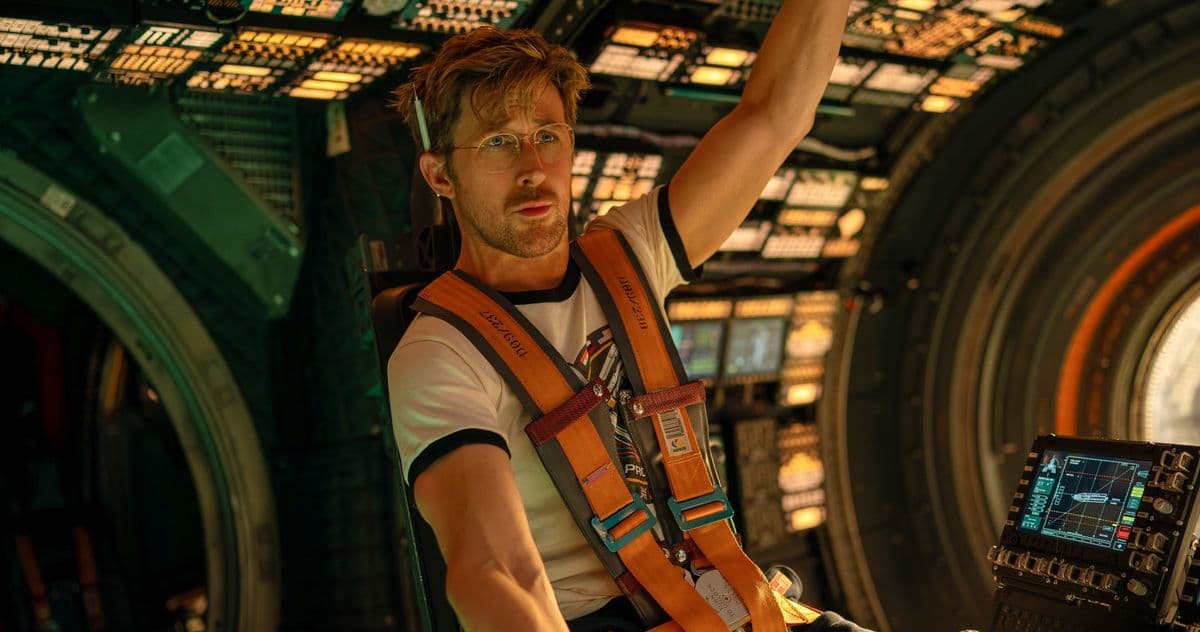
On March 20, Ryan Gosling assumes the role of a lifetime—not as an action hero, but as a desperate scientist racing against extinction in Amazon MGM’s $200 million epic *Project Hail Mary*. The film, adapted from Andy Weir’s bestselling novel (author of *The Martian*), arrives at a critical juncture for the e-commerce giant’s newly christened studio, which has spent nearly four years and billions attempting to carve out a space in Hollywood’s crowded theatrical landscape. For Amazon, the stakes couldn’t be higher: after a string of costly misfires ranging from Luca Guadagnino’s $80 million flop *After the Hunt* to the $40 million documentary *Melania*, the company is desperate for a hit to justify its aggressive push into big-budget filmmaking. Early projections suggest *Project Hail Mary* could deliver that breakthrough, with box office analysts forecasting a $63 million to $65 million opening weekend in North America—the largest debut in Amazon MGM’s history, surpassing the $58 million launch of *Creed III* in 2023.
Why Amazon MGM Bets Big on Theatrical Releases in the Streaming Era
Amazon’s $8 billion acquisition of Metro-Goldwyn-Mayer (MGM) in 2023 marked a bold declaration: the tech titan was fully committing to Hollywood’s traditional studio model, despite the broader industry’s shift toward streaming. While competitors like Netflix and Apple have largely retreated from theatrical releases—Netflix forgoing windowing entirely and Apple scaling back after high-profile bombs like Martin Scorsese’s *Killers of the Flower Moon*—Amazon MGM has doubled down on cinema screens. This strategy isn’t just about profits; it’s about perception. Theater owners, reeling from a 20% drop in revenues compared to pre-pandemic levels, have welcomed Amazon’s slate as a rare lifeline. "Amazon is building a studio where you can take risks. That’s really important to us in the business," says Gregory Quinn, managing partner of Caribbean Cinemas. "They’re going to make movies that work and don’t work. At some point, it’s going to pay off."
The Strategic Value of Theatrical Releases for Amazon’s Business Model
Amazon’s approach to theatrical releases extends beyond ticket sales. The studio argues that a big-screen presence generates a "halo effect," bolstering subscriptions and viewership for its Prime Video service. Kevin Wilson, Amazon MGM’s distribution chief, emphasized this point in a 2024 interview with *Variety*, stating: "The value of these movies is different for our business model. We’re getting a massive marketing campaign that’s being paid for before the film gets to streaming." In theory, even a modest theatrical performance could translate into long-term gains for Amazon’s streaming ecosystem. However, industry analysts remain skeptical. David A. Gross, a veteran box office analyst with Franchise Entertainment Research, counters: "Every studio operates by the same metrics: A slate of movies has to make money—more income than expenses. There are no special metrics to justify a flop."
Amazon MGM’s Costly Learning Curve: From Misfires to Breakthroughs
Amazon MGM’s theatrical division has been a rollercoaster of highs and lows since its inception. The studio’s first full slate of 13 films over 12 months—unveiled in 2024—has been a mixed bag at best. Some releases, like *Creed III* (2023), proved to be rare bright spots, grossing $276 million worldwide on a $75 million budget. Jason Statham’s *The Beekeeper* (2024) also delivered, earning $162 million on a $40 million budget, though its sequel won’t hit theaters until 2027. But other titles have hemorrhaged money. Luca Guadagnino’s star-studded *After the Hunt* limped to just $9 million on an $80 million budget, while the documentary *Melania* scraped together $16 million against a $40 million price tag. The caper film *Crime 101* fared slightly better with $65 million globally but still fell short of breaking even. Even high-profile collaborations with A-list talent have underperformed: Ben Affleck and Matt Damon’s *Air* ($90 million worldwide), Affleck’s *The Accountant 2* ($103 million), and Dwayne Johnson’s *Red One* ($186 million) all failed to recoup their budgets, which ranged from $90 million to $250 million.
The Math Behind a $200 Million Movie: Why Amazon Needs a Blockbuster
The economics of blockbuster filmmaking are unforgiving. Theater owners typically take 50% of ticket revenues, meaning a studio must gross at least $500 million to break even on a $200 million production like *Project Hail Mary*. Even with ancillary revenue streams—international sales, merchandise, and streaming rights—the pressure is immense. Amazon MGM insists it uses a different benchmark: recouping marketing and distribution costs rather than hitting a specific box office target. But as Gross notes, this rationale only goes so far. "Amazon’s $2.2 trillion market cap means a write-down of hundreds of millions is a rounding error for them," he says. "But no studio wants to be associated with a string of bombs. Sources say there’s internal anxiety after *Crime 101* didn’t break out and *Melania* was a costly flop."
Can *Project Hail Mary* Turn the Tide for Amazon’s Theatrical Ambitions?
With *Project Hail Mary*, Amazon MGM has stacked the deck in its favor. The film boasts a 95% average on Rotten Tomatoes, a rarity for a $200 million tentpole, and early word-of-mouth suggests strong audience appeal. Adapted from Andy Weir’s novel, the story follows Ryland Grace (Gosling), a scientist who must save humanity after being awakened from a coma to discover Earth’s sun is dimming. The project’s pedigree—Weir’s track record with *The Martian*, which grossed $630 million worldwide—adds credibility, though Amazon has faced criticism for its handling of previous adaptations. The studio’s next potential breakout, *Verity*—a psychosexual thriller starring Dakota Johnson and Anne Hathaway, based on Colleen Hoover’s novel—is slated for October and carries a modest $40 million budget. Looking ahead to 2026, Amazon’s slate includes the toy-based *Masters of the Universe*, the heist adventure *How to Rob a Bank*, and *I Play Rocky*, a drama about the tumultuous making of the 1976 classic *Rocky*.
The Broader Industry Stakes: Can Theaters Survive Without Amazon MGM?
Amazon MGM’s commitment to theatrical releases is more than a corporate strategy; it’s a lifeline for cinema owners grappling with declining foot traffic. "For their first year with a full slate, you can’t expect them to knock it out of the park," Quinn acknowledges. "But it’s a full slate. It’s a diverse slate. We’ll take that." The decline in theater revenues—down 20% from pre-pandemic levels—has left exhibitors vulnerable, particularly as streaming platforms prioritize home entertainment. Apple’s retreat from theatrical after high-profile failures like *Argylle* and *Killers of the Flower Moon* has only deepened concerns. Meanwhile, Netflix’s refusal to adhere to traditional release windows continues to frustrate theater owners, who argue that a robust slate of big-budget films is essential for drawing audiences back to cinemas. Amazon’s gamble, then, is not just about its own bottom line; it’s about preserving the viability of theaters in an era of fragmented entertainment.
- Amazon MGM’s *Project Hail Mary*, starring Ryan Gosling, is poised to open March 20 with a projected $63M–$65M debut—the studio’s largest ever.
- The film’s 95% Rotten Tomatoes score and Andy Weir’s (*The Martian*) source material position it as Amazon’s best shot at a theatrical hit after a string of costly flops.
- Amazon’s theatrical strategy hinges on a "halo effect" for Prime Video, though analysts question whether the model is sustainable long-term.
- Theater owners, facing a 20% revenue decline post-pandemic, see Amazon’s slate as critical to revitalizing cinemas—despite Amazon’s mixed box office track record.
- A $200M film like *Project Hail Mary* needs at least $500M globally to break even, raising questions about Amazon’s long-term theatrical viability.
What’s Next for Amazon MGM’s Theatrical Push?
Even if *Project Hail Mary* delivers on its promises, Amazon MGM’s theatrical future remains uncertain. The studio’s next major release, *Verity*, could follow in its footsteps if it becomes a breakout hit like *The Housemaid*. But the challenges are daunting: the high cost of blockbuster filmmaking, the unpredictability of audience tastes, and the ongoing shift toward streaming all weigh heavily on the studio’s strategy. As Quinn notes, "You can’t expect them to knock it out of the park" in their first year. Yet for Amazon, the alternative—abandoning theatrical entirely—would mean conceding ground to competitors and further alienating theater owners. For now, the company is all-in on Gosling’s high-stakes gamble, hoping that *Project Hail Mary* will not only save its theatrical division but also redefine its place in Hollywood.
The Global Perspective: How *Project Hail Mary* Fits Into Amazon’s International Strategy
While much of the focus has been on North American box office performance, *Project Hail Mary* is designed to be a global phenomenon. Weir’s novels have a strong international following, particularly in markets like Europe and Asia, where sci-fi and space-themed films often perform well. Amazon MGM’s global distribution network, bolstered by Amazon’s existing infrastructure, could give *Project Hail Mary* an edge in international markets. However, competition is fierce: China, the world’s second-largest film market, has strict import quotas for foreign films, and local blockbusters like *The Battle at Lake Changjin* often dominate screens. Analysts will be watching closely to see whether *Project Hail Mary* can replicate the international success of Weir’s *The Martian*, which grossed over $400 million outside North America.
Frequently Asked Questions
- How much did Amazon MGM spend to acquire Metro-Goldwyn-Mayer (MGM)?
- Amazon completed its $8 billion acquisition of MGM in March 2023, marking one of the largest deals in Hollywood history and giving the tech giant control of the legendary studio’s library, including franchises like James Bond and Rocky.
- What is the typical box office threshold for a $200 million movie to break even?
- For a $200 million film, theaters typically take 50% of ticket sales, meaning the studio needs to gross at least $500 million globally to cover production, marketing, and distribution costs. Ancillary revenue streams can offset some of this, but the math remains challenging.
- Why does Amazon MGM prioritize theatrical releases despite streaming’s dominance?
- Amazon argues that theatrical releases generate a 'halo effect' that boosts Prime Video subscriptions and viewership. The company also aims to maintain strong relationships with theater owners, who have seen revenues decline 20% since the pandemic.