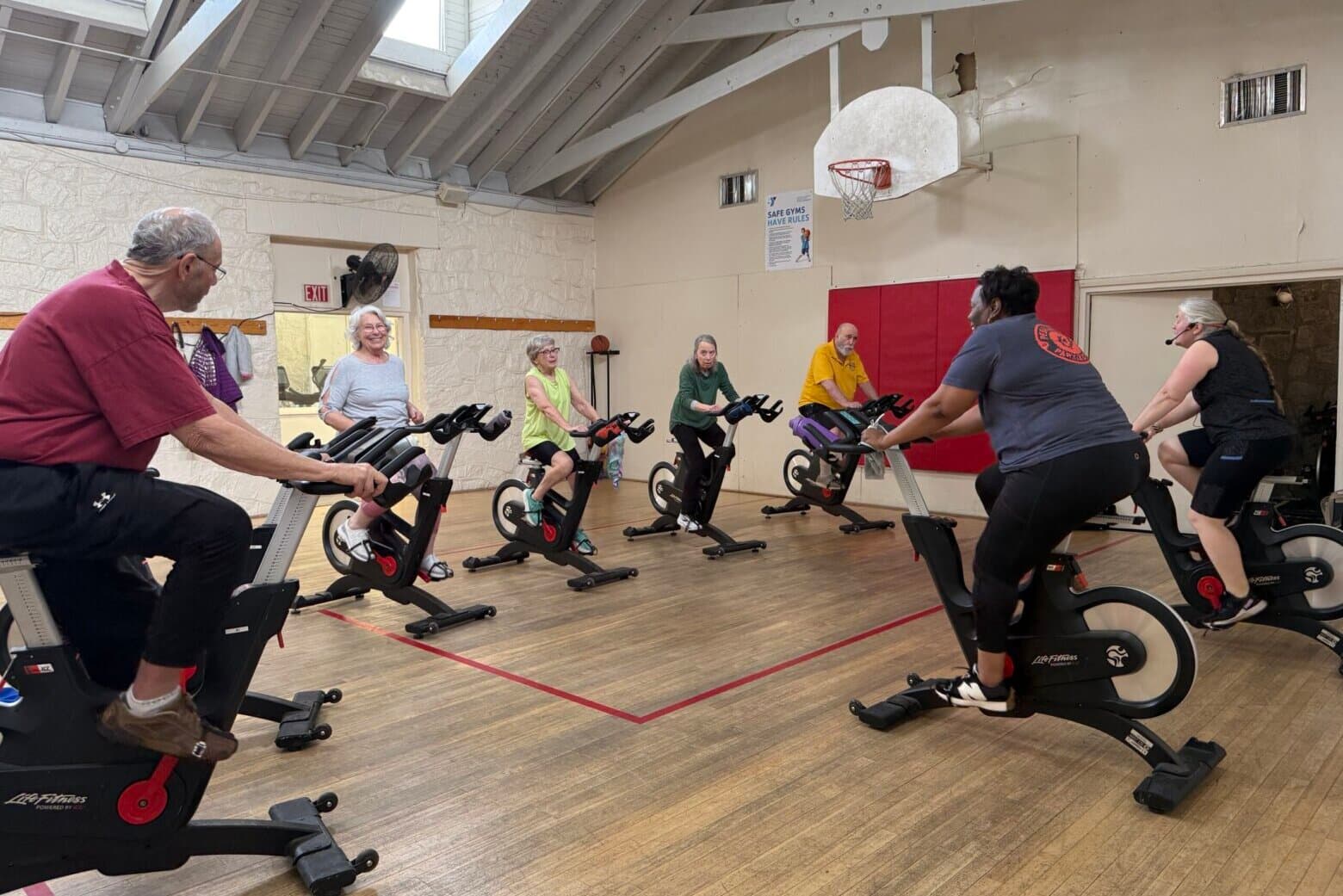
Margaret Doty’s Parkinson’s diagnosis 10 years ago could have signaled a rapid decline—but today, she remains active, social, and largely symptom-free, thanks to a simple yet powerful tool: cycling. Each week, she joins fellow Parkinson’s patients at the YMCA Silver Spring for a free Pedaling for Parkinson’s class, where laughter, camaraderie, and steady pedaling replace isolation and decline. The Davis Phinney Foundation-funded initiative is not just a workout; it’s a lifeline. With research indicating that cycling three times weekly may reduce Parkinson’s symptoms by up to 35%, these sessions are redefining how patients confront the neurodegenerative disease—one pedal stroke at a time.
- Free cycling classes for Parkinson’s patients at D.C.-area YMCAs reduce symptoms by up to 35% when attended three times weekly.
- Classes foster community, helping patients combat isolation and emotional toll of Parkinson’s.
- Stationary bikes provide stability, allowing patients to focus on leg strength and endurance without balance concerns.
- The Davis Phinney Foundation partners with YMCAs to offer Pedaling for Parkinson’s classes in five locations across the D.C. metro area.
How Cycling Slows Parkinson’s Progression and Improves Quality of Life
Parkinson’s disease, a progressive neurodegenerative disorder, affects nearly 1 million Americans, with 90,000 new cases diagnosed annually. Symptoms like tremors, stiffness, and balance issues often lead to social withdrawal and reduced mobility. But emerging research highlights cycling—especially in structured group settings—as a powerful adjunct therapy. Studies published in *npj Parkinson’s Disease* and the *Journal of Parkinson’s Disease* suggest that high-cadence cycling, particularly in stationary group classes, can slow symptom progression by enhancing dopamine production, improving gait, and reducing rigidity. The rhythmic, alternating leg movements mimic the body’s natural motor patterns, counteracting the disease’s disruption of neural pathways.
The Science Behind Pedaling: Why Cycling Works for Parkinson’s Patients
Neuroscientists attribute cycling’s benefits to its unique combination of cardiovascular exercise and neuromuscular engagement. Unlike weight-bearing activities, cycling on stationary bikes minimizes fall risk while delivering consistent resistance to leg muscles. This dual action stimulates the basal ganglia—the brain region most affected by Parkinson’s—thereby promoting neuroplasticity, or the brain’s ability to adapt and compensate for lost function. A 2018 study in *Frontiers in Neurology* found that Parkinson’s patients who cycled regularly for 12 weeks showed significant improvements in gait speed, balance, and overall motor function compared to non-cyclists. The Davis Phinney Foundation, which funds the D.C. area classes, cites these findings as the cornerstone of its Pedaling for Parkinson’s program.
From Recluse to Community Leader: The Emotional and Psychological Impact
“Psychologically, I really enjoy being with other people that have been diagnosed with Parkinson’s disease. I don’t feel so alone.” — Michael Slott, Pedaling for Parkinson’s participant
For many Parkinson’s patients, the emotional toll of the disease is as debilitating as the physical symptoms. Social isolation often accompanies diagnosis, as patients withdraw from activities they once enjoyed due to embarrassment or fatigue. The D.C. area classes, however, flip the script. In Silver Spring, Silver Spring resident Cherry Hunsaker-Clark watches as her students—some newly diagnosed, others long-time veterans—forge bonds over shared experiences. “It’s a disease that’s kind of isolating,” she says. “For them to have a community of people who have similar symptoms, I think it’s really valuable to see that.” The classes aren’t just about pedaling; they’re about rediscovering purpose, laughter, and friendship. Margaret Doty, who celebrated her 10th diagnosis anniversary this April during Parkinson’s Awareness Month, admits the camaraderie is as vital as the exercise. “Everybody gets along and has fun and jokes and has a good time,” she says. “It must be helping. I was diagnosed 10 years ago, and I’m still doing very well.”
How the D.C. Area’s Free Cycling Classes Operate: Structure, Safety, and Accessibility
The Pedaling for Parkinson’s program, operated in partnership with the Davis Phinney Foundation and YMCA of Metropolitan Washington, offers free weekly classes at five locations: YMCA Silver Spring, Anthony Bowen YMCA (D.C.), YMCA Fairfax County (Reston), YMCA Alexandria, and YMCA Bethesda-Chevy Chase. Each 60-minute session is led by certified instructors trained in Parkinson’s-specific exercise protocols. Classes begin with a 10-minute warm-up, followed by 40 minutes of moderate-to-high-intensity cycling at a cadence of 70–90 revolutions per minute (RPM). The final 10 minutes include stretching and guided breathing exercises. Safety is paramount: stationary bikes are equipped with adjustable seats and backrests, and participants are encouraged to keep hands on handlebars unless they feel stable enough to remove them.
Why Stationary Bikes Are the Ideal Choice for Parkinson’s Patients
Balance issues are a hallmark of Parkinson’s, making activities like walking or traditional biking risky. Stationary bikes eliminate this concern by providing a stable platform. “There’s no wobbling back and forth. You can always have your hands on the handlebars,” explains Kym Porter, wellness director at YMCA Silver Spring. “The instructors may say, ‘Take them off if you feel comfortable,’ but everything is optional.” This stability allows patients to focus on building leg strength, endurance, and cardiovascular health without fear of falling. Porter, who hears the class’s laughter and chatter from her office each week, describes the hour as “a joyful hour.” She adds, “One of the reasons cycling is particularly beneficial is because it’s an alternating side movement, which is great for the neuromuscular system.”
Meet the Leaders Behind the Movement: From Olympians to Local Instructors
The Pedaling for Parkinson’s program traces its roots to the late Davis Phinney, a former professional cyclist and Olympic bronze medalist diagnosed with Parkinson’s in 2000. Phinney, who co-founded the nonprofit with his wife, Connie Carpenter-Phinney, believed exercise was the key to slowing disease progression. His vision led to the creation of Pedaling for Parkinson’s, which now operates in over 300 locations nationwide. In the D.C. area, certified instructors like Cherry Hunsaker-Clark lead the charge. Hunsaker-Clark, a former competitive cyclist, transitioned to teaching after her father’s Parkinson’s diagnosis. “I love to see the camaraderie that they have with each other,” she says. “It’s not just about the exercise; it’s about the community.”
Expanding Access: How to Join a Pedaling for Parkinson’s Class Near You
Participation in the D.C. area classes is free, thanks to funding from the Davis Phinney Foundation and local YMCA sponsors. Prospective attendees do not need prior cycling experience or a Parkinson’s diagnosis to join; caregivers and family members are also welcome. Classes run year-round, with schedules available on each YMCA’s website. For those outside the D.C. metro area, the foundation’s website offers a searchable directory of Pedaling for Parkinson’s classes nationwide. Kym Porter encourages anyone curious to attend a trial class. “The joy is contagious,” she says. “You walk in here feeling down, and by the end of the hour, you’re laughing with a room full of people who get it.”
Beyond the Bike: Complementary Therapies for Parkinson’s Management
While cycling is a cornerstone of the Pedaling for Parkinson’s program, experts emphasize that it works best as part of a holistic treatment plan. The Parkinson’s Foundation recommends combining exercise with medication, physical therapy, and dietary adjustments to manage symptoms effectively. For example, studies suggest that a Mediterranean-style diet rich in omega-3 fatty acids and antioxidants may reduce inflammation linked to Parkinson’s progression. Additionally, speech therapy and occupational therapy can address vocal volume loss and fine motor skill decline, respectively. The Davis Phinney Foundation also offers resources on mindfulness, sleep hygiene, and stress management—all critical for maintaining quality of life. “It’s the only way to delay the disease,” Margaret Doty says of her cycling routine. “I take more medication than I used to, but most people usually can’t tell I have Parkinson’s.”
Challenges and the Road Ahead: Funding, Awareness, and Research Gaps
Despite the growing body of evidence supporting exercise as a disease-modifying therapy for Parkinson’s, access remains uneven. Rural areas and underserved communities often lack programs like Pedaling for Parkinson’s, leaving patients without affordable options. Funding is another hurdle: while the Davis Phinney Foundation relies on donations, similar programs struggle to secure long-term financial support. Research gaps persist as well. While cycling shows promise, scientists are still unraveling the optimal intensity, duration, and frequency required to maximize benefits. The National Institutes of Health (NIH) currently funds studies exploring the long-term effects of exercise on Parkinson’s progression, but results may take years to materialize. For now, patients like Michael Slott are left to advocate for themselves. “It helps me keep functioning a little better when the disease progresses to another stage,” he says. “I wish more people knew about this.”
Key Takeaways: What Parkinson’s Patients and Caregivers Should Know
- Cycling three times weekly may reduce Parkinson’s symptoms by up to 35%, per Davis Phinney Foundation research.
- Free Pedaling for Parkinson’s classes are available at five D.C.-area YMCAs, offering both physical and emotional support.
- Stationary bikes provide a safe, stable environment to focus on leg strength and endurance without balance concerns.
- Community and camaraderie are core benefits, helping patients combat isolation and improve mental health.
- Combine cycling with other therapies—medication, diet, physical therapy—for the best outcomes.
Frequently Asked Questions About Parkinson’s, Cycling, and the Pedaling Program
Frequently Asked Questions
- Do I need a Parkinson’s diagnosis to join a Pedaling for Parkinson’s class?
- No. While the classes are designed for Parkinson’s patients, caregivers, family members, and anyone interested in supportive exercise are welcome to attend.
- How does cycling compare to other exercises for Parkinson’s management?
- Cycling is uniquely beneficial due to its low-impact, high-cadence nature, which promotes neuroplasticity and improves gait without the balance risks of walking or traditional biking.
- Are the D.C. area classes available year-round?
- Yes. The classes operate weekly at five YMCA locations, with schedules posted on each branch’s website. Participation is free of charge.