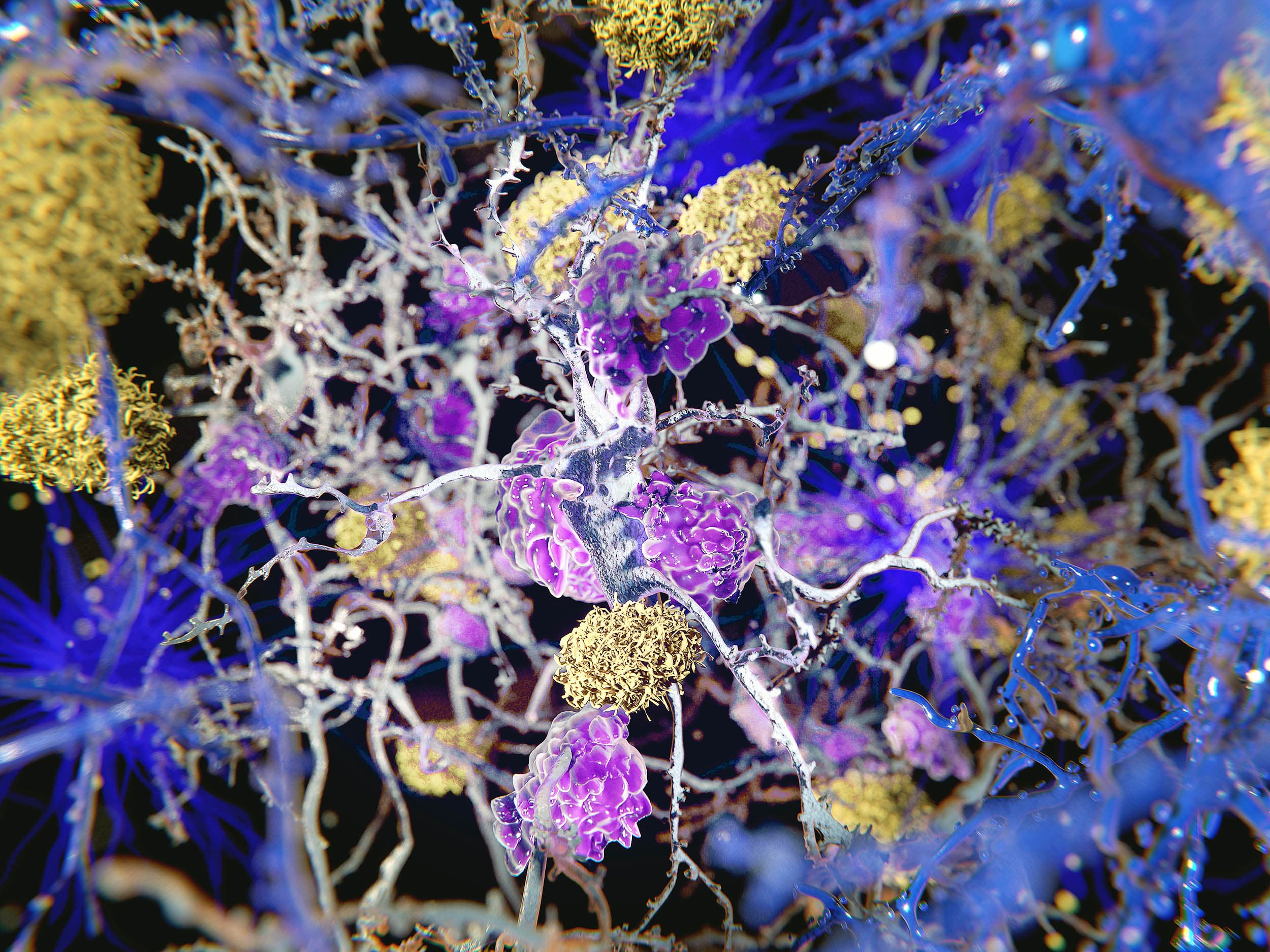
Alzheimer’s disease, long assumed to begin in the brain with the accumulation of misfolded proteins like amyloid and tau, may actually originate in systemic inflammation far outside the skull—decades before the first memory slips or disorientation appears. A groundbreaking genomic analysis published in *MedRxiv* suggests that genetic risk factors for Alzheimer’s are most active not in neural tissues, but in immune cells and barrier organs such as the skin, lungs, and digestive system. The findings, drawn from one of the largest genetic datasets ever assembled for dementia research, challenge a 30-year scientific consensus and open new avenues for prevention decades earlier than current treatments target.
How Systemic Inflammation May Trigger Alzheimer’s Decades Before Symptoms
The study, led by Dr. César Cunha at the Novo Nordisk Foundation Center for Basic Metabolic Research in Denmark, analyzed genetic data from over 85,000 individuals diagnosed with Alzheimer’s and nearly 485,000 without the disease, using the European Alzheimer and Dementia Biobank. The team then expanded their investigation to include gene activity across roughly 5 million single cells collected from 40 body regions and 100 brain regions—an unprecedented scale of tissue analysis. Their goal was simple yet radical: pinpoint where in the human body the genes linked to Alzheimer’s risk are most active.
A Surprising Finding: Weak Brain Signals, Strong Signals Elsewhere
What they discovered upended expectations. While Alzheimer’s has been historically framed as a neurodegenerative disorder of the brain, the researchers found that many of the 1,000 genes associated with increased Alzheimer’s risk were expressed far less in brain tissue than in other parts of the body. Instead, these risk genes were most prominently active in immune cells circulating in the blood, the spleen, and barrier tissues such as the skin, lungs, and gut—organs that constantly interface with the external environment. 'I initially thought there must be an error,' Cunha said in an interview. 'The brain signal was so weak, and the signal in other tissues was so strong. But after repeating the analyses, the pattern held.'
Why Barrier Tissues Could Be Ground Zero for Alzheimer’s Risk
Barrier tissues like the gut, lungs, and skin are not passive layers—they are active immune sentinels. They detect pathogens, allergens, and toxins daily, triggering inflammatory responses designed to protect the body. But when inflammation becomes chronic or dysregulated, it can spill over into systemic circulation and potentially reach the brain. The study’s authors propose that genetic variants associated with Alzheimer’s may predispose individuals to exaggerated or prolonged inflammatory responses in these tissues. A respiratory infection at age 55, for example, might ignite a low-grade inflammatory cascade that only manifests as cognitive decline decades later.
This systemic view aligns with emerging epidemiological data. A long-running study in Hawaii tracked men with elevated inflammatory markers in their blood during their late 50s and found they were significantly more likely to develop Alzheimer’s disease in their 70s and 80s. Another recent study by Dr. Rezanur Rahman at QIMR Berghofer Medical Research Institute in Australia independently observed a clustering of Alzheimer’s-linked genetic variants in the skin and lungs. 'The pattern is compelling,' Rahman noted, 'but genetic association alone doesn’t prove causation. We’re seeing signals, not smoking guns.'
From Brain-Centric to Whole-Body: A Paradigm Shift in Alzheimer’s Research
For over 30 years, Alzheimer’s research has been dominated by the amyloid hypothesis—the idea that sticky plaques of amyloid-beta protein in the brain drive cognitive decline. Despite billions spent on therapies targeting amyloid, most clinical trials have failed to slow or reverse the disease. This persistent frustration has fueled a growing realization that the brain may not be the sole stage where Alzheimer’s begins. 'The amyloid-first model has been so entrenched that anything outside it is often dismissed as “not really Alzheimer’s,”' Cunha said. 'But if we’re treating the smoke while the match was lit elsewhere decades ago, we’re starting too late.'
Why Midlife May Be the Critical Window for Prevention
The study identified a critical age window: genes associated with Alzheimer’s risk showed peak expression around ages 55 to 60. This suggests that midlife—often overlooked in dementia prevention—could be the most important period for intervention. Chronic inflammation in barrier tissues during this time might set in motion processes that only become visible as dementia decades later. 'A significant inflammatory event in your late 50s—like a severe lung infection or gut inflammation—could initiate a chain reaction that quietly progresses for 20 or 30 years,' Cunha explained. 'By the time someone shows symptoms, the damage in the brain may already be irreversible.'
Implications for Treatment and Prevention: A New Focus on Inflammation
If Alzheimer’s is indeed a systemic, inflammatory process that culminates in the brain, the implications for treatment and prevention are profound. Current therapies targeting amyloid or tau typically begin after irreversible neuronal damage has occurred. But if the roots of the disease lie in immune dysregulation and chronic inflammation decades earlier, early interventions could take the form of anti-inflammatory diets, microbiome modulation, or immune-modulating drugs—long before cognitive symptoms emerge. 'This doesn’t mean amyloid is irrelevant,' Cunha cautioned. 'It means amyloid may be a downstream effect, not the cause. We need to broaden our toolkit.'
Challenges and Next Steps: From Hypothesis to Proof
While the genomic evidence is robust, it remains a hypothesis at this stage. The study is a preprint published on *MedRxiv*, meaning it has not yet undergone peer review. Critics point out that genetic association does not equal causation. Even Rahman, whose independent work supports the findings, emphasizes that the mechanisms are not yet understood. 'We see the signals, but we don’t know how they translate into brain pathology,' he said. Researchers are now calling for longitudinal studies that track inflammatory markers in barrier tissues and blood over decades, alongside brain imaging and cognitive assessments. 'We need to move beyond correlation,' Cunha said. 'We need functional studies—animal models, human tissue biopsies, and clinical trials targeting inflammation early.'
Broader Implications: Could Other Neurodegenerative Diseases Share This Pathway?
The implications of this research extend beyond Alzheimer’s alone. Several neurodegenerative diseases—including Parkinson’s and multiple sclerosis—have been linked to systemic inflammation and immune dysfunction. If Alzheimer’s is part of a broader spectrum of inflammation-driven neurodegeneration, early interventions targeting immune pathways could have ripple effects across dementia care. 'We may be witnessing the beginning of a paradigm shift,' Cunha reflected. 'Alzheimer’s might not be a single organ disease, but a systemic one that finally declares itself in the brain.'
What This Means for Families and Public Health Policy
For families touched by Alzheimer’s, this research offers cautious hope. It suggests that prevention may begin decades earlier—not when memory loss appears, but when inflammatory risks are still manageable. Public health strategies could shift to emphasize chronic inflammation control, especially in midlife. 'We need to start thinking about Alzheimer’s like we do heart disease,' Cunha said. 'We don’t wait for a heart attack to eat healthy or exercise. We prevent it over decades. Why should dementia be any different?'
- Alzheimer’s risk genes are most active in immune cells and barrier tissues (skin, lungs, gut), not the brain.
- Chronic inflammation in midlife—triggered by infections or environmental factors—may set Alzheimer’s in motion decades before symptoms appear.
- The study challenges the amyloid-first model that has dominated Alzheimer’s research for 30 years.
- Early prevention could focus on controlling inflammation through diet, microbiome health, and immune-modulating therapies.
- This systemic view may apply to other neurodegenerative diseases, including Parkinson’s and multiple sclerosis.
Frequently Asked Questions about Systemic Inflammation and Alzheimer’s Risk
Frequently Asked Questions
- Can inflammation in the lungs or gut really cause Alzheimer’s?
- The new study suggests genetic risk variants may predispose your body to overreact to infections or irritants in barrier tissues like the lungs or gut. This chronic inflammation could, over decades, contribute to brain damage. However, this is still a hypothesis—more research is needed to confirm causation.
- If Alzheimer’s starts outside the brain, should we change how we treat it?
- Current treatments target symptoms after brain damage has occurred. If the disease begins earlier in the body, future therapies may focus on reducing systemic inflammation in midlife. This could include immune-modulating drugs, dietary changes, or microbiome interventions—long before cognitive decline appears.
- How old should people be to start taking prevention seriously?
- The study highlights a critical window around ages 55 to 60, when Alzheimer’s-linked genes show peak expression. However, experts recommend adopting brain- and inflammation-healthy habits—such as anti-inflammatory diets, regular exercise, and managing chronic conditions—starting in your 30s or 40s.