In the early hours of April 24, 2024, 8-year-old Liam Dahlberg returned home from school in Lowell, Indiana, complaining of a headache. His mother, Ashlee Dahlberg, gave him ibuprofen, which temporarily alleviated his symptoms. The next morning, Liam’s fever spiked to 103°F, and he became dizzy, delirious, and unable to stand. Within 48 hours, doctors diagnosed him with bacterial meningitis caused by Haemophilus influenzae type b (Hib) — a disease that should have been preventable. By April 28, Liam was taken off life support, leaving his family devastated and joining a growing chorus of voices warning that once-eradicated vaccine-preventable diseases like Hib are making a dangerous comeback as childhood vaccination rates plummet.
- Hib infections, which declined by over 99% after vaccine introduction, are rising again due to falling vaccination rates.
- CDC data shows Hib vaccination coverage among U.S. children dropped from 78.8% in 2019 to 77.6% in 2021.
- Doctors report severe Hib cases, including meningitis and epiglottitis, in unvaccinated children across multiple states.
- Public health experts warn that declining vaccination rates threaten herd immunity, risking outbreaks similar to measles resurgences.
The Historical Threat of Hib: From Epidemic to Near-Eradication
Before the introduction of the Hib vaccine in 1987, Haemophilus influenzae type b was a leading cause of severe bacterial infections in young children in the United States. The bacteria disproportionately targeted infants and toddlers, often resulting in life-threatening conditions such as meningitis, epiglottitis (inflammation of the windpipe), pneumonia, and septicemia. According to the Centers for Disease Control and Prevention (CDC), prior to widespread vaccination, approximately 20,000 U.S. children developed invasive Hib disease annually. Of those, roughly 1,000 died, and many survivors were left with permanent disabilities, including hearing loss, brain damage, and developmental delays.
The Devastating Impact on Families and the Healthcare System
Dr. Lara Johnson, chief medical officer at Covenant Children’s Hospital in Lubbock, Texas, carries a visible scar on her neck from a childhood battle with Hib. At age four, in 1980, she contracted Hib, which attacked her epiglottis, blocking her airway and making it impossible to swallow or breathe. She was rushed to the emergency room, where doctors performed an emergency tracheostomy — a procedure that saved her life but left a permanent reminder of the disease’s brutality. ‘I had a fever and felt like I was choking,’ Johnson recalled. ‘I thought I needed to throw up.’ She survived, but only because the Hib vaccine was not yet available. Today, she watches in alarm as vaccination rates decline and Hib re-emerges.
The psychological and financial toll on families is profound. Ashlee Dahlberg’s son Liam was otherwise healthy but had asthma, which weakened his immune response. His rapid decline shocked the family. After being transferred to a Chicago hospital, doctors diagnosed bacterial meningitis caused by Hib. ‘He was very delirious but still able to answer questions correctly,’ Dahlberg said. Within days, Liam’s brain swelling became irreversible. His organs were donated, and his family now advocates for vaccination to protect children with immune vulnerabilities.
CDC Data Reveals Alarming Decline in Hib Vaccination Rates
The CDC’s latest data shows a troubling trend: childhood vaccination rates for Hib have fallen for the first time in decades. Between 2019 and 2021, the percentage of U.S. babies who received the full series of Hib shots decreased from 78.8% to 77.6%. While this may seem like a small drop, public health experts warn that even minor declines can erode herd immunity, particularly for diseases like Hib that require high vaccination coverage to prevent outbreaks. The CDC recommends that all children under age five receive three to four doses of the Hib vaccine, depending on the brand. Clinical studies have shown that the full vaccine series is at least 93% effective in preventing invasive Hib disease.
Geographic Hotspots and Underreporting Challenges
As of March 21, 2025, the CDC had reported only eight confirmed Hib cases in the United States for the year — two each in Ohio and New York, and one each in Kansas, North Carolina, and Tennessee. However, public health officials caution that these numbers likely underrepresent the true burden of the disease. Hib is not a nationally notifiable condition in the same way as measles or influenza, meaning states do not report cases in real time. Additionally, many cases may be misdiagnosed or not reported due to the rarity of Hib in recent decades. ‘The CDC does track Hib cases, but the numbers can lag for a year or more,’ explained a CDC spokesperson. ‘This makes it difficult to detect trends early.’
Doctors Report Firsthand: ‘We’re Seeing Hib Again’
Pediatricians across the country are sounding the alarm after treating cases of Hib that haven’t been seen in decades. Dr. Kathryn Edwards, a vaccine safety expert and professor of pediatrics at Vanderbilt University Medical Center in Nashville, Tennessee, recently treated two children with Hib-related meningitis — a condition Vanderbilt hadn’t encountered in years. ‘I’ve been practicing for decades, and this is the first time in a long time we’ve seen this,’ Edwards said. ‘It’s a wake-up call.’
In Florida, Dr. Eehab Kenawy, a pediatrician in Panama City, recalled treating two unvaccinated children with Hib in December 2024 — including a 4-month-old who died. ‘I’d never seen a case of Hib for years and years,’ Kenawy said. ‘Now I’m hearing about it again. It puts us in a situation where we have to consider Hib in our differential diagnosis, even when symptoms seem mild. We may need to do more close observation, more admissions, and sometimes even unnecessary tests — and that changes how we practice medicine.’
The Science Behind Hib: A Stealthy Killer
Haemophilus influenzae type b is a bacterium that can live harmlessly in the nose and throat of some individuals. However, in certain cases — particularly in young children with immature immune systems — the bacteria can invade the bloodstream, lungs, joints, or brain, causing severe and sometimes fatal infections. Hib does not cause the seasonal flu, despite its name, but it can lead to bacterial meningitis, a rapidly progressing inflammation of the brain and spinal cord. In the pre-vaccine era, Hib was the leading cause of bacterial meningitis in children under five in the U.S. ‘When I trained between 1977 and 1980, I would do two to three spinal taps a night,’ said Dr. Paul Offit, director of the Vaccine Education Center at Children’s Hospital of Philadelphia. ‘Now, pediatric residents at our hospital don’t do spinal taps, which tells you the power of vaccines.’
Vaccine Hesitancy and the Broader Decline in Childhood Immunizations
The resurgence of Hib is not occurring in isolation. Public health data shows that childhood vaccination rates overall have declined in at least 77% of U.S. counties and jurisdictions since 2019, according to a 2025 NBC News investigation conducted with Stanford University. The decline spans routine vaccines, including those for measles, mumps, rubella (MMR), and diphtheria-tetanus-pertussis (DTaP). While vaccine hesitancy has existed for decades, experts say the movement has gained momentum in recent years, fueled by misinformation, political rhetoric, and a growing distrust of public health institutions.
The Role of Misinformation and Political Influence
Anti-vaccine sentiments have been amplified by prominent figures, including Robert F. Kennedy Jr., who has served as Health and Human Services Secretary since 2024. Kennedy has repeatedly downplayed the severity of vaccine-preventable diseases, including measles, despite documented outbreaks and deaths. In Texas alone, two young girls died from measles last year, yet Kennedy has argued that measles is not a public health crisis. His influence has contributed to policy shifts, including a controversial overhaul of the childhood vaccine schedule, which was later blocked by a federal judge. ‘You’re always going to see people who will say no to anything, but it’s increasing,’ said Dr. Rana Alissa, president of the Florida chapter of the American Academy of Pediatrics. ‘Now we’re almost seeing a free fall.’
The Human Cost: Stories of Loss and Advocacy
The Dahlberg family’s tragedy is not unique. Across the country, parents are grappling with the loss of children to diseases that were once preventable. Ashlee Dahlberg now speaks publicly about Liam’s death to urge other families to vaccinate their children. ‘What I would really love for other people to understand is that there are people out there who are like my son — who have weakened immune systems,’ she said. ‘What may be a cold for your child is a death sentence or a hospitalization for another.’
For Dr. Johnson, the scar on her neck is a daily reminder of the importance of vaccination. Now a pediatrician, she treats children who have not received their Hib vaccines, knowing the risks they face. ‘Measles is the beginning,’ said Dr. Leisha Nolen, Utah’s state epidemiologist. ‘As more people stop vaccinating their children, Hib is something we might see soon. It’s really tragic to think we’re going to have to go back to having emergency rooms filled with little babies who have this highly, highly deadly and dangerous disease.’
What Parents Need to Know: Protecting Children from Hib and Other Vaccine-Preventable Diseases
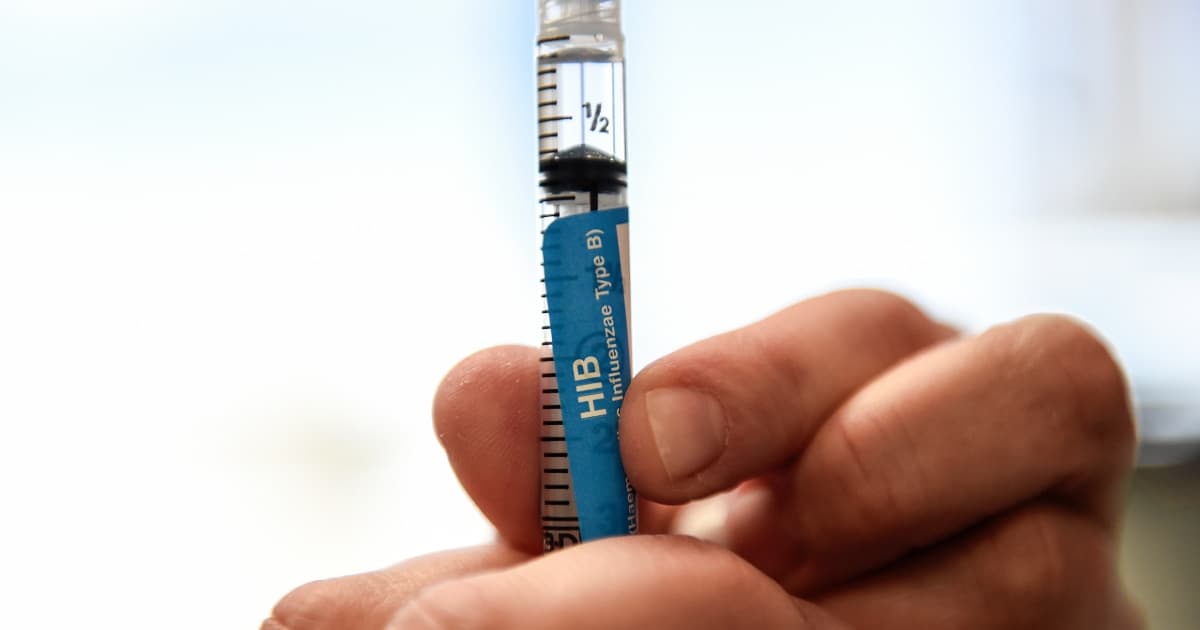
The CDC recommends that all children under age five receive the Hib vaccine as part of the routine childhood immunization schedule. The vaccine is typically given in three or four doses, depending on the brand, with the first dose administered at two months of age. Parents who are unsure about vaccination should consult their pediatrician, who can provide evidence-based information and address concerns. ‘The last night I was a pediatric resident, a child came in with Hib and promptly died by the next day,’ said Dr. Edwards. ‘I didn’t work for 50 years to have everything destroyed by one man.’
The Future of Public Health: Can Hib Be Stopped Before It’s Too Late?
Public health experts are sounding the alarm that without immediate action, Hib and other vaccine-preventable diseases could once again become endemic in the U.S. The decline in vaccination rates is not just a local issue — it has global implications, as vaccine hesitancy threatens to reverse decades of progress. Countries that had eliminated Hib, such as the United Kingdom and Australia, have also seen resurgences in recent years. The World Health Organization has repeatedly emphasized that vaccination is one of the most cost-effective ways to save lives and prevent suffering. ‘We are at a crossroads,’ said Dr. Offit. ‘We either recommit to vaccination or we risk losing the hard-won gains of the past 40 years.’
Frequently Asked Questions
- What are the symptoms of Hib disease in children?
- Hib can cause a range of symptoms, including high fever, stiff neck, severe headache, irritability, lethargy, difficulty breathing, and swelling in the throat (epiglottitis). Meningitis, a life-threatening infection of the brain and spinal cord, is a particularly dangerous complication.
- How effective is the Hib vaccine?
- The Hib vaccine is highly effective. Clinical studies show that the full vaccine series (three to four doses) is at least 93% effective in preventing invasive Hib disease. The vaccine has drastically reduced Hib infections in the U.S. since its introduction.
- Why are vaccination rates for Hib and other diseases declining?
- Vaccination rates have declined due to a combination of factors, including misinformation about vaccine safety, political rhetoric, distrust of public health institutions, and access barriers. A 2025 NBC News investigation found that childhood vaccination rates have fallen in 77% of U.S. counties since 2019.