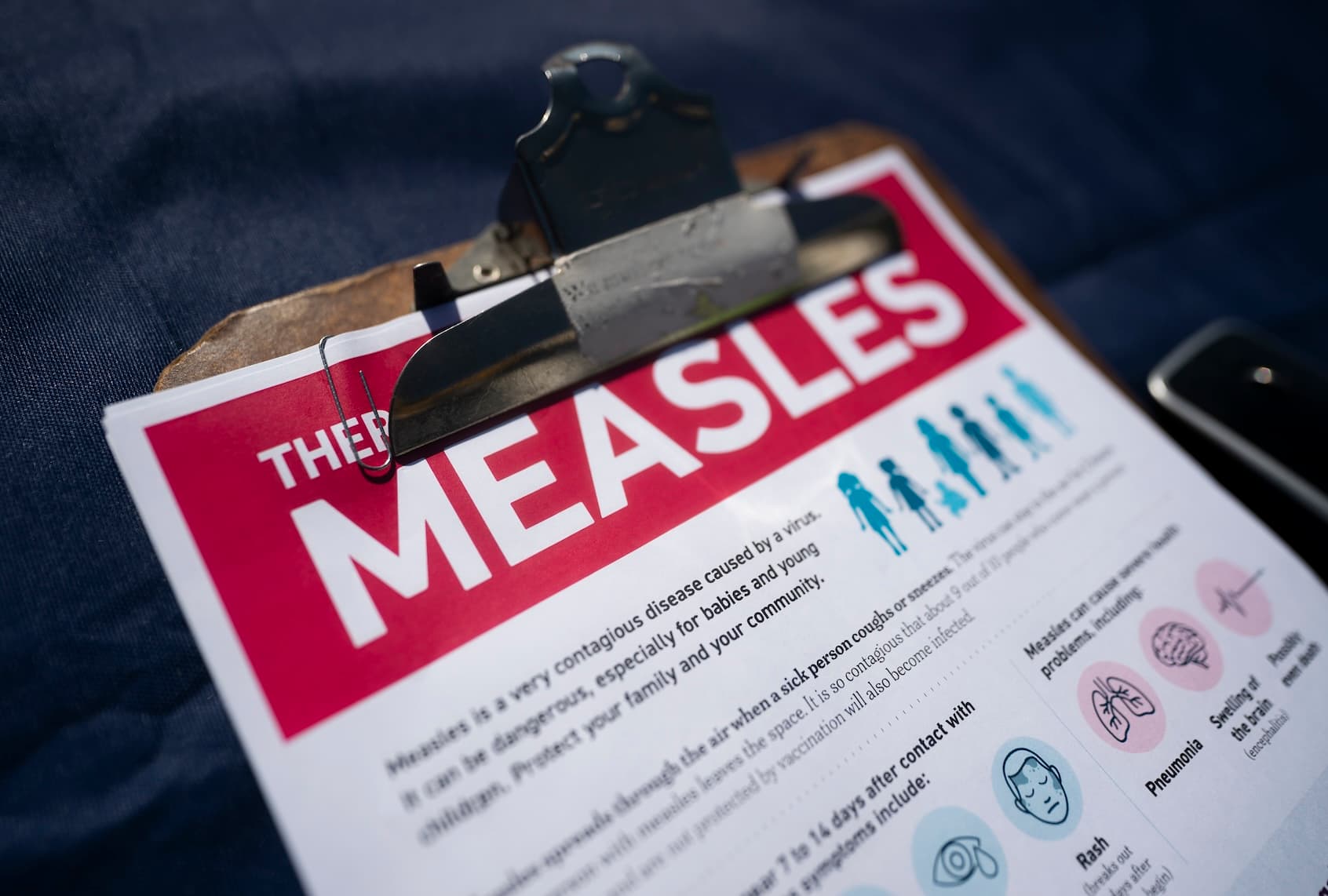
The United States is in the grip of a measles resurgence, with more than 1,600 confirmed cases reported by the CDC as of April 3, 2026—already surpassing the weekly average and threatening to eclipse last year’s total of 2,286 cases, the highest since 1991. The resurgence, driven by low vaccination rates and a cultural shift away from trust in public health institutions, has reached crisis levels in several states, particularly South Carolina, where a single mobile clinic in Spartanburg administered hundreds of MMR vaccines in early February amid an outbreak of 876 cases. Public health experts warn that without urgent intervention, measles could become endemic in the U.S. for the first time in decades, reversing decades of progress and exposing millions to a disease once considered eliminated.
Measles Resurgence: How 2026 Is Shaping Up to Be the Worst Year in Decades
CDC Data Reveals Alarming Case Surge and Hospitalization Trends
According to the CDC’s latest figures, the U.S. has recorded 1,623 measles cases so far in 2026—nearly 70% of the 2,286 cases reported in all of 2025, which itself was the highest annual total since 1991, when 2,237 cases were documented. Health officials have identified 17 new outbreaks in 2026, with 94% of confirmed cases linked to ongoing transmission chains that began in 2025. While hospitalization rates have declined slightly from 11% in 2025 to 5% in 2026, the sheer volume of cases raises concerns about strain on healthcare systems, particularly in outbreak hotspots like Spartanburg County, South Carolina, where health departments have mobilized mobile clinics and mass vaccination drives.
Public health leaders emphasize that measles is far from a mild illness. For every four people infected, one requires hospitalization due to complications such as pneumonia, ear infections, or life-threatening brain swelling known as encephalitis, which can lead to seizures, permanent hearing loss, brain damage, or death. The MMR (measles, mumps, rubella) vaccine, which has been available in the U.S. since 1963 and required for school enrollment since 1980, prevents 99% of infections after two doses. Yet despite its proven safety and efficacy, vaccination rates have plummeted in recent years, fueled by misinformation and a growing distrust of government health agencies.
The Role of Public Health Policy and the Wakefield Effect in Fueling the Crisis
The decline in vaccination coverage did not happen overnight. It traces back to 1998, when British physician Andrew Wakefield published a fraudulent study in *The Lancet* that falsely linked the MMR vaccine to autism. Though the study was retracted, debunked, and Wakefield lost his medical license, its legacy persists. A 2025 survey by the Kaiser Family Foundation found that 1 in 5 U.S. parents now believe vaccines cause autism, a belief that has contributed to a doubling in the number of kindergarteners without measles protection since 2019. This phenomenon, often referred to as the “Wakefield effect,” has left many schools in a precarious position where a single imported case can spark an outbreak.
How School Vaccination Policies Are Exacerbating the Problem
Dr. Ana Bento, an assistant professor at Cornell University’s Department of Public and Ecosystem Health and co-author of a groundbreaking pre-print study analyzing measles spread across 45 states, 50,000 schools, and 3,000 counties, explains that the U.S. is at a critical inflection point. “Since the pandemic, we’ve seen that the number of children without measles protection has roughly doubled,” she said. “At the school level, the conditions for sustained spread were crossed around 2022. That means many schools are now in a situation where a single imported case is enough to trigger ongoing transmission.” Her research, which uses granular school-level data, reveals that risk is highly concentrated in specific districts and neighborhoods, often where vaccination exemptions are high and public health surveillance is weak.
The Trump Administration’s Stance on Measles: Delayed Reviews and Growing Concerns
The current administration’s approach has further eroded confidence in public health measures. In March 2026, the Department of Health and Human Services, led by Secretary Robert F. Kennedy Jr., postponed a critical review of the U.S.’s measles-free status until after the midterm elections. This decision has drawn sharp criticism from medical organizations, including the American Academy of Pediatrics (AAP), which in a February 2026 letter to Kennedy called for immediate federal action. “Vulnerable children across the nation need federal public health officials to be fully committed to stopping the spread of measles—and to use all the tools and platforms at their disposal,” wrote Dr. Andrew Racine, AAP president.
“I think we are just going to move backward before we go forward. Sure, this has to do with the administration and lack of prioritization, but also because Americans find ourselves at the perfect storm of mistrust in institutions, general amnesia of vaccine preventable diseases, and on the heels of the COVID-19 pandemic.” — Katelyn Jetelina, epidemiologist and author of *Your Local Epidemiologist*
Anti-Vaccine Sentiment and the Rise of Endemicity: What the Data Tells Us
The anti-vaccine movement, which gained momentum during the COVID-19 pandemic, has played a central role in the measles resurgence. A 2025 Pew Research Center poll found that 28% of Americans now believe childhood vaccines are unnecessary, up from 16% in 2019. Social media platforms have amplified misinformation, with anti-vaccine influencers reaching millions through viral videos and conspiracy theories. The consequences are measurable: CDC data shows that 92% of measles cases in 2026 have occurred in unvaccinated individuals.
Measles in the 1990s vs. Today: A Comparative Look at Endemicity
Before the measles vaccine was widely available, the U.S. reported between 400 and 500 measles-related deaths annually. In the pre-vaccine era, measles was a leading cause of childhood mortality. Public health experts warn that the current trajectory could return the country to conditions not seen since the 1990s, when measles was considered endemic. Dr. Amesh Adalja, a senior scholar at the Johns Hopkins Center for Health Security, is blunt about the outlook. “I think endemicity is a foregone conclusion and measles will circulate at the level it did in the 1990s,” he said. “People are choosing this fate.” Endemicity means the disease is constantly present in a population, a stark contrast to the elimination status the U.S. achieved in 2000, a milestone recognized by the Pan American Health Organization.
The Global Context: Lessons from Samoa and the Road Ahead for the U.S.
The U.S. is not alone in facing measles resurgence. In 2019, Samoa experienced one of the worst measles outbreaks in modern history, with 83 deaths and more than 5,700 cases—largely due to low vaccination rates following Wakefield’s discredited research. Robert F. Kennedy Jr., now serving as HHS Secretary, was a vocal critic of vaccination policies during that crisis. During his 2025 Senate confirmation hearings, he testified that his 2019 trip to Samoa had “nothing to do with vaccines.” However, documents obtained by The Associated Press and *The Guardian* revealed that Kennedy met with anti-vaccine activists and lobbied against mandatory vaccination policies in the country.
Can the U.S. Regain Its Measles-Free Status?
While the situation is dire, public health experts emphasize that it is not irreversible. The U.S. can reclaim its measles-free status only if it can prove to the Pan American Health Organization that measles has not circulated continuously for a year. To do so, the country would need to implement aggressive vaccination campaigns, strengthen school immunization requirements, and improve disease surveillance. Katelyn Jetelina, the epidemiologist and science communicator, remains cautiously optimistic. “From a scientific perspective, there is real hope: measles vaccines are highly effective, and the U.S. is starting from relatively high average coverage,” she said. “But the trends in our work make it clear that improvement will only happen if surveillance and vaccination efforts are designed to see and address the fine-scale school and district clusters where risk is currently concentrated.”
Key Takeaways: What You Need to Know About the Measles Crisis
- The U.S. has already reported over 1,600 measles cases in 2026, on track to surpass 2025’s record of 2,286 cases—the highest since 1991.
- 92% of 2026 measles cases have occurred in unvaccinated individuals, with 94% of cases linked to ongoing outbreaks that began in 2025.
- Public health experts warn that measles could become endemic in the U.S. for the first time in decades, reversing elimination achieved in 2000.
- The Trump administration has delayed a review of the U.S.’s measles-free status until after the midterm elections, drawing criticism from medical organizations.
- Experts say the crisis is fueled by a combination of mistrust in institutions, anti-vaccine sentiment, and the lingering effects of the COVID-19 pandemic.
Frequently Asked Questions About the Measles Outbreak
Frequently Asked Questions
- What is causing the U.S. measles outbreak in 2026?
- The outbreak is primarily driven by low vaccination rates, fueled by misinformation about the MMR vaccine, a phenomenon known as the 'Wakefield effect,' and a decline in trust in public health institutions following the COVID-19 pandemic.
- How many measles cases have been reported in 2026 so far?
- As of April 3, 2026, the CDC has reported 1,623 measles cases in the U.S., with 17 new outbreaks identified. This number is already 70% of the total cases reported in all of 2025.
- Can the U.S. still regain its measles-free status?
- Yes, but it would require proving to the Pan American Health Organization that measles has not circulated continuously for a year. This would demand rapid vaccination campaigns, stronger school immunization policies, and improved disease surveillance.