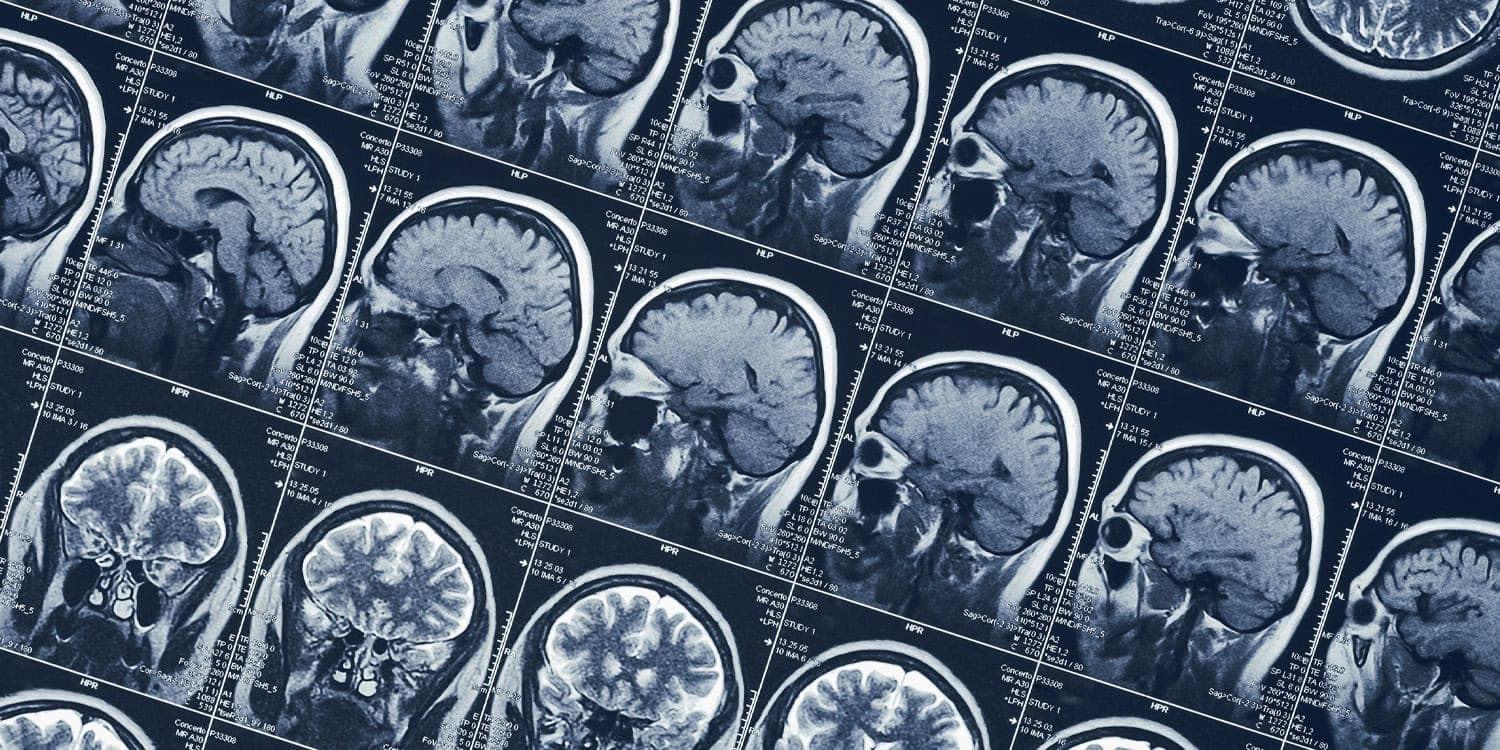
A 37-year-old woman has stunned neuroscientists by demonstrating an extraordinary ability to voluntarily enter a transcendental visionary state—an altered consciousness resembling psychedelic experiences—without any pharmaceutical intervention. In a groundbreaking case study published in *NeuroImage*, researchers used functional magnetic resonance imaging (fMRI) to document how her brain’s connectivity fundamentally reorganizes during these episodes, revealing a rare window into the mechanics of non-drug-induced altered states. The findings challenge long-held assumptions about the necessity of chemical substances for accessing psychedelic-like cognitive depths, offering new insights into the brain’s capacity for self-induced transcendence.
- A 37-year-old woman (referred to as AVP) can voluntarily enter a transcendental visionary state on command, a phenomenon documented across 20 fMRI sessions over five months.
- Brain scans revealed a dramatic shift: reduced connectivity in sensory networks (visual, auditory, somatosensory) while frontoparietal control regions showed increased coupling, aligning with her reports of internal focus and lucidity.
- Her experience follows a reproducible trajectory—beginning with geometric imagery, transitioning through a destabilizing phase, and culminating in a unified, serene state devoid of bodily boundaries or fragmented time perception.
- The study, led by Gabriel Della Bella and colleagues, is the first to map the neural signatures of a drug-free, self-induced transcendental state, distinguishing it from both baseline consciousness and drug-induced psychedelia.
- Researchers emphasize the rarity of such voluntary non-ordinary states, noting that further studies are needed to determine which findings generalize beyond this unique participant.
The Science of Non-Ordinary Consciousness: Why This Discovery Matters
Non-ordinary states of consciousness (NOCs) represent mental experiences that diverge sharply from ordinary waking awareness, often involving altered perception, time distortion, intensified imagery, and a blurring of the boundaries between self and environment. Historically, these states have been studied through meditation, sensory deprivation, extreme stress, sleep, or—most controversially—psychoactive substances like LSD, psilocybin, or DMT. While drug-induced NOCs have been a focus of neuroscience for decades, their chemical origins complicate efforts to isolate the pure mechanics of the experience from the pharmacological effects. This has left critical gaps in understanding how the brain generates these states naturally.
Enter the case of AVP (her self-designated identifier), a participant whose ability to enter a transcendental visionary state on demand provided researchers with a rare opportunity to observe NOCs without pharmacological interference. Unlike drug-induced states—which are often chaotic, unpredictable, and accompanied by nausea, paranoia, or ego dissolution—AVP’s experiences were characterized by voluntary control, temporal stability, and a serene, unified perception. Her case bridges the gap between subjective reports of mystical experiences and objective neural data, offering a new paradigm for studying consciousness.
Transcendental Visionary States: The Hallmarks of a Psychedelic-Like Experience
Transcendental visionary states are a subset of NOCs marked by vivid, often symbolic imagery (geometric patterns, luminous fields, archetypal figures) and a profound sense of insight or revelation. Participants frequently describe these experiences as feeling more ‘real’ or meaningful than ordinary perception, with common themes including encounters with entities, landscapes, or abstract constructs. The emotional tone is typically one of awe, unity, or serenity, with time perceived as flowing continuously rather than in segmented units. In religious and spiritual traditions worldwide, such states are interpreted as glimpses of the divine, the infinite, or a higher reality.
AVP’s descriptions aligned closely with these characteristics. During her fMRI sessions, she reported seeing a violet coloration replace her dark visual field, followed by a yellow-violet hexagonal lattice that felt like a structured pattern suspended in space. She described a ‘double consciousness’—fully aware of being in the MRI scanner while simultaneously experiencing a broader, unified field of existence. Once stabilized in the trance state, she reported spatial expansion, attenuated bodily boundaries, and an ‘eternal present’ where time felt continuous and unbroken. The hexagonal network, coupled with rhythmic violet pulses, emerged as a recurring motif across all 20 sessions, suggesting a highly reproducible phenomenological pattern.
The Brain in Transition: How Neural Networks Reorganize During a Self-Induced Trance
The fMRI data from AVP’s study revealed a striking paradox: while her sensory networks disengaged to allow internal imagery to dominate, her cognitive control networks became hyper-connected, enabling the maintenance of lucidity and voluntary control. This reorganization unfolded in three distinct phases—Baseline, Transition, and Transcendental State—each marked by unique neural signatures.
Phase 1: The Baseline—Ordinary Consciousness
During the Baseline phase, AVP entered the fMRI scanner in a state of ordinary waking consciousness, engaging in everyday thoughts and perceptions. Her brain activity reflected typical connectivity patterns, with sensory and motor networks operating in concert with the default mode network (DMN), which is active during self-referential thinking and mind-wandering.
Phase 2: The Transition—A Chaotic Yet Intentional Descent
The Transition phase was the most volatile, requiring deliberate effort from AVP. She described it as ‘effortful and unstable,’ involving relaxation techniques such as scanning her body, loosening muscles, and cultivating a sense of lightness. Neurologically, this phase was characterized by high variability in brain connectivity, particularly in the salience network (which detects relevant stimuli) and the frontoparietal control network (which manages attention and cognitive flexibility). The increased randomness (or ‘entropy’) in her brain’s signal during this stage likely reflected the destabilization of her normal network organization—a necessary precursor to entering the trance state.
Phase 3: The Transcendental State—Isolation of the Senses, Amplification of Control
Once AVP crossed into the fully developed transcendental state, her brain exhibited dramatic shifts. Overall connectivity between distinct networks decreased broadly, effectively isolating her from external sensory input. Her visual cortex showed severely reduced coupling with auditory, sensorimotor, orbitofrontal, thalamic, and cerebellar regions, allowing internal imagery to dominate. Similarly, her somatomotor-dorsal network disengaged from auditory and language cortices, matching her reports of losing bodily sensation and the ability to speak.
Concurrently, her frontoparietal and salience networks—responsible for internal focus, cognitive control, and interoception—showed increased coupling with the precuneus/posterior cingulate and multimodal temporal cortex. This hyper-connectivity correlated with her subjective experiences of sustained inward attention, stable absorption, and lucidity. Notably, her brain activity during the trance shifted toward lower entropy (less random noise) and higher statistical complexity, producing highly structured, rich patterns that mirrored the coherence of her phenomenological reports. These changes were absent in the control group, who were simply instructed to imagine vivid visual scenes, underscoring the uniqueness of AVP’s state.
“In AVP, this trajectory unfolds spontaneously and reproducibly across sessions: it begins with intricate geometric and luminous imagery and culminates in a lucid, expansive state of unity and serenity… At the time of data collection, she was not involved in the study design, hypothesis formulation, data analysis, or interpretation. She was blinded to the specific aims of the study and participated solely as a volunteer.”
The Participant Behind the Phenomenon: A Life Shaped by Synesthesia and Spontaneous Visions
AVP, a 37-year-old woman and co-author of the study, developed her ability to enter transcendental states intuitively and independently during adolescence. Her journey began at age 24 with a spontaneous visual phenomenon—vivid imagery that she later learned to reproduce voluntarily. Over time, she refined this skill through introspection and reasoning, though she never received formal training in meditation, hypnosis, or other consciousness-altering techniques. A lifelong trait of grapheme-color synesthesia—a neurological condition where letters, numbers, and words are perceived as inherently colored—may have contributed to her unique cognitive profile, though its direct role in her trance states remains speculative.
Her synesthesia, combined with her ability to voluntarily induce NOCs, suggests a brain that naturally blends sensory modalities and cognitive boundaries in ways that facilitate altered states. While synesthesia is estimated to affect 2–4% of the population, the ability to enter and sustain a transcendental visionary state is far rarer. AVP’s case highlights how neurodivergent traits might open doors to experiences typically associated with psychedelics or extreme meditation practices.
Beyond the Case Study: What These Findings Mean for Neuroscience and Mental Health
The study’s findings carry profound implications for multiple fields, from neuroscience to clinical psychology. By demonstrating that a transcendental visionary state can be achieved without drugs, the research challenges the conventional wisdom that psychedelic-like experiences require chemical intervention. This opens new avenues for studying NOCs in controlled settings, potentially reducing the risks associated with drug-induced research (such as adverse psychological reactions or legal constraints).
For mental health, the results suggest that voluntary induction of altered states could offer therapeutic benefits, particularly for conditions marked by rigid thought patterns, such as depression or PTSD. While AVP’s state was accompanied by serenity and unity, other NOCs—like those induced by psychedelics—have shown promise in clinical trials for treating anxiety, addiction, and treatment-resistant depression. Researchers speculate that techniques mimicking AVP’s voluntary trance (e.g., guided meditation, biofeedback, or neurofeedback) might replicate some benefits without the unpredictability of drug-induced experiences.
However, the study’s authors caution against overgeneralizing from a single case. AVP’s neurocognitive profile is highly unique, and her ability to voluntarily enter a trance may not be replicable in the broader population. Future research will need to explore whether similar neural reorganizations occur in other individuals with the capacity for voluntary NOCs, or in those trained through structured practices like Vipassana meditation or holotropic breathwork.
Methodology: How Researchers Captured the Brain’s Reorganization in Real Time
To ensure the observed brain changes were specific to AVP’s trance state, the researchers employed a rigorous multi-session fMRI protocol. Over five months, AVP completed 20 scanning sessions, each following a standardized sequence: Baseline (ordinary consciousness), Transition (intentional descent into the trance), and Transcendental State (fully developed experience). To isolate the effects of her self-induced state, the team recruited a control group of 10 matched women who were instructed to close their eyes and imagine vivid visual scenes during their scans.
The researchers also used micro-phenomenological interviews—a qualitative method pioneered by psychologists like Francisco Varela—to dissect AVP’s subjective experiences with precision. These interviews, conducted after each fMRI session, allowed the team to correlate her verbal reports with specific neural patterns, creating a detailed phenomenological map of her trance state. The study’s design ensured that AVP was blinded to the research hypotheses, reducing the risk of bias in her reports.
The Broader Landscape: How AVP’s Case Fits Into the Study of Consciousness
AVP’s case is not an isolated oddity but part of a growing body of research into the brain’s capacity for self-induced altered states. Historically, the study of NOCs has been fraught with challenges, from the stigma surrounding psychedelics to the difficulty of measuring subjective experiences objectively. However, recent advancements in neuroimaging—and the inclusion of trained meditators or individuals with rare abilities—have begun to shed light on the neural underpinnings of these states.
For example, studies of long-term meditators have shown that advanced practitioners can achieve states of ‘unity consciousness’ marked by reduced DMN activity and heightened connectivity in attention networks. Similarly, research on lucid dreaming has revealed brain signatures associated with volitional control over dream content. AVP’s case extends this work by demonstrating that such states can be induced voluntarily without years of practice or external stimuli, suggesting that the brain may possess latent capacities for transcendence that are not yet fully understood.
Critiques and Limitations: Why This Study Isn’t the Final Word
While the study offers a landmark contribution to the field, its limitations are significant. As a single-subject case study, the findings cannot be generalized to the broader population. AVP’s synesthesia, lifelong practice of inducing trances, and unique cognitive profile may have uniquely shaped her brain’s reorganization during the trance state. Additionally, the control group—though matched for gender—did not attempt to replicate AVP’s techniques, leaving open questions about whether similar neural changes could occur in others with proper training.
Some researchers also caution that the term ‘transcendental visionary state’ is subjective and culturally loaded. What AVP describes as a ‘higher reality’ or ‘divine presence’ may not align with the experiences of others in NOCs, particularly those induced by drugs or trauma. The study’s reliance on fMRI data also has inherent limitations; while it captures large-scale network changes, it cannot explain the mechanisms behind AVP’s ability to voluntarily trigger these states.
The Future of Research: Can Others Learn to Enter Transcendental States?
The most pressing question raised by AVP’s case is whether her ability can be taught or replicated. If voluntary transcendental states are indeed a latent human capacity, could structured training—such as meditation, breathwork, or neurofeedback—unlock similar experiences in others? Some neuroscientists speculate that techniques like real-time fMRI neurofeedback, which allows individuals to modulate their brain activity based on feedback, could serve as a bridge to inducing NOCs without drugs.
Others argue that AVP’s case reflects a rare neurocognitive trait that cannot be trained. Her synesthesia and lifelong practice may have created a neural architecture uniquely suited to entering trances, much like how perfect pitch is an innate ability in some musicians. Regardless, the study underscores the need for larger, multi-subject research to explore the boundaries of voluntary consciousness alteration.
Key Takeaways: What This Study Reveals About the Brain’s Hidden Capacities
- A 37-year-old woman (AVP) can voluntarily enter a psychedelic-like transcendental state without drugs, a phenomenon documented across 20 fMRI sessions over five months.
- Her brain undergoes dramatic reorganization during the trance: sensory networks disconnect while frontoparietal and salience networks become hyper-connected, enabling lucidity and internal focus.
- The experience follows a reproducible trajectory—beginning with geometric imagery, transitioning through a destabilizing phase, and culminating in a unified, serene state with altered time perception.
- This case study challenges the assumption that psychedelic-like experiences require chemical intervention, opening new avenues for studying non-ordinary states of consciousness.
- While groundbreaking, the study’s findings are limited by its single-subject design and AVP’s unique neurocognitive profile, necessitating further research.
Frequently Asked Questions
Frequently Asked Questions
- Can anyone learn to enter a transcendental visionary state like AVP?
- While AVP’s ability appears rare, future research may uncover training methods—such as meditation, biofeedback, or neurofeedback—that could help others induce similar states. However, her lifelong synesthesia and spontaneous trance experiences suggest a unique neurocognitive profile that may not be replicable.
- How does AVP’s brain activity compare to drug-induced psychedelic states?
- AVP’s trance state shares some neural hallmarks with psychedelic experiences—such as reduced sensory network connectivity and increased salience network activity—but differs in key ways. Unlike drug-induced states, her experience was characterized by voluntary control, temporal stability, and absence of chaotic or unpredictable elements.
- What are the potential therapeutic applications of this research?
- The findings suggest that voluntary induction of altered states could offer benefits for mental health conditions like depression or PTSD, potentially mimicking some therapeutic effects of psychedelics without pharmacological risks. However, clinical applications remain speculative until larger studies are conducted.