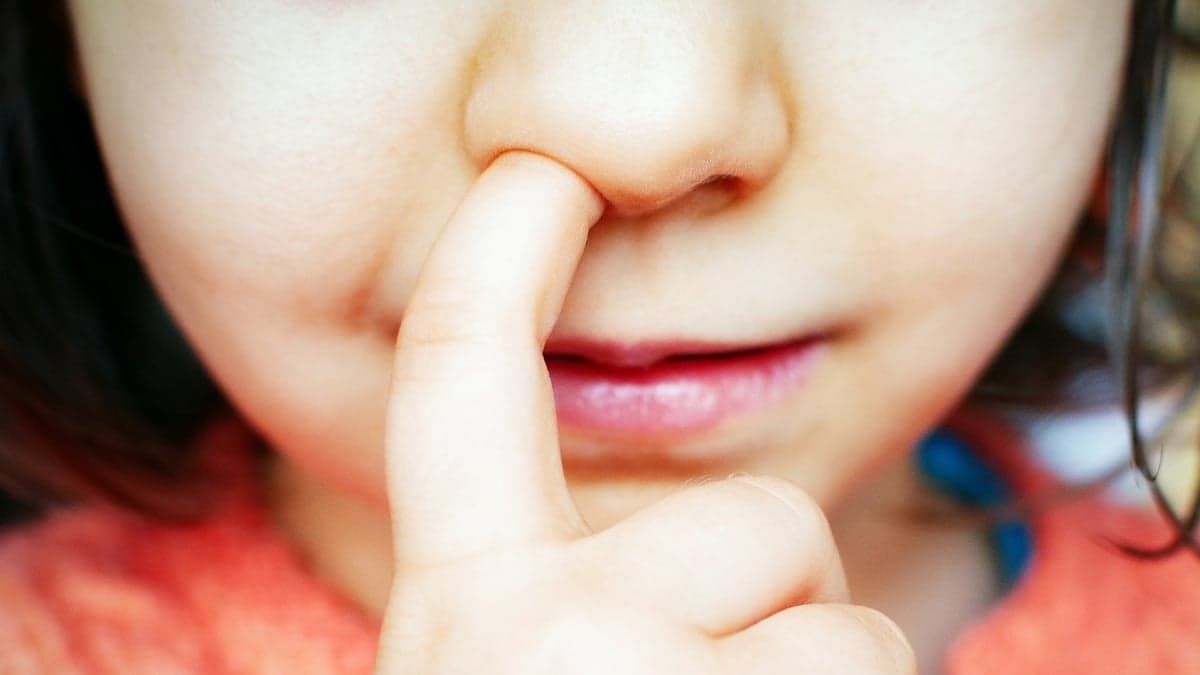
In a startling revelation that may prompt some to reconsider an everyday habit, researchers from Griffith University in Australia have uncovered a potential link between nose picking and an increased risk of developing Alzheimer’s disease. The study, published in Scientific Reports, found that in mice, the bacterium *Chlamydia pneumoniae*—which can infect humans and cause pneumonia—can travel from the nasal cavity to the brain via the olfactory nerve, particularly when the nasal lining is damaged. While the research is still in its early stages and has not been confirmed in humans, it introduces a new hypothesis about how certain pathogens might contribute to neurodegenerative diseases like Alzheimer’s, which remains one of medicine’s most perplexing unsolved mysteries.
How Nose Picking Could Influence Alzheimer’s Disease Risk
The human nose is more than just an air filter—it’s a gateway to the brain. Lined with a delicate mucous membrane called the nasal epithelium, the nose acts as the first line of defense against pathogens while also housing the olfactory nerve, which transmits signals related to smell directly to the brain. However, when this protective barrier is compromised through activities like nose picking or nose hair plucking, harmful bacteria and viruses may gain a direct route into the central nervous system.
The Role of Chlamydia pneumoniae in Brain Infections
In 2022, the Griffith University team demonstrated that *Chlamydia pneumoniae*, a bacterium commonly associated with respiratory infections, could travel from the nasal cavity to the brain in mice within 24 to 72 hours. Once inside the brain, the bacteria triggered an immune response that led to the accumulation of amyloid-beta plaques—clumps of protein that are hallmark features of Alzheimer’s disease. The speed of this infection surprised researchers, suggesting that the olfactory nerve provides an unusually efficient pathway for pathogens to reach neural tissue.
Damage to the Nasal Lining as a Risk Factor
The study’s most critical finding was the impact of nasal epithelial damage. When the thin tissue lining the nasal cavity was compromised—whether through aggressive nose picking, chronic sinusitis, or other irritants—the bacteria had an easier time infiltrating the olfactory nerve. This damage effectively removed a natural barrier, allowing *C. pneumoniae* to migrate into the brain more readily. The researchers noted that even minor injuries, such as those from habitual nose picking, could significantly increase this risk.
We’re the first to show that *Chlamydia pneumoniae* can go directly up the nose and into the brain where it can set off pathologies that look like Alzheimer’s disease. We saw this happen in a mouse model, and the evidence is potentially scary for humans as well.
Why This Research Matters for Alzheimer’s Disease Understanding
Alzheimer’s disease affects over 6.7 million Americans, according to the Alzheimer’s Association, and is the seventh leading cause of death in the United States. Despite decades of research, its exact causes remain unclear. While age is the primary risk factor—with the likelihood of developing Alzheimer’s doubling every five years after age 65—scientists have long suspected that environmental factors, including infections, may play a role. This study offers a compelling new angle: the idea that pathogens entering through the nose could trigger or accelerate neurodegenerative processes.
Human Studies Are Needed, But Caution Is Warranted
While the mouse findings are provocative, experts emphasize that they are not yet conclusive for humans. The olfactory nerve pathway exists in both mice and humans, and *C. pneumoniae* has been detected in the brains of Alzheimer’s patients. However, the exact mechanism by which the bacterium enters the brain in humans—and whether it leads to Alzheimer’s pathology—remains unproven. James St John, the lead researcher and a neuroscientist at Griffith University, stressed the need for human studies to validate these findings.
We need to do this study in humans and confirm whether the same pathway operates in the same way. It’s research that has been proposed by many people, but not yet completed. What we do know is that these same bacteria are present in humans, but we haven’t worked out how they get there.
Key Takeaways: What You Should Know About Nose Picking and Alzheimer’s Risk
- A 2022 mouse study found that nose picking may increase Alzheimer’s risk by allowing bacteria to travel from the nose to the brain via the olfactory nerve.
- The bacterium *Chlamydia pneumoniae*, which can cause pneumonia, was detected in the brains of mice and triggered amyloid-beta plaque formation, a hallmark of Alzheimer’s.
- Damage to the nasal lining—whether from nose picking, sinus infections, or allergies—may facilitate this bacterial migration.
- While preliminary, the research suggests that improving nasal hygiene could be a simple preventive measure against potential neurodegenerative risks.
- Human studies are needed to confirm whether this pathway contributes to Alzheimer’s in people.
The Olfactory System: A Plausible, Yet Understudied, Pathway to Dementia
The olfactory system, responsible for our sense of smell, has long been a subject of intrigue in neuroscience. Unlike other sensory pathways, the olfactory nerve connects directly to the brain without passing through the blood-brain barrier, making it uniquely vulnerable to pathogen invasion. A 2023 review led by researchers at Western Sydney University further explored this connection, proposing that the olfactory system could serve as a "plausible route for pathogen entry" in Alzheimer’s disease (AD). The review highlighted how the olfactory bulb—an area of the brain involved in smell processing—often shows early signs of degeneration in Alzheimer’s patients, suggesting a possible link between nasal infections and cognitive decline.
The review also drew parallels to lessons from the COVID-19 pandemic, noting that improved hand hygiene—such as frequent hand washing and the use of hand sanitizers—could mitigate the risk of introducing pathogens into the nasal cavity. While the analogy isn’t perfect (SARS-CoV-2 primarily enters through the respiratory system rather than the nose), it underscores the broader principle that small behavioral changes could have outsized protective effects.
Alzheimer’s Disease: More Than Just Age and Genetics
Alzheimer’s disease is often framed as an inevitable consequence of aging, but research increasingly suggests that it is a multifactorial condition influenced by a combination of genetic, environmental, and lifestyle factors. The APOE-e4 gene is the strongest known genetic risk factor, but it doesn’t guarantee disease development. Other suspected contributors include chronic inflammation, vascular health, and—potentially—pathogen exposure. Neuroscientist James St John emphasized this point: "Once you get over 65 years old, your risk factor goes right up, but we’re looking at other causes as well, because it’s not just age—it is environmental exposure as well."
Could Amyloid-Beta Plaques Be a Double-Edged Sword?
One of the most debated aspects of Alzheimer’s research is the role of amyloid-beta plaques. While these protein clumps are a defining feature of the disease, it’s unclear whether they are a cause of neurodegeneration or a protective response to infection or injury. Some researchers hypothesize that amyloid-beta may act as an antimicrobial peptide, trapping pathogens to prevent their spread. If this theory holds true, the plaques observed in Alzheimer’s patients could be the brain’s attempt to defend itself—albeit in an overzealous and ultimately harmful way.
The Griffith University study did not resolve this debate, but it did show that *C. pneumoniae* infection led to increased amyloid-beta production in mice. Future research will need to determine whether these plaques are a natural immune response that can be reversed once the infection is cleared, or if they represent an irreversible step in the progression of dementia.
Public Health Implications: Should Nose Picking Be Discouraged?
Given the potential risks highlighted by the study, should nose picking be added to the list of behaviors discouraged for long-term brain health? The answer, for now, is a cautious "maybe." While the evidence is not strong enough to issue sweeping public health recommendations, it does suggest that maintaining the integrity of the nasal lining is prudent. Dr. St John and his colleagues have gone so far as to call the habit "not a good idea," particularly for those who engage in aggressive nose picking or nose hair removal, which can cause micro-tears in the nasal tissue.
What’s Next? The Road to Human Research
The Griffith University team is planning follow-up studies to explore whether the same pathways observed in mice operate in humans. One critical question is whether *C. pneumoniae* or other pathogens can be consistently detected in the brains of Alzheimer’s patients and, if so, how they arrived there. If nasal entry proves to be a viable route, public health strategies could include targeted hygiene education, particularly for high-risk populations such as older adults or individuals with chronic sinus conditions.
A Broader Conversation About Infectious Triggers in Neurodegeneration
This study is part of a growing body of research examining the role of infections in neurodegenerative diseases. Previous work has explored links between herpes simplex virus (HSV-1) and Alzheimer’s, as well as the potential protective effects of certain antiviral medications. While no single pathogen has been definitively proven to cause Alzheimer’s, the cumulative evidence suggests that infections may act as triggers or accelerants in susceptible individuals. This shift in thinking—from viewing Alzheimer’s solely as a protein aggregation disorder to a condition potentially influenced by external pathogens—represents a paradigm shift in the field.
Frequently Asked Questions About Nose Picking and Alzheimer’s Risk
Frequently Asked Questions
- Is nose picking really linked to Alzheimer’s disease?
- Current evidence comes from a mouse study and suggests a plausible but unproven link. The research shows that in mice, nose picking-like damage allows bacteria to travel to the brain, triggering Alzheimer’s-like changes. Human studies are needed to confirm if this pathway exists in people.
- How could bacteria from the nose reach the brain?
- The olfactory nerve connects the nasal cavity directly to the brain. If the nasal lining is damaged—through nose picking, infections, or irritation—bacteria like *Chlamydia pneumoniae* may use this nerve as a pathway to invade brain tissue, potentially triggering neurodegenerative processes.
- Should I stop picking my nose to lower my Alzheimer’s risk?
- While the research is preliminary, it’s reasonable to minimize aggressive nose picking or nose hair plucking to protect the nasal lining. Maintaining good nasal hygiene and avoiding behaviors that cause microscopic tears in the nasal tissue could be a cautious preventive measure.