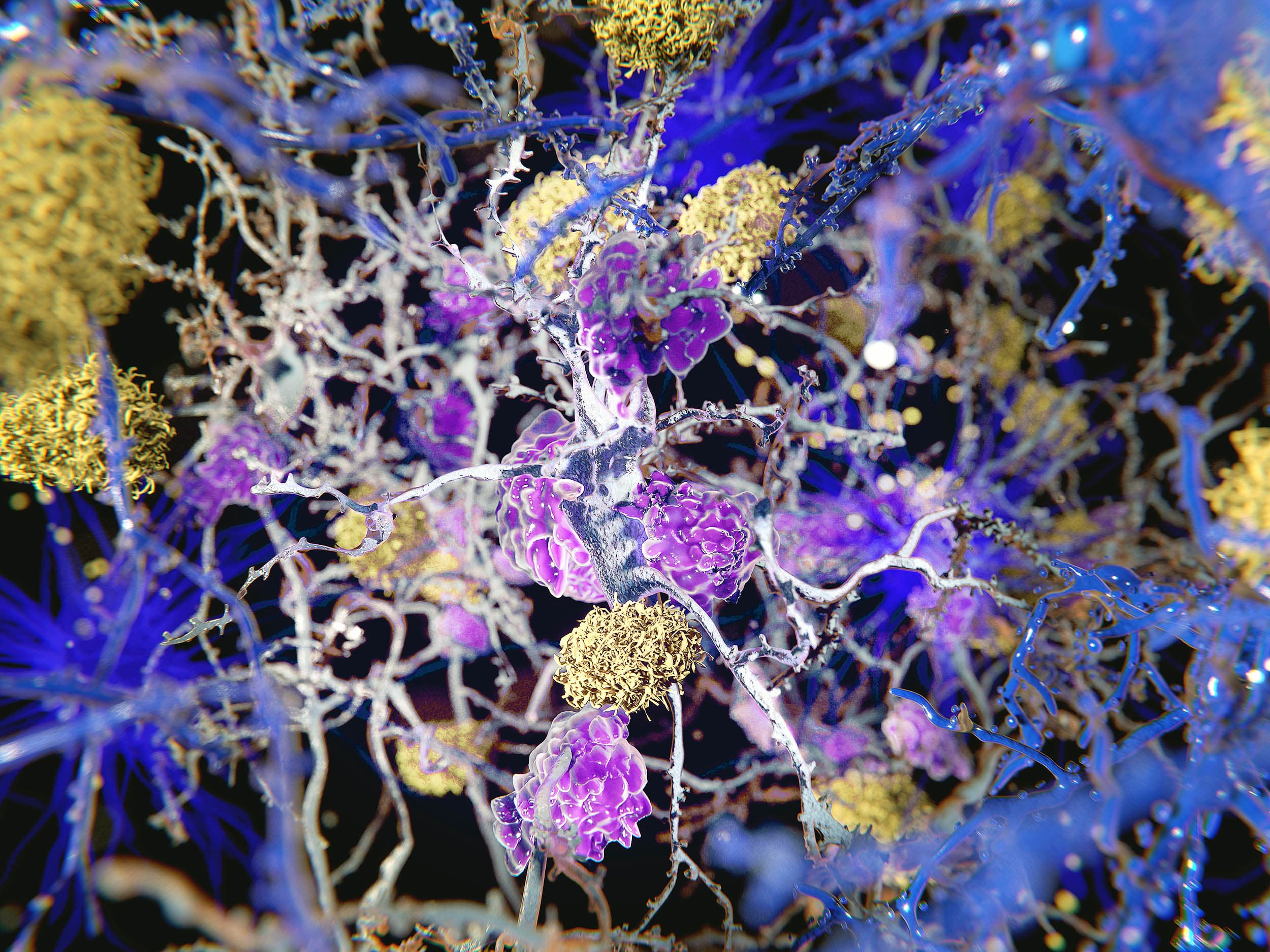
In the silent progression of Alzheimer’s disease, the earliest detectable changes often begin decades before symptoms emerge—long before a patient’s name slips their memory or familiar faces become strangers. A small but pivotal brain region called the locus coeruleus, known for its role in alertness and sleep regulation, is now emerging as a potential early warning system for the disease. Researchers believe that intervening here—through a therapy as ancient as the nervous system itself—could delay or even prevent the cognitive decline associated with aging and Alzheimer’s pathology. Emerging evidence suggests that vagus nerve stimulation, a technique already approved by the FDA for epilepsy, depression, and migraines, may help preserve the function of this vulnerable brain hub by regulating its delicate balance of activity.
Why the Locus Coeruleus Is a Critical Early Target in Alzheimer’s Disease
The locus coeruleus, Latin for “blue spot” due to its neuromelanin-rich cells, is nestled deep within the brainstem and serves as the brain’s primary source of norepinephrine—a neurotransmitter essential for attention, memory, and stress response. Unlike most brain regions, it matures early in life and begins to accumulate abnormal tau proteins as early as the third decade—decades before clinical Alzheimer’s diagnosis. While tau tangles are a hallmark of Alzheimer’s pathology, their presence in the locus coeruleus is nearly universal with age, even in cognitively healthy individuals. This suggests the region may act as a biological ‘canary in the coal mine,’ signaling the onset of neurodegenerative processes long before widespread brain atrophy occurs.
The Timeline of Tau Buildup and Cognitive Decline
Autopsy studies reveal that tau pathology in the locus coeruleus begins in midlife, with neuronal damage and cell loss becoming more pronounced by the fourth and fifth decades. These early changes correlate with subtle declines in memory and executive function, often dismissed as normal aging. However, research increasingly links locus coeruleus dysfunction to the later development of full-blown Alzheimer’s disease. A 2021 study published in *Nature Neuroscience* found that individuals with early tau accumulation in this region were 3.5 times more likely to progress to mild cognitive impairment (MCI) within five years. This positions the locus coeruleus not just as a passive victim of Alzheimer’s, but as a potential gateway to earlier intervention.
From Norepinephrine to Neuroprotection: How the Locus Coeruleus Mediates Memory
Norepinephrine, produced exclusively by the locus coeruleus, plays a dual role in brain health. It enhances synaptic plasticity—the strengthening of neural connections critical for learning—and supports the brain’s glymphatic system, which clears metabolic waste like amyloid-beta, another Alzheimer’s-associated protein. When tau disrupts locus coeruleus neurons, both functions are impaired. Reduced norepinephrine levels have been observed in Alzheimer’s patients as much as 50 years before symptom onset, according to longitudinal studies. Maintaining the health and activity of this tiny brain region could therefore have cascading protective effects across the entire brain.
How Vagus Nerve Stimulation May Preserve Memory and Cognition
The vagus nerve, a 100,000-neuron superhighway connecting the brain to the heart, lungs, and digestive system, has long been known to regulate autonomic functions. But its role in modulating brain activity—particularly in the locus coeruleus—has only recently come into focus. Vagus nerve stimulation (VNS) delivers mild electrical pulses to the nerve, either through implanted devices or noninvasive skin patches. These pulses travel to the brainstem, where they can influence the firing patterns of locus coeruleus neurons and potentially restore balance to norepinephrine release.
A Therapy with a Proven Track Record
VNS received FDA approval in 1997 for drug-resistant epilepsy and later for treatment-resistant depression, with over 150,000 patients worldwide having received implants. Clinical trials have shown that VNS can reduce seizure frequency by up to 50% in epilepsy patients and improve mood scores by 30% in depressed individuals. More recently, researchers discovered that VNS also enhances cognitive performance in these populations, suggesting broader neurological benefits. This unexpected cognitive boost—observed in patients who were not originally seeking memory improvement—sparked interest in whether VNS could specifically target Alzheimer’s-related decline.
Mechanisms: How VNS May Protect the Locus Coeruleus
While the exact mechanisms are still under investigation, current theories suggest multiple pathways. First, VNS may increase norepinephrine release from the locus coeruleus in a regulated manner, counteracting the deficit seen in early Alzheimer’s. Animal studies show that VNS can raise brain norepinephrine levels by up to 40%, improving synaptic plasticity and memory consolidation. Second, VNS appears to synchronize neural firing in the locus coeruleus, preventing the erratic hyperactivity linked to stress and anxiety, which can accelerate tau pathology. Finally, VNS may enhance blood flow and metabolic efficiency in the brainstem, supporting neuronal resilience against tau-induced damage.
“We’re not trying to cure Alzheimer’s yet. We’re trying to delay its onset by 10 or 15 years. If we can keep the locus coeruleus functioning well into old age, we might prevent the cascade of cognitive decline that leads to full-blown dementia.” — Dr. Michael Kaul, Neuroscientist at Columbia University Irving Medical Center
Early Clinical Evidence: Can VNS Slow Memory Loss?
The most compelling human data to date comes from a 2022 pilot study published in *Neurology* involving 52 adults aged 55 to 75 with mild cognitive impairment (MCI), a condition that often precedes Alzheimer’s. Participants received one hour of non-invasive VNS daily for six months. At the study’s end, they showed a 16% improvement in memory recall and a 12% boost in executive function compared to a placebo group. Brain imaging revealed reduced tau accumulation in the locus coeruleus among those who received VNS, suggesting a direct biological effect. Another 2023 study from the University of Texas Health Science Center similarly found that a single session of transcutaneous auricular VNS (a noninvasive ear-based device) improved working memory in healthy adults over age 60 by 18% for up to two weeks.
Diverse Populations, Promising Results
Researchers have also tested VNS in younger healthy adults. In a 2023 *Journal of Cognitive Neuroscience* study, healthy participants aged 18 to 25 showed enhanced associative memory after just 20 minutes of VNS. This suggests that VNS may help maintain cognitive reserve—a buffer against age-related decline—rather than only treat existing impairment. While these trials are small and require replication, they collectively indicate that VNS could play a role across the lifespan, from cognitive enhancement to early intervention in at-risk individuals.
Future Directions: From Lab to Clinic
Despite encouraging signals, significant hurdles remain before VNS becomes a standard Alzheimer’s intervention. Current devices are either surgically implanted or require precise placement on the neck or ear, limiting accessibility. Noninvasive options are being developed, including wearable headbands and adhesive patches, but their efficacy and precision still need validation. Additionally, researchers are exploring whether combining VNS with other therapies—such as lifestyle interventions, tau-targeting antibodies, or lifestyle changes—could produce synergistic effects.
Personalized VNS Protocols
One of the most exciting frontiers is tailoring VNS to individual brain states. Using real-time EEG monitoring during stimulation, scientists are beginning to optimize stimulation parameters based on each patient’s baseline locus coeruleus activity. For example, a patient with a hyperactive locus coeruleus (linked to anxiety or PTSD) might receive lower-frequency pulses to calm overactive neurons, while someone with early tau buildup might benefit from higher-frequency stimulation to boost norepinephrine. Early trials at the University of California, San Francisco, are testing this adaptive approach in 30 patients with MCI.
Long-Term Safety and Ethical Considerations
VNS has a strong safety profile, with side effects typically limited to mild hoarseness, headache, or skin irritation at electrode sites. However, long-term data on cognitive outcomes in otherwise healthy older adults are lacking. There are also ethical questions about whether such interventions should be accessible to all, given potential cost barriers—implantable VNS devices can cost $30,000 or more without insurance coverage. As research advances, policymakers and insurers will need to address equitable access to emerging brain therapies.
- Tau buildup in the locus coeruleus begins in midlife, decades before Alzheimer’s symptoms appear.
- Vagus nerve stimulation (VNS), already FDA-approved for epilepsy and depression, may help regulate locus coeruleus activity and preserve memory.
- Early clinical trials show VNS can improve memory and cognition in people with mild cognitive impairment and healthy older adults.
- VNS may work by increasing norepinephrine, synchronizing neural firing, and enhancing brain resilience against tau pathology.
- Future research is focusing on noninvasive devices, personalized stimulation protocols, and combination therapies.
Challenges and Considerations: Is VNS the Right Path?
While the science is compelling, skepticism remains within the neurology community. Alzheimer’s research has seen many promising therapies fail in later stages, and VNS is not a magic bullet. Some experts argue that targeting tau alone may not be sufficient, as amyloid plaques and neuroinflammation also play critical roles. Others caution that the locus coeruleus’s role in stress and arousal means overstimulating it could worsen anxiety or sleep disorders in some patients. The need for large-scale, randomized controlled trials is urgent. The NIH has recently funded a $25 million initiative to test VNS in 300 patients with early Alzheimer’s, with results expected by 2026.
The Bigger Picture: A New Paradigm for Brain Health
Beyond Alzheimer’s, VNS is being studied for a range of neurological and psychiatric conditions, including Parkinson’s disease, chronic pain, and PTSD. Its ability to modulate brainstem activity makes it a versatile tool with implications for sleep disorders, immune function, and even gut-brain communication. If proven effective in preventing Alzheimer’s-related cognitive decline, VNS could shift the paradigm from late-stage treatment to early-stage prevention—a goal increasingly prioritized by the National Alzheimer’s Project Act and global health organizations. The emerging science suggests that preserving the health of the locus coeruleus may be as important as reducing amyloid plaques or tau tangles in the cortex.
Frequently Asked Questions
- How does vagus nerve stimulation affect memory in people with early Alzheimer’s?
- Early clinical trials show that vagus nerve stimulation can improve memory recall and executive function in people with mild cognitive impairment by up to 16% over six months. Some studies suggest it may also reduce tau accumulation in the locus coeruleus, a brain region critical for memory.
- Is vagus nerve stimulation safe for older adults?
- VNS has a strong safety profile with minimal side effects, such as hoarseness or mild skin irritation. Long-term cognitive effects are still under study, but current data support its use in older adults with mild cognitive impairment.
- Can vagus nerve stimulation prevent Alzheimer’s disease?
- Current research is exploring whether VNS can delay the onset of Alzheimer’s symptoms by preserving locus coeruleus function. While not yet a proven prevention strategy, early evidence is encouraging for early intervention in at-risk individuals.