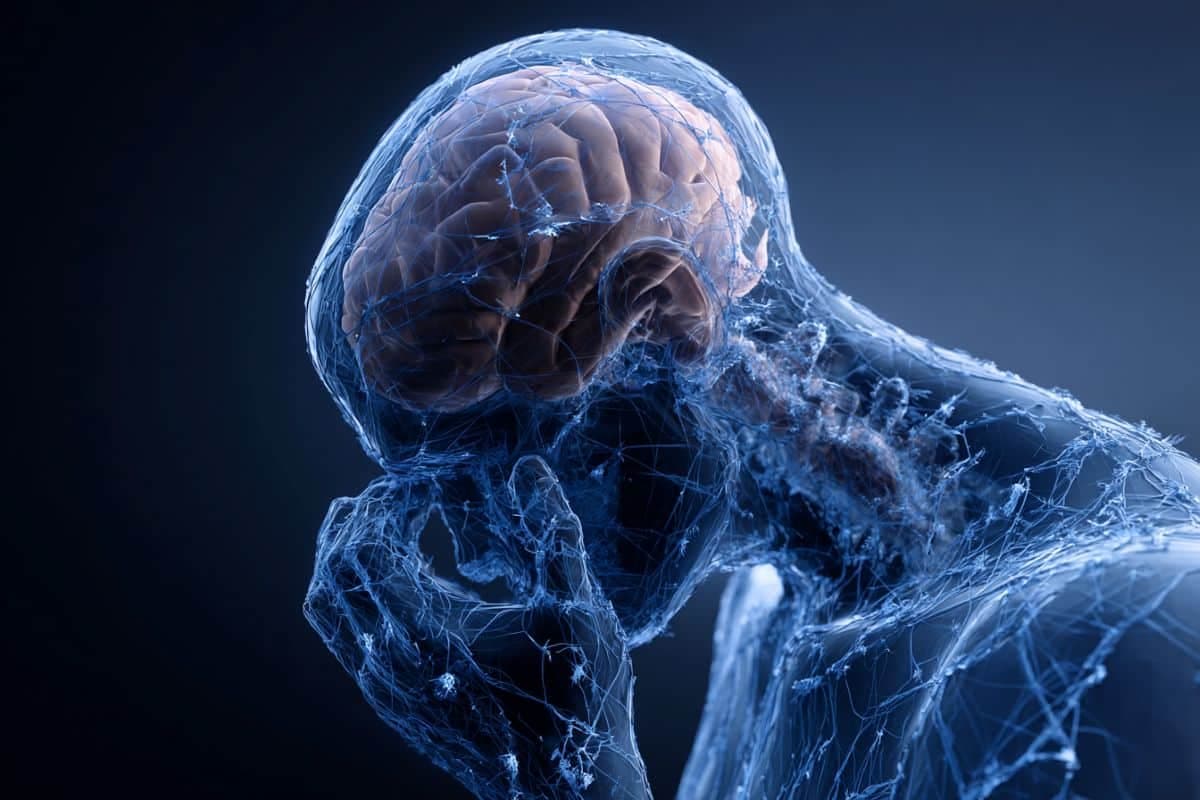
Why does a stressful day at work often lead to a drink—or worse, a relapse after months of sobriety? For decades, researchers have known that stress and substance use disorders are deeply connected, but the precise mechanism remained unclear. Now, a groundbreaking study from Texas A&M University has uncovered a direct neural pathway in the brain that links stress centers to habit-forming regions, revealing exactly how alcohol hijacks this system and traps individuals in cycles of compulsive drinking. Published in the prestigious journal eLife, the research not only illuminates the biological roots of addiction but also points toward potential therapeutic targets that could help millions break free from the grip of alcohol use disorder.
Key Takeaways: How Stress and Alcohol Hijack the Brain’s Decision-Making System
- Researchers identified a direct neural pathway from the brain’s stress centers—the central amygdala (CeA) and bed nucleus of the stria terminalis (BNST)—to the dorsal striatum, a region critical for habit formation and decision-making.
- Under normal conditions, stress signals via the chemical corticotropin-releasing factor (CRF) activate cholinergic interneurons (CINs), which act as 'traffic controllers,' helping the brain stay flexible and make adaptive decisions during stress.
- Alcohol disrupts this system by weakening CRF’s ability to activate CINs, effectively 'cutting the wire' between stress responses and flexible decision-making, pushing individuals toward rigid, compulsive habits like drinking.
- The findings explain why stress is a universal trigger for addiction and relapse, particularly during early withdrawal when the brain’s stress-response system is most vulnerable.
- This discovery opens new avenues for addiction treatment, including therapies that strengthen CINs or protect the CRF pathway from alcohol’s harmful effects.
The implications of this research extend far beyond alcohol addiction. Cognitive neuroscientists and addiction specialists note that the same brain circuitry is involved in other substance use disorders, as well as behavioral addictions like gambling. By mapping this pathway, the Texas A&M team has provided a critical piece of the puzzle in understanding how emotional stress can override rational decision-making—a phenomenon that has bedeviled recovery efforts for generations.
The Hidden Neural Highway: How Stress Signals Reach the Brain’s Habit Center
At the heart of this discovery is a previously uncharted neural superhighway connecting two of the brain’s most critical regions: the stress centers and the habit machinery. The central amygdala (CeA) and bed nucleus of the stria terminalis (BNST) are small, almond-shaped clusters of neurons deep within the brain that activate during moments of fear, anxiety, or perceived threat. These regions are part of the extended amygdala, a network long associated with the body’s stress response and emotional regulation.
The Role of CRF: The Brain’s Stress Messenger
When stress strikes, the brain releases corticotropin-releasing factor (CRF), a peptide hormone that serves as its primary alarm system. CRF travels through the brain, signaling that something is wrong and prompting a cascade of physiological responses—racing heart, heightened alertness, and, in extreme cases, panic. For years, scientists knew CRF was involved in stress and addiction, but they didn’t understand how its signals reached the dorsal striatum, a region buried deep in the forebrain that governs habitual behaviors and automatic actions, such as reaching for a cigarette or a drink.
The Texas A&M study, led by Dr. Jun Wang, professor of neuroscience and experimental therapeutics, changed that. Using advanced optogenetic and pharmacological techniques in rodent models, the researchers traced CRF’s journey from the extended amygdala directly into the dorsal striatum. What they found was a direct, one-way neural pathway—essentially a direct line of communication that hadn’t been fully mapped before.
‘What we’ve identified is a direct line of communication between the brain’s stress centers and the region that governs habits and actions, a connection that wasn’t previously understood well. Seeing stress signals travel straight into this decision-making system gives us a clearer picture of why stressful experiences can so strongly influence behavior, sometimes in ways that become unhealthy.’
Cholinergic Interneurons: The Brain’s Traffic Controllers
Within the dorsal striatum, CRF’s signals target a specialized group of neurons called cholinergic interneurons (CINs). These cells, which make up only about 1-2% of the striatum’s neuronal population, act like air traffic controllers in a crowded airport. They receive incoming signals, assess the situation, and help the brain decide whether to maintain flexibility or slip into automatic, habitual behaviors. When CRF binds to receptors on CINs, it boosts their activity and increases the release of acetylcholine, a neurotransmitter that enhances learning, adaptability, and the ability to change course mid-strategy.
Under normal circumstances, this system is adaptive. Stress—whether from a looming deadline or a heated argument—triggers CRF release, which activates CINs. The result is a temporary pause in rigid thinking, allowing the brain to weigh options, adjust plans, and respond more thoughtfully. ‘Under normal conditions, this stress signal actually helps the brain stay flexible, not rigid,’ Wang explained. ‘It helps us pause, think, and make better decisions, especially when something stressful is happening.’ This nuanced role of stress in decision-making contrasts sharply with the popular notion that stress always leads to impulsivity—a misconception the study helps correct.
When Alcohol Sabotages the System: The Pathway to Addiction and Relapse
The second—and perhaps more alarming—finding of the study reveals how alcohol exploits this delicate system. When researchers exposed brain tissue to alcohol, they observed a dramatic disruption: alcohol weakened the ability of CRF to activate CINs, effectively severing the connection between stress signals and the brain’s flexibility mechanism. Even more concerning, alcohol alone suppressed the activity of CINs, leaving the striatum less capable of responding to stress in a healthy way.
In practical terms, this means that alcohol doesn’t just numb emotional pain; it dismantles the brain’s built-in safeguards against compulsive behavior. When the CRF pathway is compromised, stress no longer triggers adaptive pauses or thoughtful decision-making. Instead, it pushes the brain toward automatic, rigid responses—like reaching for another drink, even when the individual is actively trying to quit. ‘Alcohol essentially cuts the line of communication,’ Wang said. ‘When that happens, the brain loses some of its ability to respond to stress in a healthy way. This may push a person toward automatic or habitual behaviors, like drinking.’
Why Stress Becomes a Relapse Trigger During Withdrawal
The study also examined how this system behaves during early withdrawal, a critical and vulnerable period for individuals recovering from alcohol use disorder. The researchers found that even short-term withdrawal (measured in days) blunted the brain’s response to CRF, making the stress-response circuit nearly nonfunctional. This explains why minor stressors—an argument, a bad day at work, or even the anticipation of withdrawal symptoms—can feel overwhelming and trigger relapse. ‘During withdrawal, the brain’s ability to respond to these helpful stress signals is severely blunted,’ Wang noted. ‘This means that even a minor stressor can feel overwhelming because the brain’s “flexibility system” is offline. You’re left with your “automatic” mode, which for many, is the habit of reaching for a bottle.’
The Broader Implications: From Alcohol to Other Addictions and Mental Health
While this study focused on alcohol, the neural pathway it describes is not unique to substance use disorders. The same circuitry is implicated in other forms of addiction, including nicotine, opioids, and even behavioral addictions like gambling or compulsive shopping. ‘The dorsal striatum isn’t just about alcohol,’ explained Dr. Nicholas Gilpin, a neuroscientist at Louisiana State University who was not involved in the study. ‘It’s a hub for habit formation across the board. If stress is disrupting this system, it could be contributing to relapse in a wide range of addictive behaviors.’
Moreover, the findings offer insights into mental health conditions where stress and compulsive behaviors intersect, such as obsessive-compulsive disorder (OCD) or post-traumatic stress disorder (PTSD). In these cases, the brain’s inability to flexibly respond to stress may manifest as intrusive thoughts, compulsive rituals, or avoidance behaviors. The discovery of this pathway could pave the way for targeted therapies that restore balance to the brain’s stress-response system.
Therapeutic Avenues: Can We Repair the Brain’s Broken Circuit?
The most exciting aspect of this research may be its potential to guide future treatments for addiction. By pinpointing the exact cells (CINs), receptors, and neurotransmitters involved, the Texas A&M team has provided a roadmap for developing interventions that could strengthen or protect the CRF pathway. Possible strategies include medications that enhance CIN activity, compounds that block alcohol’s disruptive effects on the pathway, or even neuromodulation techniques like deep brain stimulation to restore healthy stress responses.
One promising lead is the development of drugs that target CRF receptors in the dorsal striatum. Current FDA-approved CRF receptor antagonists, such as pexacerfont, have shown mixed results in clinical trials for anxiety and depression, but this study suggests they may be more effective when tailored specifically to the striatum’s CINs. ‘This pathway may be a promising target for helping people build resilience against addiction or relapse,’ Wang said. ‘Because we now know where the system breaks, we can start figuring out how to fix it.’
Additionally, behavioral therapies that teach stress-management techniques—such as mindfulness or cognitive behavioral therapy (CBT)—could be enhanced by this research. If the goal is to retrain the brain’s response to stress, understanding the biological underpinnings of this pathway provides a clearer target for interventions. For example, neurofeedback techniques might one day help individuals strengthen CIN activity, making them less susceptible to stress-induced relapse.
The Science Behind the Discovery: Methods and Collaborations
The study, published in eLife in 2023, was the result of a collaboration between neuroscientists, pharmacologists, and computational biologists at Texas A&M University and the University of Texas at Austin. The team employed a combination of optogenetics—a technique that uses light to control neurons—and pharmacological assays to map the CRF pathway. They also used rodent models of alcohol dependence to simulate the effects of chronic alcohol exposure and withdrawal on the brain’s stress circuits.
The research was funded by the National Institute on Alcohol Abuse and Alcoholism (NIAAA), part of the National Institutes of Health (NIH), underscoring the significance of the findings. ‘This work is a testament to the power of basic science,’ said Dr. George Koob, director of the NIAAA. ‘By understanding the neural circuits that drive addiction, we can develop more precise and effective treatments that address the root causes of the disorder, rather than just its symptoms.’
What This Means for Patients, Families, and the Addiction Treatment Field
For individuals struggling with alcohol use disorder, this research offers a glimmer of hope. It validates what many in recovery have long suspected—that stress isn’t just a psychological trigger but a biological one, hardwired into the brain’s circuitry. For families and caregivers, the findings underscore the importance of reducing stress in the environment of someone in recovery, as even minor stressors can pose significant risks. And for clinicians, the discovery provides a scientific foundation for tailoring treatments to address the brain’s specific vulnerabilities.
‘This isn’t just about alcohol,’ said Dr. Wang. ‘It’s about how the brain processes stress and how that process can go awry in addiction. If we can find ways to protect or repair this circuit, we could change the trajectory of recovery for millions of people.’
Frequently Asked Questions: Stress, Addiction, and the Brain’s Hidden Circuits
Frequently Asked Questions
- If stress helps the brain stay flexible, why does it feel so overwhelming?
- Stress itself is not the enemy—it’s the body’s way of alerting you to threats. Under normal conditions, stress signals help you pause and adapt. However, when this system is disrupted by alcohol or chronic substance use, the brain loses its ability to process stress adaptively, leaving you stuck in rigid, automatic responses like drinking.
- Does this research apply to all types of addiction, or just alcohol?
- While the study focused on alcohol, the neural pathway described is involved in habit formation across multiple addictions. The dorsal striatum, which governs habits, is a common target for various substances and behaviors, suggesting the findings could extend to nicotine, opioids, gambling, and more.
- Could medications or therapies be developed to target this pathway?
- Yes. Researchers are already exploring drugs that enhance cholinergic interneuron activity or block alcohol’s disruptive effects on the CRF pathway. Therapies like cognitive behavioral therapy (CBT) could also be tailored to strengthen the brain’s resilience to stress by targeting this specific circuit.