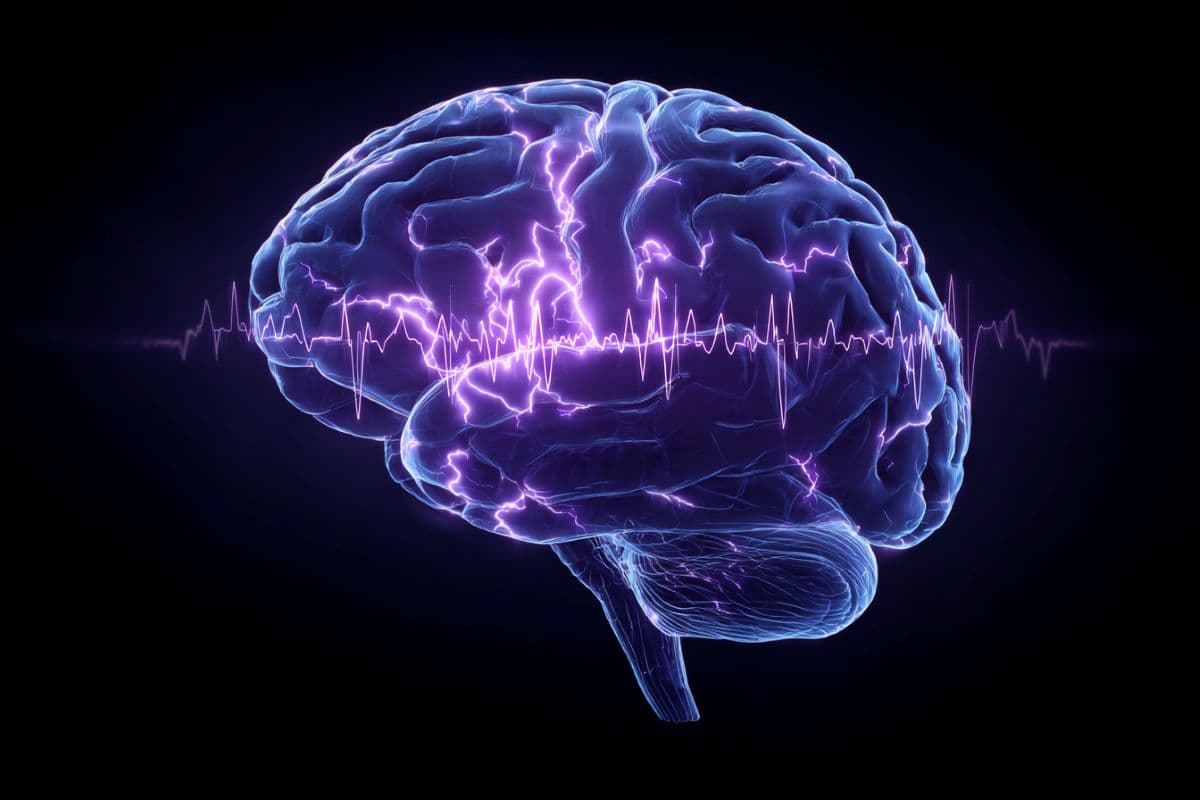
If you’ve ever found yourself ‘zoning out’ mid-conversation or struggling to focus on a monotonous task despite trying your best, new neuroscience research suggests your brain may be experiencing something far more profound than simple distraction. A groundbreaking study published in the Journal of Neuroscience has uncovered a biological phenomenon—dubbed ‘local sleep’—where patches of the brain briefly slip into sleep-like states even while the rest of the brain remains awake. For adults with ADHD, these micro-disruptions occur 50% more frequently than in neurotypical individuals, directly correlating with lapses in attention, slower reaction times, and an increased likelihood of errors during tasks.
- Adults with ADHD experience significantly more sleep-like brain activity during wakefulness compared to neurotypical peers, with frequencies up to 50% higher.
- These ‘local sleep’ disruptions in specific brain regions—particularly those linked to attention—directly contribute to attention lapses, task errors, and erratic reaction times.
- Researchers are exploring auditory stimulation during sleep as a potential non-pharmacological treatment to reduce these sleep-like intrusions during wakefulness.
- The study used EEG recordings to measure sleep-like slow waves in 32 adults with ADHD (off medication) and 31 neurotypical adults during sustained attention tasks.
The Science of 'Local Sleep': How Your Brain Takes Micro-Naps While Awake
The human brain operates on a delicate balance between wakefulness and sleep, but emerging neuroscience reveals this balance isn’t as absolute as once thought. Within the past decade, researchers have identified a phenomenon known as ‘local sleep,’ where small, isolated clusters of neurons enter sleep-like states—characterized by slow-wave activity—even when the individual is fully conscious and performing tasks. These micro-disruptions are akin to a city where most neighborhoods are bustling with activity, but a few streets abruptly dim their lights temporarily, causing localized slowdowns.
How Sleep-Like Waves Function in the Brain
During normal wakefulness, the brain generates fast, low-amplitude electrical waves that facilitate rapid information processing. However, when local sleep occurs, these give way to slow, high-amplitude waves—similar to those observed during deep sleep—that temporarily suppress neuronal activity in specific regions. This phenomenon is most commonly triggered by prolonged periods of demanding cognitive tasks, fatigue, or monotonous activities. For example, after hours of driving on a highway, many people experience brief ‘highway hypnosis,’ a state where attention drifts as local sleep intrudes on the brain’s attention networks.
Critically, local sleep doesn’t affect the entire brain uniformly. Instead, it targets regions responsible for attention, memory, or sensory processing. In the context of ADHD, these targeted disruptions disproportionately impact performance, as the condition is already associated with structural and functional differences in fronto-striatal and fronto-parietal networks—brain areas crucial for maintaining focus and regulating impulsivity.
ADHD and the ‘Porous Sleep-Wake Boundary’: Why the Brain ‘Flickers’ More Often
Attention-Deficit/Hyperactivity Disorder (ADHD) has long been characterized by inconsistent attention, impulsivity, and difficulty sustaining focus, but the underlying mechanisms have remained partially elusive. The new study from Monash University, led by neuroscientist Elaine Pinggal, offers a compelling explanation: in adults with ADHD, the boundary between wakefulness and sleep states appears to be more permeable. This increased porosity allows sleep-like slow waves to intrude more readily into waking consciousness, particularly during tasks requiring sustained attention.
The research team compared two groups: 32 adults with ADHD (who had refrained from taking ADHD medication for at least 48 hours prior to testing) and 31 neurotypical adults of similar age and background. Using high-density electroencephalography (EEG), the researchers recorded brain activity while participants performed a sustained attention task—a computerized test measuring reaction time, error rates, and variability in responses. The results were striking: individuals with ADHD exhibited a 50% higher density of sleep-like slow waves during wakefulness, particularly in parieto-temporal regions associated with attention and sensory integration.
The Performance Gap: How Local Sleep Translates to Real-World Struggles
The increased prevalence of local sleep in adults with ADHD wasn’t just an interesting observation—it directly correlated with measurable performance deficits. Participants with ADHD not only made significantly more errors (both omission errors—failing to respond—and commission errors—responding incorrectly) but also exhibited greater reaction time variability, a hallmark of ADHD-related cognitive inconsistency. Moreover, these individuals reported higher levels of subjective sleepiness during the task, despite being fully awake.
Mediation analysis further confirmed that the density of sleep-like slow waves statistically accounted for much of the attention difficulties experienced by the ADHD group. In other words, the more local sleep a participant experienced, the worse their performance became. This suggests that local sleep isn’t just a symptom of ADHD—it may be a primary mechanism driving the cognitive challenges associated with the disorder.
Sleep-like brain activity is a normal phenomenon that happens during demanding tasks. Think of going for a long run and getting tired after a while, which makes you pause to take a break. Everyone experiences these brief moments of sleep-like activity. In people with ADHD, however, this activity occurs more frequently, and our research suggests this increased sleep-like activity may be a key brain mechanism that helps explain why these individuals have more difficulty maintaining consistent attention and performance during tasks.
From Breakthrough to Treatment: Can Auditory Stimulation Reset the ADHD Brain?
The implications of this research extend beyond mere scientific curiosity. If local sleep is a central driver of ADHD-related attention lapses, could manipulating sleep architecture offer a path to relief? Prior studies in neurotypical individuals have shown that auditory stimulation during deep sleep—using carefully timed tones—can enhance slow-wave activity, leading to improved memory consolidation and reduced daytime sleepiness. The Monash team is now investigating whether a similar approach could reduce local sleep intrusions during wakefulness in adults with ADHD.
How Sound Therapy Might Work
During deep sleep, the brain naturally generates slow-wave oscillations that are critical for restorative processes. By delivering auditory stimuli (such as binaural beats or pink noise) that synchronize with these slow waves, researchers have been able to augment their amplitude and duration. This enhancement appears to ‘strengthen’ the brain’s sleep architecture, potentially making it less prone to intrusive local sleep during the day.
In the context of ADHD, this could represent a non-pharmacological intervention. While stimulant medications like methylphenidate or amphetamines remain the gold standard for managing ADHD symptoms, they don’t address the root cause of local sleep disruptions. Sound-based sleep interventions, if proven effective, could offer a complementary or alternative approach, particularly for individuals who experience side effects from medication or whose symptoms persist despite treatment.
Broader Implications: Rethinking ADHD, Sleep, and Cognitive Function
This study adds to a growing body of evidence linking ADHD with sleep disturbances, a connection that has historically been underappreciated. Up to 70% of adults with ADHD report chronic sleep problems, including delayed sleep phase disorder, insomnia, and restless leg syndrome. The new research suggests that these sleep issues may not merely coexist with ADHD but could be fundamentally intertwined with its cognitive manifestations.
Moreover, the findings challenge the traditional view of ADHD as solely a disorder of hyperactivity or impulsivity. Instead, they highlight a dimension of ADHD that is deeply physiological—a dysregulation in the brain’s ability to maintain stable wakefulness. This could reshape how clinicians approach diagnosis and treatment, emphasizing the importance of sleep hygiene and sleep quality alongside behavioral interventions.
What This Means for Individuals with ADHD and Their Support Networks
For the millions of adults living with ADHD, these findings offer a new lens through which to understand their daily struggles. Attention lapses aren’t just a matter of poor discipline or distraction—they may be the result of a biological process that is, at least in part, out of their control. Recognizing that local sleep plays a role in their cognitive challenges could reduce self-blame and open doors to targeted interventions, from sleep optimization to emerging sound-based therapies.
Caregivers, employers, and educators may also find value in these insights. For instance, understanding that adults with ADHD experience heightened sensitivity to monotonous tasks could inform workplace accommodations, such as allowing for more frequent breaks or incorporating varied stimuli to reduce the likelihood of local sleep intrusions. Similarly, educators might reconsider rigid, attention-heavy teaching methods in favor of more dynamic, interactive approaches.
The Road Ahead: From Lab to Clinic
While the study’s findings are groundbreaking, the researchers acknowledge that further investigation is needed before auditory sleep interventions can be recommended as a standard treatment for ADHD. The next phase of research will likely involve larger, controlled trials to assess the efficacy of sound-based therapy in reducing local sleep during wakefulness and improving cognitive performance.
Additionally, the team plans to explore whether other interventions—such as mindfulness meditation, which has been shown to improve sleep quality—might similarly reduce local sleep disruptions. The ultimate goal is to develop a toolkit of non-pharmacological strategies that individuals with ADHD can use to regain control over their attention and performance.
Expert Reactions: What Clinicians and Researchers Are Saying
The study has garnered attention from experts in both neuroscience and ADHD research. Dr. Russell Ramsay, co-founder of the University of Pennsylvania’s Adult ADHD Treatment and Research Program, noted that the findings align with clinical observations of ADHD-related cognitive fluctuations. “This research provides a neurobiological explanation for why individuals with ADHD often describe their minds as ‘racing’ one moment and ‘blanking’ the next,” Ramsay stated. “It suggests that sleep architecture isn’t just about nighttime rest—it’s a 24-hour process that influences daytime cognition.”
Dr. Gina Rippon, a cognitive neuroscientist and author of *The Gendered Brain*, emphasized the importance of moving beyond behavioral descriptions of ADHD. “This study underscores that ADHD is not a deficit of willpower but a difference in brain function,” Rippon said. “It challenges the narrative that people with ADHD simply need to ‘try harder’—their brains are literally working overtime to stay awake.”
Frequently Asked Questions
- Does this mean people with ADHD are falling asleep during the day?
- No, not in the traditional sense. The phenomenon is called 'local sleep,' where small patches of the brain briefly enter sleep-like states while the rest of the brain remains awake. It’s more like having 'neighborhoods' in your brain dim their lights temporarily rather than the entire house going dark.
- Can improving sleep quality reduce ADHD symptoms?
- Emerging research suggests a strong link between sleep quality and ADHD-related cognitive issues. While not a cure, optimizing sleep—through better sleep hygiene or targeted interventions like auditory stimulation—may reduce the frequency of local sleep intrusions during the day, potentially improving attention and reducing errors.
- Are there any FDA-approved treatments for local sleep in ADHD?
- Currently, no treatments specifically target local sleep in ADHD. Stimulant medications, which remain the primary treatment for ADHD, can help manage symptoms but don’t directly address the underlying sleep-like brain activity. Researchers are exploring sound-based therapies and other non-pharmacological approaches as potential future options.