In a groundbreaking advance against one of modern medicine’s most pressing threats, scientists in Switzerland have engineered an ultra-thin, invisible coating that neutralizes drug-resistant bacteria and viruses on command—simply by exposing it to infrared light. Developed at Empa’s Nanomaterials in Health Lab in St. Gallen, the graphene-based material represents a paradigm shift in infection control, delivering rapid, targeted antimicrobial action without the side effects or environmental drawbacks of traditional metal-based coatings. In laboratory tests, the novel coating eradicated nearly 100% of one antibiotic-resistant bacterial strain and over 90% of another, outperforming silver-based alternatives currently used in clinical settings. This breakthrough comes at a critical juncture, as the World Health Organization warns that antimicrobial resistance could claim 10 million lives annually by 2050 if unchecked.
The Global Antibiotic Resistance Crisis and Why New Solutions Are Urgent
The rise of superbugs—pathogens resistant to multiple antibiotics—has transformed from a theoretical concern into a daily reality in hospitals worldwide. According to the Centers for Disease Control and Prevention, more than 2.8 million antibiotic-resistant infections occur in the U.S. each year, resulting in over 35,000 deaths. These infections, often contracted during medical procedures, prolong hospital stays, increase healthcare costs, and can lead to severe complications such as sepsis or organ failure. Traditional antimicrobial coatings, typically infused with silver, copper, or titanium dioxide, have long been the first line of defense on surfaces like catheters, surgical tools, and implants. However, these metals carry significant limitations: they may trigger allergic reactions in sensitive patients, lose efficacy over time, and contribute to environmental toxicity when released into wastewater. The Swiss team’s graphene-based innovation directly addresses these shortcomings by offering a tunable, non-toxic, and highly effective alternative that can be activated on demand.
A Graphene-Based Breakthrough: How a Single-Atom Layer Fights Superbugs
From Czech Research to Swiss Innovation: The Birth of a New Material
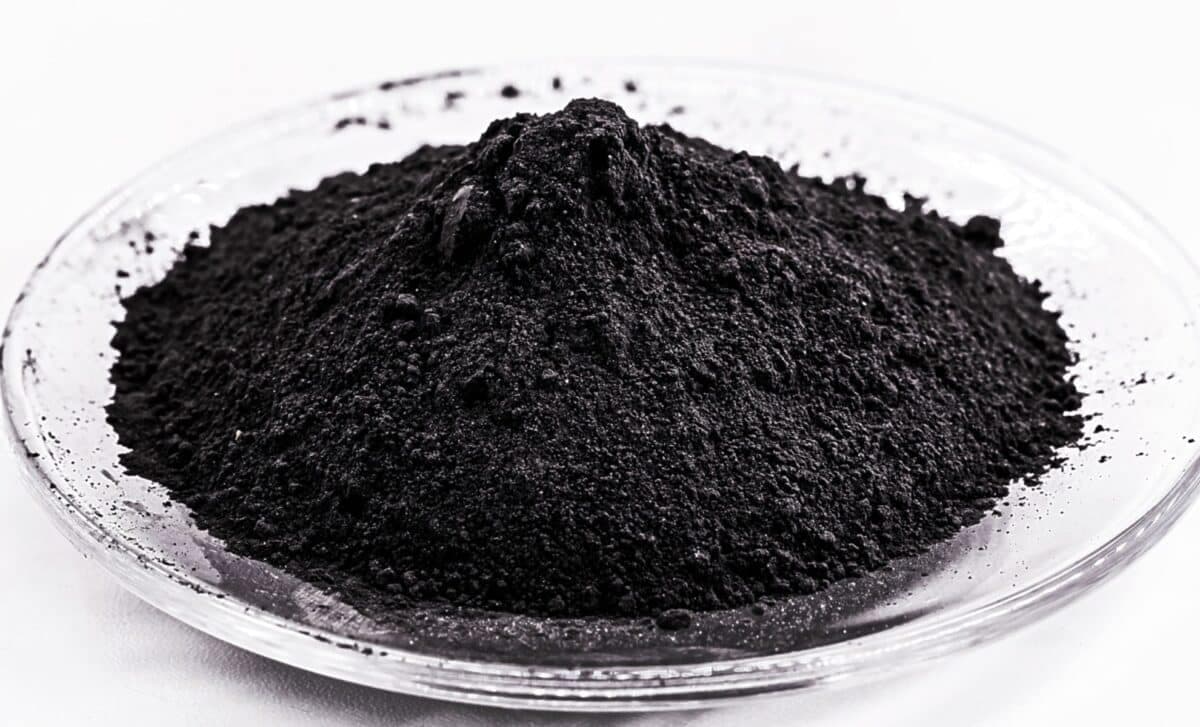
The foundation of this technology traces back to a collaboration with researchers at Palacký University Olomouc in the Czech Republic, where scientists had been exploring the antimicrobial potential of graphene oxide—a single layer of carbon atoms arranged in a hexagonal lattice. It was this foundational work that caught the attention of Peter Wick, head of Empa’s Nanomaterials in Health Lab and a 25-year veteran in biomaterials science. Wick and his team, including chemist Giacomo Reina, who joined in 2023, set out to refine the material into a practical medical coating. The result is a hybrid composed of graphene oxide and polyvinyl alcohol (PVA), a biocompatible polymer widely used in food packaging and medical devices. The coating is so thin—measuring just a few nanometers—that it is invisible to the naked eye, allowing seamless integration onto medical instruments, implants, and even personal protective equipment without altering function or appearance.
Four Tailored Formulations Designed for Specific Medical Needs
Reina and his colleagues synthesized four distinct graphene-based formulations, each engineered to optimize performance for different applications. While the core chemistry remains rooted in graphene oxide, subtle variations in composition and structure allow the team to tailor the material’s antimicrobial potency, stability, and compatibility with human tissue. One variant, for instance, is optimized for rapid heat dissipation to minimize thermal stress on surrounding cells, while another focuses on maximizing reactive oxygen species generation—a key mechanism behind its germicidal effect. According to Reina, these are believed to be the first antimicrobial coatings based on graphene acid, a derivative of graphene oxide with enhanced chemical reactivity. The team’s rigorous criteria required the material to be not only antimicrobial but also tissue-compatible, environmentally biodegradable, and chemically stable under physiological conditions—benchmarks that most existing coatings, particularly those relying on heavy metals, have failed to meet consistently.
We didn’t just want to create another antimicrobial coating. We aimed to design a material that could be precisely controlled, that wouldn’t accumulate in the environment, and that could be safely applied even to sensitive tissues. Graphene-based materials gave us that unique balance of high efficacy and low toxicity.
How Infrared Light Unleashes the Coating’s Germicidal Power
The core innovation lies in the material’s ability to harness light as a trigger for antimicrobial action. When exposed to near-infrared light—wavelengths commonly used in therapeutic settings such as pain management or physiotherapy—the graphene coating rapidly heats to approximately 44 degrees Celsius. While this temperature alone can weaken bacterial cell walls, the most critical effect is photothermal activation: the infrared light induces a chemical reaction between the graphene oxide and ambient oxygen, generating highly reactive oxygen radicals. These free radicals attack and disrupt microbial cell membranes, proteins, and DNA, effectively killing the pathogen. What makes this approach particularly powerful is its precision. The antimicrobial response can be fine-tuned by adjusting the intensity and duration of light exposure, allowing clinicians to escalate treatment in severe infections or use minimal energy for routine maintenance. For procedures requiring deeper penetration, such as activating a coating on an internal implant, clinicians could use laser-based systems to deliver focused infrared energy through up to two centimeters of tissue.
Dental Implants as the First Frontier: A Targeted Solution for Chronic Infections
With proof-of-concept established in lab settings, the Empa team has turned its focus to a pressing and widespread medical challenge: infections associated with dental implants. These titanium screws, surgically anchored into the jawbone to support crowns or bridges, have a success rate exceeding 95% in healthy patients. However, in up to 10% of cases, bacteria colonize the implant surface, forming biofilms that resist antibiotics and immune defenses. These infections can lead to peri-implantitis—a destructive inflammatory condition that erodes surrounding bone and, in severe cases, spreads systemically, posing life-threatening risks. Under the supervision of Wick and Professor Roland Jung of the University of Zurich’s Center for Dental Medicine, doctoral student Paula Bürgisser is leading efforts to adapt the graphene coating for dental use.
A Preventive and Reactive Strategy for Implant Safety
The proposed application is elegantly simple: the portion of a dental implant that interfaces with gum tissue would be pre-coated with the graphene-based material during manufacturing. Once implanted, clinicians could activate the coating using a handheld near-infrared device during routine dental check-ups or at the first sign of infection. The treatment not only eliminates surface bacteria but can be repeated as needed without degrading the coating’s structure or efficacy. In vitro testing has shown that the material retains its antimicrobial properties through multiple activation cycles, a critical advantage over silver coatings, which often lose potency after prolonged use. The team envisions a future where such coatings become standard on all intraoral implants, significantly reducing the incidence of implant failures and systemic complications.
Regulatory Pathway and Clinical Realities
Despite the promising results, the journey from lab bench to patient is long and complex. The team plans to partner with a private-sector medical technology company within the next three to four years to initiate clinical trials, a process that typically spans several years and demands rigorous evaluation by regulatory bodies such as the U.S. Food and Drug Administration or the European Medicines Agency. Even if trials succeed, widespread patient access could still be a decade away, according to Wick. The timeline reflects not only the need for extensive safety and efficacy data but also the challenges of scaling nanomaterial production while maintaining consistency and affordability. Still, the potential impact—particularly in high-risk environments like intensive care units, operating rooms, and dental clinics—has sparked significant interest from investors and clinicians alike.
- A graphene-based coating activated by infrared light can eliminate nearly 100% of one superbug strain and over 90% of another, outperforming silver-based coatings.
- The material is designed to be tissue-compatible, environmentally biodegradable, and chemically stable—addressing major drawbacks of traditional metal-based antimicrobials.
- Dental implants are the first real-world target due to the high incidence of biofilm-related infections that often lead to peri-implantitis and systemic complications.
- The technology uses photothermal activation to generate reactive oxygen species, offering precise, on-demand antimicrobial control with minimal side effects.
- Clinical adoption is expected to take a decade or more, but early partnerships and trials could accelerate progress in the coming years.
Beyond Implants: A Platform for Future Medical Technologies
While dental implants represent the immediate focus, the implications of this technology extend far beyond a single application. Wick and his team are already exploring broader uses, including nanomaterial-based sensors for early disease detection and targeted cancer therapies that use light-activated coatings to deliver localized treatment. The versatility of the platform stems from graphene’s unique electronic, thermal, and chemical properties, which can be engineered to respond to specific biological cues or external stimuli. For instance, sensors embedded with similar graphene composites could detect biomarkers for sepsis or diabetes in real time, while cancer treatments might employ light-triggered coatings to release chemotherapeutic agents directly at tumor sites. These long-term visions underscore a fundamental truth articulated by Wick: basic research in materials science continues to unlock unforeseen medical possibilities, transforming abstract laboratory discoveries into tools that can reshape patient care.
Challenges and Considerations: Safety, Scalability, and Cost
Despite the promise, several hurdles remain before the technology can achieve widespread adoption. One key concern is the long-term biocompatibility of graphene-based materials, particularly when implanted in sensitive tissues. While initial cytotoxicity tests have been encouraging, regulators will require extensive data on potential immune responses, inflammation, and degradation over time. Another challenge is scalability: producing high-quality graphene oxide in industrial quantities while maintaining consistency across batches is a known bottleneck in nanomaterial manufacturing. Cost is also a factor, as graphene-based materials are currently more expensive than conventional coatings. However, proponents argue that the reduced need for antibiotics, shorter hospital stays, and lower infection-related complications could offset these initial costs, making the technology economically viable in the long run. Environmental impact will also be scrutinized, though the team emphasizes that their graphene acid formulations are designed to biodegrade safely without leaving toxic residues.
The Road Ahead: From Lab to Clinic and Beyond
As the Empa team prepares to transition from laboratory research to clinical development, the scientific community is watching closely. The urgency of the antibiotic resistance crisis has never been clearer, with global health authorities sounding alarms about the dwindling arsenal of effective treatments. In this context, innovations like the light-activated graphene coating offer a glimpse of hope—not by replacing antibiotics entirely, but by providing a complementary tool to suppress infections at their source. The next phase will depend on securing funding, forming strategic partnerships, and navigating the rigorous pathways of medical regulation. Yet, the potential rewards are immense: a future where hospital-acquired infections are preventable, where implant failures are rare, and where clinicians have a new weapon against the relentless march of superbugs.
Frequently Asked Questions
- How does this graphene coating compare to traditional silver-based antimicrobial coatings?
- Unlike silver coatings, which rely on ion release and can trigger allergic reactions or lose efficacy over time, the graphene-based coating is activated on demand by light and generates reactive oxygen species that directly kill bacteria. It also avoids heavy metal toxicity and environmental persistence, making it safer for patients and ecosystems.
- Can the infrared light penetrate through skin to activate coatings on internal implants?
- Yes. Near-infrared light can penetrate up to two centimeters of tissue, allowing clinicians to activate coatings on internal implants such as orthopedic screws or heart valves without invasive procedures. Laser-based systems can provide even greater precision for deeper applications.
- What are the potential side effects of using this coating on medical implants?
- Early lab tests show the material is tissue-compatible with low cytotoxicity, but full clinical trials are needed to assess potential immune responses or inflammation over extended periods. The team is designing formulations to minimize thermal stress on surrounding cells during activation.