Leagues don't get much deeper than this
Mar 2, 2026 at 10:55 am ET • 20 min read
Rotisserie leagues are known for many things, but among the least discussed is the stress they put on the player pool. With 23 lineup spot to fill, every position is stretched to the max, making it all but certain you'll be weak somewhere.
Now cut the player pool in half, and that's what playing in an AL- or NL-only Rotisserie league is like. You'd be lucky just to be weak somewhere. Factor in the unbridled autonomy of an auction, which is how we distributed players in this particular AL-only league, and you risk being weak everywhere if you don't apply the proper restraints.
I learned the hard way years ago that the most effective restraint is to spread the dollars. A studs-and-duds approach may work in a standard mixed Rotisserie league, where the "duds" themselves still have a fair amount of upside and the waiver wire offers something to fall back on. But in AL-only, the duds really are as described, and the waiver wire is virtually nonexistent. Even a trade to address those shortcomings, while technically possible, is rarely practical because of the lack of excess anywhere. What you draft is your team, and it has to work as-is.
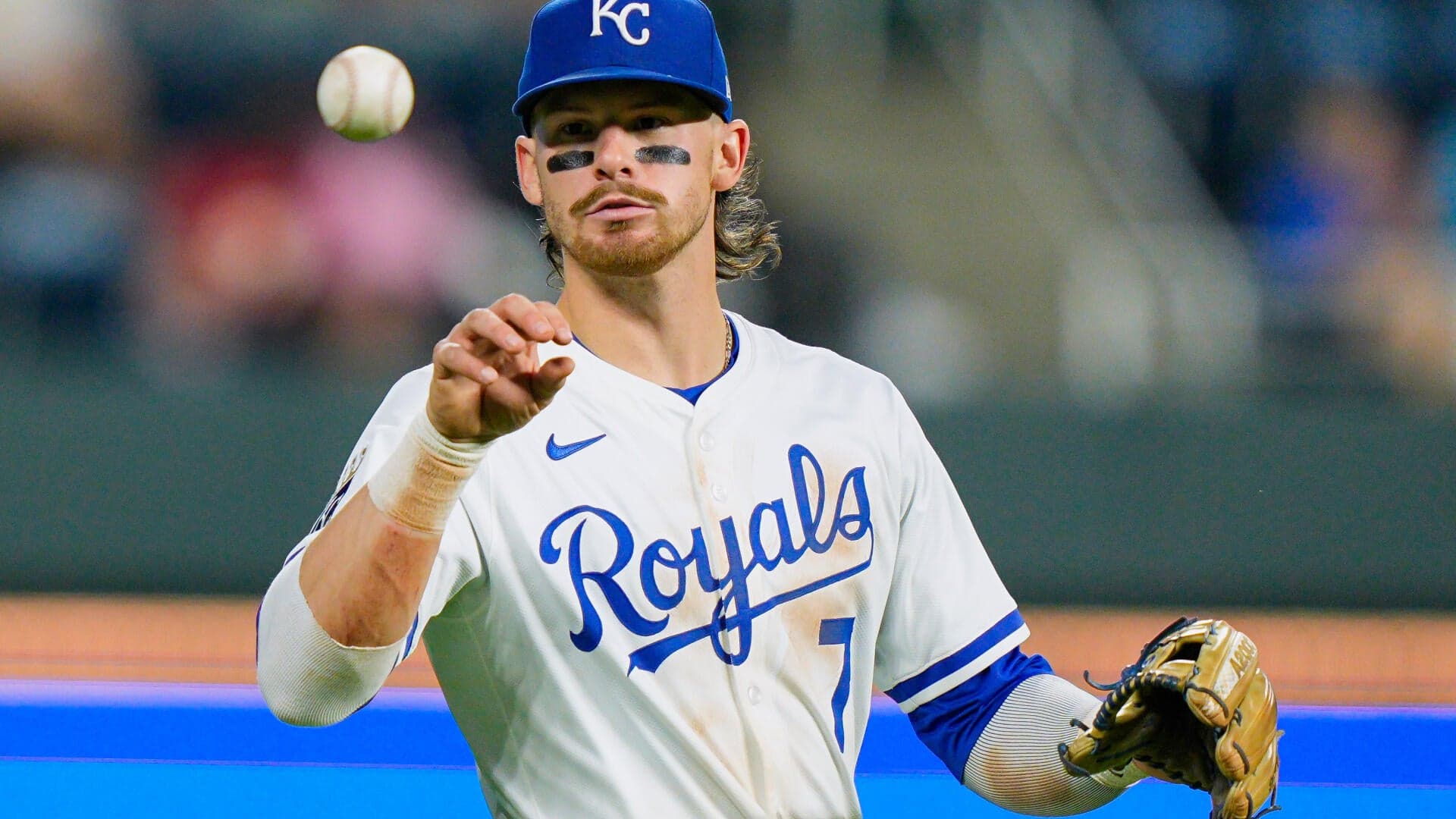
Of course, spreading the dollars means avoiding the most high-end players, which is no one's idea of a good time, but drafting them is often a double whammy. They cost the most just by virtue of them being the best, and then there's an additional upcharge for them being the best. The difference between Bobby Witt ($46) and Corey Seager ($23) in this draft was actually a little more than the difference between Seager and Bryan Rocchio ($1), which doesn't seem proportional when you consider what those respective players are projected to do. In a format that's going to exhaust the entire player pool, the math doesn't need to be any more complicated than that.
My general rule in a league-specific format such as this is to stop short of spending $30 on any player. Turns out this time, I didn't even spend $25. That gave me the lowest-priced top player (Cody Bellinger) of any team, but the tradeoff was that I had six players costing $20 or more (spreading the risk a bit) and only four players costing $2 or less (avoiding the absolute bottom of the barrel). Doc Eisenhauer was the only other drafter to have no players costing $30 or more, and he ended up having the most costing $10 or more (14).
Mike Gianella also took a spread-the-dollars approach, but he did so within a lower range of the rankings, drafting a $35 Cal Raleigh (which seems reasonable enough) but then only one other player costing $20 or more. Notably, Mike has won the championship each of the past two years.
There's a couple of offhanded introductions for you. Here are the full ones:
- Jack Bronkie, avid listener and smart guy
- Jesse Severe, Dynasty Sports Life (@dynsportslife)
- Gavin Tramps, Bat Flips & Nerds (@batflips_nerds)
What else can we take away from this draft?
- Obviously, saves are scarcer than ever in this format, so anyone with a clear path to them demanded top dollar. I count only 10 surefire closers in the AL right now, and this is a 12-team league. The cheapest of those 10 was a $13 Seranthony Dominguez.
- More dollars than I expected went toward pitching in general, with eight starting pitchers going for more than $25. This seems like a growing trend in these AL- and NL-only leagues. It speaks to the idea that only so many pitchers are usable in Rotisserie leagues these days because the rest risk doing too much ratio damage. Rotisserie is an unforgiving format for mediocre pitching, and cutting the player pool in half makes it harder to avoid those land mines.
- Third and second base are thought to be the weakest positions this year, and that calculation doesn't change when only the AL side is in play. It's why I was a little bit reckless in my bid for Kazuma Okamoto ($18), not wanting to settle for for dead weight at third base. Travis Bazzana and Kristian Campbell actually tied for 12th-most expensive second baseman ($4), and neither is expected to begin the year in the majors.
- I did something weird at catcher that I thought was worth highlighting. Carter Jensen ($15) and Danny Jansen ($4) were among the first 17 player nominated, and since I liked the price for both, they became my two catcher right away. You'd think I'd be out on Ben Rice ($22), then, but I do rank him fourth among first basemen in the AL. I had to pull the trigger when I saw him going for multiple dollars less than both Josh Naylor ($27) and Vinnie Pasquantino ($26). Starting a catcher-eligible player at first base would normally be regarded as a misallocation of resources, but I thought the dollars here said otherwise.
(Note: Players listed as RES were selected in the reserve rounds immediately after the salary cap portion of the draft. They make up each team's bench.)
- AL-only Roto salary cap draft Scott White 20 min read
- Scott's Busts 2.0 Scott White 28 min read