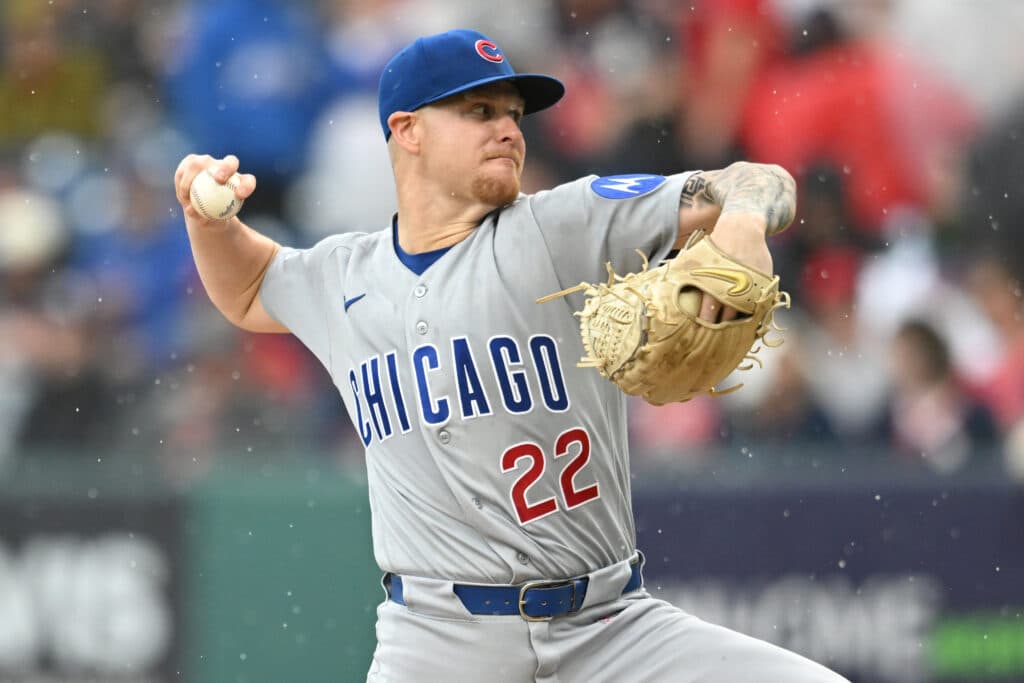
Chicago Cubs right-hander Cade Horton, one of the National League’s most promising young pitchers, will miss the remainder of the 2026 MLB season after undergoing season-ending elbow surgery for a torn ulnar collateral ligament (UCL). The devastating news, confirmed by manager Craig Counsell and reported by *The Athletic*’s Sahadev Sharma and the *Chicago Tribune*’s Meghan Montemurro, caps a frustrating start to what was projected to be a breakthrough year for the 24-year-old. Horton, who had already been placed on the 15-day injured list with forearm discomfort, will be transferred to the 60-day IL to accommodate a potential 40-man roster expansion. Surgeons have not yet determined whether he’ll require full Tommy John surgery (TJS) or an internal brace procedure, but either option will sideline him for at least 14 months—or longer if complications arise.
The Rise of Cade Horton: From Prospect to Cubs Ace
Horton’s journey to becoming the Cubs’ most reliable starter in the 2025 season was nothing short of meteoric. After being called up in mid-May of that year, he delivered a 118-inning campaign with a 2.67 earned run average (ERA), finishing second in National League Rookie of the Year voting. His performance was so impressive that it triggered the Prospect Promotion Incentive (PPI), retroactively granting him a full year of MLB service time—locking in his arbitration eligibility and ensuring he wouldn’t become a free agent before his prime. By the time the 2026 season began, Horton was poised to cement his status as a franchise cornerstone, with pundits projecting him for All-Star caliber numbers. Instead, his career is now on hold, with his future hinging on the outcome of an invasive surgical procedure.
How the Injury Unfolded: A Rapid Decline from Opening Day to the IL
The warning signs emerged during the Cubs’ Friday start against the Milwaukee Brewers, when Horton’s fastball velocity dipped sharply—registering roughly two miles per hour below his typical 94-96 mph average. After summoning the team’s trainer mid-game, he was removed from the contest with forearm tightness, a common precursor to UCL tears in pitchers. The Cubs initially labeled the ailment as "forearm discomfort" but soon upgraded the diagnosis after imaging revealed the ligament damage. By Sunday, Horton was placed on the 15-day injured list, a move that now appears to have been a precursor to the far more serious procedure he’s about to undergo.
The Surgical Crossroads: Tommy John or an Internal Brace?
The type of surgery Horton undergoes will dictate not only his recovery timeline but also his long-term prognosis. Full Tommy John surgery, which involves reconstructing the UCL using a tendon graft (often from the patient’s forearm or hamstring), typically requires 14–18 months for pitchers to return to full strength. The procedure has a success rate of approximately 85–90% for returning to previous performance levels, though some pitchers experience lingering velocity loss or arm fatigue. An alternative—an internal brace procedure—involves reinforcing the ligament with a collagen-coated tape, potentially allowing for a faster return (as early as 9–12 months for low-grade tears). However, this method is less common for major UCL tears and may carry higher re-injury risks. Cubs medical staff are expected to make the final call during the operation, leaving Horton and the organization in limbo until then.
The Cubs’ Rotation Crisis: Depth and Deadline Implications
Horton’s absence couldn’t come at a worse time for the Cubs, who entered the 2026 season with high expectations but have already seen their rotation ravaged by injuries. In addition to Horton, left-hander Matthew Boyd is on the IL with a bicep strain (though his timeline for return is shorter, at two weeks), while Justin Steele—Horton’s teammate and fellow UCL surgery veteran—remains on the 60-day IL after his own 2025 procedure and won’t be eligible to return until late May. From an Opening Day rotation that included Javier Assad, Edward Cabrera, Jameson Taillon, and Shota Imanaga, the Cubs are now down to a skeleton crew, with Assad recalled from Triple-A to fill the void. Swingman Colin Rea is expected to start the next game, but the lack of proven depth is glaring. Top pitching prospect Jaxon Wiggins, currently at Triple-A Iowa, has struggled with command this season (13.9% walk rate in 2026, up from 11.5% in 2025), while non-roster veterans Kyle Wright and Vince Velasquez offer little upside due to their lack of recent MLB experience.
Historical Context: UCL Tears and Their Toll on Young Arms
Horton’s injury fits a troubling trend in MLB, where the incidence of UCL tears among pitchers has surged in recent years. According to data from *The Hardball Times*, the number of Tommy John surgeries performed annually on MLB pitchers has increased from 29 in 2010 to 44 in 2023, with pitchers under 25 accounting for nearly 30% of cases. The Cubs themselves have been no strangers to this epidemic, with Steele’s 2025 surgery following a similar path. Research suggests that factors like increased pitch counts at younger ages, year-round training, and the heightened velocity of modern pitching may contribute to the rise in injuries. Horton’s case is particularly alarming given his age and the PPI-triggered service time, which ensures he won’t reach free agency until at least 2030—making his recovery a critical long-term investment for the franchise.
Key Takeaways: What This Means for Horton, the Cubs, and MLB
- Cade Horton will undergo season-ending UCL surgery, leaving the Cubs without their ace for at least 14 months—or longer if complications arise.
- The type of procedure (Tommy John vs. internal brace) will determine his recovery timeline and potential for a full return to form.
- Chicago’s rotation is now critically thin, with injuries to Horton, Boyd, and Steele forcing the team to rely on unproven arms like Jaxon Wiggins.
- Horton’s lost season underscores the growing epidemic of UCL injuries in MLB, particularly among young pitchers.
- The Cubs’ front office faces a pivotal decision: whether to pursue reinforcements at the trade deadline or lean on internal options.
The Road Ahead: Recovery, Replacement, and Long-Term Outlook
For Horton, the next 12–18 months will be a grueling test of patience and resilience. His rehabilitation will involve a phased approach, starting with early mobility exercises and progressing to long-toss programs and bullpen sessions. The Cubs’ medical staff, led by head athletic trainer Dave Turski, will monitor his progress closely, with checkpoints at the six-month and nine-month marks to assess readiness. Meanwhile, the organization must navigate the 2026 season without its most reliable starter. If Horton undergoes traditional Tommy John surgery, the Cubs may explore trade options to bolster their rotation before the July 31 deadline, with names like Luis Gil or Garrett Crochet potentially in play. However, if an internal brace procedure allows for a quicker return, Horton could rejoin the rotation in mid-2027—just in time to capitalize on the Cubs’ window of contention.
A Franchise at a Crossroads: Balancing Present Needs and Future Investments
The Horton injury arrives at a pivotal juncture for the Cubs, who entered 2026 with a core of young talent (Nico Hoerner, Christopher Morel, Pete Crow-Armstrong) and a farm system ranked among the league’s best. The front office, led by president of baseball operations Jed Hoyer and general manager Carter Hawkins, must now weigh short-term urgency against long-term sustainability. Do they prioritize winning in 2026 by acquiring a proven starter (e.g., Tyler Glasnow, Kodai Senga) at the trade deadline, or do they exercise patience and let internal options like Wiggins or right-hander Michael McAvene develop? Horton’s absence complicates both scenarios, as his return in 2027 will coincide with the maturation of several high-upside prospects—but only if he can regain his pre-injury form.
FAQ: Cade Horton’s Injury and the Cubs’ Rotation
Frequently Asked Questions
- How long will Cade Horton be out after UCL surgery?
- A full Tommy John surgery typically requires 14–18 months for pitchers to return, while an internal brace procedure may allow a faster recovery of 9–12 months. The exact timeline will depend on the procedure performed and Horton’s rehabilitation progress.
- Could the Cubs trade for a starting pitcher before the deadline?
- Yes, but their options will depend on availability and cost. The Cubs have limited trade capital but could pursue mid-tier starters if a deal aligns with their timeline. Injuries to Horton, Boyd, and Steele have made rotation depth a priority heading into July.
- Has Justin Steele returned from his UCL surgery yet?
- No. Steele underwent UCL surgery in April 2025 and remains on the 60-day injured list. He is not eligible to return until late May 2026, leaving the Cubs with just three reliable starters at the moment.