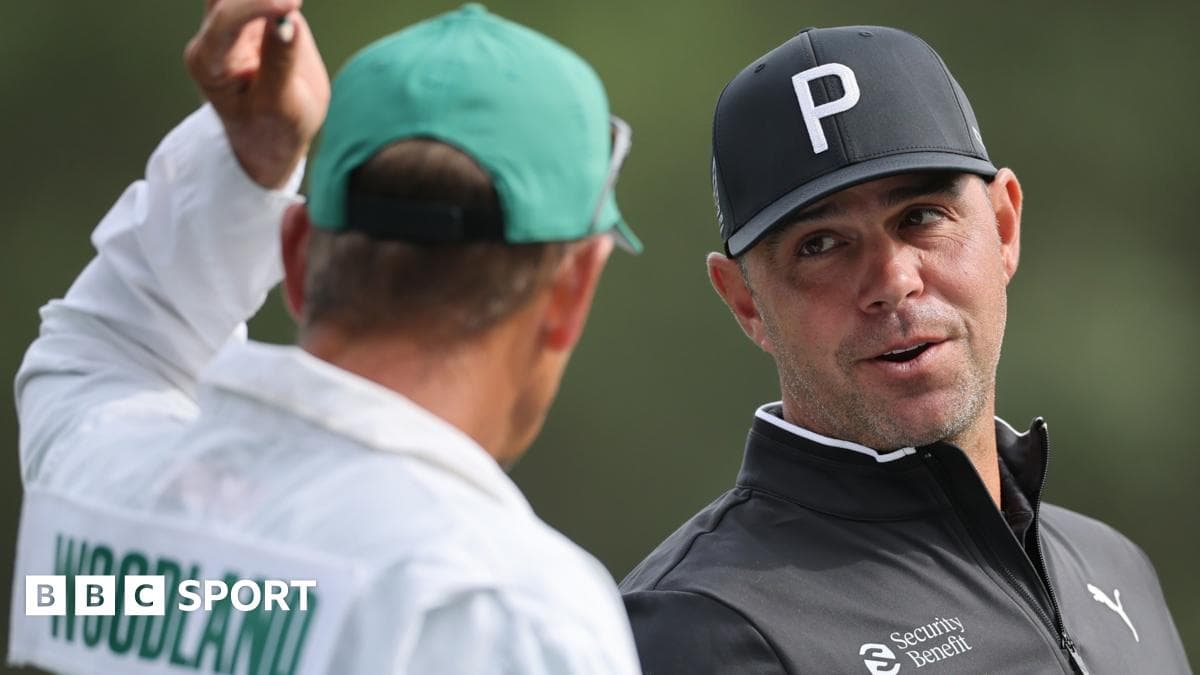
When Gary Woodland steps onto the first tee of Augusta National on Thursday, his focus will extend beyond driving accuracy and course management. The 2019 U.S. Open champion, now in his 13th Masters appearance, has arranged for heightened security measures to help manage the post-traumatic stress disorder (PTSD) that emerged following a 2023 brain surgery to remove a tumor. Woodland’s condition, formally diagnosed about a year ago, has reshaped his approach to tournament golf, forcing him to prioritize psychological safety alongside athletic performance. His presence at the 2026 Masters—where he’ll play the first two rounds alongside world No. 1 Scottie Scheffler and Scotland’s Robert MacIntyre—represents more than a comeback attempt; it’s a statement about mental health awareness in professional sports.
Gary Woodland’s Journey: From Major Champion to Mental Health Advocate
Gary Woodland’s career trajectory has been defined by resilience. The 41-year-old Kansas native won the 2019 U.S. Open at Pebble Beach with a final-round 65, securing his place as one of golf’s most promising talents. However, his journey took a dramatic turn in 2023 when he underwent emergency surgery to remove a brain tumor. While the tumor was benign, the physical and psychological toll of the operation and subsequent recovery process triggered PTSD symptoms that Woodland had never experienced before.
The Brain Surgery That Changed Everything
Woodland’s medical ordeal began in early 2023 when he experienced severe headaches and vision disturbances. After a series of MRI scans, doctors discovered a tumor pressing against his optic nerve. On March 15, 2023, he underwent a 10-hour surgery at the Mayo Clinic in Rochester, Minnesota, where surgeons successfully removed the tumor while preserving critical brain functions. Though the operation was deemed a success, Woodland’s recovery was complicated by anxiety, hypervigilance, and panic attacks—symptoms that would later be diagnosed as PTSD.
The Silent Struggle: PTSD in Professional Golf
PTSD, commonly associated with combat veterans or trauma survivors, is rarely discussed in the context of professional athletes. Yet for Woodland, the condition manifested in ways that directly impacted his ability to compete. Symptoms included an exaggerated startle response to sudden movements, such as a camera operator rushing past or a fan clapping loudly. In high-pressure environments like Augusta National, where crowds can reach 25,000 spectators per day, such triggers can be debilitating. Woodland’s experience highlights a growing conversation within sports about the mental health challenges athletes face, particularly those recovering from physical trauma.
How Extra Security Became a Mental Health Lifeline
Woodland’s solution to managing his PTSD during tournaments has been to implement a highly personalized security protocol. Before the 2026 Masters, he mapped out the locations of security personnel on every hole at Augusta National, ensuring he can visually confirm their presence at all times. This approach stems from his belief that visibility equals safety—a concept he describes as ‘the whole deal’ for him. His caddie, Zach Allen, has also been briefed on the security arrangements, allowing him to provide reassurance when Woodland’s symptoms flare up.
The big deal for me is it's visual. If I can see somebody, then I can remind myself that I'm safe constantly. So I have a good idea now where security is on every hole. The big deal for me, my caddie knows too, so he can constantly remind me.
Woodland’s reliance on security personnel extends beyond Augusta National. At the 2026 Houston Open—his first victory since 2019—he credits his on-course security team with helping him navigate a particularly harrowing moment. On Friday of that tournament, Woodland experienced a hypervigilant episode on the ninth hole, where he became convinced that people were trying to harm him. After confiding in tour security, he was assigned a dedicated team that flanked him throughout the weekend. This support system, he says, was the reason he was able to secure the win.
The Turning Point: Speaking Out About Mental Health
For much of 2024 and early 2025, Woodland kept his struggles private, attempting to manage his PTSD alone. His decision to publicly disclose his condition in early 2025 marked a turning point—not just for his career, but for his personal well-being. Speaking openly about his experiences has given him a newfound strength, he says. In interviews, Woodland has emphasized that vulnerability has been instrumental in his recovery, allowing him to seek professional help and lean on his support network.
Speaking about it and how I feel afterwards made me a lot stronger. I didn’t know that releasing this battle was going to make me stronger, and it has done that. I feel a lot stronger now than I did three weeks ago.
Why the 2026 Masters Matters Beyond Golf
Woodland’s participation in the 2026 Masters is significant for several reasons. First, it represents a rare moment of visibility for mental health struggles in professional sports, where athletes are often expected to perform at peak levels regardless of personal challenges. Second, his story underscores the importance of institutional support within sports organizations. The PGA Tour has increasingly recognized the need for mental health resources, with initiatives like the PGA Tour Player Assistance Program, which offers confidential counseling and wellness support to players. Woodland’s willingness to share his journey could encourage other athletes to seek help without fear of stigma.
The PGA Tour’s Evolving Approach to Mental Health
The PGA Tour has made strides in recent years to address mental health, though the conversation remains in its early stages compared to leagues like the NFL or NBA. In 2022, the tour partnered with the American Foundation for Suicide Prevention to launch the ‘Mind Your Mental’ campaign, aimed at reducing stigma and providing resources for players. Additionally, tour officials have begun offering confidential mental health counseling through the Player Assistance Program, which was established in 2020. While these efforts are a step forward, Woodland’s experience suggests that more personalized, on-course support may be necessary for athletes dealing with conditions like PTSD.
Key Takeaways: What Gary Woodland’s Story Teaches Us
- Gary Woodland’s PTSD, triggered by a 2023 brain surgery, has reshaped his approach to tournament golf, requiring personalized security measures for psychological safety.
- His first victory since 2019 came at the 2026 Houston Open after he began openly communicating with tour security, demonstrating the importance of institutional support.
- Woodland’s public disclosure of his mental health struggles has given him strength and could help destigmatize PTSD in professional sports.
- The PGA Tour is gradually expanding mental health resources, but Woodland’s experience highlights the need for more tailored solutions for athletes facing psychological challenges.
The Broader Implications: Mental Health in Professional Sports
Woodland’s story is part of a broader reckoning within professional sports about mental health. Athletes across disciplines are increasingly speaking out about conditions like anxiety, depression, and PTSD, challenging the long-held notion that mental toughness alone can overcome psychological struggles. In golf, where the mental game is as critical as the physical, the pressure to perform can exacerbate underlying conditions. Woodland’s openness about his PTSD could inspire other golfers—or athletes in any sport—to prioritize their mental well-being without fear of career repercussions.
What’s Next for Gary Woodland?
While Woodland’s focus for the 2026 Masters is on managing his PTSD and competing at a high level, his long-term goals remain ambitious. He has spoken about wanting to return to the winner’s circle consistently, not just as a one-time anomaly. His recent victory in Houston suggests that his new approach to mental health is yielding results, but the road ahead is uncertain. For now, Woodland is content to take things one round at a time, knowing that he has the support systems in place to help him navigate the challenges ahead.
Frequently Asked Questions About Gary Woodland’s PTSD and the 2026 Masters
Frequently Asked Questions
- Why does Gary Woodland need extra security at the Masters?
- Woodland has been diagnosed with PTSD following a 2023 brain surgery, which causes severe anxiety and hypervigilance. Extra security provides visual reassurance, helping him feel safe during tournaments.
- How did Gary Woodland’s PTSD affect his golf performance?
- PTSD symptoms, such as exaggerated startle responses and panic attacks, made it difficult for Woodland to focus during tournaments. His Houston Open win came after he began working closely with tour security to manage his condition.
- Has the PGA Tour implemented mental health programs for players?
- Yes, the PGA Tour offers mental health support through the Player Assistance Program, which provides confidential counseling. Initiatives like ‘Mind Your Mental’ aim to reduce stigma and provide resources for players.