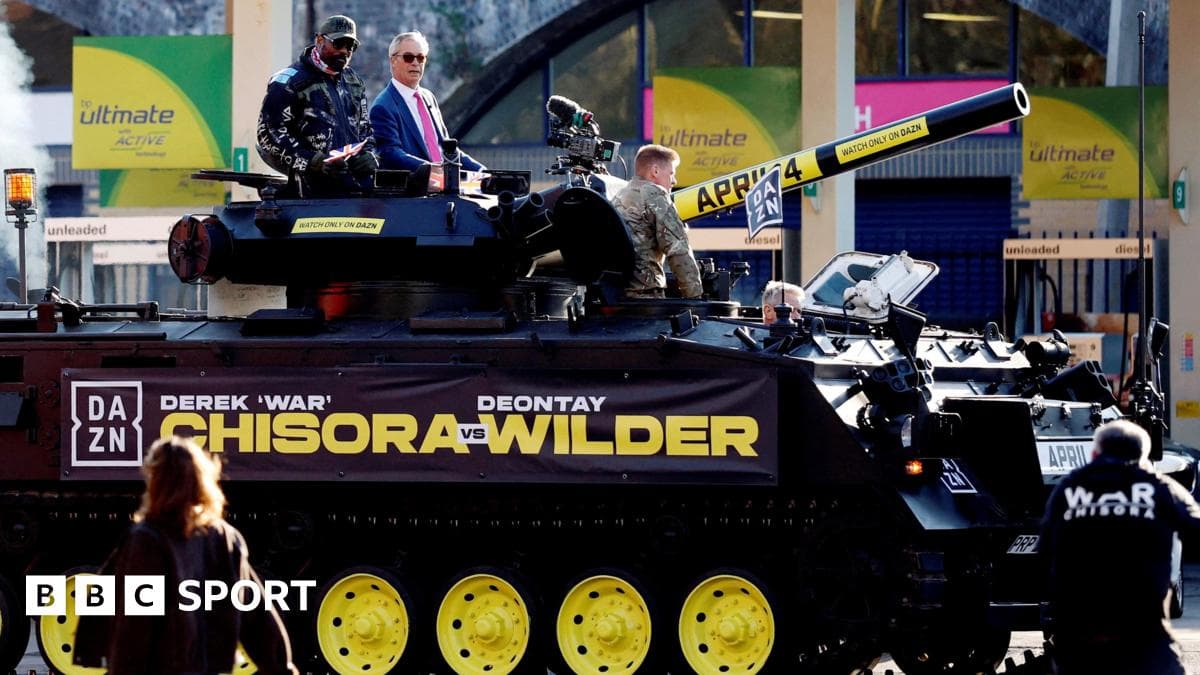
London’s historic York Hall erupted in anticipation on Tuesday as British heavyweight Derek Chisora made a dramatic entrance fit for a manic movie scene—arriving at a pre-fight news conference in an armored military tank, accompanied by Nigel Farage, leader of the Reform UK party. The spectacle, designed to stoke headlines and fire up fans, overshadowed the actual media event, which focused exclusively on Chisora’s final professional bout this Saturday against American rival Deontay Wilder at The O2 Arena. While Farage did not attend the conference, the stunt underscored Chisora’s reputation as boxing’s most audacious showman—a persona that has kept him in the public eye for nearly two decades despite 13 losses to elite opponents.
The Underdog’s Last Stand: Chisora’s 50th Fight and His Relentless Come-Forward Style
At 42, Derek Chisora is stepping into the ring for his 50th professional fight, a milestone few heavyweights ever reach. The Zimbabwe-born Briton, who turned professional in 2007, has become a cult hero in British boxing through sheer grit and unfiltered charisma. Unlike many of his peers who peak early and fade, Chisora has defied expectations by building a career on resilience and spectacle. Known for his aggressive, pressure-fighting style and unapologetic trash talk, he has endeared himself to fans with moments like kissing Carl Baker mid-fight, slapping Vitali Klitschko, and brawling with David Haye outside the ring.
Career Highlights and the Weight of Legacy
Chisora’s resume includes wins over Manuel Charr and Carlos Takam, but his name is also synonymous with tough losses: three against Tyson Fury, two to Oleksandr Usyk, and a brutal KO defeat to Vitali Klitschko in 2012. Despite absorbing 346 rounds of punishment—more than most heavyweights suffer in a decade—Chisora insists this is his final fight. Yet history suggests caution: fighters often vow retirement only to return when the money is right. This bout carries extra weight as Chisora seeks to close his career on his own terms, ideally with a victory that silences critics who dismiss him as a journeyman.
His pre-fight bravado at York Hall was vintage Chisora: he predicted a first-round knockout, swore repeatedly (forcing host Adam Smith to apologize to viewers), and goaded the crowd into chants. ‘Boxing is so easy: it’s put your hands up and hit the other guy. That’s it,’ he quipped, summarizing his no-frills approach to the sport. His confidence belies a body of work that includes 34 victories, but also 13 defeats—11 by stoppage—against top-tier competition.
Wilder’s Desperate Comeback: From ‘Bronze Bomber’ to the Edge of the Abyss
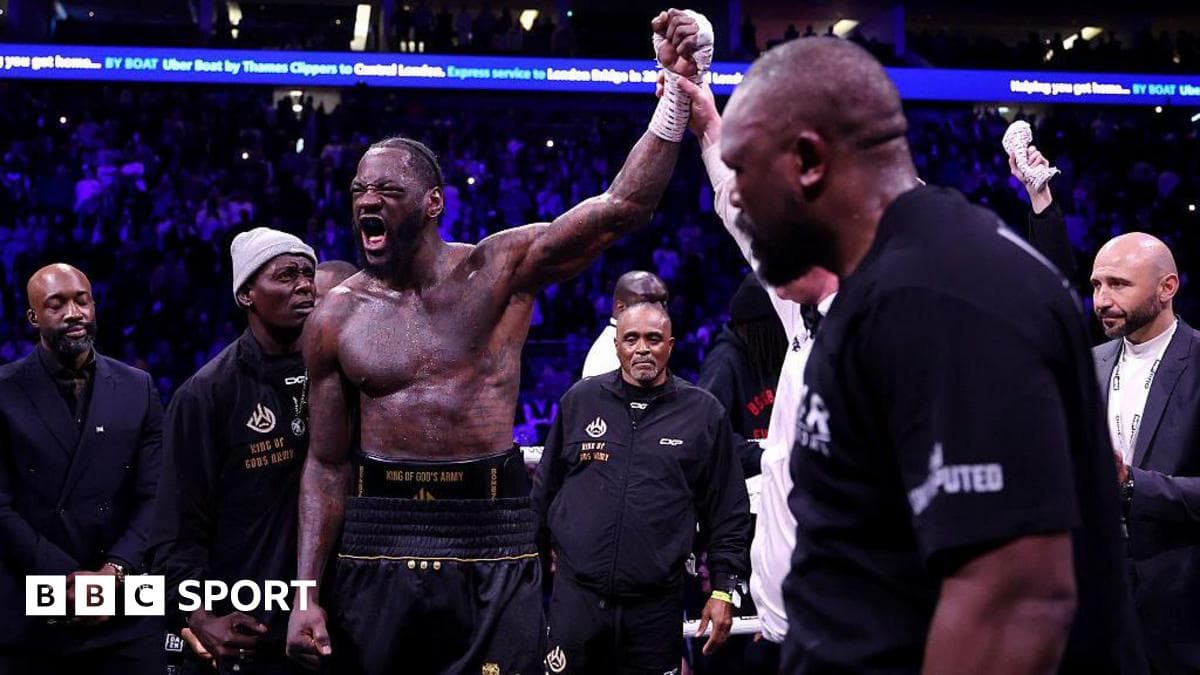
Deontay Wilder, 40, arrives in London as a diminished shadow of the man who once terrorized the heavyweight division. Once known as the ‘Bronze Bomber’ for his explosive right hand, Wilder dominated with 43 knockouts in 44 wins, including a 2015 victory over Luis Ortiz that announced his arrival on the world stage. But his career took a precipitous turn after a trilogy with Tyson Fury between 2018 and 2022, during which he was dropped five times and stopped twice in brutal exchanges. Since the Fury rivalry, Wilder has lost four of his last six fights, including a 2023 knockout loss to Joseph Parker and a 2024 split decision to Luis Ortiz in a rematch.
The ‘Healed’ Wilder and His Final Push for Redemption
Wilder’s pre-fight comments at York Hall were laced with bravado and vulnerability. ‘I am healed, this is a healed Wilder,’ he declared, referring to personal struggles and past setbacks. ‘I need you to bring all the appliances that are not bolted down… I need it for myself.’ His delivery—mixing humor with hints of desperation—signaled a fighter aware he may be running out of second chances. A loss here would likely end his career, as Wilder himself acknowledged: ‘When I say I’m gone, I’m gone. So enjoy me while I’m here.’
Once the WBC heavyweight champion and the first American to hold a world heavyweight title in nine years, Wilder’s legacy is now a cautionary tale of unfulfilled potential. His power remains undeniable—he’s one punch away from immortality—but his timing and judgment have faltered. The question looming over this fight is whether Wilder’s physical tools can still overcome his ring rust and mental scars.
The Politics of Boxing: Farage, the Tank, and the Spectacle Behind the Sport
The presence of Nigel Farage, leader of Reform UK, at Chisora’s arrival thrust the fight into the intersection of sports and politics—a rare but not unprecedented crossover in combat sports. Farage, a polarizing figure in British politics known for his hardline stances on Brexit and immigration, has long used provocative gestures to amplify his message. His appearance beside Chisora in a tank—an armored vehicle typically associated with war—was a deliberate provocation, designed to shock and attract attention. Security at York Hall was notably heightened that day, with attendees subjected to unusually thorough pat-downs. Once word spread that Farage was outside, the overzealous screening made sense to many who witnessed it.
For Chisora, the alliance with Farage fits his larger-than-life persona. The fighter has never shied from controversy, whether it was publicly feuding with promoter Frank Warren, throwing a table at Dillian Whyte during a weigh-in brawl, or trolling opponents with antics like slapping Vitali Klitschko. But beneath the theatrics lies a fundamental truth: Chisora has always fought for respect in a division dominated by glamorous champions like Anthony Joshua and Tyson Fury. This bout is his chance to leave on his own terms, regardless of the political stunt.
Legacy, Health, and the Human Cost of a Veteran Clash
Beyond the headlines, this fight carries serious implications for both men’s health and legacies. Chisora’s 19-year career has left its mark; he’s absorbed punishment from nearly every elite heavyweight of his era. Medical experts have long warned about the long-term effects of repeated head trauma, particularly in fighters who absorb damage early in their careers. Chisora’s willingness to step into the ring for a 50th fight—against a man with Wilder’s power—raises ethical questions about the sport’s duty of care.
Will This Be Chisora’s Swan Song or Another Return?
Chisora has repeatedly stated this is his final fight, but boxing history is littered with retirements that last only as long as the next paycheck. A dominant performance against Wilder could tempt promoters to offer him one more payday, especially in the lucrative exhibition circuit. Conversely, a loss might finally push him into retirement, allowing him to enjoy life beyond the ropes—a rare outcome for a man whose identity has been tied to the sport for two decades.
Wilder’s Final Chapter: Can He Reclaim His Place in History?
For Wilder, the stakes are even higher. At 40, he’s past the age where most heavyweights begin contemplating retirement, yet his decline suggests he’s not ready to walk away. This fight isn’t just about pride; it’s a lifeline. A victory could revive his career, potentially setting up a rematch with Fury or a shot at a fringe title. But defeat would likely close the door on any realistic return, forcing him to confront the end of a journey that once promised greatness. ‘I know when I hang up the gloves, people will miss me,’ he said. Whether that’s true may depend on the outcome this Saturday.
York Hall’s Electric Atmosphere and the Boxing World’s Hope for a Clean Exit
York Hall, a 1,200-capacity venue in Bethnal Green, has long been a proving ground for British boxing. Chisora fought there seven times in his first 11 bouts, and the intimate setting has witnessed countless memorable moments, from Ricky Hatton’s rise to Anthony Joshua’s early dominance. The venue’s narrow corridors and close-to-the-ring seating amplify the drama, making it an ideal stage for a fight that feels more like a celebration of two careers than a typical sporting event.
Yet for all the spectacle, there’s a quiet hope among fight insiders that both men emerge unscathed. Boxing’s reputation has suffered in recent years amid concerns over fighter safety and the exploitation of aging veterans. This bout, while not a marquee matchup, represents an opportunity for two legends to bow out with dignity—or, at the very least, to secure one last payday before the final curtain falls.
- Derek Chisora, 42, fights Deontay Wilder, 40, in Chisora’s 50th professional bout at London’s O2 Arena this Saturday.
- Chisora arrived at a pre-fight news conference in a tank with Nigel Farage, though Farage did not attend the event.
- Wilder, once the WBC heavyweight champion, has lost four of his past six fights and seeks redemption after trilogy losses to Tyson Fury.
- Both fighters have absorbed significant damage over long careers, raising concerns about their long-term health.
- The matchup is one of the most unpredictable in years, with no clear favorite heading into the bout.
What’s Next for Boxing After This Fight?
Regardless of the outcome, Saturday’s fight will mark the beginning of the end for two distinct eras in heavyweight boxing. Chisora’s departure would close a chapter on Britain’s most idiosyncratic heavyweight, while Wilder’s potential exit would signal the fade-out of one of the most explosive punchers of the past decade. The post-fight landscape could see a power vacuum in the division, with prospects like Daniel Dubois and Fabio Wardley positioned to inherit the mantle.
For promoters and networks, the challenge will be filling the void left by these aging stars. Boxing thrives on compelling narratives, and Chisora and Wilder have provided plenty—through triumph, tragedy, and sheer audacity. Their final act may be the last gasp of a bygone era, but it’s one that will be remembered long after the final bell rings.
Key Takeaways
- Derek Chisora fights Deontay Wilder on Saturday at The O2 Arena in London, marking Chisora’s 50th professional fight and Wilder’s attempt to revive his career.
- Chisora’s tank entrance with Nigel Farage at a York Hall news conference overshadowed the event, highlighting his reputation for theatrics.
- Wilder, once the WBC heavyweight champion, has lost four of his last six fights and is fighting to rediscover his destructive form.
- Both men have absorbed extensive damage over long careers, raising concerns about their long-term health and legacy.
- The fight is a high-risk, high-reward scenario with no clear favorite, offering one last payday for two aging legends.
Frequently Asked Questions
Frequently Asked Questions
- Who is favored to win the Derek Chisora vs. Deontay Wilder fight?
- Odds are mixed, with no clear favorite heading into the bout. Chisora’s recent form and home advantage are factors, but Wilder’s power and experience could swing the odds in his favor. Most bookmakers rate the fight as a toss-up.
- How many rounds will the Derek Chisora vs. Deontay Wilder fight last?
- Chisora predicted a one-round knockout, but the fight is scheduled for 12 rounds. Given both men’s power and history, a short, explosive fight is possible, but veteran matchups often go the distance.
- Will this be Derek Chisora’s final fight?
- Chisora has stated this is his 50th and final professional fight, but boxing history shows many retirements are temporary. A strong performance or big payday could tempt him back.