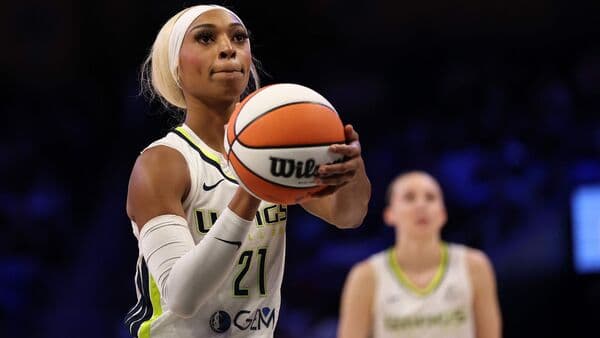
The league has not announced any discipline. Carrington has not been suspended. The debate over what she meant, and whether the WNBA intends to respond at all, remains unresolved.
The Ejection: What Happened Saturday
During Saturday's Fever-Sky game, Carrington was assessed a Flagrant 2 foul on Indiana Fever forward Sophie Cunningham. Under WNBA rules, a Flagrant 2 is the most severe foul classification and carries an automatic ejection. Officials ruled the contact excessive and unnecessary, and Carrington was removed from the game immediately.
The call was contested. Sky supporters felt it was too severe. Fever fans and many neutral observers backed the officials. But wherever you came down on the foul itself, the ejection turned out to be the start of a much bigger story.
The "White Privilege" Post
Shortly after the game, Carrington posted on Threads and tagged the Indiana Fever's official account. The post included the phrase "White privilege," though the full message left enough room for interpretation that it did not land the same way for everyone. She did not specify in that initial post exactly what she was accusing the Fever of, or which person or incident she was pointing to.
That ambiguity made things worse. Supporters read the post as a pointed critique of how Black players are treated differently than white players, whether in officiating, media coverage, or fan reception. Critics read it as a vague and unfair accusation aimed at a team and its fanbase rather than any concrete grievance.
Sports media picked it up quickly, and it spread well outside WNBA circles.
Carrington Responds to Emmanuel Acho
As the backlash grew, sports commentator Emmanuel Acho publicly questioned Carrington's use of the term. She replied to him directly on X, defending the post and standing by her language.
She did not walk anything back. Her reply made clear she believed the phrase was appropriate in the context she intended, and she was not looking to soften the message for critics who disagreed with her framing.
Whatever your view of the substance, the exchange settled one question: the post was deliberate, not reactive, and she was prepared to defend it.
Sophie Cunningham's Background and the Protests
Cunningham's presence in this story adds another layer. She has been publicly outspoken in her opposition to transgender athletes competing in women's sports, a position that has made her one of the more polarizing figures in and around the league.
Saturday's game at the United Center drew organized rallies and counter-protests outside the arena alongside the usual crowd. Demonstrators on multiple sides showed up, a reflection of the broader cultural tensions that have attached themselves to certain WNBA matchups this season. Games between Chicago and Indiana have become among the most politically charged in the league, partly because of the players involved and the audiences they draw.
That context gave Carrington's ejection and her subsequent post considerably more weight than they might have carried in a quieter week.
The WNBA's Silence
By the time Monday's game tipped off, the WNBA had not announced any review, fine, or suspension connected to Carrington's social media post. She suited up for Chicago against Seattle without any apparent intervention from the league.
That silence has drawn criticism. The league has moved quickly on player conduct in other situations, and some observers argue that a player publicly tagging a rival team's official account and invoking racial privilege, without further explanation, warrants at minimum some acknowledgment from the league office.
Others take the opposite view, arguing the league is right to stay out of it and that treating the post as protected speech avoids the optics of punishing a Black player for speaking about race.
The WNBA has not explained its position either way.
A Pattern of Friction
Saturday's events did not arrive without history. In 2024, Carrington was involved in an incident with Caitlin Clark in which contact near Clark's eye became a significant flashpoint. Clark is the Fever's most prominent player and one of the most widely followed athletes in women's sports. The incident drew intense scrutiny, with some accusing Carrington of intentional contact and others defending her.
That background means the ejection and the Threads post are being read by many observers as part of a longer-running tension between Carrington and the Fever's players and fanbase, one that keeps finding new ways to surface.
What Comes Next
The league still has time to act. Disciplinary decisions are sometimes delayed while organizations review footage, gather information, or consult legal counsel before making anything public. It is also possible the WNBA has concluded no action is warranted.
What is clear is that this story has grown well beyond a single ejection. It now touches on how the league governs player speech, how race gets discussed in professional women's basketball, and whether the WNBA applies its standards consistently across different players and different situations.
Carrington played Monday. The league said nothing. That silence carries meaning, whether or not anyone in the league office intended it to.