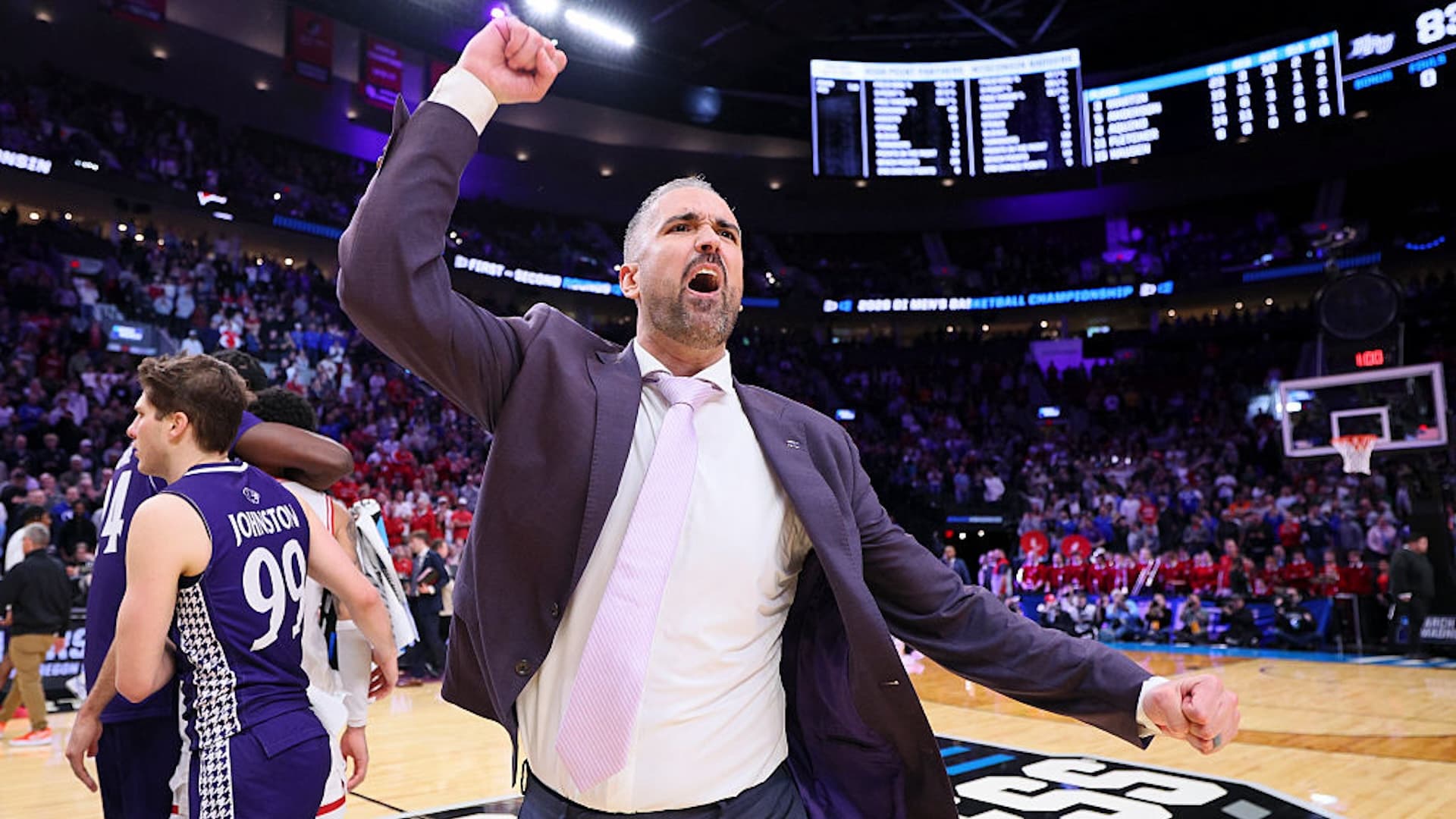
In a March Madness moment that captivated casual fans and basketball purists alike, High Point University—located in the heart of North Carolina’s Piedmont region—catapulted itself into the national spotlight by knocking off fifth-seeded Wisconsin 83-82 in the NCAA Tournament’s opening round. The victory, secured on a buzzer-beating three-pointer by senior guard Chase Johnston, was more than just an upset; it was a collision of two contrasting worlds. On one side stood Wisconsin, a storied Big Ten program with five national championships and a reputation for consistency. On the other was High Point, a Methodist-affiliated private university with fewer than 5,000 students, a basketball program that had never reached the tournament before 2023, and a campus culture that has drawn equal parts admiration and skepticism. The win wasn’t just about basketball—it was about identity, ambition, and the evolving role of private universities in the higher education landscape.
The Rise of High Point Basketball: From Obscurity to Tournament Glory
A Small School with Big Ambitions
High Point University’s basketball program has spent the better part of two decades clawing its way to relevance. Founded in 1924, the school’s athletic department operated for decades in the shadows of North Carolina’s powerhouse programs—Duke, North Carolina, NC State—before making a decisive pivot in the early 2000s. Under the leadership of head coach Tubby Smith, who led Kentucky to a national championship in 1998, High Point elevated its profile in the Big South Conference. Smith’s tenure (2014-2018) laid the foundation for the program’s current success, but it was his successor, former assistant coach Alan Huss (2018-2023), who truly transformed High Point into a contender. Huss’s teams steadily improved, culminating in a 21-win season in 2022-23 and a Big South Conference tournament title in 2024, secured with a 15-point drubbing of Winthrop. That victory earned High Point its first-ever NCAA Tournament bid, where the Panthers became the rare 12-seed to topple a power-conference foe.
The Identity of an Underdog: Johnston and the Three-Point Specialist
No narrative encapsulates High Point’s tournament run—and the school’s broader ethos—quite like the story of Chase Johnston. A 6’2” senior guard from Huntington Beach, California, Johnston was not a highly recruited prospect. He signed with High Point in 2020 as a walk-on, a fact that speaks volumes about the program’s ability to develop talent organically. Johnston’s role, however, was anything but ordinary. During the 2023-24 season, he played just 12 minutes per game, yet attempted 138 of his 143 field goal attempts from beyond the arc, draining 49 percent of them. His usage rate—nearly 30 percent in the games he played—was among the highest in college basketball for a player who wasn’t a primary scorer. "He’s a specialist in the truest sense," said ESPN analyst Jay Bilas in a postgame interview. "Most players don’t have a role this defined." Johnston’s defining moment came in the waning seconds of the Wisconsin game, when he buried a three-pointer over Wisconsin’s Tyler Wahl to seal the victory. The shot wasn’t just a game-winner; it was a statement. "I told myself before the game that if I got a chance, I was going to let it fly," Johnston said. "The coaches trusted me, and I had to repay that faith."
High Point’s Campus: A Theme Park for Future Executives
While High Point’s basketball team was busy defying expectations on the court, the university’s campus has long been a subject of fascination—and occasional ridicule—for its resemblance to a luxury resort. Under the leadership of President Nido Qubein, who took the helm in 2005, High Point has undergone a transformation that prioritizes experiential learning, brand immersion, and what Qubein describes as "preparing students for the real world." The results are undeniable. The campus boasts amenities that rival those of elite private institutions, if not five-star hotels. Students dine at 1924 PRIME, an on-campus steakhouse where servers coach diners on proper etiquette, including which fork to use and when to salt their food. The university’s "Air Travel Training" program includes a full-scale airplane cabin, where students practice boarding, seating, and even conversation techniques to prepare for interactions with executives. "We’re not in the business of pampering students," Qubein told *The Wall Street Journal* in 2021. "We are in the business of preparing our students."
The High Price of Higher Education at High Point
This commitment to luxury comes at a cost. Tuition at High Point for the 2023-24 academic year was $42,222, with total costs exceeding $63,000 when including room, board, and fees. Critics argue that such expenditures are emblematic of the growing commodification of higher education, where amenities often overshadow academics. Yet High Point’s defenders point to outcomes: 90 percent of graduates secure employment or graduate school placement within six months of graduation, a rate that rivals Ivy League institutions. The university’s focus on career readiness extends to its admissions strategy, which aggressively targets wealthy families. Campus tours are conducted in golf carts, and prospective students are greeted with personalized parking spots bearing their names. "When my family visited, we were told that the university’s job is to make sure I’m prepared for the boardroom, not just the classroom," said Corey Kalinoski, a 2022 graduate. "That’s a selling point for a lot of families."
A Methodist Foundation in a Secular World
High Point’s Methodist roots are woven into its identity, though the university operates as a non-denominational institution. Founded by the United Methodist Church, the school maintains ties to its heritage through chapel services, service-learning requirements, and a commitment to social justice. In 2020, High Point launched the "Center for Inclusive Excellence," which focuses on diversity, equity, and inclusion initiatives. Yet the juxtaposition of its basketball success, luxury campus, and Methodist values has sparked debates about authenticity. "There’s a disconnect between the school’s public image and its stated mission," said Dr. Mark Edmundson, a professor of English at the University of Virginia and author of *Why Teach?* "When a school spends millions on steakhouses and airplane cabins, it sends a message about what it values." High Point’s administration counters that the amenities are tools for education, not distractions. "We’re teaching students how to navigate professional spaces where they’ll be judged on their appearance, their communication, and their confidence," said Dr. Qubein. "That’s a form of social justice."
Coach Flynn Clayman: The Agitator Who Became a Mascot
No figure embodies the contradictions of High Point University quite like head basketball coach Flynn Clayman. A former walk-on player at Davidson under Bob McKillop, Clayman’s coaching career has been defined by his relentless advocacy for mid-major programs. His postgame press conference after the Wisconsin victory, in which he tearfully lamented the lack of opportunities for teams like High Point to schedule power-conference opponents, became an instant viral moment. "It looks pretty obvious to me that high majors need to play mid-majors during the season because they said we ain’t played nobody," Clayman said, his voice cracking with emotion. "We won 22 of our last 23 games and we didn’t move up one spot in the metrics. Not one. We’ve won 25 games by double digits. [Wisconsin] is a fantastic team that beat five Top 10 teams." The rant, delivered in a tone that oscillated between disbelief and outrage, was equal parts poignant and perplexing. Critics accused Clayman of sour grapes, while supporters praised his passion for mid-major basketball. Either way, the moment cemented his reputation as the public face of High Point’s underdog ethos.
Why High Point’s Story Resonates Beyond the Court
The narrative of High Point’s tournament run transcends basketball. It’s a story about the changing face of higher education in America, where private universities are increasingly competing for students by offering experiences that mirror the professional world. It’s about the tension between accessibility and exclusivity, and how institutions like High Point justify their high costs by promising outcomes that extend beyond diplomas. It’s also about the democratization of March Madness, where a 12-seed from a school with a $1.2 billion endowment—a figure that includes a $500 million gift from an anonymous donor in 2021—can humble a Big Ten powerhouse. As analysts dissected Wisconsin’s struggles and debated the validity of mid-major basketball, High Point’s players and fans were left to savor a moment that was uniquely theirs. "This isn’t just about basketball," said senior forward John-Michael Wright. "This is about High Point. This is about proving that we belong here, not just on the court, but in the conversation."
Key Takeaways: What High Point’s NCAA Run Reveals
- High Point University, a small Methodist-affiliated private school in North Carolina, stunned Wisconsin 83-82 in the NCAA Tournament as a 12-seed, powered by a buzzer-beating three-pointer from senior guard Chase Johnston.
- The university’s campus is a lightning rod for debate, blending luxury amenities like a steakhouse, airplane cabin training, and personalized parking spots with a mission to prepare students for elite professional environments.
- Head coach Flynn Clayman’s emotional postgame rant about mid-major scheduling inequities became a viral moment, encapsulating the school’s underdog identity and its broader advocacy for smaller programs.
- High Point’s rise reflects the evolving priorities of private higher education, where career readiness and brand immersion are prioritized alongside academic rigor, often at a premium cost.
- The victory underscores the unpredictability of March Madness, where underdogs like High Point can disrupt the status quo and force a reckoning with the structures that govern college sports.
The Road Ahead: What’s Next for High Point?
With its first NCAA Tournament win in program history secured, High Point’s basketball team now faces a daunting second-round matchup against either Arkansas or Illinois, should the Panthers advance. The program’s newfound visibility will likely bring increased recruiting interest, particularly for players drawn to its unique blend of athletic competition and lifestyle amenities. Off the court, the university’s administration will continue to defend its approach to higher education, balancing its Methodist heritage with its modern identity as a training ground for future leaders. "We’re not trying to be Harvard or Stanford," Dr. Qubein said in a 2023 interview. "We’re trying to be High Point—a place where students are prepared not just for their first job, but for a lifetime of leadership." Whether that vision resonates with the broader public remains an open question, but for now, High Point’s basketball team has given the world a reason to pay attention.
Frequently Asked Questions
Frequently Asked Questions
- How did High Point University become known for its luxury campus amenities?
- Under President Nido Qubein, who took over in 2005, High Point transformed its campus into a brand-driven environment emphasizing career readiness. Amenities like a steakhouse, airplane cabin training, and personalized parking spots are framed as tools to prepare students for professional success.
- What is High Point University’s religious affiliation, and how does it influence campus life?
- High Point was founded by the United Methodist Church and maintains ties to its heritage through chapel services and service-learning requirements. However, the university operates as non-denominational and focuses on inclusive excellence programs.
- How much does it cost to attend High Point University, and what do students get for the tuition?
- For the 2023-24 academic year, tuition was $42,222, with total costs exceeding $63,000. Students gain access to luxury amenities, career training programs, and a strong alumni network, with 90 percent securing employment or graduate school placement within six months of graduation.