The 2026 NCAA Men’s Basketball Tournament opened with a historic 36 million brackets registered across major prediction games, but only 224 remained perfect by the end of the first round—after a series of stunning upsets, heart-stopping comebacks, and a handful of blowouts that shattered millions of fans’ dreams. The first 48 hours of March Madness delivered chaos on the court and on paper, as underdogs like VCU, Texas, and High Point toppled higher-seeded opponents, while powerhouses like Florida turned routs into record books. Among the carnage, individual performances stood out: UConn’s Tarris Reed Jr. posted a near-triple-double to save his team’s season, Kansas survived a late scare from Cal Baptist, and Florida wrote itself into tournament lore with the largest 1-seed blowout in history. As the field narrows to 64, the question now isn’t just who will win—it’s who dared to predict it.
Why Perfect Bracket Numbers Plummeted After First Round Upsets
At the start of the 2026 NCAA tournament, over 36 million brackets were entered into major online prediction games hosted by ESPN, CBS, Yahoo, Kalshi, USA Today, and Sports Illustrated. By the conclusion of the first round, the number of perfect brackets had dwindled to just 224—a survival rate of less than 0.0006%. This dramatic reduction wasn’t the result of a single catastrophic upset, but a cascade of close games, buzzer-beaters, and statistical anomalies that collectively erased nearly all flawless predictions. While three 11-seeds and one 12-seed won their openers, the real damage came from tightly contested games that hinged on free throws, defensive stops, and a single missed three-pointer. For example, No. 7 Kentucky’s 89–84 overtime win over No. 10 Santa Clara eliminated roughly 8,000 perfect brackets alone. The unpredictability of the first round underscored why March Madness is as much a test of statistical clairvoyance as it is of basketball IQ.
The Upset That Killed Thousands of Perfect Brackets
The most devastating moment for bracketologists came in Lexington, Kentucky, where the Wildcats escaped Santa Clara in a thrilling double-overtime thriller. Kentucky, a No. 7 seed with NBA-level athleticism, found itself in a dogfight with the Broncos, who shot 48% from the field and forced five turnovers. Santa Clara led by three points with under a minute left in regulation, but a clutch three-pointer by Kentucky’s point guard tied the game and sent it to OT. The Wildcats pulled away in the extra session, but not before Santa Clara’s bench mobbed the scorer—only for the ball to go out of bounds, preserving Kentucky’s chance to win. That sequence, combined with a controversial no-call on a potential foul in the final seconds, was enough to tip the scales against thousands of perfect predictions. By the time the final buzzer sounded, 8,000 brackets had been invalidated.
The Cinderella Teams That Almost Ruined Everyone’s Bracket
- VCU (No. 11) over No. 6 Tennessee — one of the first upsets of the tournament, knocking out early favorites.
- Texas (No. 11) over No. 6 Oklahoma State — a 12-point win that stunned analysts and casual fans alike.
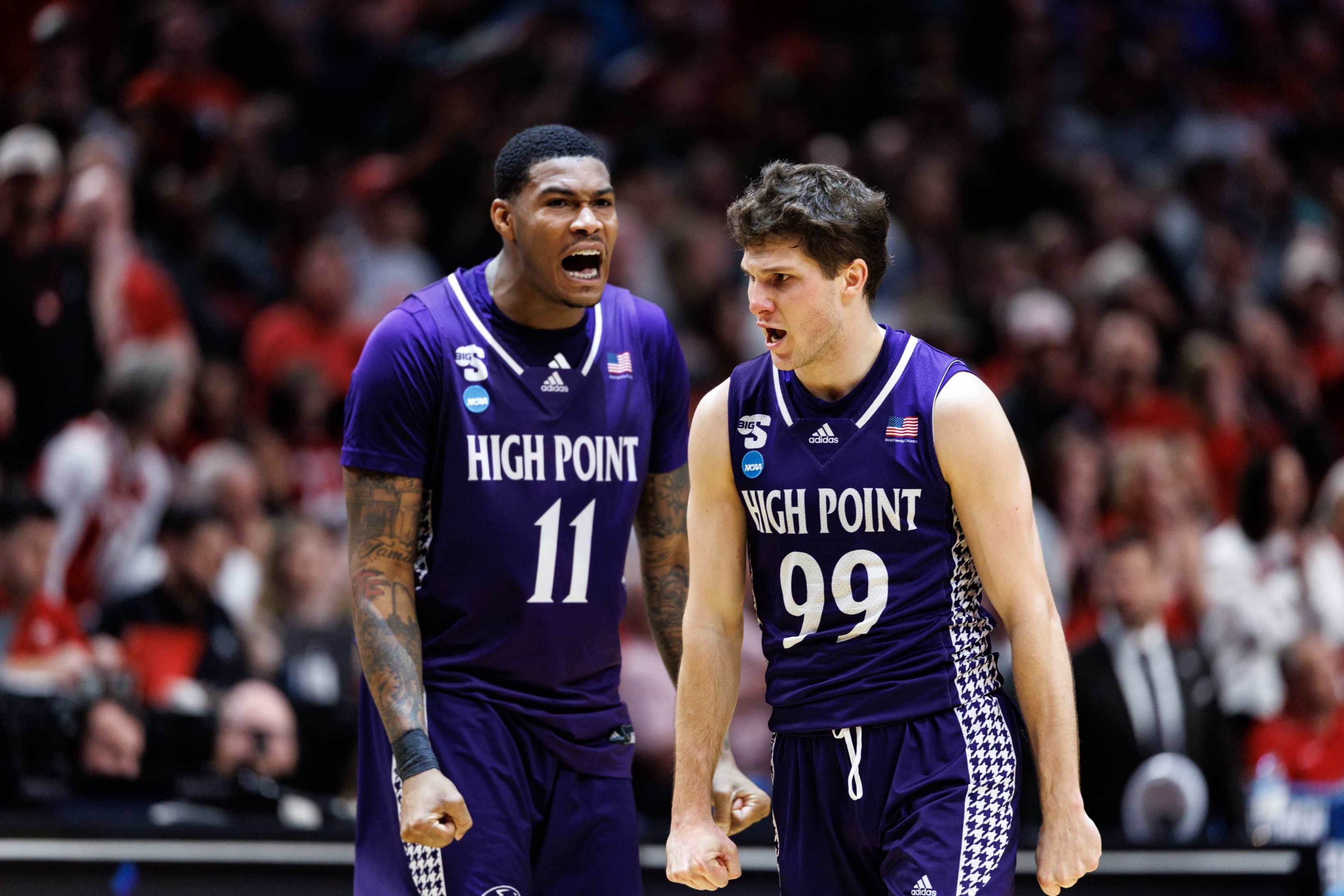
- High Point (No. 12) over No. 5 Auburn — the highest-seeded underdog to win on Day 1.
These three upsets collectively erased millions of brackets within the first 24 hours. VCU’s 76–72 win over Tennessee was especially brutal for bracketologists, as the Volunteers entered as a Final Four contender. The loss exposed a soft spot in Tennessee’s defense and ignited a frenzy of bracket resets. Texas, meanwhile, used a suffocating full-court press to dismantle Oklahoma State, while High Point’s balanced attack overwhelmed Auburn’s zone defense. Each of these wins was by double digits, making them harder to rationalize in hindsight—but for those who picked them, a glimmer of hope remained.
Record-Breaking Blowouts and the Dominance of No. 1 Florida
While upsets dominated the narrative, the first round also produced some of the most lopsided victories in NCAA tournament history. No. 1 Florida dismantled No. 16 Prairie View A&M, 114–55—a 59-point margin that shattered records and sent shockwaves through the bracket pool. The Gators shot 64.3% from the field, including 77.8% from the free-throw line, and outrebounded the Panthers 54–20. This performance surpassed the previous largest 1-over-16 blowout, Kansas’ 58-point win over Prairie View A&M in 1998, and fell just 10 points short of the all-time record set by Loyola-Chicago over Tennessee Tech in 1963 (111–42). Florida’s dominance wasn’t just a statistical anomaly—it was a statement. With guards Tyrese Samuel and Jalen Green combining for 44 points, the Gators announced themselves as national title contenders.
How Florida’s Historic Win Changed the Bracket Landscape
Florida’s 59-point win didn’t just eliminate brackets—it redefined expectations. By routing a 16-seed by nearly 60 points, the Gators proved they could score at will and control tempo, two traits of champions. This result forced many bracketologists to rethink their Final Four projections, as Florida now looked like a legitimate title threat rather than a vulnerable top seed. The win also triggered automatic eliminations in two major bracket games: USA Today and Sports Illustrated both saw their last perfect brackets fall when Florida advanced. For the remaining 224 perfect brackets, Florida’s emergence meant one less variable to predict—but also one more juggernaut to account for in future rounds.
Tarris Reed Jr.’s Career Day Lifts UConn Past Furman in Dramatic Fashion
One of the most improbable performances of the first round came from UConn senior forward Tarris Reed Jr., who authored a historic 31-point, 27-rebound masterpiece in the Huskies’ 82–71 win over No. 15 Furman. Reed shot 12-of-15 from the field, including 7-of-9 from the charity stripe, and pulled down 16 defensive rebounds alongside 11 offensive boards—a modern-day double-double on steroids. His effort was particularly remarkable because UConn shot just 20% from three-point range (5-of-25), forcing the game to be decided in the paint. Reed’s offensive rebounds kept possessions alive, while his second-chance points stemmed Furman’s late rally. The Paladins, led by senior Tom House and freshman Alex Wilkins (each with 21 points), nearly pulled off the upset, cutting the deficit to four in the second half. But Reed’s dominance in the paint and clutch free throws sealed the deal.
“This is why we play the games. I just wanted to go out there and leave it all on the floor for my team, my coaches, and my university. To have a game like this in the tournament—it’s a dream come true.” — Tarris Reed Jr., UConn forward, after recording 31 points and 27 rebounds vs. Furman
Kansas Survives a Scare from Cal Baptist in One of the Most Exciting Games of the Round
No. 4 Kansas entered its opener against No. 13 Cal Baptist as a prohibitive favorite, and for most of the first half, it looked like the Jayhawks would cruise. Kansas led by 20 at the break and by as many as 26 early in the second half. But Cal Baptist, led by senior guard Dominique Daniels Jr. (25 points, four threes), mounted one of the most improbable comebacks in recent tournament history. An 18–2 run cut the deficit to six with under 10 minutes remaining. Kansas, the defending national champions, nearly collapsed under the pressure of a 13-seed’s relentless energy. Freshman Darryn Peterson, however, delivered a clutch performance, scoring 28 points on 11-of-24 shooting—just two shy of his career high—to steady the ship. The Jayhawks held on, 68–60, but the scare served as a reminder that no lead is safe in March.
Purdue, St. John’s, and Miami Maintain Momentum with Dominant First-Round Wins
While chaos reigned elsewhere, three top seeds asserted control with emphatic victories. No. 2 Purdue overwhelmed No. 15 Queens, 104–71, behind senior guard Braden Smith, who broke the NCAA Division I career assists record in the first half en route to a 26-point performance. Smith’s record-breaking night (he finished with 8 assists and 26 points) was the headline, but Purdue’s balanced attack—five players in double figures—demonstrated why the Boilermakers are Final Four contenders. St. John’s, led by senior forward Zuby Ejiofor (14 points, 11 rebounds), handled No. 12 Northern Iowa with a 20–3 first-half run that never relented. The Red Storm shot 51% from the field and limited the Panthers to 39% shooting, including a brutal 21% from beyond the arc. Miami (Fla.), meanwhile, survived a late scare from Missouri to advance, 80–66, behind Malik Reneau’s 24 points.
What’s Next for the Remaining Perfect Brackets and Cinderella Stories
With 224 perfect brackets still alive heading into the second round, the odds of a flawless tournament prediction are now astronomically low—though not impossible. The remaining brackets are a mix of seasoned bracketologists and sheer luck, with some entries surviving due to early upsets that others avoided. Among the matchups that could further decimate perfect brackets: No. 2 UConn vs. the winner of Furman, a potential rematch of Florida vs. Iowa (a No. 9 seed), and a potential blockbuster between Purdue and Miami. Meanwhile, the Cinderella stories aren’t over. Cal Baptist, despite its near-upset of Kansas, remains a team to watch, as does Furman, which pushed UConn to the brink. And let’s not forget VCU, Texas, and High Point—each of which could return if the right matchups align. For the bracketologists still in contention, the next 48 hours will be a minefield of potential heartbreak and redemption.
Key Takeaways from the First Round of the 2026 NCAA Tournament
- Only 224 out of 36 million perfect brackets survived the first round due to upsets, close games, and statistical anomalies.
- Florida set a new record for the largest 1-seed blowout in NCAA tournament history with a 59-point win over Prairie View A&M.
- Tarris Reed Jr.’s 31-point, 27-rebound performance was one of the most dominant individual efforts in recent tournament history.
- Three 11-seeds (VCU, Texas) and one 12-seed (High Point) pulled off upsets on Day 1, reshaping bracket projections nationwide.
- Kansas nearly became the latest top seed to fall victim to a Cinderella team, surviving a furious Cal Baptist comeback.
How Bracket Games Work and Why the First Round Matters Most
NCAA tournament bracket prediction games operate on a simple premise: correctly pick the winner of every game from the Round of 64 to the championship. The entry fee is typically free, with prizes ranging from cash to bragging rights. Major platforms like ESPN, CBS, Yahoo, and Kalshi use different scoring systems, but most award points for correct picks, with bonus points for upsets. The first round is the most punishing because it features the largest number of games (32) and the greatest disparity in seeding. A single upset in the first round can eliminate thousands of brackets, as seen with VCU’s win over Tennessee. The second round is slightly less volatile, but still unpredictable—especially when underdogs like Furman push top seeds. By the Sweet 16, the field has narrowed enough that perfect brackets become slightly more plausible, though still exceedingly rare. Historically, only a handful of brackets have ever survived to the Final Four, and none have reached perfection in the modern era.
The Psychological Toll on Bracket Players: Why We Can’t Look Away
There’s an undeniable psychological draw to March Madness bracket games. For the 36 million participants, each upset isn’t just a statistical event—it’s a personal failure, a moment of doubt, or a flicker of hope. The first round is particularly cruel because it forces fans to confront the randomness of sports. A team’s seed, its record, even its reputation mean little when momentum shifts in an instant. This year, the chaos was amplified by social media, where viral moments—like Reed’s rebounding clinic or Florida’s historic rout—spread faster than ever. The result? A national conversation about “what ifs,” recriminations, and late-night bracket resets. For the 224 perfect bracket holders, the pressure is just beginning. Every game now carries the weight of history—and the dream of $1 million or eternal glory.
Frequently Asked Questions About the 2026 NCAA Tournament Perfect Brackets
Frequently Asked Questions
- How many perfect brackets remain after the first round of the 2026 NCAA tournament?
- Only 224 perfect brackets remain out of over 36 million entries across major prediction games. This number dropped dramatically due to upsets, close games, and statistical anomalies in the first 48 hours of March Madness.
- What was the biggest blowout in the first round of the 2026 tournament?
- No. 1 Florida defeated No. 16 Prairie View A&M, 114–55—a 59-point margin that broke the record for the largest 1-over-16 blowout in NCAA tournament history. The Gators shot 64.3% from the field and outrebounded the Panthers 54–20.
- Who had the best individual performance in the first round?
- UConn’s Tarris Reed Jr. delivered a historic 31-point, 27-rebound performance in the Huskies’ 82–71 win over Furman. His near-triple-double included 16 defensive rebounds and 11 offensive boards, carrying UConn despite a 20% three-point shooting performance.