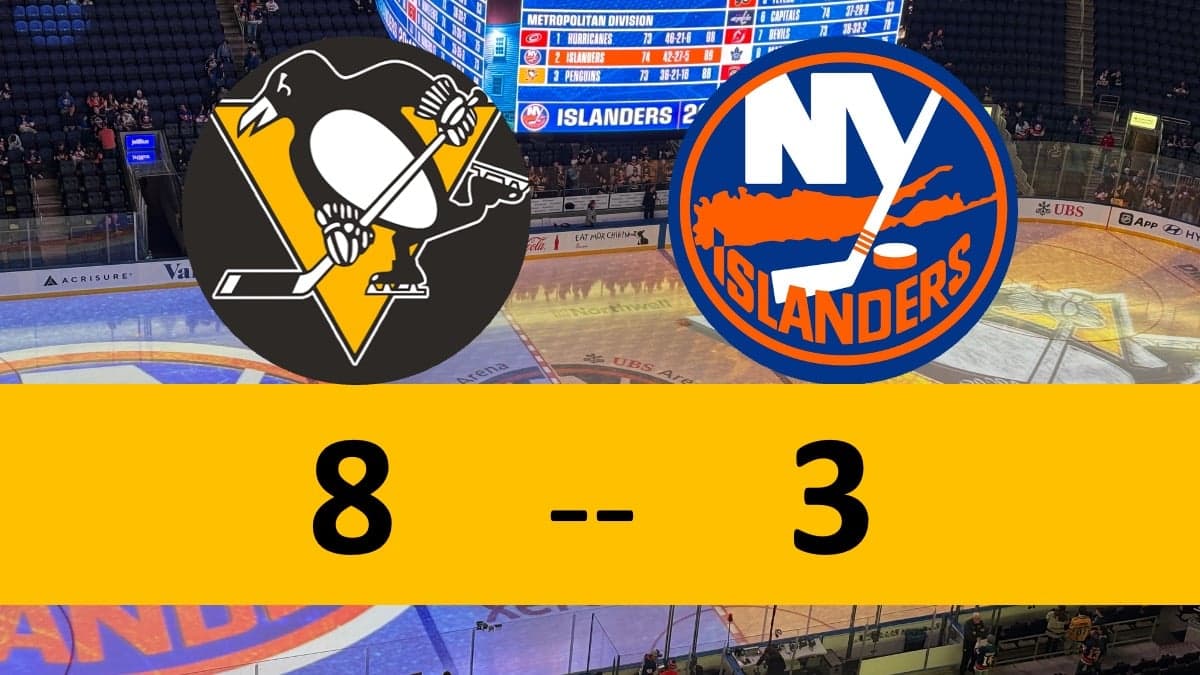
ELMONT, N.Y. — In a high-stakes Metro Division collision at UBS Arena on Monday, the Pittsburgh Penguins delivered a statement victory over the New York Islanders, claiming an 8-3 win that reshaped the playoff picture in the Eastern Conference. The Penguins (37-21-16) entered the night just one point behind the Islanders (42-28-5), but left with a one-point lead of their own, now occupying second place in the division with a game in hand. The victory, powered by a five-goal second period, marked the Penguins’ most dominant offensive performance in recent weeks and sent a clear message about their postseason aspirations.
How the Penguins Overcame Early Defensiveness to Claim Control
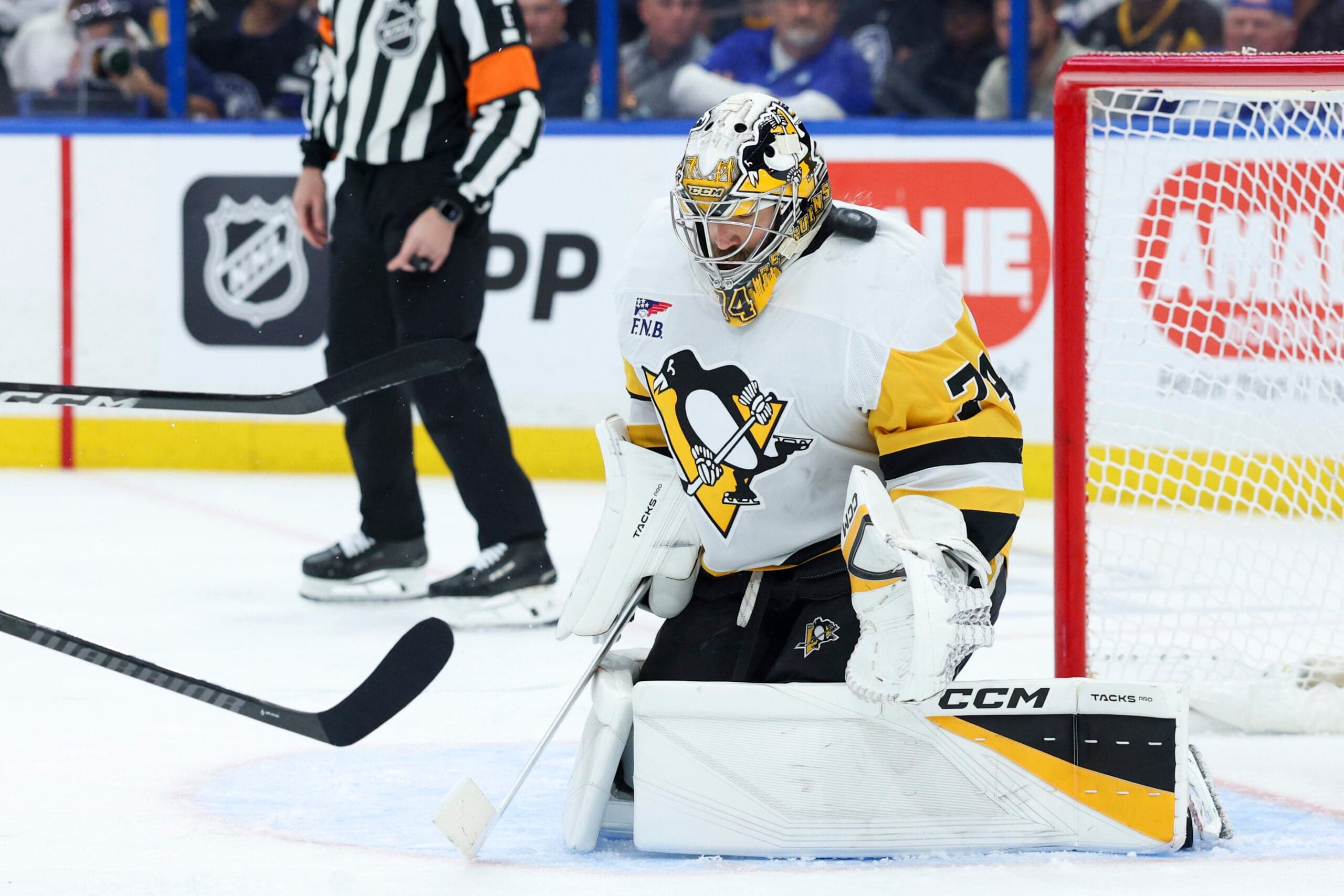
The Penguins’ victory was anything but smooth, beginning with a sluggish first period where neither team could solve the opposing goaltender. Pittsburgh entered the final frame of the opening 20 minutes with just seven shots on goal, while the Islanders managed 13, including the sole shot that beat Arturs Silovs, who was pulled midway through the third period. Coach Dan Muse’s decision to shuffle all four forward lines—except the fourth—left the Penguins disoriented early, as the team struggled mightily in their own zone and failed to generate sustained offensive pressure.
A Frustrating Start Gives Way to a Goal-Fueled Surge
Pittsburgh’s defensive breakdowns in the first 10 minutes led to a swift Islanders power play goal at 1:27 of the second period, when Anders Lee redirected a puck past Silovs after it ricocheted off the back wall. Just 90 seconds later, Mathew Barzal capitalized on a Penguins defensive miscue, flying into the zone and beating Silovs with a wrister that doubled the Islanders’ lead. The Penguins, suddenly staring down a 2-0 deficit, responded with a flurry of goals that would define the game.
Within minutes, Elmer Soderblom ignited the Penguins’ comeback with a shorthanded goal at 6:41, capitalizing on a grinding fourth-line shift to beat Silovs with a close-range wrister. The Islanders’ Brayden Schenn added a third goal at 9:17 on a rebound created by Silovs’ aggressive positioning, but Pittsburgh refused to fold. Instead, the Penguins unleashed a relentless offensive onslaught, scoring four unanswered goals in the middle frame to swing momentum entirely in their favor.
Anthony Mantha’s Historic Night Propels Penguins Past Islanders
Anthony Mantha, who entered the night with 27 goals on the season, authored a performance for the ages, finishing with a career-high three goals and three points in the 8-3 rout. His first marker came at 14:35 of the second period, when a slick give-and-go with Ryan Shea set up a backhanded tally through Silovs’ five-hole. Less than three minutes later, Mantha capitalized on a Brazeau-to-Mantha cross-ice feed, driving to the net and deking around the Islanders’ netminder to slot a backhand into an empty cage. By the time the second period expired, Mantha had authored a three-point night, with two of his goals coming at even strength—a rare feat in modern NHL play.
Rickard Rakell and Ryan Shea Provide Critical Offensive Depth
While Mantha stole the spotlight, Rickard Rakell and Ryan Shea delivered pivotal contributions that stabilized the Penguins’ lineup. Rakell, who had been nursing a lower-body injury, found his scoring touch with a pair of goals, including a shorthanded tally at 11:01 that pulled Pittsburgh within one. Shea, inserted into the lineup as a result of Muse’s line alterations, contributed a goal of his own at 13:29, firing a laser from the left circle to tie the game 3-3. The duo’s production, combined with Mantha’s heroics, ensured the Penguins’ attack was too much for the Islanders to contain.
Pittsburgh’s Defensive Resilience Shines in Third Period
After allowing three goals in the first 20 minutes, the Penguins’ defensive structure tightened significantly in the third period, limiting the Islanders to just eight additional shots despite the Islanders’ late desperation. Silovs, pulled with nearly nine minutes remaining, finished the game with a .864 save percentage, stopping 19 of 22 shots. His replacement, David Rittich, surrendered just one goal on 10 shots, while the Penguins’ forecheckers applied relentless pressure, forcing turnovers that led to Avery Hayes’ sixth goal of the season at 6:06.
Defenseman Parker Wotherspoon, often a liability in his own zone, turned in a strong shift in the third period, logging two assists while helping to stifle the Islanders’ rush attempts. Meanwhile, Elmer Soderblom—already known for his physicality—engaged in a third-period scrap with Islanders defenseman Scott Mayfield, emerging with the upper hand and narrowly missing a Gordie Howe hat trick by a single assist.
Coach Muse’s Line Shuffles Pay Dividends in Late-Season Push
Dan Muse’s decision to overhaul four of his five forward lines Monday appeared risky, given the unit’s lack of chemistry, but the gamble paid off in spades. By swapping out top-line center Tommy Novak for Avery Hayes and inserting lesser-used forwards like Brazeau and Hayes into key roles, Muse forced the Penguins to adapt mid-game—a challenge they met with aplomb. The lineup reshuffle also provided a spark to players like Ben Kindel, who anchored the Penguins’ defensive play and set up Hayes’ eventual goal, proving the importance of roster flexibility in the NHL’s grueling stretch run.
Implications for the Metro Division Playoff Race
With the win, the Penguins leapfrogged the Islanders into second place in the Metro Division, now holding a one-point lead with one game in hand. Their victory also increased their advantage over the Columbus Blue Jackets (second wild-card team) to two points, while the Ottawa Senators and Detroit Red Wings—currently occupying the first two out-of-playoff spots—trail by four points each. The Penguins, who have eight games remaining, can ill-afford another slump if they hope to secure home-ice advantage in the first round of the playoffs. Meanwhile, the Islanders, now clinging to the third wild-card spot in the East, must regroup quickly if they hope to avoid a first-round exit.
Key Takeaways from the Penguins’ Dominant Win
- The Penguins’ five-goal second period, including four unanswered, erased an early 2-0 deficit and swung momentum entirely in their favor.
- Anthony Mantha’s three-point night, highlighted by two even-strength goals, marked a career-high and underscored his importance to Pittsburgh’s offense.
- Coach Dan Muse’s bold line shuffles, which initially caused confusion, ultimately revitalized the Penguins’ attack and set the tone for a crucial late-season push.
- Defensive improvements in the third period, including strong play from Parker Wotherspoon and Elmer Soderblom, prevented the Islanders from mounting a late comeback.
- The win propelled the Penguins into second place in the Metro Division, one point ahead of the Islanders, with a game in hand and a clear playoff path.
What’s Next for the Penguins and Islanders?
For the Penguins, the focus now shifts to maintaining momentum as they navigate a challenging eight-game schedule. Their next contest comes Thursday at home against the Detroit Red Wings, a team they currently hold a four-point advantage over in the wild-card race. The Islanders, meanwhile, face an uphill battle to secure a playoff spot, with their next contest on Wednesday at home against the Washington Capitals. A loss could effectively end their postseason hopes, given their current position in the standings.
Fan and Analyst Reactions to the Penguins’ Resurgence
"This was a must-win game for us in the Metro Division race, and the way we responded after falling behind early shows the character of this team. Anthony Mantha was unreal tonight, and the adjustments we made to the lines paid off when it mattered most." — Dan Muse, Penguins Head Coach
"We started strong, but once we got the first two goals, we let up a little bit. We’ve got to be better at protecting leads and limiting their chances, especially in the third period." — Anders Lee, Islanders Captain
Frequently Asked Questions
Frequently Asked Questions
- How did the Penguins manage to come back from an early 2-0 deficit?
- The Penguins scored four unanswered goals in the second period, led by Anthony Mantha’s two goals and Rickard Rakell’s shorthanded tally, which swung momentum entirely in their favor.
- What impact did Dan Muse’s line changes have on the game?
- Muse’s decision to shuffle four of his five forward lines initially caused confusion, but it ultimately revitalized the Penguins’ attack and provided a spark to players like Avery Hayes and Elmer Soderblom.
- Where do the Penguins and Islanders stand in the Metro Division playoff race after this game?
- The Penguins now hold a one-point lead over the Islanders for second place in the Metro Division, with a game in hand and a clearer path to a first-round bye.