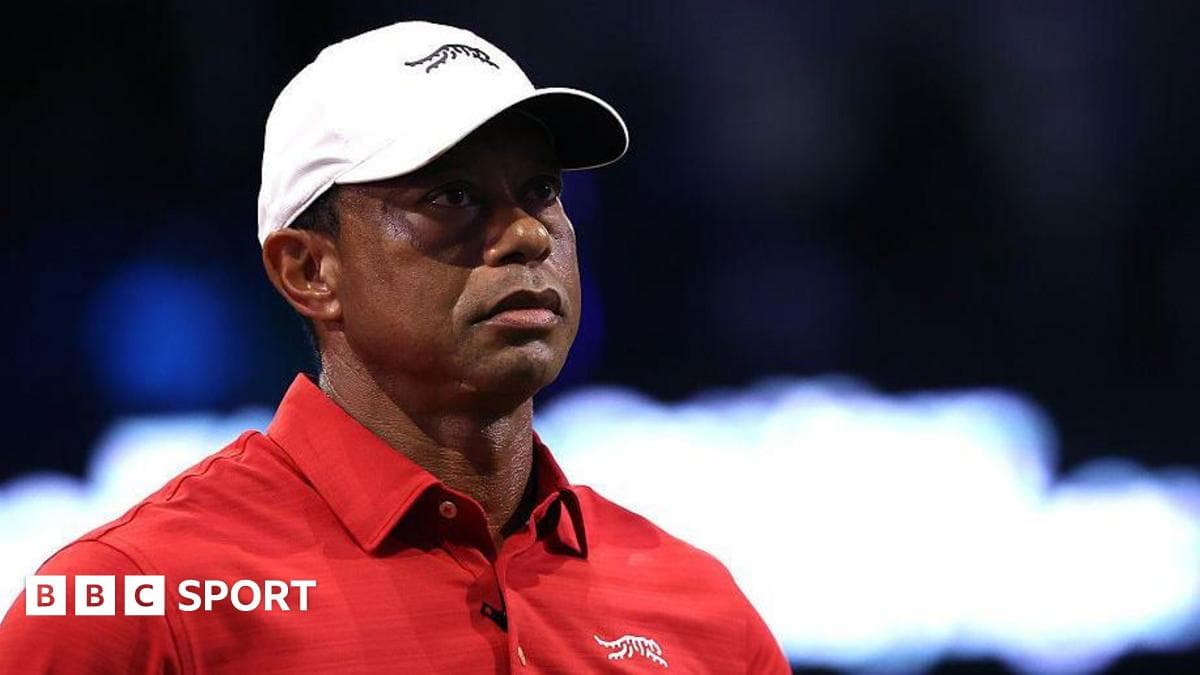
AUGUSTA, Ga. — For the second straight year, the absence of Tiger Woods loomed large over the Masters without him stepping foot on the hallowed grounds of Augusta National. His March 27 arrest in Florida for driving under the influence—following a single-vehicle crash in which his Land Rover flipped on a residential street—has reignited debates about accountability, health, and the enduring myth of invincibility in professional sports. Woods, a five-time Masters champion and global icon of golf, was found with two prescription painkiller pills in his pocket and initially refused a urine test before entering a not guilty plea last week. His decision to seek treatment abroad has drawn both sympathy and criticism, with fellow players like Jason Day acknowledging his struggles while questioning the wisdom of getting behind the wheel in an impaired state.
Why Tiger Woods' Absence at the 2026 Masters Matters to Golf and Beyond
Tiger Woods’ absence from the Masters—his first consecutive miss since 1994—is more than a footnote in golf’s annual narrative. It is a reflection of his enduring, yet fragile, legacy as the sport’s most transformative figure. Since his 1997 Masters victory at age 21, Woods has redefined what it means to dominate a sport, amassing 15 major championships, 82 PGA Tour wins, and a cultural influence that transcends athletics. His 2019 Masters win, a 14-year journey marked by four back surgeries, knee reconstruction, and a 2017 DUI arrest where he claimed a bad mix of painkillers led to his impaired driving, was hailed as one of the greatest comebacks in sports history. Yet his latest absence arrives amid a fresh crisis: a physical toll that includes a 2021 SUV accident that crushed his right leg and ankle, a 2025 Achilles tendon rupture, and a 2024 back surgery. The Masters, often called golf’s most exclusive club, is not just a tournament—it is a pilgrimage for fans, a proving ground for players, and a stage where history is made. Woods’ presence has been synonymous with the event for decades, making his absence a poignant reminder of the human fragility behind athletic greatness.
The Details of Woods' March 27 DUI Arrest and Legal Response
On the evening of March 27, 2026, Tiger Woods was involved in a single-vehicle crash in Jupiter, Florida, that resulted in his Land Rover flipping onto its side. According to the Jupiter Police Department, officers responding to the scene found Woods in the driver’s seat with two prescription painkiller pills in his pocket. When asked to submit to a urine test to determine his impairment level, Woods refused, leading to his arrest on suspicion of driving under the influence. He was briefly jailed before being released pending further legal proceedings. Last week, Woods entered a not guilty plea and filed a motion to seek treatment outside the United States, a request that was granted by the court. The plea hearing on April 10, 2026, marked his first public court appearance since the incident, setting the stage for a legal process that could span months.
Woods' History of Painkiller Use and Past Legal Troubles
This is not Woods’ first encounter with prescription drug misuse. In 2017, he was arrested in California after being found asleep behind the wheel of his running car. Woods later revealed he had taken a mix of painkillers that impaired his judgment. He avoided jail time by entering a diversion program and publicly acknowledged his struggle with painkiller addiction. His medical history includes multiple surgeries—including seven back operations between 2014 and 2024—and chronic pain management, which has required the use of prescription medications. The recurrence of such incidents raises questions about the adequacy of his support systems, both personal and professional, in managing his health and substance use.
Fellow Golfers React: Support, Concern, and Criticism
The golf community’s reaction to Woods’ arrest has been a mix of empathy, concern, and frustration. Jason Day, the 2015 Masters champion and former world No. 1, expressed deep sympathy for Woods but questioned the decision to drive while impaired. Speaking from the Texas Children’s Houston Open just days after the incident, Day told reporters, 'He’s just a human being like everyone else and we have struggles. It’s unfortunate. The only thing that I don’t understand is that it’s a little bit selfish of him to drive and put other people in harm’s way, as well.' Day added, 'When you’re the player that he was and how strong-willed he is, he thinks he can do almost anything. And that’s probably why he’s driving and a little bit under the influence.'
'He’s my hero. The reason why I play golf is because of this tournament and Tiger. It’s hard to see him go through what he’s going through, and especially under the microscope. Must be hard to be who he is and have everything, everyone look on, kind of down on him. Some people want him to fail. Some people obviously want him to succeed.' — Jason Day, on Tiger Woods' struggles
Other legends have been more direct. Six-time major winner Nick Faldo, in an interview with Britain’s Daily Telegraph, stated, 'There are two sides to this right now. There’s one side that’s like... let’s care for Tiger. And then there has got to be a responsibility and an accountability side as well.' Faldo continued, 'Forget about golf. We are not meant to be on the streets with two pills in our pocket. The bottom line is that I really think that this is a serious issue and something should be done that is a little bit more serious than waving him off to a tropical island and saying, “Welcome back,” in three or four months or whatever it might be.' Phil Mickelson, a three-time Masters champion, is also skipping the event due to a family health matter, marking the first time since 1994 that neither Woods nor Mickelson is competing in the first major of the year.
The Physical Toll: Surgeries, Accidents, and a Body Under Strain
Woods’ latest DUI arrest comes at a time when his body has been through more than most athletes endure. In February 2021, his Genesis SUV crashed at high speed on a coastal road in Los Angeles, rolling down a hill and leaving him with a crushed right leg and ankle. The accident required multiple surgeries and a prolonged recovery, cutting short his competitive return. In March 2025, he ruptured his Achilles tendon, an injury that sidelined him from the Masters and forced him to miss the entire PGA Tour season. In December 2024, he underwent his seventh back surgery, a procedure designed to alleviate chronic pain that had plagued him for years. These setbacks have not only impacted his performance but also raised questions about the long-term sustainability of his career. Despite these challenges, Woods has remained active in golf’s infrastructure, including his work on 'The Patch,' a short course he helped refurbish in Augusta, and the ongoing development of the TGR Learning Lab in the city.
Woods’ Role in Augusta: More Than a Champion
Beyond his competitive achievements, Tiger Woods has become a cornerstone of Augusta National’s cultural and philanthropic identity. His 1997 Masters win—where he became the youngest and first Black champion in tournament history—reshaped the game and inspired generations of golfers. For Harris English, a two-time PGA Tour winner and Augusta resident, Woods’ influence is deeply personal. 'He’s such a legend in this game, somebody I looked up to,' English said. 'Watching him win around this place in ’97 is kind of the reason I started getting into golf. I know he’s going to get through this. He has a big fight ahead of him. He’s a fighter. That’s what he does.' English’s remarks underscore the emotional connection fans and players feel toward Woods, whose legacy extends far beyond statistics and trophies. His absence this year is felt not only for what he brings to the tournament but for what he represents: resilience, ambition, and the complex reality of fame.
Key Takeaways: What This Means for Woods, Golf, and Public Perception
- Tiger Woods missed his 25th consecutive Masters appearance after a March 27 DUI arrest in Florida, where his Land Rover flipped during a crash.
- Fellow golfer Jason Day expressed sympathy for Woods but questioned the decision to drive while impaired, highlighting concerns about accountability.
- Woods’ legal team has entered a not guilty plea, and he has been granted permission to seek treatment abroad, though details remain undisclosed.
- This is the latest in a series of health and legal challenges, including multiple surgeries, a 2021 SUV accident, and a 2017 DUI arrest linked to painkiller use.
- Woods’ absence resonates deeply in golf, where his 1997 Masters win transformed the sport and inspired generations of players.
The Broader Implications: Substance Use, Athlete Health, and Public Accountability
Tiger Woods’ situation is not unique in professional sports, where elite athletes often face intense pressure to perform despite physical pain, leading to reliance on prescription medications. The National Football League, for instance, has grappled with opioid addiction among players, while Major League Baseball has seen multiple cases of DUI arrests tied to pain management. The conversation around athlete health has evolved significantly in recent years, with leagues implementing stricter protocols for pain management, mental health support, and substance abuse treatment. However, the high-profile nature of Woods’ case—amid his status as a global icon—amplifies the scrutiny. Should his treatment and recovery be handled privately, or does the public have a right to expect greater accountability? Nick Faldo’s criticism reflects a tension between compassion and the expectation that individuals in the public eye must adhere to societal norms, even when facing personal crises.
What’s Next for Tiger Woods? Recovery, Legal Proceedings, and the Future of His Career
As Woods embarks on international treatment, the immediate question is whether this step will lead to long-term recovery or merely delay the inevitable. His legal team’s decision to seek treatment abroad suggests a recognition of the need for a controlled environment, away from the pressures of his public persona. However, the timeline for his return to competition remains uncertain. Golf’s demanding schedule and the physical toll of the sport make a full comeback increasingly challenging as Woods approaches his 50th birthday in December 2026. The Masters, for which he has won five green jackets, may no longer be the stage for his return. Yet Woods’ history of defying expectations suggests that even the most daunting obstacles can be overcome—if, and when, he chooses to tackle them again.
Frequently Asked Questions
- What charges is Tiger Woods facing from his March 27 DUI arrest?
- Woods was arrested on suspicion of driving under the influence in Jupiter, Florida, after his Land Rover flipped during a crash. He refused a urine test at the scene and was later released pending legal proceedings. He entered a not guilty plea on April 10, 2026, and the case is ongoing.
- Has Tiger Woods been in legal trouble over impaired driving before?
- Yes. In May 2017, Woods was arrested in California for DUI after being found asleep behind the wheel of his running car. He later revealed he had taken a mix of painkillers that impaired his judgment. He avoided jail time by entering a diversion program.
- Why is the Masters so significant to Tiger Woods' legacy?
- Woods won his first Masters in 1997 at age 21, becoming the youngest and first Black champion in tournament history. His 2019 Masters victory was hailed as one of the greatest comebacks in sports, following years of injuries and surgeries. The Masters is both a personal and professional milestone in his career.