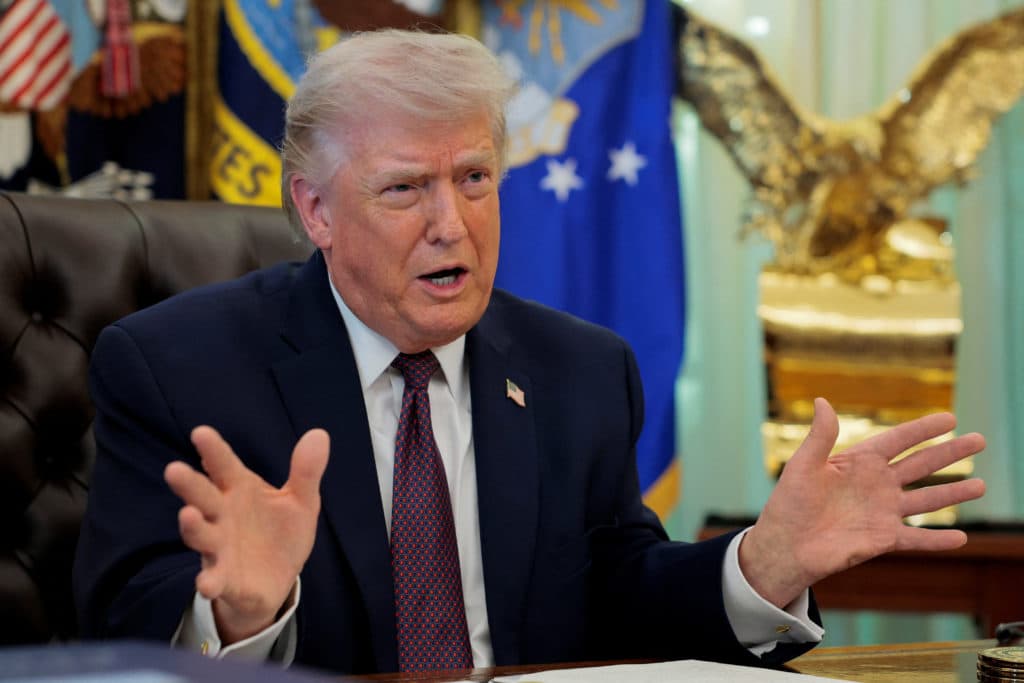
Hours before the women’s Final Four tipped off, President Donald Trump signed an executive order Friday aimed at overhauling college sports by imposing stricter eligibility limits, transfer rules, and pay-for-play compliance—or risking federal funding. The move marks the latest federal intervention in an industry rocked by a $2.8 billion NCAA settlement that upended decades of amateurism rules, now allowing athletes to earn millions while universities grapple with unprecedented financial pressures. Trump’s order directs agencies like the Department of Education and Federal Trade Commission to penalize schools that fail to comply, leveraging the same tactic his administration used to enforce diversity and inclusion policies across education. But with Congress deadlocked for over a year on bipartisan reforms, the order accelerates a high-stakes battle between athletes, universities, and governing bodies over the future of college athletics.
Why Trump’s Executive Order Could Reshape College Sports for Decades
President Trump’s executive order arrives at a pivotal moment for college sports, as the NCAA faces its most significant financial and legal reckoning in history. The $2.8 billion settlement approved in May 2024—amid lawsuits alleging antitrust violations over name, image, and likeness (NIL) rights—has forced universities to rethink everything from athlete compensation to transfer policies. Schools are now distributing over $20 million annually in NIL deals, while athletes have gained near-unrestricted freedom to transfer via the NCAA Transfer Portal. Trump’s order seeks to impose guardrails on these changes, including a five-year participation window for athletes and limits on transfers, despite athletes and advocates arguing such rules infringe on their hard-won rights.
The $2.8 Billion Settlement That Broke Amateurism Forever
The NCAA’s settlement stemmed from lawsuits filed by athletes including former Arizona State swimmer Grant House and former Illinois football player Trey Kohler, who argued that the organization’s restrictions on NIL compensation violated antitrust laws. Under the agreement, the NCAA agreed to pay $2.8 billion to current and former athletes over 10 years, while also loosening rules to allow athletes to profit from endorsements and sponsorships. This seismic shift has upended the financial model of college sports, where universities once relied on amateurism to justify revenue-sharing with athletes. Now, schools in the Power Five conferences (ACC, Big Ten, Big 12, Pac-12, SEC) are pouring millions into NIL collectives—third-party groups that pool donor money to pay athletes—while smaller schools struggle to compete.
How the Executive Order Could Force Compliance Through Federal Funding Cuts
Trump’s order empowers federal agencies to review whether universities violating the new rules should lose access to billions in annual grants and contracts. This tactic mirrors the Department of Education’s 2020 push to defund schools that refused to comply with Title IX or diversity policies, which led to lawsuits and policy reversals. The threat is particularly acute for public universities, which rely heavily on federal funding for research, student aid, and infrastructure. For example, Penn State and Florida State—both facing significant financial pressures—have already made concessions to avoid federal showdowns in other policy areas. However, the order’s legality remains untested, with legal experts warning it could trigger years of litigation over the federal government’s role in regulating college sports.
Key Provisions in Trump’s Order: Eligibility, Transfers, and Pay-for-Play
- Establishes a five-year participation window for athletes, limiting their eligibility to four seasons within five calendar years.
- Allows only one transfer per athlete, with a second transfer permitted after earning a four-year degree.
- Directs agencies to enforce pay-for-play compliance, ensuring athletes’ compensation aligns with NCAA guidelines.
- Requires the Department of Education and FTC to evaluate whether violations of these rules make a school ineligible for federal funding.
“I’m extremely supportive of the President’s order. I’m very excited that we’re making progress and look forward to continued work in Congress to permanently preserve a system that’s done so much for America.” — Cody Campbell, Texas Tech regent and billionaire shaping policy
The Congressional Deadlock and Why Lawmakers Are Stuck
While Trump’s order pressures universities, Congress remains the ultimate arbiter of college sports reform. Lawmakers have been negotiating bipartisan legislation for over a year, with key figures like Sen. Maria Cantwell (D-Wash.) and Sen. Tommy Tuberville (R-Ala.) leading discussions. Cantwell, a member of the Senate Commerce Committee, has emphasized the need for permanent solutions, stating, “I’m glad to know the President wants Congress to pass something.” However, deep divides persist over issues like revenue-sharing for Olympic sports, which are at risk of being defunded as Power Five schools prioritize football and basketball. The NCAA has also struggled to reconcile its own rulebook with state laws, creating a patchwork of regulations that complicates federal oversight.
The Olympic Sports Crisis: Can Non-Revenue Sports Survive?
Trump’s order includes a call to “fix revenue-sharing” to protect Olympic sports like swimming, track and field, and gymnastics—programs that have seen funding cuts as universities prioritize revenue-generating football and basketball teams. The U.S. Olympic and Paralympic Committee’s CEO, Sarah Hirshland, praised the order for “sending an important signal about the value of preserving and promoting investment in women’s and men’s collegiate Olympic sports in America.” Yet, the reality is stark: since 2020, over 50 Division I programs have been cut, including storied football powers like the University of Cincinnati and Western Michigan. The NCAA’s settlement has further strained budgets, as schools divert funds to athlete compensation, leaving little for non-revenue sports.
The Legal Battles Ahead: Court Challenges and Uncertainty
Legal experts predict Trump’s order will spark litigation from athletes, universities, and third-party groups like NIL collectives. Attorney Mit Winter, who specializes in college sports law, warned, “Either way, we’re likely going to see litigation challenging the executive order by athletes and third parties.” Players like House and Kohler have already sued the NCAA over eligibility limits, arguing that restrictions violate antitrust laws. Meanwhile, universities face a dilemma: comply with the federal order or risk legal challenges from athletes who argue the rules infringe on their rights. The University of Nebraska’s president, Jeffrey Gold, acknowledged the uncertainty, saying, “It is critical to what we must do to keep college athletics in line with what we do.”
Reactions from the NCAA and Power Conferences: A Mixed Bag
The NCAA and major conferences have responded cautiously to Trump’s order. NCAA President Charlie Baker noted that the order highlights the need for congressional action, stating, “From what I saw, some of the social media traffic, it’s pretty clear that he made clear that we need Congressional action to sort of seal the deal on a number of these things.” The Atlantic Coast Conference (ACC) and Southeastern Conference (SEC) issued statements thanking Trump for his involvement, with ACC Commissioner Jim Phillips saying, “There continues to be significant momentum to preserve the athletic and academic opportunities for the next generation of student-athletes.” However, critics argue the order oversteps federal authority and could disrupt the delicate balance between amateurism and professionalism in college sports.
Key Takeaways: What This Means for Athletes, Universities, and Fans
- Trump’s executive order imposes stricter eligibility and transfer rules on college athletes, but its enforcement relies on federal funding cuts—a tactic with untested legal grounds.
- The NCAA’s $2.8 billion settlement has accelerated changes in athlete compensation, but the financial strain on universities threatens non-revenue sports like swimming and track.
- Congress remains the ultimate decision-maker, but bipartisan negotiations have stalled for over a year, leaving the future of college sports in limbo.
- Legal challenges are inevitable, with athletes and universities likely to sue over the order’s compliance mandates and eligibility restrictions.
The Broader Implications for Higher Education and Sports Policy
Trump’s order is part of a broader trend of federal intervention in higher education, from diversity policies to transgender rights. By tying college sports compliance to federal funding, the administration is wielding a powerful tool to reshape institutional behavior. However, the precedent raises questions about the federal government’s role in regulating amateur athletics—a domain traditionally governed by the NCAA and state laws. If courts uphold the order, it could embolden future administrations to use funding as leverage for other policy goals, from climate change compliance to gun safety regulations in schools. For now, universities must navigate a complex web of federal mandates, state laws, and NCAA rules, all while grappling with the financial fallout of the NIL era.
Frequently Asked Questions
Frequently Asked Questions
- What does Trump’s executive order on college sports actually do?
- The order directs federal agencies to enforce stricter eligibility limits, transfer rules, and pay-for-play compliance for college athletes. Schools that fail to comply could lose federal funding, including grants and research contracts.
- How does the NCAA’s $2.8 billion settlement affect college sports?
- The settlement allows athletes to profit from their name, image, and likeness, upending decades of amateurism rules. Schools are now distributing millions annually in NIL deals, while the NCAA faces financial strain that threatens non-revenue sports.
- Will Trump’s order lead to legal challenges from athletes?
- Legal experts predict lawsuits from athletes and universities, arguing that the executive order infringes on their rights or oversteps federal authority. Past rulings have limited the government’s ability to regulate amateur athletics.