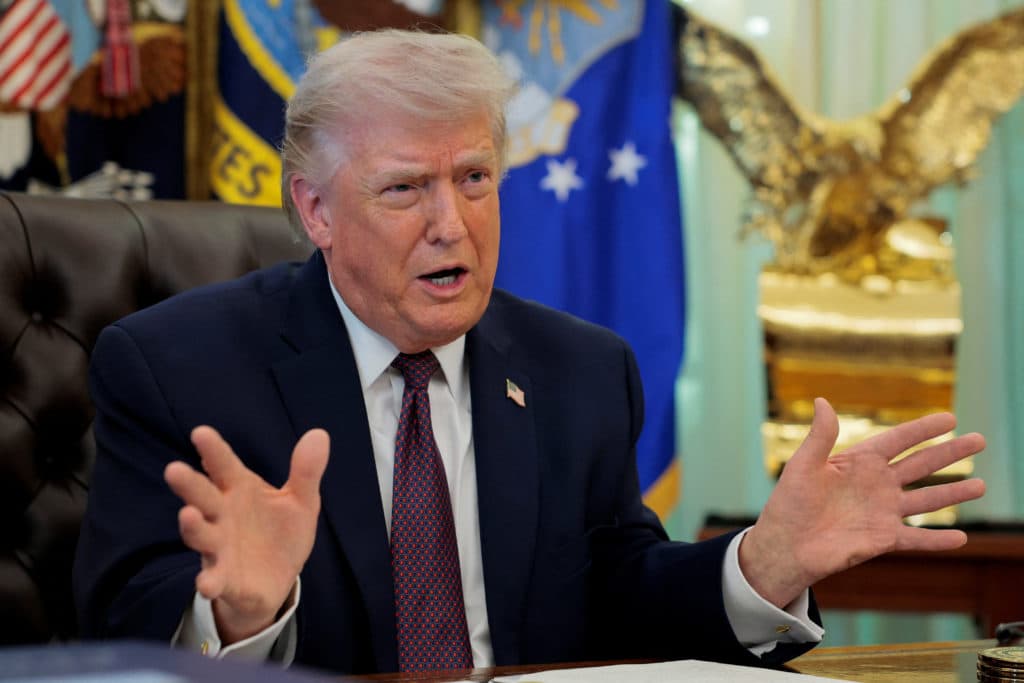
Hours before tip-off at the women’s Final Four in Phoenix, President Donald Trump signed an executive order Friday that aims to overhaul the fractured governance of college sports—threatening to withhold federal funding from schools that fail to comply with new rules on athlete eligibility, transfer limits, and name, image, and likeness (NIL) compensation. The move marks Trump’s latest attempt to impose federal pressure on an industry now reeling from a $2.8 billion settlement that ended amateurism rules and a transfer portal era allowing athletes to switch schools almost at will. While the order’s immediate impact may be limited by legal and bureaucratic hurdles, its broader goal is clear: to accelerate Congress’s stalled efforts to codify college sports’ rapidly evolving rules before the 2025-26 academic year.
Why Trump’s Executive Order Targets College Sports Now
The timing of Trump’s order—signed just as the NCAA Final Four tipped off—is no coincidence. For over a year, Congress has been deadlocked over how to regulate the most sweeping changes to college sports since the 1950s, when the NCAA was formed to standardize rules. The $2.8 billion settlement, approved in May 2024, ended the NCAA’s longstanding amateurism model by allowing athletes to profit from their NIL, while also paving the way for conferences and schools to negotiate revenue-sharing deals. Yet the absence of federal guardrails has created a patchwork of state laws, conference policies, and institutional rules, leaving athletes, coaches, and administrators in a state of perpetual uncertainty. Trump’s order, analysts say, is an attempt to break this gridlock by leveraging the federal government’s most potent tool: the power of the purse.
The $2.8 Billion Settlement That Changed Everything
The catalyst for Trump’s order is the NCAA’s landmark $2.8 billion settlement, which resolved three major lawsuits: *House v. NCAA*, *Hubbard v. NCAA*, and *Carter v. NCAA*. These cases challenged the NCAA’s restrictions on athlete compensation, arguing they violated antitrust laws. The settlement, which requires conferences to distribute $2.8 billion over 10 years to athletes for past NIL earnings, also mandates revenue-sharing for current players—a seismic shift from the days when scholarships were the sole form of compensation. "This settlement didn’t just change the rules; it rewrote the entire playbook," said Mit Winter, a sports law attorney who tracks NCAA litigation. "Now, the question isn’t whether athletes should be paid, but how much, and under what conditions."
Federal Funding as a Lever: How Trump’s Order Could Work
Trump’s order directs federal agencies—including the Education Department, Federal Trade Commission (FTC), and Department of Justice—to evaluate whether universities violating new eligibility or transfer rules should lose access to federal grants and contracts. This tactic mirrors the Trump administration’s earlier attempts to pressure schools on diversity, equity, and inclusion (DEI) policies, as well as transgender rights and curriculum restrictions. "The threat is real, but the enforcement mechanism could take years to unfold," said Sarah Chase, a higher education policy expert at the Brookings Institution. "Federal funding isn’t a light switch you can flip; it’s a process involving audits, appeals, and potential litigation." Under the order, agencies could scrutinize Title IV funding—comprising over $100 billion annually in Pell Grants, student loans, and research grants—if schools fail to comply with rules on athlete eligibility windows, transfer limits, or NIL reporting.
Key Provisions in Trump’s College Sports Order
- Establish a **five-year participation window** for athletes to maintain eligibility, limiting how long they can compete in a sport.
- Restrict athletes to **one transfer** during their collegiate career, with a second transfer permitted upon earning a four-year degree.
- Require schools to report NIL deals to the Education Department for oversight, addressing concerns about "pay-for-play" schemes.
- Instruct Congress to pass legislation by **2025** to permanently codify these rules, avoiding a patchwork of state laws.
The order also calls for "clear, consistent, and fair" eligibility standards, a response to growing frustration among coaches and athletic directors over the transfer portal’s disruption. Since its 2018 launch, the portal has enabled athletes to switch schools with minimal restrictions, undermining the traditional four-year pipeline that once defined college sports. Critics argue the portal has led to roster churn, competitive imbalances, and financial strain on smaller programs. "We’re seeing schools spend millions just to keep up, and it’s not sustainable," said Cody Campbell, a Texas Tech regent and billionaire donor who has advised Trump on the order. "Athletes deserve opportunities, but we also need stability in the system."
Congress’s Role: Can Lawmakers Break the Deadlock?
Trump’s order places Congress in the hot seat, tasking lawmakers with drafting legislation by 2025 to avoid a federal funding showdown. But bipartisan negotiations have been stalled for over a year, with key sticking points including revenue-sharing caps, athlete employment classification (are they students or employees?), and the role of the NCAA versus individual conferences. Senator Maria Cantwell, D-Wash., a senior member of the Senate Commerce Committee, pointed to ongoing talks between Sen. Cory Booker, D-N.J., and Sen. Jerry Moran, R-Kan., as potential pathways forward. "We’re making progress, but the devil’s in the details," Cantwell said at a recent hearing. "The question isn’t whether we need federal action, but how to balance fairness for athletes with the financial realities of college sports."
The Revenue-Sharing Debate: Who Gets What?
One of the thorniest issues is how to distribute revenue-sharing funds—estimated at $20 billion annually across the Power Five conferences alone. The NCAA’s settlement allows conferences to allocate up to 22% of their media rights revenue to athletes, but critics argue this isn’t enough to cover the "full cost of attendance" in Power Five schools, let alone mid-major programs. At the Final Four, NCAA President Charlie Baker acknowledged the need for federal action, stating: "We’ve made progress, but the system is still fragmented. What we need is a national framework that works for everyone, from the Power Five to the smallest Division III school." Meanwhile, conferences like the SEC and ACC have publicly backed Trump’s order, signaling their eagerness to see stability. "There’s a sense of urgency," said ACC Commissioner Jim Phillips. "We owe it to student-athletes to get this right."
Legal Battles Loom as Schools and Athletes Push Back
Trump’s order is likely to face immediate legal challenges, with athletes, advocacy groups, and even some schools arguing that it overreaches federal authority. The order’s call for federal agencies to police eligibility rules could conflict with existing state laws, such as California’s Fair Pay to Play Act, which predates the NCAA’s settlement. "This is a constitutional gray area," said Winter. "The executive branch can’t unilaterally rewrite sports rules, and courts may see this as an overreach." Athletes have already won key victories in court, including the Supreme Court’s 2021 *NCAA v. Alston* decision, which upheld athletes’ rights to compensation for education-related expenses. Now, some are suing over eligibility limits, arguing that a five-year window unfairly penalizes athletes who take medical redshirts or pursue internships. "The system was built for amateurs, but we’re not amateurs anymore," said a former Division I athlete who requested anonymity. "Why should we be held to rules that don’t account for our health or education?"
Financial Strain on Schools: Who Can Afford the New Rules?
While Power Five conferences like the SEC and Big Ten are flush with media revenue—SEC schools earned $700 million in 2023 alone—smaller programs are drowning in debt. Penn State, for example, faces a $2.5 billion unfunded liability in its athletics department, while Florida State reported a $55 million deficit in 2023. These financial pressures have led some schools to cut non-revenue sports, sparking outrage among alumni and donors. "We’re at a breaking point," said University of Nebraska President Jeffrey Gold. "The roundtable Trump hosted last month showed that everyone agrees on the need for change, but no one agrees on who should pay for it." Gold’s comments underscore a growing divide in college sports: as revenue grows, so does the cost of compliance. The Knight Commission on Intercollegiate Athletics estimates that maintaining competitive balance while funding athlete compensation could cost mid-major schools up to $10 million annually.
What’s Next? Litigation, Legislation, and a Possible Supreme Court Showdown
The coming months will likely see a three-front battle: litigation challenging Trump’s order, congressional negotiations over a federal bill, and internal debates within the NCAA and conferences over revenue-sharing models. Legal experts predict that any federal action—whether via executive order, agency rulemaking, or legislation—will face scrutiny from courts, particularly on issues of antitrust law and states’ rights. "The Supreme Court has already ruled that the NCAA can’t restrict education-related compensation," said Winter. "Now, they’ll have to decide if the federal government can impose broader restrictions on athlete mobility or NIL deals." Meanwhile, Congress’s timeline is tight. With the 2025 legislative session looming, lawmakers must reconcile competing interests: athlete advocates pushing for full revenue-sharing, athletic directors seeking fiscal sustainability, and conferences wary of federal overreach. As Trump’s order takes effect, the college sports landscape—once defined by tradition and amateurism—now faces its most turbulent era in history.
Key Takeaways
- President Trump signed an executive order Friday targeting college sports’ eligibility, transfer, and NIL rules, threatening federal funding cuts for non-compliant schools. The move aims to force Congress to act by 2025.
- The order responds to the NCAA’s $2.8 billion settlement, which ended amateurism rules and allowed athletes to profit from their NIL, creating chaos in a system previously governed by strict regulations.
- Federal agencies like the Education Department and FTC may now evaluate whether schools violating these rules should lose access to over $100 billion in annual federal grants and contracts.
- Legal challenges are expected, with athletes and advocacy groups arguing the order overreaches federal authority, while schools face financial strain from compliance costs.
- Congress remains the biggest hurdle, with bipartisan negotiations stalled over revenue-sharing, athlete classification, and the role of conferences vs. the NCAA.
Frequently Asked Questions
Frequently Asked Questions
- What does Trump’s executive order actually do for college athletes?
- The order directs federal agencies to enforce stricter eligibility and transfer rules, including a five-year participation window and one transfer per athlete. It also requires schools to report NIL deals to the Education Department, aiming to curb pay-for-play schemes while pushing Congress to pass permanent legislation by 2025.
- Could schools lose federal funding if they don’t comply?
- Yes, but enforcement would be a lengthy process involving audits, appeals, and potential litigation. The order empowers agencies like the Education Department to review compliance, but actual funding cuts would require multiple steps and could face legal challenges.
- How does the $2.8 billion NCAA settlement affect this order?
- The settlement ended amateurism rules, allowing athletes to profit from NIL and requiring revenue-sharing. Trump’s order builds on this by seeking federal oversight of eligibility and transfer policies, which the NCAA and conferences have struggled to regulate uniformly. The settlement also created financial pressure on schools to adapt quickly.