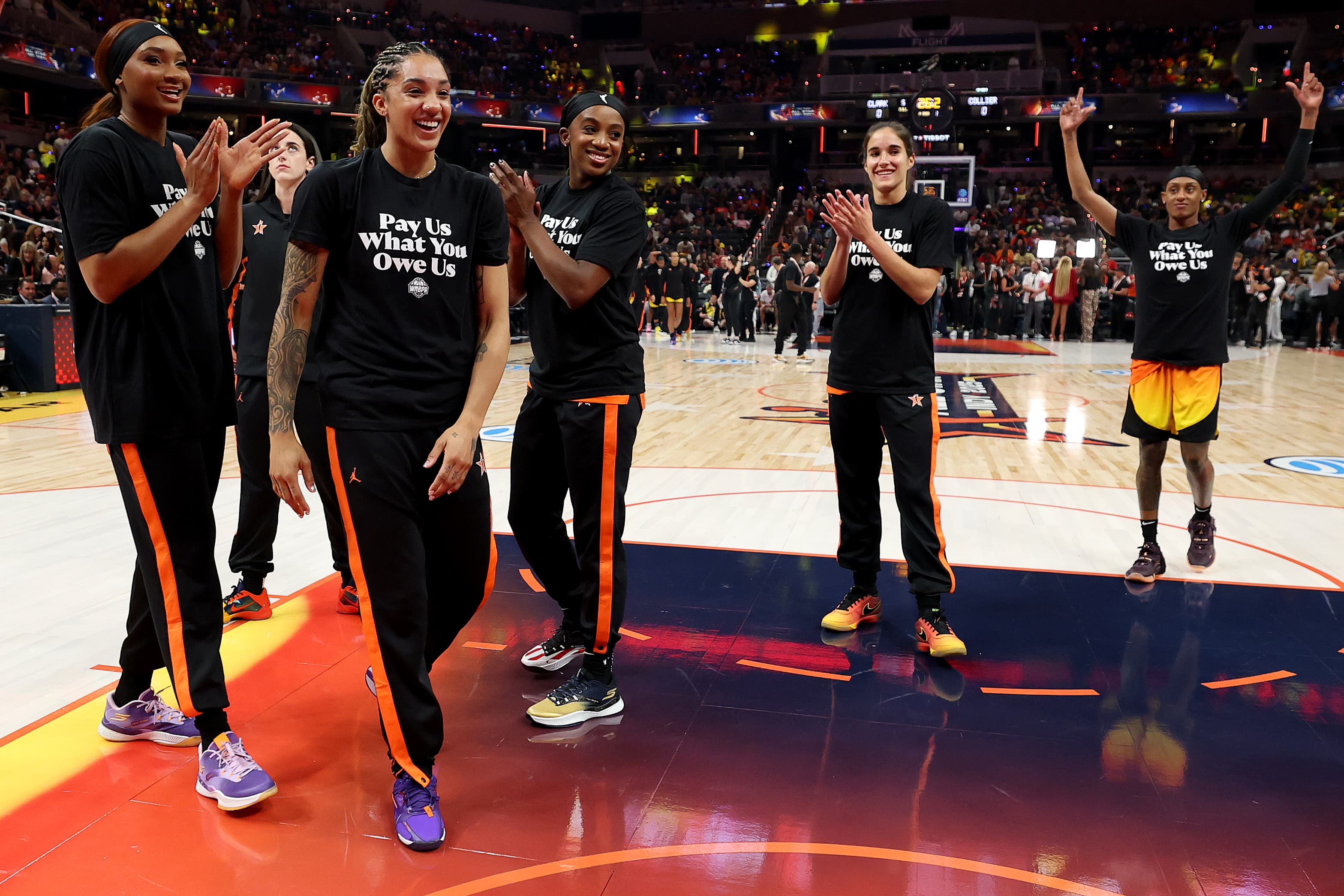
The WNBA and its players’ union reached a historic verbal agreement on a transformative new collective bargaining agreement (CBA) early Wednesday morning, culminating 100 hours of intense negotiations and setting the stage for a salary revolution ahead of the league’s 30th season. The breakthrough deal—expected to quadruple player salaries and introduce the first seven-figure contracts in league history—closes a contentious 17-month standoff marked by opt-out threats, revenue disputes, and franchise-level tensions. With finalization pending legal review and governance approval, the agreement arrives just eight weeks before the May 8 season opener in a league that shattered its single-season attendance record in 2025, drawing over 2.5 million fans nationwide.
Key Takeaways: What the WNBA’s New CBA Means for Players, Teams, and Fans
- The new CBA ties player salaries directly to league revenue for the first time, creating a salary cap that could exceed $500,000 on average per player.
- Seven-figure base salaries are expected to debut in the WNBA, a first in league history as the league approaches its 30th anniversary.
- The deal resolves a 17-month stalemate after the players’ union opted out of the previous agreement, citing growth without proportional compensation.
- Finalization hinges on a term sheet review by both sides and subsequent votes by players and the Board of Governors.
- The league faces a compressed 10-week window to finalize roster moves, host an expansion draft for Toronto and Portland, and prepare for the May 8 opener.
A Decade of Stalled Progress Leads to Breakthrough in Labor Negotiations
The road to Tuesday night’s breakthrough spanned 17 months of escalating tensions between the WNBA and its players’ union, the Women’s National Basketball Players Association (WNBPA). The dispute reached a flashpoint in October 2024 when players exercised an opt-out clause from the 2020 CBA, which had been extended through 2027. Union leaders argued that while the league’s popularity surged—evidenced by record attendance, rising viewership, and expansion into Toronto and Portland—the financial benefits were not being equitably distributed. Revenue sharing emerged as the central sticking point; players contended that their share of league earnings had stagnated despite the league’s commercial growth, while WNBA leadership maintained that structural constraints prevented immediate parity. The impasse mirrored broader debates across women’s sports about fair compensation, with the WNBA often cited as a case study in how leagues balance competitive equity with financial sustainability.
100 Hours of Negotiations Culminate at 2:20 a.m. in Manhattan
The final stretch of negotiations unfolded over an eight-day marathon that stretched into early Wednesday, culminating in a marathon 10-hour session on Tuesday night. According to both sides, the breakthrough occurred at 2:20 a.m. in a midtown Manhattan hotel, where WNBA Commissioner Cathy Engelbert and WNBPA President Nneka Ogwumike delivered the news to reporters just before 3 a.m. in a joint press briefing. The marathon talks followed a pattern of intense day-and-night sessions that included representatives from both legal teams and executive committees. "It's been, obviously, a process, but we're very proud to be leading women's sports," Engelbert told reporters outside the hotel, her voice reflecting both relief and determination. "These players are amazing, and we're going to have an amazing 30th season tipping off in May."
For the first time, player salaries are tied to a truly meaningful share of league revenue, driving exponential growth in the salary cap, increasing average compensation beyond half a million dollars and raising the standard across facilities, staffing and support.
Revenue Sharing and Player Compensation: The Core Issues That Defined the Battle
From Stagnant Salaries to Seven-Figure Contracts
At the heart of the dispute was a fundamental disagreement over how to distribute the WNBA’s rapidly growing revenue—projected to exceed $250 million annually by 2026, according to internal league estimates. Under the previous CBA, the average player salary hovered around $120,000, with top stars earning between $235,000 and $250,000. The new agreement is expected to quadruple those figures, with average salaries potentially surpassing $500,000 and select players reaching the $1 million threshold for the first time in league history. This shift aligns player compensation with the league’s revenue-sharing model adopted in 2023, which ensures that players receive a percentage of league earnings tied directly to performance, viewership, and sponsorship growth. The WNBPA argued that without this linkage, the league’s commercial success would continue to leave players undercompensated relative to their contributions. "We opted out because what we were giving to this league and what we were getting back didn't match," said Alysha Clark, a union executive committee member and Las Vegas Aces forward. "You could feel the growth everywhere, but it wasn't showing up for the players the way it should."
Franchise Tags and Housing: The Secondary Battles That Nearly Derailed the Deal
Beyond revenue sharing, the negotiations grappled with two contentious secondary issues: franchise tags and housing stipends. Franchise tags—mechanisms that allow teams to retain top free agents at below-market rates—had become a flashpoint, with players arguing they restricted mobility and devalued top talent. The union pushed for limits on tag usage, while teams sought to preserve flexibility in roster construction. Similarly, housing emerged as a morale and retention issue, particularly for players navigating expensive markets like New York, Los Angeles, and Dallas. While the final terms remain under wraps, sources close to the talks indicated that both sides compromised on housing stipends and franchise tag frameworks to unlock the broader revenue-sharing agreement. "I hope young girls and women see this and feel it, to know their voice matters, their value matters, and they don't have to settle for less than that," said Brianna Turner, an executive committee member and Phoenix Mercury forward. "Now, we get back to the game. Back to competing, back to that feeling, and back to being out there with our fans."
From Opt-Out to Breakthrough: How the Players Forced a New Reality
The players’ decision to opt out of the 2020 CBA in October 2024 was not an impulsive move but the culmination of years of frustration. Despite the WNBA’s steady growth since its 1996 inception—marked by expansion into Las Vegas (2020), Atlanta (2021), and most recently Toronto and Portland (2026)—players had seen limited financial gains. The 2020 CBA included incremental salary increases and improved travel conditions but failed to address the widening gap between league revenue and player compensation. By 2025, the WNBA’s revenue had grown by 60% since 2020, yet the average salary had risen only 25%, according to union economic analysis. This disconnect set the stage for the opt-out, which triggered a 30-day negotiation window that ultimately extended to 17 months. The players’ unity—and their willingness to forgo games—sent a clear signal to the league: the status quo was untenable. "We're just really grateful to be able to come to a deal," Ogwumike said. "We're proud of ourselves. This is historical for women's sports."
WNBA Commissioner Cathy Engelbert: Architect of a League in Transition
Cathy Engelbert, who became the WNBA’s commissioner in 2019, has overseen a period of unprecedented growth for the league, including record viewership, expansion into Canada, and lucrative media rights deals with ESPN and Amazon Prime Video. Under her leadership, the WNBA has positioned itself as a leader in social justice initiatives, player wellness, and commercial innovation. Engelbert’s approach to labor negotiations emphasized collaboration over confrontation, a strategy that contrasted with the more adversarial tone of some prior CBAs. Her goal, she told reporters in 2025, was to create a sustainable model where financial success translated directly into player compensation. "We have aligned on key elements of a new collective bargaining agreement together," Engelbert said. "We still need to finalize a formal term sheet, but the progress made in these discussions marks a transformative step forward for players and the league."
Nneka Ogwumike: The Union Leader Who Redefined Player Advocacy
As president of the WNBPA since 2016, Nneka Ogwumike has emerged as one of the most influential voices in women’s sports, guiding the union through multiple CBA negotiations and labor disputes. A former Stanford standout and No. 1 overall pick in the 2012 WNBA Draft, Ogwumike has leveraged her platform to advocate for systemic change, pushing for revenue sharing, improved maternity leave policies, and greater financial transparency. Her leadership was instrumental in the opt-out decision, which she framed as a necessary step to ensure that the league’s rising tide lifted all players. "This is historical for women's sports," she said in the early hours of March 19, 2026. "I told Cathy it's not just for the players that are entering the league or the players that aren't already here. We're just really grateful to be able to come to a deal."
The Road Ahead: Expansion Drafts, Free Agency, and a May 8 Season Opener
With the verbal agreement in place, the WNBA now faces a compressed timeline to execute the logistical dominoes leading to the May 8 season opener. Among the immediate priorities is an expansion draft scheduled for early April to stock the rosters of the Toronto and Portland franchises, which will join the league this season. Following the draft, teams will begin negotiations with more than 80% of players who are free agents—potentially reshaping rosters across the league. Training camps are set to open on April 19, just six days after the 2026 WNBA Draft, which will be held on April 13 in Brooklyn. The league’s compressed calendar reflects the urgency to capitalize on its momentum while navigating the complexities of expansion. "The league now has to sprint over the next two months to get to opening day on May 8," Engelbert said. "It’s a busy time, but we’re excited about the future."
Why This Deal Matters Beyond the WNBA: A Blueprint for Women’s Sports
The WNBA’s new CBA is poised to serve as a model for other women’s sports leagues grappling with similar labor disputes, including the NWSL, PWHL, and LPGA. By tying player compensation directly to league revenue, the agreement creates a sustainable financial ecosystem where growth benefits all stakeholders. This model contrasts with the traditional approach in women’s sports, where revenue sharing has often been minimal or nonexistent. The WNBA’s success in negotiating this deal could pressure other leagues to adopt similar frameworks, accelerating the broader shift toward equitable pay in women’s sports. Additionally, the deal underscores the growing power of player unions in women’s leagues, where collective action has historically been fragmented. As the WNBA approaches its 30th season, the CBA represents more than a labor agreement—it’s a statement that the future of women’s sports must be financially inclusive and structurally fair.
What’s Next: Legal Review, Voting, and the Long-Awaited Season Kickoff
The agreement reached at 2:20 a.m. on March 19 is not yet legally binding. Over the next two weeks, lawyers for the WNBA and the WNBPA will draft a formal term sheet outlining the specific terms of the CBA, including salary scale details, revenue-sharing percentages, franchise tag rules, and housing stipends. Once finalized, the term sheet will be submitted to the 12 WNBA teams’ Board of Governors for approval and to the players for a vote. If ratified, the new CBA will take effect immediately, setting the stage for a historic 30th season. For a league that has long been criticized for underpaying its stars, this moment marks a turning point—one that could redefine the economics of women’s professional sports for decades to come.
Frequently Asked Questions About the WNBA’s New Collective Bargaining Agreement
Frequently Asked Questions
- When will the new WNBA CBA officially take effect?
- The CBA will take effect only after the term sheet is finalized, approved by the Board of Governors, and ratified by the players—likely in April 2026, just weeks before the May 8 season opener.
- How will revenue sharing work under the new CBA?
- While exact percentages remain undisclosed, the agreement ties player salaries directly to league revenue, ensuring that a portion of the WNBA’s growing earnings flows to players. This marks the first time such a model has been implemented in the league.
- What changes can fans expect in the 2026 WNBA season?
- Fans can anticipate higher-caliber player talent, improved facilities and staffing, and potentially seven-figure contracts for top players. The league’s expansion into Toronto and Portland will also bring new rivalries and storylines.