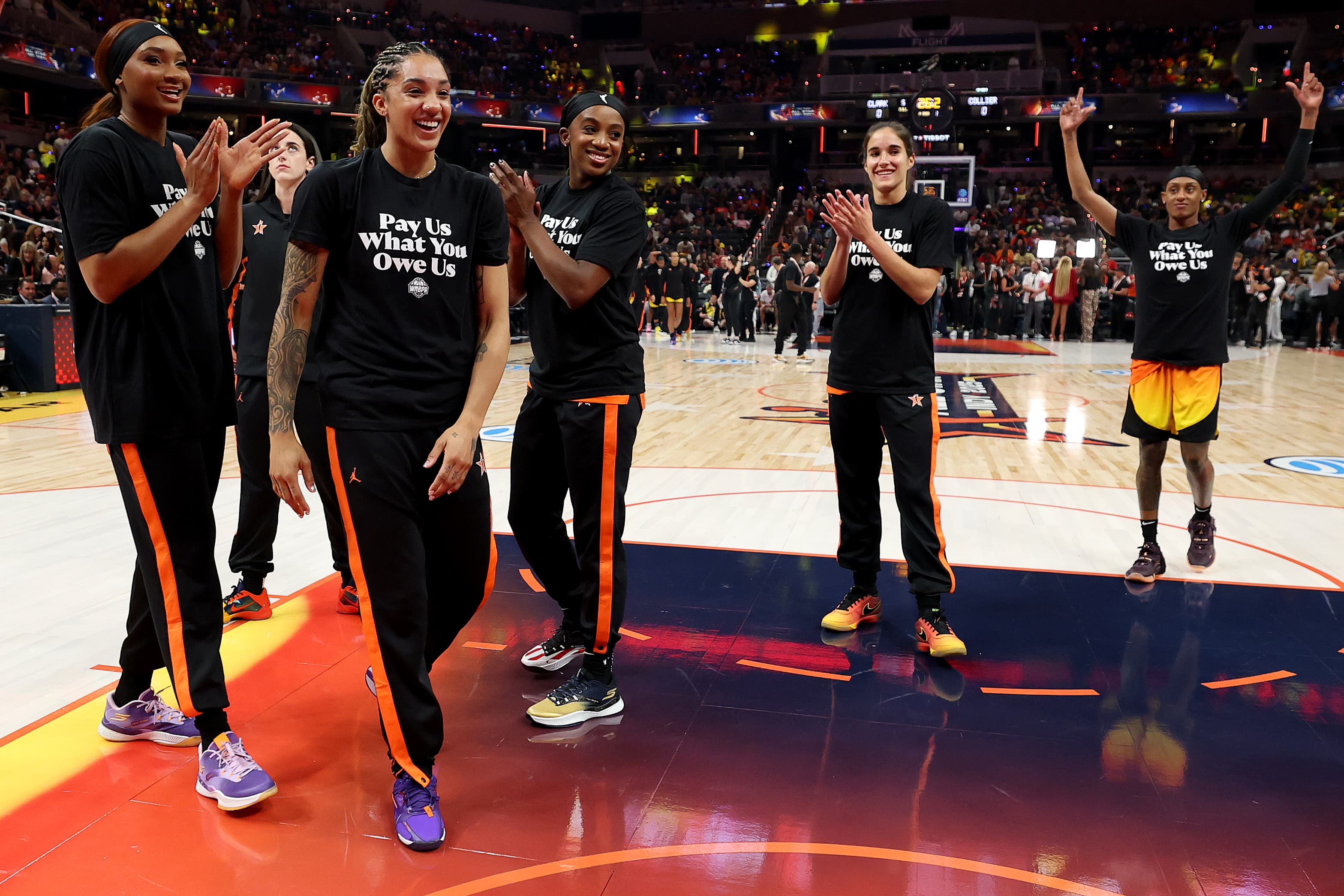
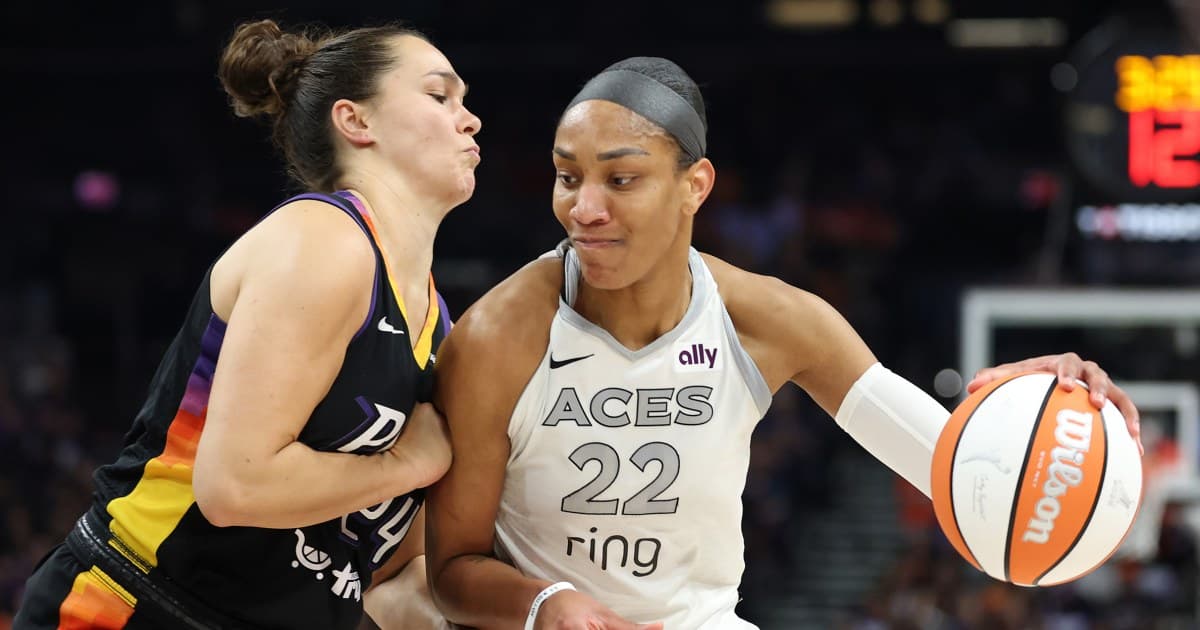
After months of intense negotiations and a high-stakes opt-out period, the WNBA and its players union have reached a historic agreement in principle on a new collective bargaining agreement (CBA) that will reshape the financial landscape of women’s professional sports. The deal, announced in the early hours of Wednesday morning after over 100 hours of negotiations, guarantees million-dollar salaries for top players, a near fourfold increase in average pay, and a revenue-sharing model that ties compensation directly to the league’s explosive growth. While legal and procedural details are still being finalized, the agreement represents a watershed moment for the WNBA, its athletes, and the broader women’s sports ecosystem.
- The CBA will introduce million-dollar contracts for WNBA players, with top stars eligible for a $1.4 million supermax salary in the first year.
- Average salaries are set to exceed $585,000 by 2026, with a salary cap rising to $7 million—quadrupling from the 2023-24 season.
- Minimum salaries will jump to approximately $300,000, a fourfold increase from last season, as the league enters its 30th anniversary year.
- Players will now share in a meaningful portion of league revenue, fundamentally altering the economic relationship between athletes and the WNBA.
- The agreement follows 17 months of negotiations and a contentious opt-out process, signaling a new era of collaboration and growth.
How the New WNBA CBA Transforms Player Compensation and League Economics
The cornerstone of the new CBA is a dramatic restructuring of player compensation, designed to align salaries with the league’s burgeoning revenue streams and market valuation. Under the agreement, top-tier players will be eligible for supermax contracts starting at $1.4 million in the first year, with the salary cap projected to reach $7 million by the 2026 season. Average salaries are expected to surpass $585,000, a staggering increase from the $120,000 average in the 2023-24 season. Minimum salaries will rise to approximately $300,000, ensuring that even role players and rookie contracts are financially competitive.
Revenue Sharing: The Game-Changer for WNBA Players
One of the most contentious issues in the negotiations—revenue sharing—has been addressed with a groundbreaking model that ties player compensation to the league’s economic performance. According to a person familiar with the discussions, the new CBA will ensure that players receive a meaningful percentage of league revenue, a departure from the previous structure where salaries were largely fixed and disconnected from the WNBA’s rapid growth. This shift reflects a broader trend in professional sports, where revenue-sharing agreements have become essential for attracting and retaining top talent while ensuring competitive balance.
Nneka Ogwumike, president of the WNBA Players Association, emphasized the significance of this change in a statement to the Associated Press. 'For the first time, player salaries are tied to a truly meaningful share of league revenue,' she said. 'This drives exponential growth in the salary cap, increases average compensation beyond half a million dollars, and raises the standard across facilities, staffing, and support.' Ogwumike’s remarks underscore the CBA’s role in transforming the league from a cost-center for owners into a sustainable, athlete-driven enterprise.
From Opt-Out to Breakthrough: The Road to the Historic Deal
The path to this landmark agreement was neither smooth nor swift. The players’ union officially opted out of the previous CBA in October 2023, citing a fundamental mismatch between the league’s revenue growth and player compensation. Alysha Clark, a member of the union’s executive committee, articulated the players’ stance at the time: 'We opted out because what we were giving to this league and what we were getting back didn’t match.' She pointed to the league’s skyrocketing attendance, viewership, and corporate investment as evidence that the economic benefits were not being equitably distributed.
The Final Push: 100 Hours of Negotiations
The breakthrough came after eight days of marathon in-person negotiations in New York, culminating in a 12-hour session on Tuesday that stretched into the early hours of Wednesday. The agreement was reached at approximately 2:20 a.m., according to multiple sources familiar with the process. The intensity of the talks reflected the high stakes: without a deal, the league risked a labor stoppage that could have derailed the 2024 season and damaged its momentum. Instead, the two sides emerged with a framework that promises to stabilize the league’s economic future.
“This is historical for women’s sports. It’s not just for the players entering the league or those already here—it’s a legacy for the next generation. We’re proud of what we’ve accomplished together.” — Nneka Ogwumike, WNBA Players Association President
The Broader Impact: Growth, Equity, and the Future of Women’s Basketball
The new CBA arrives at a pivotal moment for the WNBA, which has experienced unprecedented growth over the past five years. The league set attendance records in 2023, with an average of 10,000 fans per game, and its viewership on ESPN and ABC saw a 20% year-over-year increase. Corporate sponsors, including major brands like State Farm, Nike, and AT&T, have expanded their partnerships, reflecting the league’s rising cultural and commercial relevance. The addition of expansion teams in Toronto and Portland in 2026 is expected to further accelerate this trend, bringing the league’s total to 16 teams.
Facilities, Support, and Off-Court Improvements
Beyond salaries, the CBA includes provisions to enhance the quality of life for WNBA players, addressing long-standing concerns about housing, travel accommodations, and family support. Ogwumike highlighted these improvements in her statement, noting that the deal ‘increases the standard across facilities, staffing, and support.’ This reflects a growing recognition in professional sports that athlete well-being—both on and off the court—is critical to performance and league sustainability.
“The deal is going to be transformational. It’s going to build and help create a system where everybody is getting exactly what they deserve and more—on the court and off the court.” — Breanna Stewart, WNBA Players Association Vice President
What’s Next? Finalizing the Agreement and Preparing for the 2024 Season
While the agreement in principle marks a major milestone, the work is far from over. Legal teams on both sides are now tasked with drafting a formal term sheet, which is expected to be completed within the next few days. This document will then need to be ratified by the players in a vote and approved by the WNBA’s Board of Governors. The league is racing against the clock, as the 2024 season opener is slated for May 8, with training camps beginning on April 19. Additional logistical hurdles include an expansion draft for the Toronto and Portland franchises and negotiations with more than 80% of players who are free agents this offseason.
A Message to Young Athletes: The Power of Collective Action
The players’ union made it clear that this victory is not just about the current generation of WNBA stars but about sending a message to young girls and women across the country. Brianna Turner, a member of the union’s executive committee, emphasized the symbolic importance of the deal in an interview with the Associated Press. 'I hope young girls and women see this and feel it,' she said. 'They should know their voice matters, their value matters, and they don’t have to settle for less than that.' This sentiment resonates in an era where women’s sports are increasingly breaking through traditional barriers, from record-breaking viewership in the FIFA Women’s World Cup to the NWSL’s expansion teams.
Historical Context: The WNBA’s Evolution and the Fight for Equity
Founded in 1996, the WNBA has long been a pioneer in women’s professional sports, but its journey toward economic parity has been fraught with challenges. Early seasons were marked by low salaries, limited exposure, and financial instability, which led to multiple ownership changes and franchise relocations. However, the past decade has seen a dramatic shift, fueled by the rise of social media, streaming platforms, and corporate investment in women’s sports. The 2020 WNBA season, played in a bubble due to the COVID-19 pandemic, became a cultural phenomenon, with players like Ogwumike, Stewart, and A’ja Wilson using their platform to advocate for social justice and gender equity. This activism laid the groundwork for the current push for fairer compensation.
The Role of Leadership: Cathy Engelbert’s Vision for the WNBA
WNBA Commissioner Cathy Engelbert has been a driving force behind the league’s recent growth, overseeing record revenue increases and strategic partnerships. Her leadership style, which emphasizes collaboration with the players’ union, has been credited with breaking the deadlock in these negotiations. In her post-agreement statement, Engelbert acknowledged the significance of the moment. 'The progress made in these discussions marks a transformative step forward for players and the league,' she said. 'It underscores a shared commitment to the continued growth of the game.' Engelbert’s approach reflects a broader shift in sports leadership, where commissioners are increasingly viewed as partners in athlete empowerment rather than adversaries.
Frequently Asked Questions
Frequently Asked Questions
- When will the new WNBA CBA officially take effect?
- The agreement is still in the finalization phase, with a formal term sheet expected within days. It must then be ratified by the players and approved by the WNBA’s Board of Governors before taking effect. The league aims to implement the changes before the 2024 season opener on May 8.
- How much will the average WNBA player earn under the new CBA?
- Average salaries are projected to exceed $585,000 by the 2026 season, a significant increase from the $120,000 average in the 2023-24 season. Minimum salaries will rise to approximately $300,000, ensuring higher earnings across the board.
- What does revenue sharing mean for WNBA players?
- Revenue sharing ties player compensation directly to the league’s financial performance, ensuring athletes receive a meaningful percentage of the WNBA’s growing revenue. This model aligns the league with other major sports leagues, where revenue sharing is standard practice.