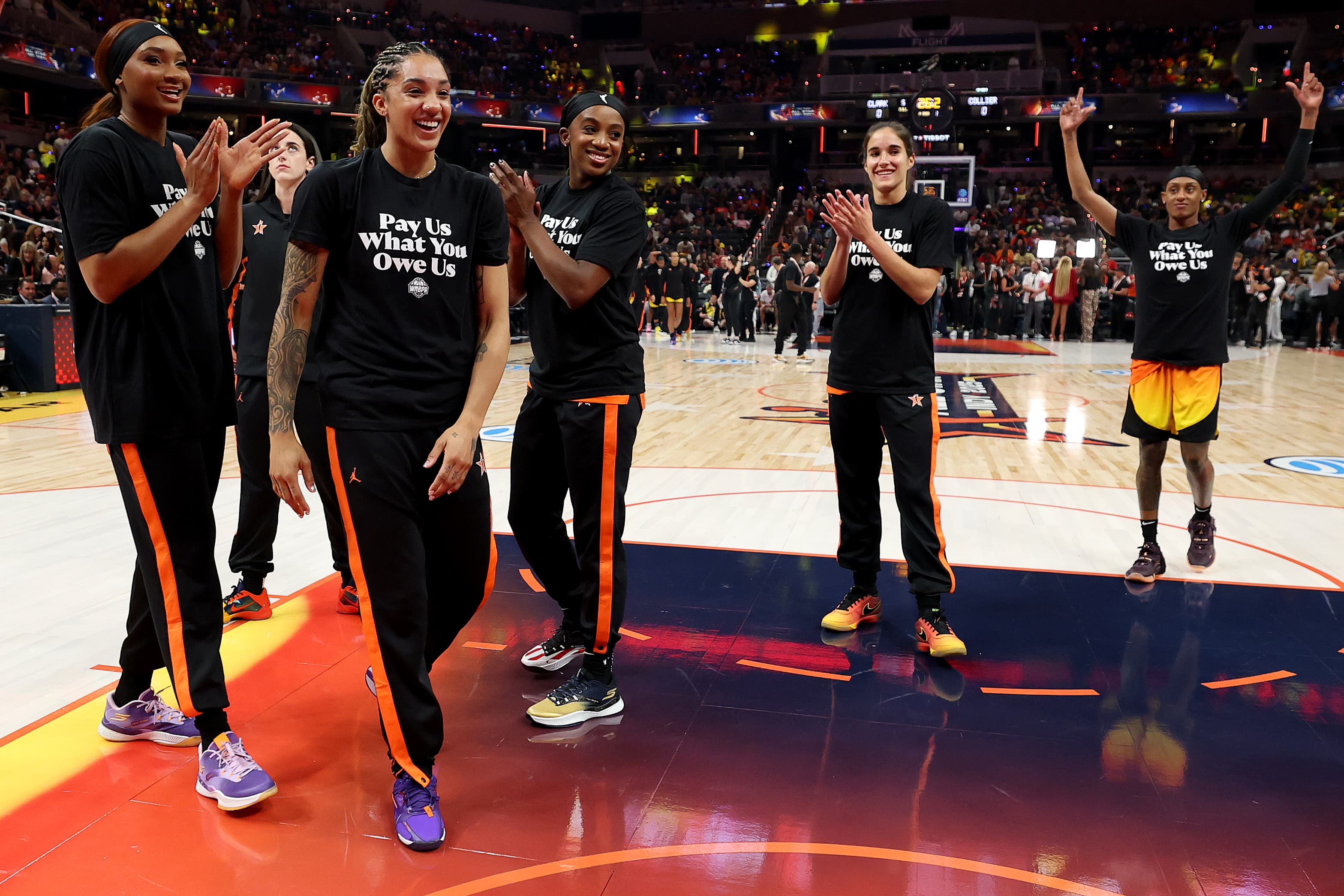
Negotiators for the Women's National Basketball Association and the Women's National Basketball Players Association extended their intensive collective bargaining agreement discussions deep into Thursday morning in Manhattan, with talks continuing past 1 a.m. without a tentative agreement in place. The two sides have now spent more than 30 cumulative hours at the bargaining table over three consecutive days, exchanging nine separate proposals as they work to finalize terms on a new labor contract that will govern player compensation, benefits, and working conditions. The extended negotiations underscore the complexity of reaching consensus on financial terms and non-monetary issues that will shape the future of professional women's basketball in America.
Understanding the WNBA's Latest Salary Cap and Compensation Proposal
The WNBA's most recent financial proposal represents a significant evolution from earlier offers, featuring a team salary cap of $6.2 million—an increase from the $5.75 million figure presented in the league's prior proposal. According to sources with direct knowledge of the negotiations, this updated offer would provide players with approximately 15.5% of total league revenue over the duration of the agreement, though certain operational expenses would continue to be deducted before revenue-sharing calculations are finalized.
Under the current proposal framework, maximum player earnings in the first year of the agreement would reach $1.3 million when revenue-sharing payouts are included alongside base salary and other compensation mechanisms. The proposal also projects average player earnings at $570,000 annually, with the average base salary calculated at approximately $516,600. For the league's elite players, the supermax salary—calculated at 20% of the team salary cap—would reach $1.24 million. It is important to note that these figures represent projections and are expected to shift as both sides continue the iterative process of exchanging and refining proposals.
Our proposal on the table is a really historic and transformational deal for these players. Huge gains in salaries, benefits, everything you're seeing beyond that when you see the whole thing.
WNBA Commissioner Cathy Engelbert made this statement following the conclusion of the second day of bargaining, characterizing the league's financial offer as representing substantial improvements for the player workforce across multiple dimensions beyond base salary increases alone.
The Union's Revenue-Sharing Demands and Negotiating Strategy
The WNBPA's negotiating position has evolved considerably throughout the bargaining process. The union initially entered negotiations seeking 40% of the league's total revenue before expenses—a figure that represented an ambitious opening position in collective bargaining discussions. Through subsequent rounds of proposals, the union has moderated its demands, with the most recent known union proposal requesting 26% of league revenue before expenses. According to multiple sources familiar with the talks, the WNBPA's subsequent proposals have sought less than the 26% figure, indicating the union's willingness to move toward the league's position as discussions progress.
This negotiating arc reflects a common pattern in major labor disputes, where both sides begin with aspirational positions and gradually narrow the gap through successive rounds of counterproposals. The movement from 40% to 26% and beyond demonstrates the union's strategic approach to finding common ground while maintaining pressure on the league to improve its offer.
Key Issues Beyond Salary: Housing, Designations, and Player Protections
While compensation remains the central focus of the collective bargaining agreement negotiations, multiple sources indicate that Thursday's extended bargaining session was expected to address several non-monetary issues that have emerged as priorities for the union. Two particularly significant areas of discussion include team-provided housing for players and the scope and application of the core designation—a contract classification that carries important implications for player movement and team control.
Team-provided housing has become an increasingly important benefit in professional women's sports leagues, addressing practical challenges that players face when relocating for professional employment. The core designation, meanwhile, relates to how teams can retain and control player rights, with the union seeking to limit the league's ability to restrict player movement and negotiating leverage. These issues, while distinct from pure financial compensation, carry substantial impact on the overall value and quality of professional employment in the WNBA.
Composition of Negotiating Teams and Representation
Thursday's bargaining session, which commenced around 11 a.m. at the Langham Hotel in Manhattan, included key leadership from both the union and the league. The WNBPA's negotiating team included executive committee members representing the players' interests: Nneka Ogwumike, Breanna Stewart, Brianna Turner, and Alysha Clark, along with WNBPA Executive Director Terri Carmichael Jackson and additional union staff members. The league's representatives have included Commissioner Cathy Engelbert, Bethany Donaphin (head of league operations), New York Liberty owner Clara Wu Tsai, and Connecticut Sun president Jennifer Rizzotti, though the exact composition of the league's team for Thursday's session remained unclear.
The presence of team owners and league executives in direct negotiations underscores the significance of the discussions and the financial stakes involved. All players departed the Langham Hotel around midnight Thursday evening as negotiations continued, indicating the sustained intensity of the bargaining process.
The March 10 Deadline: League Pressure and Player Perspective on Timeline Urgency
The WNBA established a March 10 deadline for reaching a tentative agreement, warning on February 23 that failure to meet this target could result in delays to the upcoming season. League officials communicated to all 12 team general managers a specific timeline for conducting the two-team expansion draft and initiating the free agency period, contingent upon achieving a handshake agreement by the March 10 date. This deadline structure was designed to provide sufficient time for the league to execute its offseason operational schedule before the May 8 season tipoff.
However, following Wednesday's bargaining session, WNBPA leadership indicated that the union did not view the March 10 deadline as a binding constraint on their negotiating strategy. Nneka Ogwumike, speaking on behalf of the union, stated that the players had never prioritized the deadline as a critical milestone in their approach to the negotiations. "We have never really considered that as a timeline that has been something to prioritize on our side because we have always been negotiating in good faith," Ogwumike explained. "We've experienced lulls, shall I say, in the negotiation. We want to play. That's why we all flew out here." This statement reflects the union's position that meaningful progress toward a fair agreement takes precedence over arbitrary calendar deadlines.
Season Timeline Implications and Potential Disruptions to Training Camp and Preseason
The May 8 season tipoff date remains 57 days away from the current bargaining period, with training camp scheduled to commence in less than six weeks. Multiple sources indicate that if a collective bargaining agreement is not finalized in the coming days, training camp will face delays, which could cascade into cancellations of preseason games and other disruptions to the league's operational calendar. Such delays would represent a significant departure from the WNBA's normal offseason schedule and could impact fan engagement, broadcast arrangements, and team preparation.
The urgency of reaching a resolution is therefore driven not merely by administrative preferences but by the practical necessity of allowing adequate time for teams to conduct training camp, execute roster transactions, and prepare for the competitive season. The extended negotiations demonstrate that both sides recognize the importance of the issues at stake and are willing to invest substantial time in achieving a comprehensive agreement rather than accepting a hastily negotiated settlement.
Historical Context: Why This CBA Negotiation Matters for Women's Professional Basketball
The current collective bargaining agreement negotiations occur at a pivotal moment for the WNBA and women's professional basketball more broadly. In recent years, increased media coverage, improved broadcasting deals, and growing fan interest have contributed to enhanced financial performance for the league. The negotiations represent an opportunity for players to secure compensation and benefits that more closely reflect the league's revenue generation and the players' contributions to the sport's growing commercial success.
Commissioner Engelbert's characterization of the league's proposal as "historic and transformational" reflects the league's position that its offer represents meaningful progress from previous collective bargaining agreements. The union's willingness to negotiate intensively and move from its initial 40% revenue-sharing demand demonstrates a pragmatic approach to reaching consensus while advancing player interests. The outcome of these negotiations will establish precedents and financial frameworks that will govern professional women's basketball employment for years to come, making the intensive negotiation process a worthwhile investment of time and resources for both parties.
- WNBA and WNBPA have engaged in over 30 hours of negotiations across three consecutive days in Manhattan with no agreement reached as of 1 a.m. Thursday
- League's latest proposal offers $6.2 million team salary cap and approximately 15.5% revenue share for players, with maximum first-year earnings reaching $1.3 million
- Union has moderated initial demands from 40% revenue share down to less than 26%, indicating movement toward compromise on financial terms
- Non-monetary issues including team-provided housing and core player designations remain active negotiation points alongside compensation discussions
- May 8 season tipoff is 57 days away; failure to reach agreement soon could delay training camp and force cancellation of preseason games
Frequently Asked Questions
- What is the WNBA's current salary cap proposal in the collective bargaining agreement negotiations?
- The WNBA's most recent proposal includes a $6.2 million team salary cap, up from the previous $5.75 million offer. This would provide players with approximately 15.5% of total league revenue over the life of the agreement, with maximum first-year earnings reaching $1.3 million when revenue-sharing payouts are included.
- How much revenue share are WNBA players currently demanding in the CBA negotiations?
- The WNBPA has moderated its demands significantly from an initial request of 40% of league revenue before expenses. The union's most recent proposals seek less than 26% of revenue before expenses, indicating substantial movement toward the league's position as negotiations progress.
- What happens if the WNBA and players union don't reach a CBA deal by March 10?
- If no agreement is reached by March 10, the WNBA has indicated the season could face delays. Training camp would be delayed, potentially resulting in canceled preseason games. However, the union has stated it does not view the March 10 deadline as binding and prioritizes reaching a fair agreement over meeting arbitrary timelines.