LoaderSave StorySave this storyCommentLoaderSave StorySave this storyFeatured in this articleBest Air Purifier OverallIQAir Atem XRead more$1,400 Amazon
Best Air Purifier for OdorsCoway Airmega 450Read more$499 Amazon
Best Affordable Air PurifierCoway Airmega Mighty AP-1512HHRead more$230 $155 (33% off) Amazon
Best Budget Small-Room Air PurifierBrondell O2+ Horizon 5-Stage Air Purifier with HEPARead more$180 Brondell
Welcome to the future, where clean air is a luxury. Thanks to pandemics and wildfires, air purifiers have become the gotta-have-it home appliance. Buildings let in a lot of particulate matter, volatile organic compounds, and vaporous chemicals. Indoor plastics, furniture, paint, and flooring off-gas noxious fumes, too.
Since your home might be your workplace, playground, meditation studio, dine-in restaurant, and movie theater, you want to ensure that the air you’re breathing for most of the day is clean. These are our best air purifiers—from the top-of-the-line IQ Air Atem X ($1,400) to the lower-priced, popular Coway Airmega Mighty ($230) and everything in between.
Trends in air purifier design favor both the cylindrical tower models along with boxier designs, washable fabric covers, and dual-purpose air purifiers that not only clean the air but also work as electric dustpans, humidifiers, night-lights, sunrise alarms, and tables.
For more home tips, take a peek at our other guides, including the Best Space Heaters, Best Robot Vacuums, Best Cordless Vacuums, and Best Mesh Wi-Fi Routers.
Updated March 2026: We've added the Alen BreatheSmart, Blueair Classic Pro, Sharp FPF30UH, Brondell Horizon, and Blueair PetAir Pro as new picks, moved some previously tested purifiers down to honorable mentions, and removed some models that have been discontinued. We've also ensured up-to-date links and prices.
Compare Our PicksRecommended With ReservationsOthers We TestedNot RecommendedHow to Shop for an Air PurifierHow to Check Your Air QualityHow Do We Test Air Purifiers?How Does WIRED Select Air Purifiers to Review?What Does WIRED Do With Air Purifiers After Testing?Best Air Purifier OverallPhotograph: Lisa Wood ShapiroCourtesy of AmazonChevronChevronSave to wishlistSave to wishlistIQAir
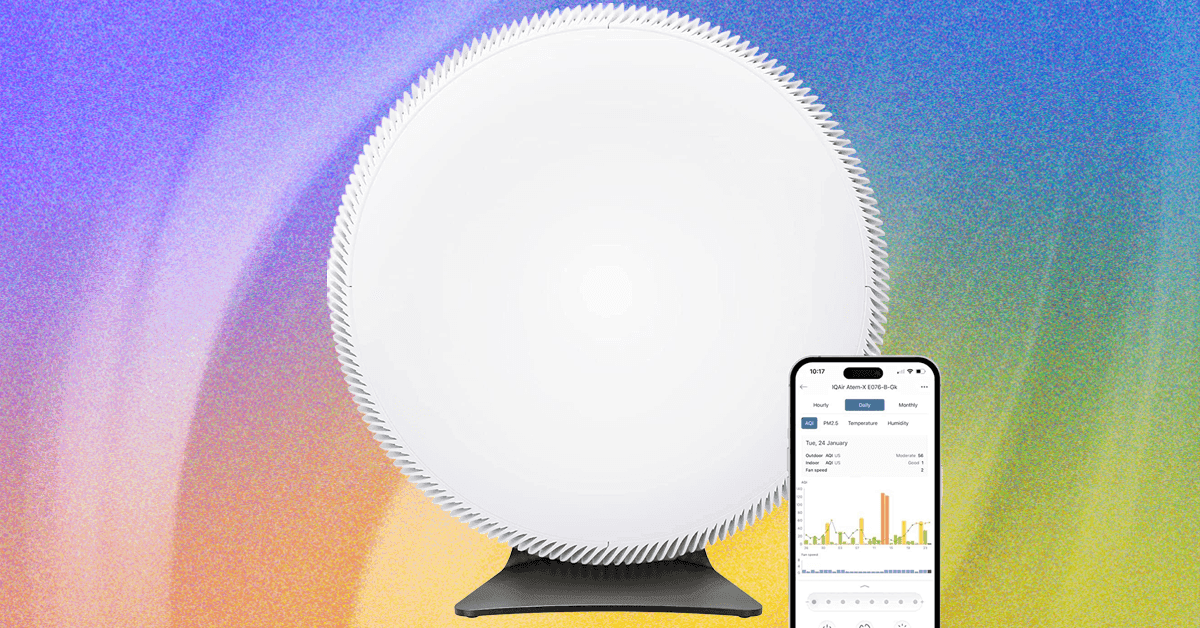
The more air purifiers I test, the more I think they should be viewed as a lifetime investment. If you have the means, the Atem X truly is the best investment when it comes to a HEPA filter. Aside from its sleek design, there's an option for a 10-year warranty (with registration and filter subscription), which means you’ll have access to parts and repairs for a decade. It’s quiet and has custom settings, a built-in sensor, and a dashboard phone app, and it can be set flush against a wall. I use the term “air purifier math” to consider how many air purifiers you might burn through in the next decade. One, two, maybe three? This is why the Atem X is a wise investment, even at its big-ticket price. The one drawback is that the Atem X doesn’t have a carbon filter to remove gases.
WIRED10-year warrantyQuietHas app controlTIREDNo carbon filter to remove gasesBest Air Purifier for OdorsPhotograph: Lisa Wood ShapiroSave to wishlistSave to wishlistCoway
It took only a few minutes to unbox the Coway Airmega 450. The 30-inch cylinder tower is just under 25 pounds. Its easy-to-maneuver wheels and hidden handle made this unit glide across my wooden floors. With its quiet air cleaning abilities, capturing particulate matter, odors, and volatile organic compounds (VOCs), the Airmega 450 might be my favorite air purifier from Coway to date. The 450 is able to quietly (not at the highest and thus noisiest setting) clean the air in an average-sized room—around 300 to 400 square feet—at the recommended five times an hour. And while Coway boasts that it can clean the air of a 3,285-square-foot room, the fine print notes that it can do that once an hour and at its loudest setting (nearly 60 decibels). What I’ve learned reviewing air purifiers is that the largest room size that can be cleaned in an hour still needs to be divided by five to get the recommended number of exchanges. Once you have that number, reduce it again to account for the fact that you don’t want your air purifier running at its highest setting.
The Airmega 450 is not Wi-Fi compatible, though if you’re like me and set your purifiers to auto mode, that might not be a negative. The 450’s built-in air quality sensor illuminates the large circular indicator light on the top of the tower. I wish Coway adopted the standard air quality index color code. I like knowing my indoor air quality with a quick glance at its indicator light, but it’s confusing that the light glows blue for good, green for moderate (green is good on the AQI color code), yellow for unhealthy, and red for very unhealthy. As a cat owner, I appreciate the model’s control-panel lock, as my cats tend to turn off other tower purifiers by sitting on the unit. It also has a timer and filter replacement button. Lastly, the 450 has an energy efficient Eco Mode: When no pollution is detected for 10 minutes, it will automatically stop airflow to save energy. And while I recommend the 450, I had the same difficulty reading the numbers on the control panel in bright light as I had with Coway’s Aimega ProX, and at a cost of $500, I wish the warranty were longer than a year.
WIREDQuietHas a control-panel lockWheels and handle make it easy to move aroundTIREDNo app control or remoteAir quality indicator lights are confusingWarranty is short for the priceBest Affordable Air PurifierCourtesy of CowaySave to wishlistSave to wishlistCoway
The Mighty from air purifier stalwarts Coway might have the best bang for your buck when it comes to air purifiers. At under $200, the Mighty can clean a 361-square-foot room, exchanging the air the recommended 4.8 times per hour. Note that this is based on running the Mighty at its highest and loudest setting at 53 decibels. And, as I’ve written before, you most likely won’t want that kind of white noise 24/7, so I suggest fitting the Mighty in a room around 200 square feet or smaller to run it at a quieter setting while still benefiting from a high air exchange rate. It has an on/off button for the ionizer and a timer activation/deactivation feature that will power off after 1, 4, or 8 hours, along with Eco Mode that turns off the fan if no air pollution is detected for 30 minutes.
The Mighty has a built-in air sensor and air quality light that shines blue for clean air, dark purple for polluted air, and red for highly polluted. This is Coway’s color system, and I found it confusing as the colors don't line up with the US air quality index standards of green for good, red for unhealthy, and purple for very unhealthy. It is the air sensor that enables the Mighty to automatically adjust its fan speed. At just under a foot and a half tall and 12 pounds, the box-like Mighty feels lighter than that with its easy-to-grab back handle. I pulled off the front cover to reveal the Mighty’s three filters: a HEPA, a deodorizing filter, and the prefilter. The Mighty also needs to sit about 8 inches from the wall or furniture. And while I liked the simple design of the Mighty, its glossy white plastic finish attracts pet hair in that clingy, staticlike way. It isn’t compatible with Google Home or Amazon’s Alexa, nor does it have a remote or app. Still, for the price, the Mighty is an excellent air purifier for small rooms.
WIREDVery effective for its price and sizeBack handle makes it easy to move aroundThree filtersIonizer to neutralize airborne particlesTIREDAir quality indicator light is confusingNeeds to be 8 inches from a wall or furnitureGlossy finish attracts pet hairNo app or remote controlBest Budget Small-Room Air PurifierPhotograph: Lisa Wood ShapiroSave to wishlistSave to wishlistBrondell
O2+ Horizon 5-Stage Air Purifier with HEPA
Brondell’s Horizon is a slim, under-2-foot, 11-pound air purifier that cleans the air of a small room with four layers of air-cleaning power. It has a prefilter, a HEPA to capture small particulates, activated carbon to remove and trap volatile organic compounds (VOCs) and neutralize odors, and a cold catalyst to filter out lingering gases like formaldehyde, benzene, and ammonia. That lower price reduces the number of features. There’s no app, nor is there an internal air sensor, but there is something refreshing about this all-business, sleek, white air purifier that has one of the easiest-to-read control panels, a real handle, three speeds, and a timer for one, two, and four hours, as well as an inefficient but quiet sleep mode.
Like so many of the smaller-size air purifiers I’ve tested, the Brondell is loud at its highest setting; my consumer Toptes RA-5018 sound level meter hit 80 decibels. That’s around the same level as a busy restaurant or a police siren. The Horizon is not unique in its noise range. It costs money to go quiet. The Brondell runs less than $200, though it’s worth mentioning that spending over $200 on a purifier, like Coway’s popular Airmega Mighty (above), gets you a quieter clean. If you need light lifting in a small room and an aesthetically pleasing design, the Brondell Horizon is an easy choice for the money.
WIREDSlim, understated designFilters punch above their weightGreat valueTIREDNo internal air sensorNo appNo auto modeVery loud at the highest settingBest Air Purifier for BedroomsPhotograph: Lisa Wood ShapiroPhotograph: Lisa Wood ShapiroPhotograph: Lisa Wood ShapiroPhotograph: Lisa Wood ShapiroChevronChevronSave to wishlistSave to wishlistBurtran
Burtran's new Nano-Oxy purifier stands out in a crowded market for its ability to generate negative oxygen ions, which have been shown to have a positive effect on sleep quality. Housed in a simple, industrial-style metal body, the unit promises not only cleaner air but a fresher, “forestlike” indoor atmosphere by releasing 2,000 to 5,000 negative oxygen ions per cubic centimeter. The company says this can boost energy, reduce stress, and support better sleep, all without producing ozone or radiation.
It is important to note that some negative-ion devices have triggered warnings from regulators over potential radiation risks. Nano-Oxy is certified by the California Air Resources Board (CARB) as an approved air-cleaning device, meaning it has not been shown to emit harmful ozone levels. To confirm, we tested it with a consumer Geiger counter, which also showed only normal background readings.
Beyond ionization, the purifier uses a HEPA 14 filter—denser than the more common HEPA 13—claiming to capture 99.995 percent of particles as small as 0.1 micron. It also includes an activated carbon filter for volatile organic compounds (VOCs) and a prefilter for larger debris. Despite concerns that higher-density filters can restrict airflow, we found the Nano-Oxy maintained strong output and is rated to clean a 270-square-foot room five times per hour. Replacement filters cost about $100.