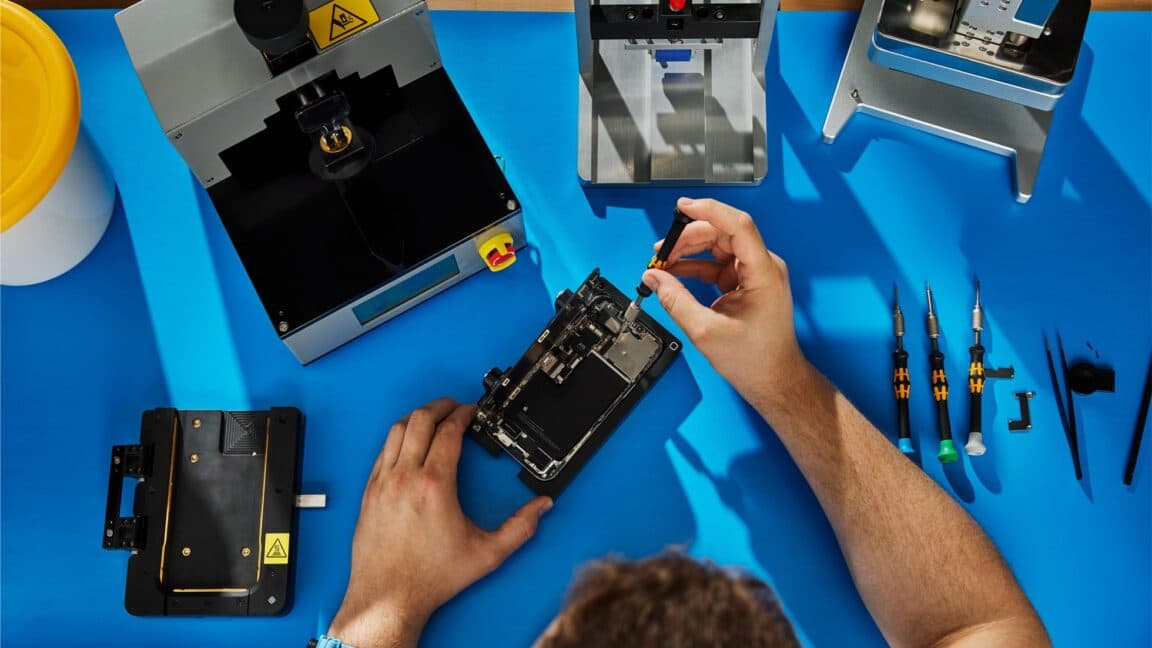
Apple and Lenovo have been named the least repairable laptop manufacturers in a comprehensive 2026 analysis by the Public Interest Research Group (PIRG) Education Fund, raising concerns about industry-wide barriers to repair access. The findings, released today, grade the repairability of the 10 newest laptops and smartphones available on manufacturers’ French websites in January, leveraging France’s pioneering repairability index—a legal requirement for devices sold in the country. Apple received a C-minus for laptop repairability and a D-minus for smartphone repairability, while Lenovo earned a C-minus for laptops, underscoring persistent challenges in device disassembly, documentation, and parts accessibility despite global right-to-repair advocacy efforts.
- Apple and Lenovo scored the lowest grades in laptop repairability in PIRG’s 2026 report, with Apple earning a C-minus and Lenovo also receiving a C-minus.
- The report critiques Apple’s persistent use of parts pairing and software restrictions, which lock out third-party repairs, as well as Lenovo’s ongoing failure to fully comply with France’s repairability documentation laws.
- PIRG penalized companies for membership in industry groups opposing right-to-repair legislation, including TechNet and the Consumer Technology Association (CTA), which deducted 0.5 points from most vendors’ scores.
- Though incremental improvements were noted—such as Apple’s MacBook Neo design and Motorola’s top phone repairability score—the report concludes that overall laptop repairability has stagnated across major brands.
- PIRG’s analysis highlights a widening gap between consumer demand for repairable devices and manufacturers’ compliance with emerging global repair standards.
How the 2026 PIRG Report Measures Device Repairability and Why It Matters
The PIRG Education Fund’s “Failing the Fix (2026): Grading laptop and cell phone companies on the fixability of their products” report evaluates the 10 newest laptops and smartphones available on manufacturers’ French websites in January 2026. The analysis is grounded in France’s repairability index—a mandatory labeling system introduced in 2021 that grades devices on five criteria: ease of disassembly, availability of repair documentation, affordability of spare parts, access to tools, and product-specific information such as manuals and service guides.
The Weighted Scoring System: What Consumers Should Know
PIRG adapted the French index for its U.S.-focused audience by placing greater emphasis on the physical ease of disassembling a product—weighting it as the most critical factor for consumers. The other categories from the French system—availability of repair documentation, affordability of spare parts (calculated as a percentage of the device’s total cost), access to tools, and part-specific information—were also included but assigned less weight. PIRG further adjusted scores by deducting 0.5 points for each instance of membership in TechNet or the Consumer Technology Association (CTA), industry groups that have publicly opposed right-to-repair legislation in the U.S. Conversely, manufacturers received 0.25 points for each piece of right-to-repair legislation they supported through testimony in the past year.
Why France’s Repairability Index Is a Global Benchmark
France’s repairability index, introduced in 2021 as part of its broader anti-waste law, represents one of the most advanced regulatory frameworks for consumer electronics repair in the world. Under the law, all smartphones, laptops, washing machines, and televisions sold in France must display a repairability score—ranging from 0 to 10—on product packaging and online listings. The score is derived from a detailed questionnaire completed by manufacturers and verified by independent auditors. For laptop manufacturers, the index has already driven improvements in part availability and documentation, though critics argue enforcement and transparency remain inconsistent across brands. PIRG’s decision to base its analysis on devices available in France stems from the index’s rigor and the fact that it provides the most detailed, publicly accessible data on repairability performance across major manufacturers.
Apple and Lenovo Top the List of Least Repairable Laptop Manufacturers
Apple received the lowest laptop repairability grade in PIRG’s 2026 report, earning a C-minus overall. The company’s score was significantly dragged down by poor disassembly performance, a persistent issue highlighted in previous years. Apple also lost a full point due to its membership in TechNet and the CTA, organizations that have lobbied against right-to-repair bills in multiple U.S. states. Additionally, Apple’s continued use of parts pairing—where certain components, such as batteries or screens, must be authenticated via proprietary software to function—remains a major barrier for independent repair shops and consumers seeking affordable fixes.
Lenovo ranked second-worst in laptop repairability, also earning a C-minus. The company’s score was impacted by low disassembly ease and a failure to fully comply with France’s legal requirement to post PDFs of repairability scores for its newest laptops. This issue is not new; in the 2025 PIRG report, Lenovo received an F for failing to provide required documentation for at least 12 models. David Hamilton, Lenovo’s director of communications, attributed the problem at the time to a temporary backend web compatibility issue on the company’s French website, claiming it was ‘widely resolved.’ However, PIRG’s 2026 report indicates the issue persists, with the advocacy group urging Lenovo to address what it calls a ‘multi-year compliance failure.’ According to the report, while Lenovo has improved documentation availability on its website, the company still falls short of full compliance with French consumer law.
Smartphone Repairability: Apple and Samsung Struggle Under New EU Criteria
For the first time, PIRG incorporated the European Product Registry for Energy Labelling (EPREL) into its smartphone repairability analysis. Introduced by the European Commission in June 2025, EPREL is a mandatory repairability scoring system for smartphones and tablets sold in the EU, based on six factors including disassembly ease, part availability, and software restrictions. Under this new framework, Apple and Samsung scored poorly across the board, with Apple receiving a D-minus and Samsung a C-minus. PIRG noted that both companies’ phones are guaranteed to receive software updates for only five years, limiting their long-term repairability potential.
The Impact of Parts Pairing and Activation Lock on Repair Access
One of the most contentious issues in smartphone repairability is parts pairing—a practice where manufacturers require replacement components to be authenticated via encrypted software checks before they will function with the device. While Apple has made some progress in reducing parts pairing for certain components in its newer devices, the report highlights that third-party Face ID replacements still do not work, effectively locking out independent technicians from performing critical repairs. Additionally, Apple’s expansion of its Activation Lock anti-theft feature to individual parts has drawn criticism from repair advocates, who warn that perfectly functional components could become unusable if paired with the wrong device. This software restriction is not unique to Apple; it remains a widespread industry practice that continues to frustrate consumers and repair professionals alike.
Motorola Shines as the Top Smartphone Brand for Repairability
In stark contrast to Apple and Samsung, Lenovo’s Motorola brand earned the highest repairability grade in PIRG’s smartphone analysis, scoring a B. The report attributes Motorola’s strong performance to better disassembly ease, more affordable spare parts, and fewer software restrictions compared to its competitors. This marks the third consecutive year that Asus led the laptop repairability rankings, scoring an A-minus, and Motorola has now secured the top spot in smartphone repairability for two consecutive years. These results suggest that at least some manufacturers are prioritizing repair accessibility, even as the broader industry lags behind consumer demand.
Why Laptop Repairability Has Stagnated Despite Growing Consumer Demand
Despite widespread advocacy from consumer rights groups, environmental organizations, and even some policymakers, PIRG’s report concludes that laptop repairability has remained largely stagnant across the eight most popular brands in the U.S. market. Nathan Proctor, senior director of the U.S. PIRG Education Fund’s Right to Repair campaign, noted that while access to parts, tools, and repair documentation has improved for consumers, significant barriers—particularly around ease of disassembly—continue to persist. Proctor acknowledged some positive developments, such as Apple’s introduction of the MacBook Neo, which features a more modular design aimed at facilitating repairs. However, he emphasized that structural changes, such as standardized repair manuals and toolkits, are needed to drive meaningful progress.
The Role of Industry Lobbying in Delaying Right-to-Repair Progress
A key factor complicating the right-to-repair movement is the influence of industry lobbying groups like TechNet and the Consumer Technology Association (CTA), both of which have actively opposed right-to-repair legislation in multiple U.S. states. TechNet represents major tech companies including Apple, Google, and Microsoft, while the CTA advocates on behalf of consumer electronics manufacturers such as Samsung, Sony, and LG. In PIRG’s scoring system, membership in these groups results in an automatic deduction of 0.5 points, reflecting the argument that such organizations fund efforts to block legislation that would mandate greater repair access. Proctor explained to Ars Technica that while membership does not necessarily indicate a company’s personal stance on repair issues, it does fund organizations working against the movement.
While a company’s membership in these associations doesn’t mean that the company is actively in opposition to Right to Repair, they are funding an organization which is working against this legislation, which we factor in our score.
What’s Next for Right to Repair? Advocates Push for Federal and State Action
The right-to-repair movement has gained significant momentum in recent years, with advocates securing legislative victories in states like New York, Minnesota, and Colorado, where laws now require manufacturers to provide repair manuals, diagnostic tools, and spare parts to independent repair shops. At the federal level, the Biden administration has expressed support for right-to-repair policies, and the Federal Trade Commission (FTC) has taken steps to crack down on anti-competitive repair restrictions. However, progress remains uneven, with many manufacturers continuing to resist changes that could reduce their control over the repair ecosystem. PIRG’s report underscores the need for stronger enforcement of existing laws—such as France’s repairability index—and the passage of comprehensive right-to-repair legislation in the U.S. and other countries.
Key Takeaways for Consumers Seeking Repairable Devices
- Apple and Lenovo remain the least repairable laptop manufacturers in 2026, with Apple earning a C-minus for laptops and a D-minus for smartphones, while Lenovo received a C-minus for laptops.
- Parts pairing and software restrictions continue to limit repair access across the industry, with Apple’s Activation Lock expansion and persistent Face ID pairing issues cited as major barriers.
- France’s repairability index is emerging as a global standard, but compliance and enforcement gaps persist, particularly for Lenovo and other manufacturers.
- Motorola (Lenovo) and Asus lead the way in repairability, with Asus earning an A-minus in laptops for the third consecutive year and Motorola topping smartphone rankings with a B.
- Right-to-repair advocates argue that membership in industry lobbying groups like TechNet and the CTA correlates with weaker repairability scores, reflecting broader opposition to legislative reform.
Frequently Asked Questions About Laptop and Smartphone Repairability in 2026
Frequently Asked Questions
- Why did Apple and Lenovo score so poorly in PIRG’s 2026 repairability report?
- Apple and Lenovo received the lowest grades primarily due to poor disassembly ease, restrictive software practices like parts pairing, and penalties for membership in industry groups opposing right-to-repair legislation. Apple also faced deductions for Activation Lock expansion, while Lenovo struggled with ongoing compliance failures in posting required repairability documentation.
- What is parts pairing, and why does it matter for repair access?
- Parts pairing is a practice where manufacturers require replacement components to be authenticated via proprietary software before they will function with the device. This restricts independent repair shops from using third-party parts, often forcing consumers to pay higher prices for manufacturer-approved components.
- How does France’s repairability index influence global repair standards?
- France’s repairability index, introduced in 2021, is one of the most rigorous mandatory labeling systems in the world, requiring all electronics sold in France to display a repairability score. It has driven improvements in part availability and documentation, serving as a model for other countries considering similar regulations.