LoaderSave StorySave this storyCommentLoaderSave StorySave this storyWhile they may not be able to levitate or act like a Jetsons-style robot personal assistant, smart beds these days come pretty close to accomplishing both. As a professional mattress tester and certified sleep science coach, I always expect the unexpected, especially when it comes to smart beds. The latest and greatest models these days include features I usually see in sleep trackers, noise machines, and even massage guns—all contained in a single mattress.
In my honest, professional opinion, smart beds are similar to, but not the same as, adjustable mattresses. It’s easy to get them confused because they are indeed similar and overlap in features like adjustable firmness and the ability to raise and lower the head and foot. These days, though, smart beds offer so much more and operate at a different level, integrating AI and specialized programming to deliver all their features.
However, if you’re keen on sticking with more old-school mattresses, or need something very specific for your particular situation, we have tested plenty of those, too. Check out our guides on the Best Mattresses You Can Buy Online, the Best Organic Mattresses, and the Best Mattresses for Back Pain.
Compare Our Top PicksHow We Test MattressesDo I Need to Use a Wearable With a Smart Bed?Do I Need an Adjustable Base to Go With My Smart Bed?What's the Difference Between an Adjustable Bed and a Smart Bed?Can a Smart Bed Work for All Sleeping Positions?Do I Need Wi-Fi Connectivity for My Smart Bed to Work?How Does WIRED Acquire the Mattresses?What Does WIRED Do With the Mattresses After Testing Them?Best Smart Bed OverallPhotograph: Julia ForbesPhotograph: Julia ForbesPhotograph: Julia ForbesChevronChevronSave to wishlistSave to wishlistBryte
Most smart beds you'll come across use air chambers to achieve adjustable firmness. Most of the time, this is fine, but you can definitely feel the flexible air chambers underneath you. Certain adjustable bases let you unlock relaxation features, such as the heavily marketed “massage” settings. But that tech typically isn't built into the mattress itself, and when I've tried them, I wouldn't exactly call them relaxing. I didn't sign up for an earthquake simulation, just better sleep.
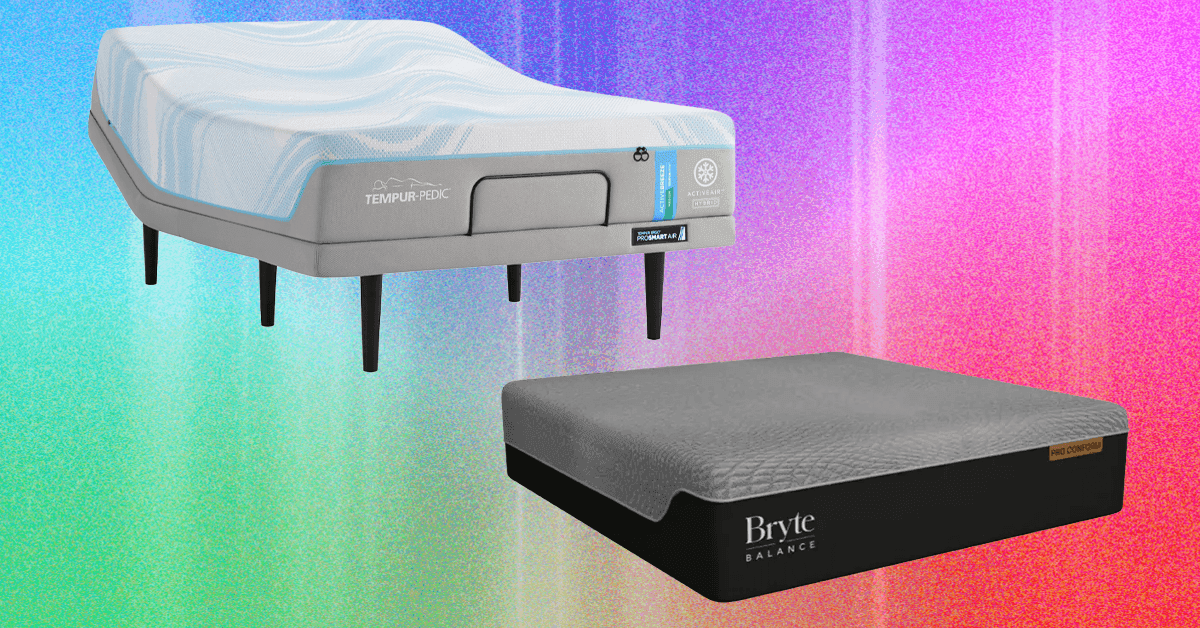
But that's not the case with Bryte's Balance Pro, which is why it's so interesting. Instead of air chambers on each side of the mattress, this smart bed follows a more traditional blueprint of coils and memory foam layers. These coils, called Bryte Balancers, can be adjusted to specific zones. If you want extra lumbar support or contouring, use the Bryte app to select that area of the bed to get a boost. There are also 100 firmness levels, with 100 feeling very firm thanks to the Balance Pro's coil usage. This level of support also opens smart bed access to more sleepers, as stomach sleepers and heavier body types may not find air-chambered smart beds to be firm enough for lumbar support.
The smart bed is controlled exclusively via app, with an AI Sleep Concierge feature. The Sleep Concierge is best for getting tips on how to sleep better or to explore the bed's features. My favorite feature, by far, is the massage settings in the app's Guided Meditation library, which gently press the coils against you.
Another feature built into this smart bed is sleep tracking. It will monitor your sleep metrics, including sleep phases, hours of sleep, heart rate, respiratory rate, and the number of bed rebalances. This refers to how it automatically adjusts its Bryte Balancer coils while you're sleeping, keeping your support evenly distributed.
Bryte Balance Pro ranges from $5,999 for a twin mattress to $6,899 for a California king.
Photograph: Julia ForbesSave to wishlistSave to wishlistTempur-Pedic
If you were looking for the spaceship of smart beds, Tempur-Pedic's Tempur-ActiveBreeze comes pretty dang close. This is a true luxury smart bed, with a unique build centered on temperature control and intense programming. It's also got some of the most extensive sleep tracking and temperature control features I've ever seen, which factors heavily into its cost.
The main appeal of this bed is that it caters to hot sleepers in more extreme night-sweat situations, whether that's due to chronic conditions, body composition, or medical treatments. There are fans built into the base, and you have three airflow speeds to work with: slow, medium, and fast. Airflow is streamlined from the base through two ports in the bed. To help with this, the perforated memory foam layers and coils inside are meant to promote circulation. Altogether, it's supposed designed to provide either a 30-degree cooler or warmer temperature range.
The wild thing is, I felt cool air lightly skittering along the surface. Even when I piled on my heaviest duvets and bedding, I did not break out in a sweat once. The marketed temperature range is debatable, as I only saw a 6-degree drop when I used a temperature gun. There are so many variables that can affect temperature, like time of year, the clothing you wear, or how your body functions. However, the cooling was palpable, which was exciting.
The depth of data the Tempur-ActiveBreeze can pull from is also a big driver of this bed. With Sleeptracker-AI integration, you can utilize an AI sleep coach to get active feedback on how to tackle the day based on how you rested. You can also monitor your bedroom's air quality and analyze sleep metrics like breath and heart rate, plus gauge all the sleep stages you were in. The app will break down this data into nightly, monthly, and eventually yearly views for you—and send updates via an email report.
It's important to note that this is the only bed I've tested that doesn't qualify as an adjustable mattress, as it has only one firmness level. With the provided adjustable base (provided you purchase directly from Tempur-Pedic), you can do typical smart bed settings like zero gravity, head-and-foot angles, and anti-snore.
The Tempur-ActiveBreeze (base included via Tempur-Pedic) ranges from $10,398 for a queen to $19,396 for a split California king.
ChevronSave to wishlistSave to wishlistSleep Number
Sleep Number (With FlexFit 3 Base)
Memory foam and side sleepers are a perfect match. Side sleepers need a softer surface for their hips and shoulders to sink into, and memory foam is the leading mattress material for this. It provides pressure relief in areas that have many nerve endings. Too firm a surface, and these joints will let you know in the form of joint pain or next-morning soreness. This is where Sleep Number's P6 is such a good fit.
Aside from the adjustable firmness levels that come standard with Sleep Number beds, the P6 features additional pressure-relief foams to enhance cushioning. Its standout feature is the “Responsive Air” setting. Relying on sensors, this sleep technology gauges the amount of pressure across your body as you sleep and automatically adjusts to areas where it detects high pressure. To redistribute your body weight away from your joints and high-pressure areas, this setting inflates and deflates small air chambers along the surface. You can turn this feature off in the app, and the sound of it happening does take some getting used to. But if you have problematic joints like mine, it's a futuristic experience for your hips and shoulders to receive.
Sleep Number is already well-regarded for helping carve out a niche in the mattress industry, allowing smart beds to flourish. So it's no surprise that the Sleep Number P6 holds its own with its sleep tracking metrics. Sensors in the bed provide detailed sleep tracking, giving you a SleepIQ score that measures overall sleep quality and your projected energy for the day.
The caveat is that you absolutely should pair this mattress with an adjustable base from the brand, and both the bed and base require Wi-Fi to function. I tested it with the FlexFit 3 to experience all its features, such as foot warming, motion-sensor underbed lighting, and a range of motion at the top and bottom of the bed.
The Sleep Number P6 (bed only) ranges from $3,199 for a queen to $7,998 for a FlexTop California king.
ChevronSave to wishlistSave to wishlistPersonal Comfort
Personal Comfort’s Rejuvenate is a really solid adjustable mattress, particularly for side sleepers, and ideal for those who may not want sleep tracking or tech. While it's got “smart bed” in the name and an app to control it, with no extra programming or sleep tracking, it doesn't qualify as a true smart bed in my book. This doesn't mean it's bad, but we need to align expectations before you make the investment.