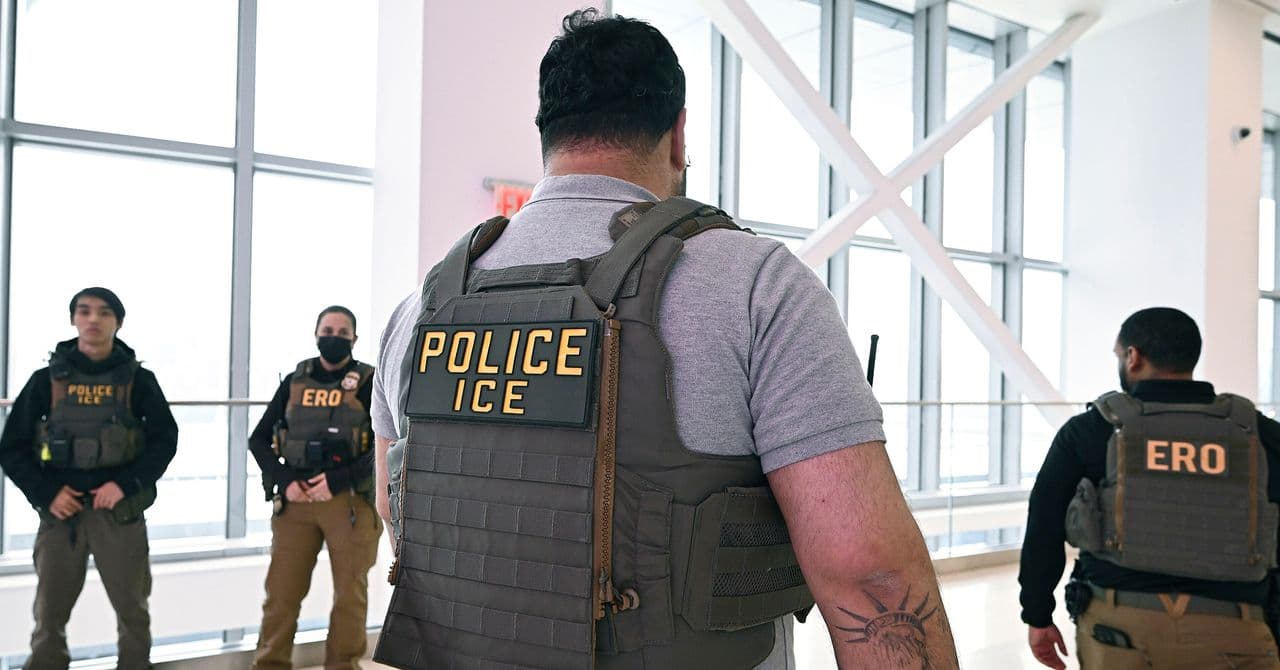
At least 14 U.S. airports saw the deployment of Immigration and Customs Enforcement (ICE) agents this week, sparking frustration among Transportation Security Administration (TSA) workers already strained by a partial federal government shutdown that has left many unpaid for weeks. The unconventional move, purportedly aimed at reducing wait times at airport checkpoints, has instead ignited tensions between agencies and raised serious concerns over job displacement and operational safety.
- ICE agents stationed at 14+ airports amid shutdown lack TSA-specific training
- TSA officers report increased stress, financial hardship, and fears of replacement
- Call-out rates rose to 11% nationwide, with some airports seeing over 35% staff absences
- More than 480 TSA screeners have resigned since February due to pay delays
- President Trump announced plans for an executive order to address TSA payroll issues
Why ICE Agents Were Sent to Airports During the Shutdown
The decision to send ICE personnel to assist with airport security screening during the ongoing federal government shutdown appears to stem from administrative efforts to reduce traveler wait times. However, many TSA officials argue that the move is both ineffective and potentially dangerous. While the Department of Homeland Security (DHS), which oversees both TSA and ICE, has not officially commented on the deployment, sources within TSA indicate that the agents were placed in roles such as document checking—an entry-level task typically performed by untrained TSA staff.
Lack of Proper Training Raises Concerns
ICE agents are not certified transportation security officers, nor do they possess specialized knowledge related to aviation threats or prohibited items. This limitation restricts their ability to perform more complex duties necessary for effective checkpoint operations. According to TSA Acting Administrator Ha Nguyen McNeill, the ID-checking role is considered 'nonspecialized,' yet numerous reports suggest these agents have struggled even with basic crowd control and instructional responsibilities.
Frustration Mounts Among Unpaid TSA Workers
“ICE are here and they’re doing literally nothing to help,” said an airline worker in New York, echoing sentiments heard across multiple terminals at John F. Kennedy International Airport.
Many TSA employees view the deployment as a symbolic gesture that undermines their professionalism and dedication. With paychecks delayed since early February, morale among TSA workers has plummeted. Food banks have cropped up inside major airports—including Houston, San Diego, and Charlotte—as frontline workers struggle to meet basic needs like housing, groceries, and child care.
Increased Absenteeism and Staff Turnover
The strain shows statistically. Nationally, daily call-out rates surged to 11%, compared to just 4% prior to the shutdown, according to testimony before the House Homeland Security Committee. Daily absenteeism exceeded 35% at major hubs including Atlanta, New Orleans, JFK, and Houston. So far, more than 480 TSA screeners have officially resigned—some citing dire financial conditions and others pointing to the perceived instability of federal employment under current leadership.
Broader Implications of ICE Deployment on Federal Workforce Stability
Beyond immediate logistical issues, the sight of paid ICE agents supporting unpaid TSA workers has intensified fears about long-term changes to federal staffing models. Some TSA employees referenced Project 2025—a policy framework promoted by the conservative Heritage Foundation that includes proposals to privatize the TSA entirely—as evidence that job security for current screeners is increasingly precarious.
“A part of the American dream that I was sold was that working for the government was honorable and stable,” said Carlos Rodriguez, vice president of AFGE TSA Council 100, representing Northeastern airports. “But this is not honorable or stable at this moment.”
The presence of ICE agents also raises questions about resource allocation and interagency coordination. Critics note that deploying personnel from one department to another during a funding crisis indicates poor contingency planning. Additionally, it sets precedent for cross-utilization of law enforcement resources outside their core missions, possibly compromising effectiveness elsewhere.
Airline Industry Reacts to Escalating Tensions
Flight crews and airline unions have expressed concern about rising passenger frustrations stemming from inconsistent service levels and longer lines. Paul Hartshorn Jr., spokesperson for the Association of Professional Flight Attendants, warned that heightened tension in terminal areas can carry through to aircraft cabins, creating unsafe environments for both customers and crew.
Union Guidance Issued to Flight Crews
In response, the union issued guidance for American Airlines flight attendants interacting with ICE agents, urging caution and requesting clearer communication from airline management. The group emphasized that uncertainty surrounding agent authority and protocols creates confusion that impacts overall customer experience and worker safety.
Political Fallout and Executive Action Promised
President Donald Trump addressed the situation via his Truth Social account, stating he intends to issue an executive order ensuring TSA worker compensation. However, no timeline or mechanism for implementation was provided, leaving affected workers skeptical about whether relief will arrive promptly enough to offset months of missed wages.
“To have them come in …while officers are not receiving a paycheck, I feel like it’s a waste,” said Aaron Barker, president of AFGE Local 554, representing Georgia-based TSA workers. “It’s a waste of money that could have been coming into officers’ bank accounts.”
Calls for congressional action continue, with lawmakers pressing for swift resolution of the shutdown and clarification on how cross-agency deployments align with existing authorities and budgetary restrictions.
Frequently Asked Questions
- Why were ICE agents sent to airports during the shutdown?
- The deployment was reportedly intended to reduce airport security line wait times during a partial government shutdown. Officials claimed ICE agents could be trained quickly to perform ID checks, though most lack formal TSA certification.
- How has the TSA workforce responded to ICE involvement?
- Many TSA employees are frustrated and concerned about job stability, particularly given that ICE agents are being paid while TSA workers remain furloughed. There has been significant staff turnover and absenteeism linked to financial distress.
- What impact has this had on airport travelers?
- While the White House touts shorter lines, TSA workers attribute this primarily to normal fluctuations in air travel volume, seasonal trends, and regional differences—not the presence of ICE agents who often contribute minimally to actual screening processes.