Nintendo quietly introduced a game-changing feature for the Nintendo Switch 2 earlier this month that enhances the visual fidelity of older Switch games when played in handheld mode. Dubbed Handheld Boost Mode, the feature leverages the Switch 2’s more powerful hardware to render games at docked-level quality, even when unplugged. While the upgrade delivers stunning improvements in resolution, anti-aliasing, and overall clarity, it comes at a steep cost: battery life plummets by nearly a quarter in testing. Despite the trade-off, most players consider the visual leap worth the sacrifice, as it transforms compromised ports and underpowered games into near-native experiences.
- Handheld Boost Mode runs Switch 1 games at docked quality in handheld mode on Switch 2, improving visuals dramatically.
- Battery life drops by 23% in Handheld Boost Mode, with Doom Eternal lasting just 3 hours 43 minutes compared to 5 hours 1 minute without it.
- Players report significant improvements in games like Xenoblade Chronicles 2, Paper Mario TTYD, and The Witcher 3 when using the feature.
- Nintendo released the feature without announcement, surprising users and reigniting interest in the Switch 2’s backward compatibility.
How Handheld Boost Mode Works and Why It Matters
Handheld Boost Mode is a software enhancement exclusive to the Nintendo Switch 2 that bridges the gap between the original Switch’s hardware limitations and the Switch 2’s superior capabilities. When activated, the feature forces older games to run at higher resolutions, improved frame rates, and enhanced graphical settings—conditions typically reserved for docked play. This is achieved by offloading processing tasks to the Switch 2’s more powerful NVIDIA Tegra X1+ chip, which compensates for the original Switch’s weaker hardware.
The significance of Handheld Boost Mode cannot be overstated for players with large libraries of legacy titles. Many Switch 1 games, particularly those released in the console’s later years, suffered from subpar visuals in handheld mode due to the system’s power constraints. Games like *Xenoblade Chronicles 2* and *Fire Emblem: Three Houses* were notorious for their blurry textures and reduced anti-aliasing when unplugged, often prompting players to dock their systems just to enjoy better visuals. Handheld Boost Mode eliminates this compromise, delivering a consistent experience regardless of play mode.
The Technical Backbone: How Switch 2’s Hardware Enables the Upgrade
The Nintendo Switch 2’s hardware upgrade is the foundation of Handheld Boost Mode’s success. While Nintendo has not officially detailed the exact specifications, reports and teardowns suggest the Switch 2 utilizes an enhanced version of the original Switch’s NVIDIA Tegra X1+ SoC, paired with 8GB of RAM (up from 4GB on the original Switch). This additional processing power allows the system to dynamically adjust graphical settings in real-time, a feat the original Switch’s hardware could not achieve. The result is a seamless transition from handheld to docked quality, a feature long requested by Nintendo fans.
Developers and modders have long explored ways to push the original Switch’s hardware further through homebrew tools like emulators and overclocking utilities. However, Handheld Boost Mode represents Nintendo’s first official foray into this space, signaling a shift in the company’s approach to backward compatibility. By leveraging the Switch 2’s superior hardware, Nintendo is not only preserving its legacy but also enhancing it—a rare move in the gaming industry where remasters and re-releases often require purchasing games anew.
Battery Life Trade-Off: The Cost of Crisp Visuals
The most immediate drawback of Handheld Boost Mode is its impact on battery life. In a test conducted by Reddit user JampyL, *Doom Eternal*—a notoriously demanding title—lasted just 3 hours and 43 minutes with Handheld Boost Mode enabled, compared to 5 hours and 1 minute without it. This represents a 23% reduction in battery endurance, a significant sacrifice for handheld gamers who prioritize portability. The drain is even more pronounced in graphically intensive games like *The Witcher 3* or *Metroid Dread*, where the Switch 2’s hardware is pushed to its limits.
Nintendo has not provided official battery specifications for the Switch 2’s handheld mode, but third-party estimates suggest the console’s 4,310mAh battery is comparable to the original Switch’s 4,310mAh unit. The original Switch’s battery life in handheld mode ranged from 2.5 to 6.5 hours depending on the game, with most titles averaging around 4.5 hours. Handheld Boost Mode’s 23% reduction would bring that average down to roughly 3.5 hours for demanding games, though lighter titles like *Stardew Valley* or *Pokémon Scarlet/Violet* may see less impact.
Real-World Performance: Games That Benefit Most from Handheld Boost Mode
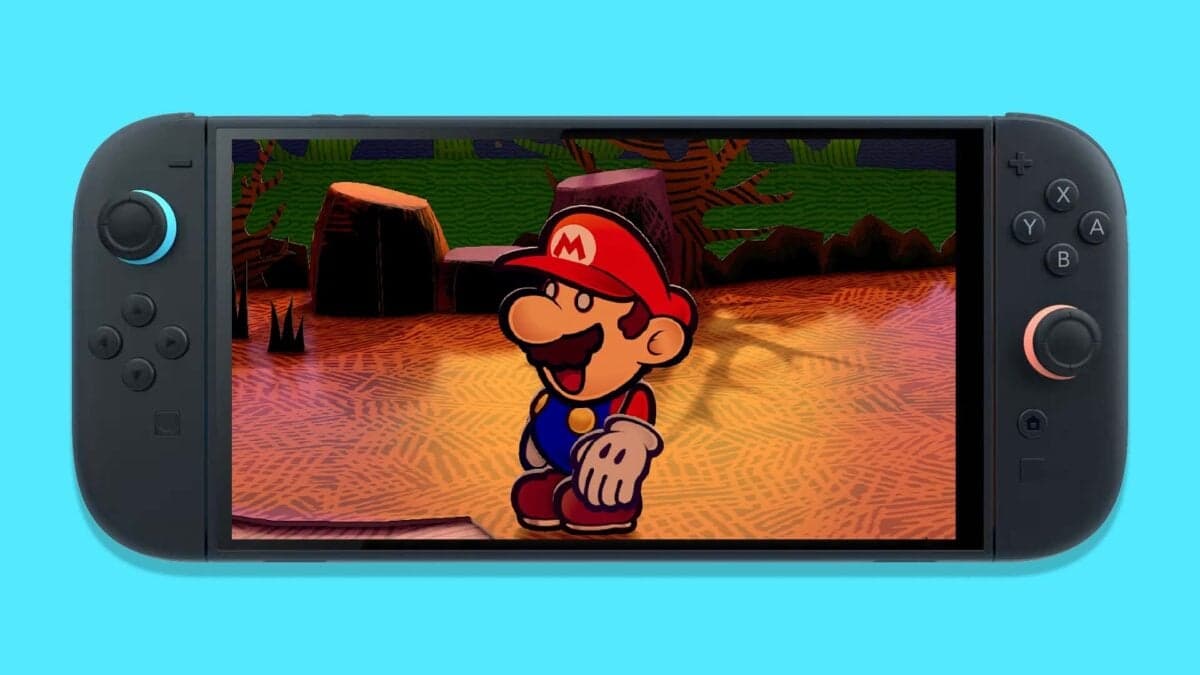
While Handheld Boost Mode improves visuals across the board, some games see more dramatic transformations than others. Titles with notoriously poor handheld performance on the original Switch stand to gain the most. For example, *Paper Mario: The Thousand-Year Door* (a remake of the beloved GameCube classic) benefits from sharper textures and reduced aliasing, making the game’s vibrant world pop even on the Switch 2’s 7-inch screen. Similarly, *Astral Chain*—a visually stunning action game—loses its jagged edges and muddy textures, resulting in a near-native experience.
RPGs with heavy reliance on text and UI, like *The Witcher 3* and *The Outer Worlds*, also see noticeable improvements. The game’s menus and subtitles, often blurry on the original Switch, become legible without the need to dock the console. Even ports with well-documented issues, such as *Xenoblade Chronicles 3*, benefit from reduced screen tearing and improved frame pacing. However, not all games are equally affected; simpler titles like *Minecraft* or *Celeste* show marginal improvements, as their visual demands are already low.
“Everyone needs to turn Handheld Boost ON right now. It’s not quite Switch 2 Edition / compatibility update level, but in handheld it basically runs at docked quality and the difference is obvious. Feels SO much better! It will eat up your battery like ass though.” — @Kumasenshi_, March 17, 2026
“Here’s a comparison of *Paper Mario TTYD* without handheld boost and with handheld boost. This is a huge improvement. I had to take actual photos of the screen because screenshots wouldn’t do this justice (since they are only taken in 720p in handheld mode).” — Reecee, March 17, 2026
The Surprise Release and Nintendo’s Silent Strategy
One of the most intriguing aspects of Handheld Boost Mode is its sudden, unannounced release. Nintendo has historically been cautious about revealing new features for its consoles, often spacing out updates to avoid overwhelming players. The absence of fanfare surrounding Handheld Boost Mode suggests the company may have been testing the feature internally or collaborating with developers before its rollout. Alternatively, it could indicate a shift toward a more agile approach to post-launch support, a move that aligns with industry trends favoring iterative improvements over static hardware.
The lack of official documentation or press releases has left some players confused about the feature’s availability and limitations. While Handheld Boost Mode is accessible through the Switch 2’s menu settings, Nintendo has not clarified whether the feature will be expanded to additional games or if it will remain a blanket enhancement for all backward-compatible titles. Speculation is rife that Nintendo may introduce more hidden gems in the coming months, especially as the Switch 2 approaches its one-year anniversary in June 2026.
Broader Implications: How Handheld Boost Mode Could Shape Nintendo’s Future
Handheld Boost Mode is more than just a neat trick for Switch 2 owners—it’s a potential blueprint for how Nintendo could approach backward compatibility in future consoles. By leveraging the power of newer hardware to enhance older games, Nintendo is redefining the value proposition of its ecosystem. This strategy could reduce the need for costly remasters or re-releases, instead allowing players to revisit classic titles with improved visuals at no additional cost.
The feature also serves as a counterpoint to Sony’s and Microsoft’s approaches to backward compatibility. While PlayStation and Xbox have focused on streaming or emulation to preserve legacy games, Nintendo’s method emphasizes hardware-driven enhancements. This could give Nintendo a competitive edge in attracting players who prioritize both nostalgia and modern performance. However, it also raises questions about whether Nintendo will extend Handheld Boost Mode to future iterations of the Switch, or if it will remain a Switch 2 exclusive.
Player Reactions: A Mixed but Overwhelmingly Positive Response
The gaming community’s reaction to Handheld Boost Mode has been overwhelmingly positive, despite the battery life trade-off. Social media platforms like Twitter and Reddit have been flooded with before-and-after comparisons, showcasing the feature’s impact on everything from *Xenoblade Chronicles 2* to *Fire Emblem: Three Houses*. Many players have praised Nintendo for finally addressing long-standing complaints about the original Switch’s handheld performance, calling Handheld Boost Mode a “game-changer” and “one of the best features of the Switch 2.”
However, not all feedback has been glowing. Some players have expressed frustration over the battery life reduction, particularly those who rely on their Switch 2 for long commutes or travel. Others have pointed out that the feature does not apply to all games equally, with some titles showing minimal improvements. Despite these critiques, the consensus is clear: Handheld Boost Mode is a must-try feature for Switch 2 owners, especially those with extensive libraries of older titles.
What’s Next for Nintendo and Handheld Boost Mode?
As the Switch 2’s first anniversary approaches, speculation is mounting about what Nintendo has planned next for Handheld Boost Mode. Potential updates could include targeted enhancements for specific games, such as frame rate improvements or additional graphical options. There is also hope that Nintendo will eventually expand the feature to include Nintendo 64 or GameCube titles via emulation, further solidifying the Switch 2 as a retro gaming powerhouse.
Another possibility is that Nintendo will introduce a “Boost Mode Plus” or similar premium feature in a future update, offering even more dramatic visual improvements at the cost of further battery drain. Alternatively, the company may choose to keep Handheld Boost Mode as a free, blanket enhancement, prioritizing accessibility over monetization. Whatever the case, the feature’s success thus far suggests that Nintendo will continue to invest in backward compatibility, blurring the lines between past and present generations of its consoles.
Key Takeaways for Switch 2 Owners
- Handheld Boost Mode transforms older Switch games into docked-quality experiences when played in handheld mode, dramatically improving visuals and performance.
- The feature comes with a 23% battery life reduction, as demonstrated by tests on *Doom Eternal*, which lasted 3 hours 43 minutes with Boost Mode enabled versus 5 hours 1 minute without it.
- Games like *Paper Mario TTYD*, *Astral Chain*, and *The Witcher 3* see the most dramatic improvements, while simpler titles may see minimal changes.
- Nintendo released Handheld Boost Mode without fanfare, signaling a potential shift toward more agile post-launch support for the Switch 2.
- The feature could redefine Nintendo’s approach to backward compatibility, offering a cost-effective way to enhance legacy titles without remasters.
Frequently Asked Questions
- Does Handheld Boost Mode work on all Switch 1 games?
- Handheld Boost Mode is designed to work on all backward-compatible Switch 1 games, but the extent of visual improvements varies depending on the game’s graphical demands. Simple or well-optimized titles may see minimal changes, while graphically intensive games benefit the most.
- How much battery life does Handheld Boost Mode consume?
- Testing by Reddit user JampyL showed a 23% reduction in battery life when using Handheld Boost Mode on *Doom Eternal*, dropping from 5 hours 1 minute to 3 hours 43 minutes. The impact may vary by game and individual playstyle.
- Will Nintendo expand Handheld Boost Mode to other features or games?
- Nintendo has not announced any plans to expand Handheld Boost Mode, but the feature’s surprise release suggests the company may have more tricks up its sleeve. Players speculate about future updates, including potential enhancements for specific games or even retro titles.