Today on Decoder, let’s talk about prediction markets, which continue to insert themselves into the news cycle and the news itself in increasingly weird, unsettling, and potentially illegal ways.
My guest today is Liz Lopatto, senior reporter at The Verge, who owns what we cheerfully call the chaos beat. Liz has been writing a lot about prediction markets lately and especially why they all seem so intent on being perceived as sources of news — a position that directly incentivizes insider trading. That, in turn, creates a long list of very predictable problems.
This past weekend, after the United States and Israel went to war with Iran, leading prediction market platforms Kalshi and Polymarket erupted with activity. That included extremely contentious markets around the death of Iran’s supreme leader, and some that appeared to be rife with insider trading from people with advanced knowledge of US military actions.
Verge subscribers, don’t forget you get exclusive access to ad-free Decoder wherever you get your podcasts. Head here. Not a subscriber? You can sign up here.
In 2026, you can, from the comfort of your couch, wager on when the US will bomb a foreign country. And for Kalshi and Polymarket, that’s quite literally the business model: betting on anything. (After we recorded this episode, Polymarket even briefly featured a wager on whether nuclear war would break out before 2027; the company removed it.)
Sports are where these firms make the bulk of their money, which is why both Kalshi and Polymarket are in the crosshairs of so many state gambling authorities. But this industry also thinks of itself as something far grander. Prediction market players want to be the news, and they’ve even devised new, frankly unconvincing frameworks for why they should be considered legitimate sources of information — instead of just anything-goes casinos. Yet more and more, news organizations are taking the bait.
Kalshi’s tagline is “trade on what you know.” Polymarket CEO Shayne Coplan has called insider trading “cool.” And later on in this episode, you’ll hear from Robinhood CEO Vlad Tenev, who came on the show last year to defend prediction markets as “the news faster; in some cases before it even happens,” which, last time I checked, is impossible without insider trading.
Insider trading is supposed to be illegal, and so is operating an unregulated sports book. So you’re now starting to see Kalshi and Polymarket getting hit from both sides of this broader regulatory debate, and 2026 is shaping up to be the year that all of this really comes to a head. To what end? It’s hard to say, especially as these companies cozy up to the Trump administration.
But it’s also becoming increasingly untenable for prediction markets to sit in the middle of the tension between gambling on the news and trying to self-regulate such that they don’t encourage insider trading.
Okay: Verge senior reporter Liz Lopatto on prediction markets, gambling, and the news. Here we go.
This interview has been lightly edited for length and clarity.
Liz Lopatto, you’re a senior reporter at The Verge. Welcome back to Decoder.
Thank you. It’s good to be back.
I’m excited to talk to you about gambling. I think we’re just going to talk about gambling. I’m saying gambling because I know the people who run prediction markets hate it when we call it gambling, and I’m trying to bait them into talking to either you or me for a piece on the difference between prediction markets and gambling. What do you think the difference is?
I don’t think there is one. I’m just being honest here. I think the structural difference is what they’ll point to, which is that on a prediction market, it’s a contract between independent players, and with a casino, you’re betting against the house. And so they’re just taking a cut of these contracts rather than playing against the players.
One of the reasons you’re on the show this week is because prediction markets are moving ever more aggressively into news. The inciting event here is Polymarket and Substack have launched a joint venture by which Substack writers can integrate Polymarket odds into whatever they’re doing. They might get paid for that, they might not.
The tagline for this is “Journalism is better when it’s backed by live markets.” I’ve been staring at that tagline for a long time. What do you think is made better by live markets in the context of journalism?
Well, first of all, Nilay, I think we have Bloomberg at home. But second, in the sense that markets and journalism have anything to do with each other, it is pretty much only markets reporting. If you’re reporting on, say, the stock market and part of your job is to put together the big movers of the day, and somebody publishes an exposé on a company that sends its shares plunging, those things are synergistic.
I don’t understand what these contracts would have to do with news except in a very specific context having to do with politics. And that context is, basically, trying to figure out who’s going to win an election.
Obviously, who’s going to win the election is something that there are odds made about every single day. You can criticize politics coverage in many ways, but predicting whether or not someone’s up or down or whether some candidate is on the rise such that they might win an election, that’s just a core part of political coverage. And the idea that you should be able to bet on that has gone through long periods of uncertainty.
Mostly we’ve said that’s a bad idea. I think these prediction markets are saying, “No, it’s a pretty good idea.” There’s some kernel of the conventional wisdom embedded there that it’s more rigorous because the money provides stakes to your bet, and those stakes mean that you believe what you say is true, versus just lying to a pollster . Do you think any of that holds water?
No. Let me start by just explaining something. That explanation you gave me about “money stakes mean you believe something.” That comes from economists. One thing about economists is that they tend to discover 50 years later stuff that psychologists and sociologists have already known the whole time.
One of the things that we know from psychology is that there are a lot of people who get involved in betting and just bet for the pure feeling of being in a flow state. We know a great deal about this because casinos run on this. They do what they can to keep you in this flow state so that you’ll keep betting and keep losing money. Slot machines are the ideal way of looking at it.
While prediction markets are not slot machines, I do want to be clear about that, they share some of these basic mechanisms, specifically intermittent reinforcement. So if you are somebody who’s very serious about your prediction markets, you may not be betting because you believe in something. You may be betting just to bet, just to be involved, to be part of the action, because you can’t win if you don’t play. That’s thing one.
Thing two is that I think there’s something a little weird going on, and it has to do with polls and the fact that we no longer really trust polls. If you think about it, there was this long period of time in politics reporting where we would have a debate and then we would see how voters responded to the debate. Did the poll numbers move? And this was a proxy for saying, “Did somebody win the debate?” You can talk about whether or not this is good reporting or whether this is something that has driven the American political scene to its current nihilistic existence.
I think we should tell the audience that Liz and I would both very much like to talk about whether poll-driven political reporting is good or bad, but we’re not going to at this time.
You can hear it, it’s subtext, but not at this time.
So as these polls have become less reliable because people aren’t picking up their phones because we haven’t fixed the spam calls problem, the people who had been using polls as a way of guiding elections coverage just looked to something else. And that something else was prediction markets.
The prediction markets said that Trump was going to win in the last presidential election, and then Trump did win. For a lot of people, that was a confirmation that prediction markets were good. But for those of you who were watching the polls, they suggested that the race was a toss-up, which it was. And so the fact that Trump won didn’t necessarily mean that that particular kind of predicting was wrong. There’s a whole nest of things going on here that has started this move.
You wrote a long piece for us this week really unpacking from the beginning what the difference between news and events and pseudo-events is. There’s some philosophy embedded in there in classic Liz Lopatto fashion. Let’s start at the very beginning. This is a hilarious conversation for you and I to be having, but I’m going to ask, what do you think the word “news” means and why are we having to redefine news in the context of prediction markets?
If I were to give you a pithy statement, news is very recent history. I’m giving you the history of events that occurred as recently as yesterday or 20 minutes ago. But the primary thing that you have to keep in mind is that these events occurred. If you look at the history of news, and I go into this more in the piece, maybe more than people want, it evolves from trying to keep track of what’s going on in either governments or trade. You’re keeping track of specific events in order to orient yourself in the world.
That is what news is. At the very bottom, it’s about events. It’s about car crashes and assassinations,these kinds of things that really occur in the real world that you can really witness.
There’s this book called The Image: A Guide to Pseudo-Events in America that is about everything else that appears in a newspaper. The way that these are referred to is “pseudo-events.” They’re things that can be repeated, can be known ahead of time, and are essentially like marketing.
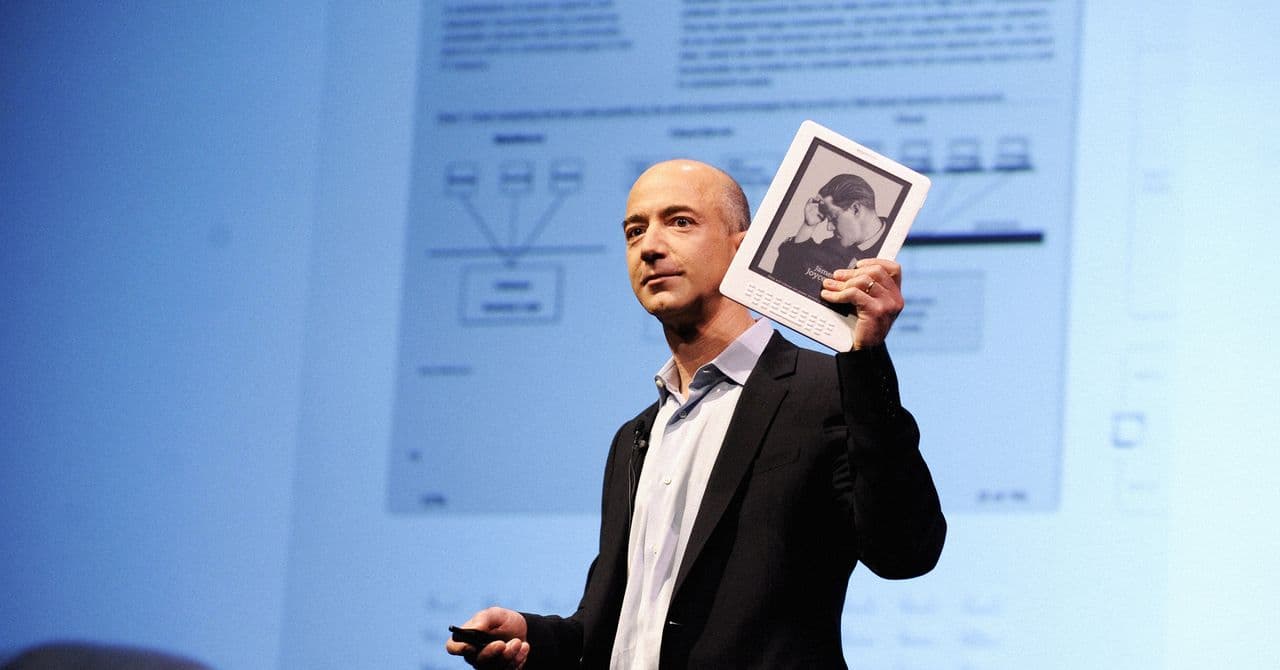
The Apple event, for instance, that’s a pseudo-event. That’s not an event in the same way that a helicopter crash is an event. Because everybody at Apple knows what’s going to happen ahead of time. There might be a couple of surprises if the audience acts up, but they know what they’re announcing, they know roughly when they’re going to announce it, they’ve rehearsed. And so this is a knowable pseudo-event.
A lot of newspapers and news organizations are covering pseudo-events. These are things like press releases. Celebrities are arguably human pseudo-events. In this book, the argument is made that this happens because we don’t have enough events to fill the entire newspaper. And so these pseudo-events have crept in and become part of our language in understanding the world. And there is a market for these things. People do want to feel informed about these pseudo-events as much as they do about events. Our audience certainly wants to know what happened at the Apple event.
That really is one of the things that have tipped some of the confusion around what news is into the place where we’re going. And the place where these pseudo-events happen most frequently is politics. If you think of something like a debate or a protest, those are pseudo-events, and polls arguably are also pseudo-events. They’re not real events.
So because these things become knowable, because these things are not quite the same as news, I think there’s some sense in which they become easier to bet on. If you know there’s going to be a debate and you know there’s going to be a snap poll after the debate, you can bet on who’s going to win the snap poll after the debate to say who won the debate.
You just heard Liz explain the concept of pseudo-events, and the distinctions we draw between real, verifiable news and future events with outcomes known to only a select few people. But in the murky middle there are future events with unknown outcomes: the winner of a sports game or a political election, or even the moment when a new war breaks out in the Middle East after months of mounting pressure.
Our history of wanting to know, and profit from, the outcome of those events before they happen is long and complicated. Now, you can. And as we saw with markets around Iran last weekend, this can have some very disturbing consequences.
Last Saturday, a Polymarket trader made more than half a million dollars last Saturday by betting at the last minute on the date of the Iran offensive. And yet this person remains anonymous, with Polymarket refusing to ban trading related to these kinds of conflicts or the killing of world leaders, and with no plans to ban using inside information to profit off either.