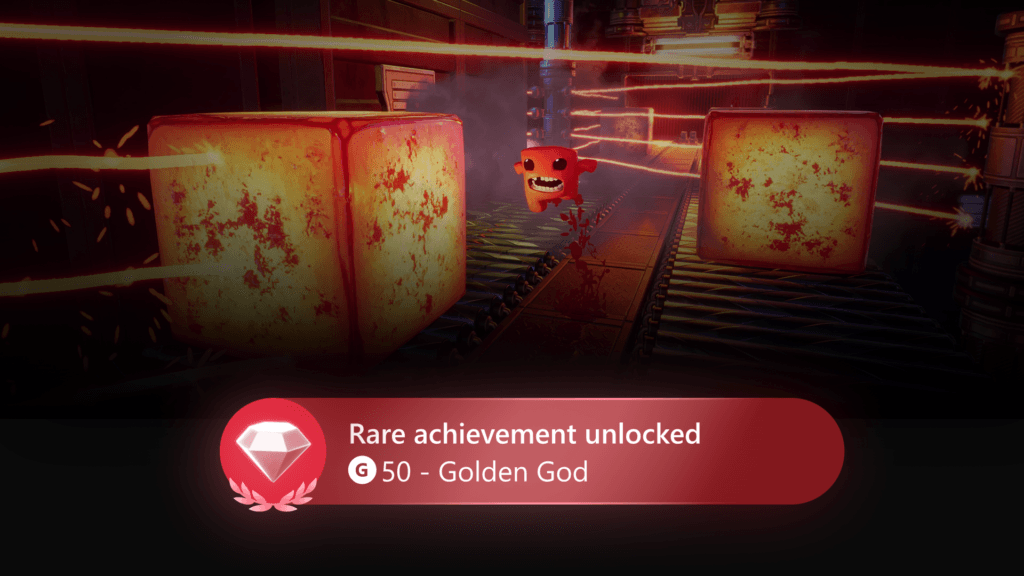
In 2010, Team Meat’s *Super Meat Boy* redefined the indie platformer genre with its lightning-fast, precision-based gameplay, challenging players to navigate deadly obstacle courses with relentless speed. A decade later, developers Sluggerfly and Team Meat revisited the franchise with *Super Meat Boy 3D*, attempting to translate that same adrenaline-fueled experience into a third dimension. The result is a game that captures the spirit of the original while grappling with the inherent difficulties of 3D movement, offering a rewarding but uneven experience that will frustrate and delight players in equal measure.
- Super Meat Boy 3D successfully adapts the 2010 classic’s fast-paced, precision platforming into a 3D space, retaining its signature speed and challenge.
- Frustrating perspective issues and inconsistent level design occasionally disrupt the experience, leading to unfair deaths unrelated to skill.
- New mechanics like the air dash add depth to movement, but the game’s rigid 8-directional movement can feel restrictive.
- The game’s layered unlockable content—including Dark World levels and guest characters—extends its lifespan significantly, rewarding completionists.
- While not as polished as the original, Super Meat Boy 3D succeeds in preserving the chaotic charm and tight controls that made the first game a cult classic.
The Legacy of Super Meat Boy: From 2D Breakout to 3D Experiment
When *Super Meat Boy* launched on Xbox Live Arcade in 2010, it was a revelation—a brutally difficult yet accessible platformer that distilled precision platforming into its purest form. The game’s protagonist, Meat Boy, a sentient cube of muscle, chased after Dr. Fetus, a villainous fetus in a suit and top hat, to rescue his bandage-wrapped girlfriend, Bandage Girl. Levels were designed to be completed in 30 to 45 seconds, demanding players memorize hazards, time jumps with millisecond precision, and maintain relentless momentum. The game’s difficulty was unforgiving, but its tight controls, responsive mechanics, and satisfying respawn system made each death feel like a step toward mastery.
By 2023, *Super Meat Boy* had cemented its status as one of the greatest indie games of all time, frequently appearing on "best of" lists, including *IGN*’s "Mitchell’s 25 Best Games of All Time." Its influence extended beyond its own success, inspiring a wave of precision platformers and proving that indie games could compete with AAA titles in terms of polish and player engagement. When Sluggerfly and Team Meat announced *Super Meat Boy 3D*, fans were divided: Could the series’ signature speed and precision translate to a third dimension without losing its magic?
Gameplay Evolution: How Super Meat Boy 3D Translates 2D Movement to 3D Space
Mastering Meat Boy’s Movement in a New Dimension
At its core, *Super Meat Boy 3D* retains the same DNA as its predecessor. Meat Boy retains his signature speed, stopping on a dime with precise control over his jumps. A full press of the jump button sends him soaring up to 50 yards—far enough to clear entire chasms—while a light tap produces a short hop, just enough to clear a saw blade. The game’s control scheme is intentionally minimalist: by default, Meat Boy’s movement snaps into 45-degree increments, restricting him to eight cardinal directions. This grid-like movement can feel stiff at first, but it also prevents unintended drift that could throw off a player’s alignment with a platform.
This rigid movement system is a double-edged sword. On one hand, it forces players to plan their routes with geometric precision, a hallmark of the series. On the other, it can make navigation feel unnatural, especially in levels where freeform movement would feel more intuitive. The game’s new air dash mechanic mitigates some of this stiffness, allowing Meat Boy to instantly halt his momentum and dash in any direction. This ability is particularly useful for correcting overshoots or latching onto walls after a tricky jump, adding a layer of high-risk, high-reward movement that wasn’t present in the original.
The Persistent Challenge of 3D Perspective
The most significant hurdle *Super Meat Boy 3D* faces is perspective. In a 2D game, it’s easy to judge depth and distance because the camera is fixed and the world is flat. In 3D, even with a dynamic camera that follows Meat Boy closely, the added dimension introduces ambiguity. The game attempts to address this with a red ring beneath Meat Boy’s feet, indicating his position relative to the ground. However, this solution isn’t foolproof. Levels often feature platforms at varying heights, and when Meat Boy leaps over a gap to cling to a wall, it’s not always clear whether he’s aligned correctly until it’s too late.
‘There is a little red ring that always appears underneath your character to let you know where they actually are, relative to the ground, but the ground isn’t always at eye level, and when you’re making giant leaps over large gaps in an attempt to wall cling to [a] platform that’s off center, trying to find the right angle to approach from can feel like a guessing game that usually ends up in death.’
These perspective issues are the game’s most frustrating flaw. Unlike the original, where deaths stemmed from misjudged timing or unforeseen hazards, many deaths in *Super Meat Boy 3D* result from the game’s inability to communicate depth effectively. This undermines the series’ core philosophy of fair but challenging gameplay, turning what should be a skill-based learning experience into a trial-and-error slog.
Level Design: A Mixed Bag of Triumphs and Pitfalls
The Good: Tight, Rewarding Challenges
When *Super Meat Boy 3D* works, it *really* works. The level design shines in its ability to introduce new hazards and mechanics gradually, building on the foundation laid by the original. Early levels serve as a warm-up, easing players into the 3D movement and the game’s signature speed. As the difficulty ramps up, players encounter inventive setups that demand mastery of the air dash, wall-clinging, and precise jumping. Boss battles, a staple of the series, return in full force, featuring three increasingly deadly phases that test a player’s ability to read patterns and react quickly.
The game’s structure mirrors the original: five worlds, each culminating in a boss battle, with Dark World versions of every level unlocked by achieving A+ ranks on the Light World counterparts. Guest characters from other indie games—unlocked by finding hidden bandages—add variety to the gameplay, each offering unique movement styles. This layered progression ensures that *Super Meat Boy 3D* offers something for players of all skill levels, from casual fans looking to experience the story to completionists chasing every unlockable.
The Bad: Inconsistent Quality and Frustrating Design
Unfortunately, not all levels hit the mark. Some of the game’s weaker stages suffer from poor layout or perspective issues that make them feel unfair rather than challenging. A level might require a precise jump that’s nearly impossible to time correctly due to camera angles or obscured platforms. Other levels introduce mechanics that feel tacked on or underdeveloped, breaking the flow of the game. The inconsistency is jarring—one moment, you’re soaring through a level with effortless precision, and the next, you’re dying repeatedly to a design oversight.
The game’s short length—approximately four hours for the base story—also highlights its uneven pacing. While this is par for the course for the series, *Super Meat Boy 3D*’s replay value comes from its unlockable content rather than the core experience. The Dark World levels, which increase in difficulty exponentially, provide a significant challenge for those seeking to master the game, but they’re not enough to salvage levels that feel fundamentally broken.
The Spirit of the Original: Does Super Meat Boy 3D Capture Its Magic?
Despite its flaws, *Super Meat Boy 3D* undeniably captures the spirit of the original. The game’s soundtrack, art style, and sense of humor all pay homage to the 2010 classic, creating a familiar atmosphere that longtime fans will appreciate. The controls, while not as fluid as the original’s, are responsive enough to make the experience enjoyable, and the air dash adds a fresh layer of depth to the movement.
The biggest testament to the game’s success is its ability to evoke the same addictive, “just one more try” energy as the original. Even when a level feels unfair, the game’s quick respawns and tight feedback loop keep players engaged. The satisfaction of finally conquering a difficult stage or achieving an A+ rank is as rewarding as ever, proving that the core appeal of *Super Meat Boy*—the thrill of overcoming impossible odds—translates surprisingly well to 3D.
Who Should Play Super Meat Boy 3D—and Who Should Avoid It
*Super Meat Boy 3D* is a game that will appeal to fans of the original and hardcore platformer enthusiasts willing to overlook its flaws. If you loved *Super Meat Boy*’s challenge and precision, this game offers a fresh take that’s worth experiencing, even if it’s not a perfect adaptation. Completionists will find plenty to sink their teeth into, from the Dark World levels to unlocking every guest character.
However, the game’s perspective issues and inconsistent level design make it a tough sell for casual players or those new to the series. If you struggled with the original’s difficulty, *Super Meat Boy 3D* will likely frustrate you further. Even experienced players may find themselves grinding their teeth over unfair deaths that have little to do with skill and more to do with the game’s technical limitations.
The Future of Super Meat Boy: What’s Next for the Franchise?
As *Super Meat Boy 3D* carves out its place in the franchise’s history, it raises questions about where the series can go next. Will Team Meat or Sluggerfly revisit the world of Meat Boy again, or is this the definitive end for the character? Given the game’s mixed reception—praised for its ambition but criticized for its flaws—it’s unclear whether a sequel would be feasible. However, the success of the original and the cult status of the franchise suggest that there’s still an audience eager for more.
For now, *Super Meat Boy 3D* stands as a bold but flawed experiment—a testament to the challenges of adapting a 2D classic into 3D. It may not reach the heights of the original, but it’s a worthy follow-up that proves the series’ formula can evolve while retaining its core identity.
Frequently Asked Questions
- Is Super Meat Boy 3D harder than the original?
- While the core challenge remains similar, the added dimension and perspective issues in 3D can make it feel harder in some ways. The game’s unforgiving design and occasional unfair deaths add to the frustration, though skilled players will adapt over time.
- Does Super Meat Boy 3D have the same story as the original?
- Yes, the story remains identical: Meat Boy chases Dr. Fetus to rescue Bandage Girl. The narrative is minimal, serving primarily as a backdrop for the gameplay, but it retains the same quirky charm as the 2010 classic.
- Are there unlockable characters in Super Meat Boy 3D?
- Yes, players can unlock guest characters from other indie games by finding hidden bandages within levels. Each character has unique movement abilities, adding variety to the gameplay and replay value.