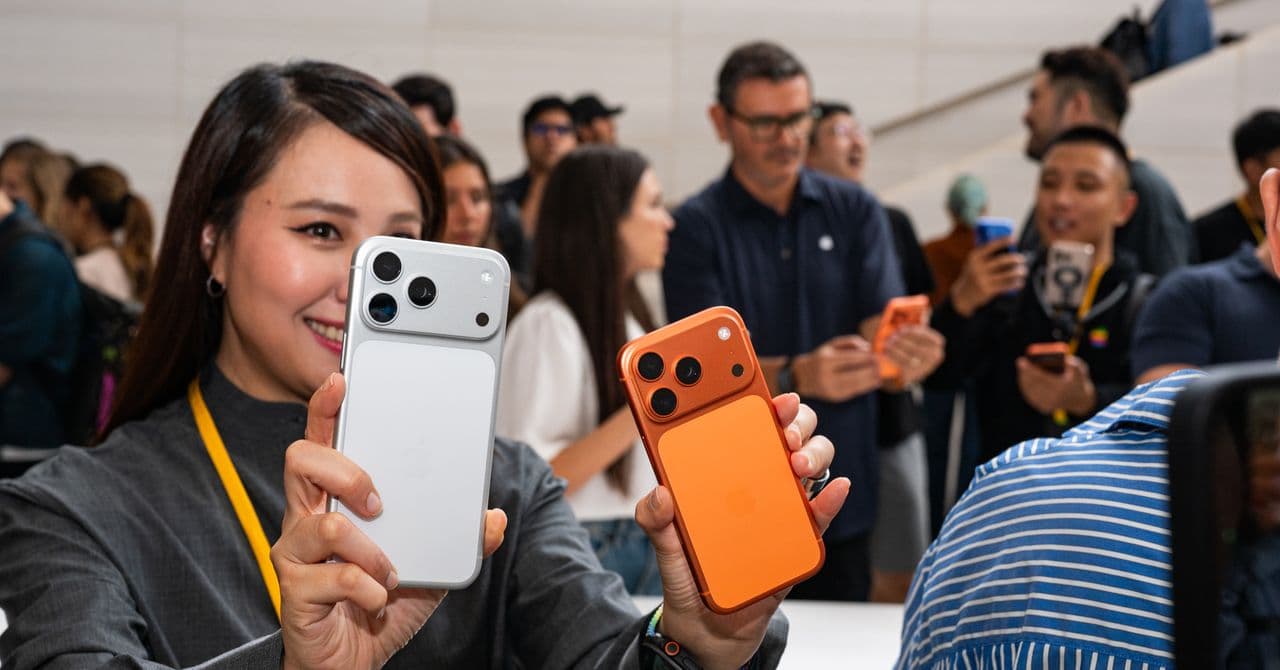
The new phones are officially on sale. If you're considering an upgrade, which iPhone 17 model should you get? I'll break down the key differences and similarities among the iPhone 17 lineup, so you can make an informed choice. Don't forget, these aren't the only iPhones that Apple sells—read our Best iPhones guide for all of your options. And check out our Best iPhone 17 Cases guide for ways to keep your new handset in pristine condition.
Updated March 2026: We've added the iPhone 17e.
If you have an iPhone from just a few years ago, you probably don't need to upgrade to Apple's latest, unless your device has issues. Even then, there are things you can do to fix your iPhone, like getting a battery replacement, or you can try some of these troubleshooting steps. The point is, you shouldn't feel the need to upgrade just because Apple has a new model.
If you're set on buying an iPhone 17 model, we have a guide on how to sell your iPhone so that it doesn't just collect dust in a drawer. When your new device arrives, back up your old iPhone before switching to the new one, then follow our guide on factory-resetting your device before selling or giving it away. We also have tips on how to set up your new iPhone and what settings to change to get the most out of it.
Let's quickly talk about the similarities across all the iPhone 17 models this year, and yes, that includes the iPhone Air, even if it doesn't have “17” in the name.
Although iPhones differ in screen size, they all feature an OLED screen (Apple refers to it as a Super Retina XDR display). All of these devices, except for the iPhone 17e, employ ProMotion technology. This is the first time the non-Pro models have ProMotion, which is essentially a 120-Hz refresh rate.
A high refresh rate has been a common feature on Android phones for a while, but it means your display refreshes 120 times per second rather than 60, like on the iPhone 16, so everything you do will feel smoother. (We have a broader explainer here.) These are adaptive refresh rates that can drop as low as 1 Hz when there's little activity on the screen, which is why the iPhone 17 and iPhone Air now support the always-on display. That does mean that, yes, the iPhone 17e does not have the always-on display.
Apple also says there's a new Ceramic Shield 2 front glass that's three times more scratch-resistant than before, and a new antireflective coating to reduce glare. These screens can also hit up to 3,000 nits of peak brightness, meaning it'll be easier to read your iPhone screen on sunny days, though the iPhone 17e caps it at 1,200 nits to hit that lower price.
The front-facing selfie camera is identical on all the iPhone 17 models except the iPhone 17e, which retains the same 12-MP front camera as the iPhone 16e. It's a new square-shaped 18-megapixel sensor, and that means you can expect more detail out of your selfies. However, the square sensor also introduces a smarter way to capture group selfies. You can keep holding your phone in portrait orientation for the best grip, and it will automatically zoom out to make sure everyone fits in the frame, while also switching to a landscape orientation for the widest view. All of these models also support Dual Capture, which lets you shoot with both the front and rear cameras at the same time. You can read more about these features here.
All of the iPhones are IP68 water- and dust-resistant and have Face ID, Action Button, USB-C, and Qi2 magnetic wireless charging (MagSafe). Except the iPhone 17e, they have the Camera Control button for more precise control over the shutter in the camera app. All devices start at 256 GB of storage. There's Apple Intelligence, Emergency SOS via Satellite, and Crash Detection capabilities, and barring the iPhone 17e, they utilize Apple's new N1 wireless networking chip for Bluetooth 6, Wi-Fi 7, and Thread support.
Now, here's where they diverge, which will help you better understand what model to buy.
Display: 6.1 inch, 60 Hz, OLED, 1,200 nits (peak), antireflective coating
6.3 inch, 120 Hz, OLED, 3,000 nits (peak), always-on display, antireflective coating
6.5 inch, 120 Hz, OLED, 3,000 nits (peak), always-on display, antireflective coating
6.3 inch, 120 Hz, OLED, 3,000 nits (peak), always-on display, antireflective coating
6.9 inch, 120 Hz, OLED, 3,000 nits (peak), always-on display, antireflective display
Cameras: 48-MP main camera, 12-MP front camera
48-MP main camera, 48-MP ultrawide with Macro, 24-MP front camera (binned to 18 MP)
48-MP main camera, 24-MP front camera (binned to 18 MP)
48-MP Fusion camera, 48-MP ultrawide with Macro, 48-MP telephoto with 4X zoom, 24-MP front camera (binned to 18 MP)
48-MP Fusion camera, 48-MP ultrawide with Macro, 48-MP telephoto with 4X zoom, 24-MP front camera (binned to 18 MP)
USB-C speeds: USB 2, up to 480 Mb/s
Lavender, Mist Blue, Black, White, Sage
Space Black, Cloud White, Light Gold, Sky Blue
Material: Aluminum and Ceramic Shield 2 on front
Aluminum and Ceramic Shield 2 on front
Titanium, Ceramic Shield 2 on front, Ceramic Shield on back
Aluminum, Ceramic Shield 2 on front, Ceramic Shield on back
Aluminum, Ceramic Shield 2 on front, Ceramic Shield on back
Weight and thickness: 169 grams, 7.8 mm
Extras: Qi2 15W (MagSafe) wireless charging, Face ID, IP68, Apple C1X modem
Qi2 25W (MagSafe) wireless charging, Face ID, Dynamic Island, Ultra Wideband (2nd Gen), IP68, N1 networking chip, Dual Capture, Center Stage
Qi2 20W (MagSafe) wireless charging, Face ID, Dynamic Island, Ultra Wideband (2nd Gen), IP68, N1 networking chip, Apple C1X modem, Dual Capture, Center Stage
Qi2 25W (MagSafe) wireless charging, Face ID, Dynamic Island, Ultra Wideband (2nd Gen), IP68, N1 networking chip, Vapor chamber cooling, Dual Capture, Center Stage, 4K 120 fps video
Qi2 25W (MagSafe) wireless charging, Face ID, Dynamic Island, Ultra Wideband (2nd Gen), IP68, N1 networking chip, Vapor chamber cooling, Dual Capture, Center Stage, 4K 120 fps video
The iPhone 17e is for anyone who wants a brand-new iPhone for the least amount of cash, especially if you don't want to risk buying a used smartphone. Maybe that means you also don't care for extra features, don't use the phone's camera much, or perhaps you want the smallest iPhone on the market. You want a basic iPhone—that's the iPhone 17e.
It doesn't have a 120-Hz screen refresh rate, nor does it have the brightest display. There's only a single camera, meaning it's not as versatile as the iPhone 17 if you want to grab a wider shot. The selfie camera isn't as nice, and it doesn't have the modern notch-less look of the pricier models. While it has the A19 chip like the iPhone 17, it lacks a graphics core, so there's a small performance hit.
Thankfully, Apple added MagSafe to the iPhone 17e, so you can still take advantage of the healthy MagSafe accessories market, though it won't wirelessly charge as quickly. It has the same C1X modem as the iPhone Air for more energy-efficient 5G connectivity, and Apple bumped the base storage to 256 GB. I'll be reviewing it soon, so stay tuned for our full thoughts.
Who it's for: You want a basic iPhone for not a lot of money, without having to buy used.
The iPhone 17 (9/10, WIRED Recommends) is the best iPhone for most people. The 6.3-inch screen is slightly larger, there's a bump in storage over its predecessor, and it finally features Apple's ProMotion 120-Hz technology. It sports the A19 chipset like the iPhone 17e, except there's one extra graphics core, so there's a slight performance boost.