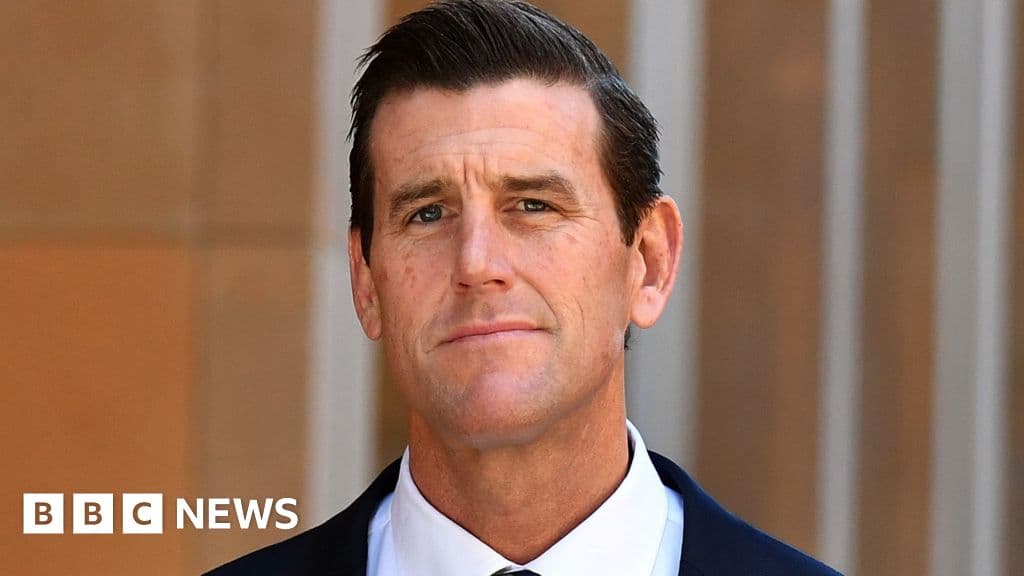
Australia’s most-decorated living soldier, Ben Roberts-Smith, stood at the center of a national reckoning with military justice on Tuesday when authorities arrested him at Sydney Airport on five counts of the war crime of murder. The arrest, following a high-profile defamation case that found him liable for multiple killings in Afghanistan, underscores the gravity of allegations that elite Australian troops unlawfully took lives during the conflict. Roberts-Smith, a former corporal in the Australian Special Air Service Regiment (SAS) and recipient of the Victoria Cross—the nation’s highest military honor—denies all wrongdoing, calling the accusations "egregious" and "spiteful." The case has ignited a national debate over accountability, military honor, and the legacy of Australia’s involvement in Afghanistan, where a landmark 2020 investigation exposed a pattern of potential war crimes involving special forces.
Who Is Ben Roberts-Smith and Why His Case Matters
Ben Roberts-Smith is more than a decorated soldier; he is a symbol of Australian military heroism and national pride. Born in 1978, Roberts-Smith rose through the ranks of the Australian Defence Force (ADF) during the Afghanistan War, earning the Victoria Cross in 2011 for single-handedly eliminating Taliban fighters in a 2010 battle near Shah Wali Kot. His actions on the battlefield made him a household name in Australia, celebrated as a paragon of courage and leadership. By the time he left the ADF in 2013, Roberts-Smith had been awarded the Victoria Cross, the Medal for Gallantry, and eight other honors, cementing his status as Australia’s most-decorated living soldier.
Yet Roberts-Smith’s reputation took a dramatic turn in 2018 when *The Age* and *The Sydney Morning Herald* published investigations alleging that elite Australian soldiers, including Roberts-Smith, had unlawfully killed civilians and prisoners in Afghanistan. These reports, later corroborated by a federal inquiry, accused Roberts-Smith of involvement in at least four murders, including the killings of unarmed men and a handcuffed farmer. The allegations not only challenged Roberts-Smith’s legacy but also raised troubling questions about accountability within Australia’s most elite military units.
The Brereton Report: A Turning Point in Australia’s War Crimes Inquiry
The arrest of Roberts-Smith is the latest chapter in a years-long reckoning triggered by the 2020 Brereton Report, an internal inquiry led by Justice Paul Brereton of the New South Wales Court of Appeal. The report, commissioned by the Australian Defence Force, found "credible evidence" that Australian special forces unlawfully killed 39 people in Afghanistan, including prisoners, farmers, and civilians, between 2009 and 2013. It recommended criminal investigations into 19 current or former ADF personnel, including Roberts-Smith.
The Findings: Unlawful Killings and a Culture of Impunity
The Brereton Report painted a damning picture of elite units operating with impunity in war zones. It described a culture where junior soldiers were "blooded"—encouraged to kill unarmed detainees to prove their mettle—and where trophies, including a Taliban fighter’s prosthetic leg used as a drinking vessel, were taken as macabre souvenirs. The report concluded that the killings were not isolated incidents but part of a systemic pattern within the SAS’s 2nd Commando Regiment. Among the cases cited was the 2010 killing of an unarmed farmer, whom Roberts-Smith allegedly kicked off a cliff after handcuffing him, and the murder of a captured Taliban fighter whose prosthetic leg was removed and paraded as a trophy.
The Defamation Case: A Historic Legal Battle
In 2023, Roberts-Smith lost a landmark defamation case that marked the first time any Australian court examined allegations of war crimes by its own forces. The trial, which spanned seven years and cost millions in legal fees, was dubbed Australia’s "trial of the century." Justice Anthony Besanko, presiding over the Federal Court, found on the balance of probabilities that Roberts-Smith had been involved in multiple unlawful killings. The judge ruled that Roberts-Smith had twice ordered the execution of unarmed men to "blood" rookie soldiers, participated in the murder of a handcuffed farmer, and was linked to the killing of a Taliban fighter whose prosthetic leg was later used as a trophy.
“The evidence overwhelmingly supports the conclusion that the respondent committed the murders alleged,” Justice Besanko wrote in his judgment. “The killings were not the result of battlefield decisions but deliberate acts of violence against unarmed individuals.”
The Criminal Charges: What Roberts-Smith Faces Now
On Tuesday, Roberts-Smith was arrested at Sydney Airport and charged with five counts of murder under the *International Criminal Court Act 2002*, which incorporates war crimes into Australian law. The charges include one count of murder, one count of jointly commissioning a murder, and three counts of aiding, abetting, counselling, or procuring a murder. According to Australian Federal Police (AFP) Commissioner Krissy Barrett, it will be alleged that Roberts-Smith either shot victims himself or ordered subordinates to do so while serving in Uruzgan Province, Afghanistan, between 2009 and 2012.
The Challenges of Prosecuting War Crimes from Afar
Prosecuting war crimes across 9,000 kilometers of ocean presents unique obstacles. Ross Barnett, director of investigations at the Office of the Special Investigator (OSI)—the federal agency tasked with probing the allegations—has described the challenges as "challenging circumstances." The OSI lacks access to crime scenes, forensic evidence, or the ability to interview key witnesses in Afghanistan. "We don’t have photographs, site plans, measurements, the recovery of projectiles, blood spatter analysis," Barnett said. "We don’t have access to the deceased or the ability to reconstruct the events in the way a domestic murder investigation would allow." Despite these hurdles, the OSI has charged Roberts-Smith and one other person, with investigations ongoing into other allegations.
The Broader Impact: Reckoning with Military Culture and National Identity
Roberts-Smith’s arrest arrives amid a global reckoning with military misconduct, from the U.S. military’s failures in Iraq and Afghanistan to the Dutch inquiry into the 2007 Srebrenica massacre. In Australia, the case has forced the nation to confront uncomfortable truths about its involvement in the Afghanistan War, which lasted from 2001 to 2021. The war, initially framed as a mission to dismantle al-Qaeda and stabilize the region, became mired in controversy over civilian casualties, detainee abuse, and the conduct of special forces.
Reactions from Government and Military Leaders
Prime Minister Anthony Albanese declined to comment on the case, adhering to the principle of judicial independence. "It is very important that there not be political engagement," he said. Meanwhile, AFP Commissioner Barrett emphasized that the allegations were confined to "a very small section" of the ADF, insisting that "the majority of the ADF do our country proud." The Australian War Memorial, which had previously displayed Roberts-Smith’s uniform and medals, announced it would again review its exhibit in light of the charges. A plaque accompanying the display has been updated multiple times to reflect the allegations and the outcome of the defamation case.
Key Takeaways
- Ben Roberts-Smith, Australia’s most decorated living soldier, was arrested Tuesday on five war crime charges tied to alleged killings in Afghanistan between 2009 and 2012.
- The arrest follows a 2023 defamation case in which a Federal Court judge found Roberts-Smith liable for multiple murders, marking the first time Australian courts examined alleged war crimes by its own forces.
- The Brereton Report (2020) exposed a pattern of unlawful killings by elite Australian special forces, recommending criminal investigations into 19 personnel, including Roberts-Smith.
- Prosecutors face significant challenges due to the lack of access to crime scenes and forensic evidence in Afghanistan, but the OSI has charged Roberts-Smith and one other person.
- The case has ignited a national debate over military accountability, national identity, and the legacy of Australia’s war in Afghanistan.
What’s Next for Roberts-Smith and the Legal Process
Roberts-Smith, 47, spent Tuesday night in police custody and is scheduled to appear in court for a bail hearing on Wednesday. His legal team has indicated they will vigorously contest the charges, arguing that the killings occurred in combat or were fabricated. The case is expected to proceed through the Australian court system, with the potential for a lengthy trial. Meanwhile, the OSI continues its investigations, with Barnett noting that the agency is examining "literally dozens" of additional murder allegations. The outcome of this case could set a precedent for how Australia addresses war crimes committed by its own troops.
Frequently Asked Questions
Frequently Asked Questions
- What specific war crimes is Ben Roberts-Smith charged with?
- Roberts-Smith faces five charges under Australian law, including one count of murder, one count of jointly commissioning a murder, and three counts of aiding, abetting, counselling, or procuring a murder. These charges stem from alleged killings in Afghanistan between 2009 and 2012.
- How did the Brereton Report lead to Roberts-Smith’s arrest?
- The 2020 Brereton Report found "credible evidence" that Australian special forces unlawfully killed 39 people in Afghanistan and recommended criminal investigations into 19 personnel, including Roberts-Smith. The report’s findings were later corroborated by a defamation case that found Roberts-Smith liable for multiple murders.
- What challenges do prosecutors face in this case?
- Prosecutors lack access to crime scenes, forensic evidence, and key witnesses in Afghanistan. The Office of the Special Investigator has noted the inability to conduct blood spatter analysis or site reconstructions, making the case uniquely difficult to build.