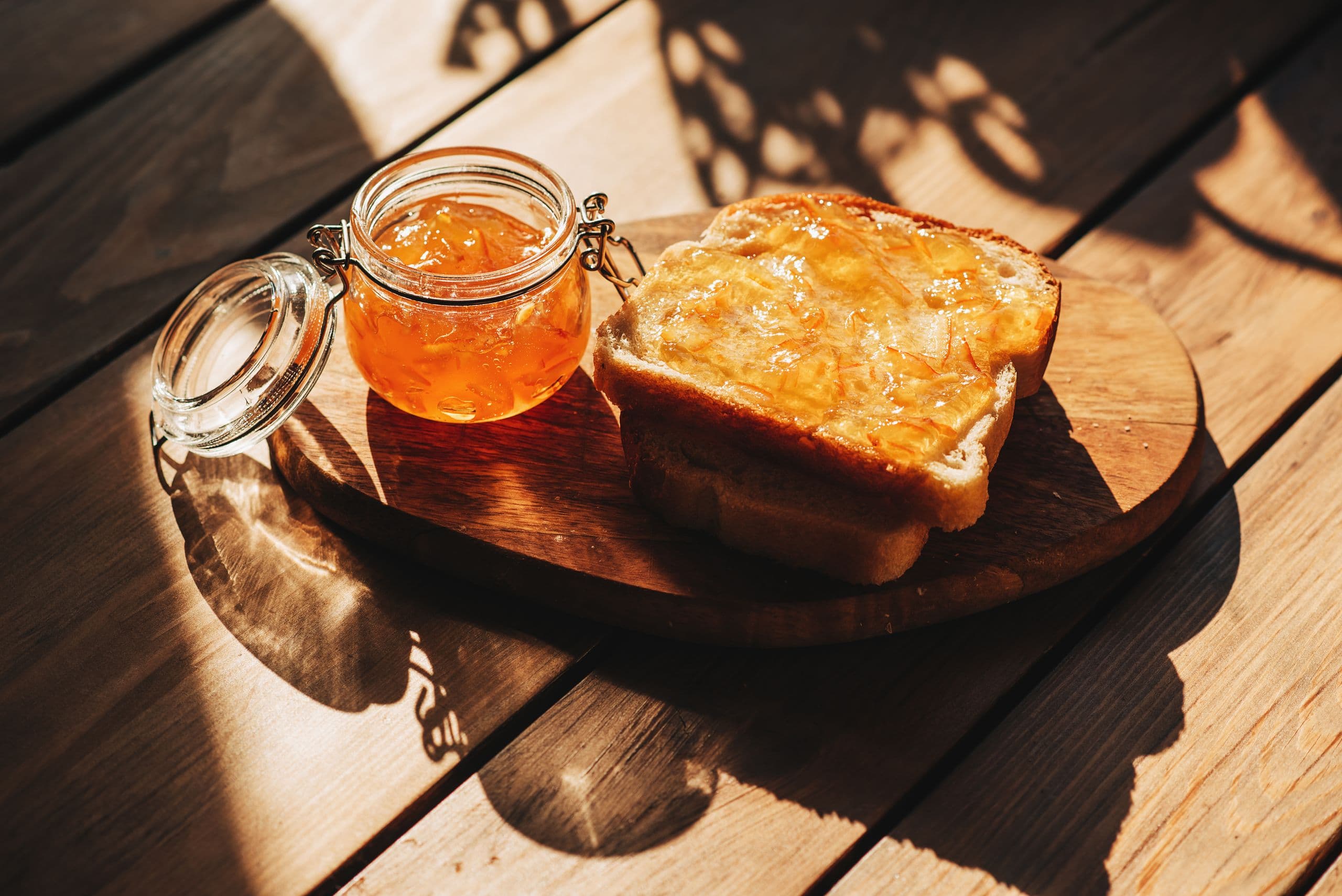
For nearly 300 years, marmalade has been a cornerstone of British breakfast tables, a tangy preserve so beloved that it earned the patronage of Queen Victoria and even became the namesake of a certain polite bear from Darkest Peru. But this week, the nation’s most cherished citrus spread is embroiled in a post-Brexit identity crisis that could force a rebranding so sweeping, even Paddington Bear might struggle to recognize it. Starting this summer in Northern Ireland—and potentially across the entire UK by 2027—traditional British marmalade may soon be required to carry labels like 'citrus marmalade' or 'orange marmalade' under new European Union trade rules, a change that has sparked both outrage and reluctant acceptance among producers, historians, and breakfast enthusiasts alike.
- The EU is relaxing the legal definition of 'marmalade,' allowing European producers to use the term for any jam, not just citrus-based ones.
- British marmalade, historically protected by EU rules, now faces a rebranding to 'citrus marmalade' in trade with the EU.
- The change, already effective in Northern Ireland, could extend to the rest of the UK by mid-2027 under the Windsor Framework.
- Artisan producers warn of costs and confusion, while some marmalade competitions see the shift as a way to clarify global standards.
The Historical Roots of Marmalade: From Portuguese Quince Paste to British Breakfast Icon
The word 'marmalade' traces its origins to 15th-century Portugal, where 'marmelada' referred to a thick paste made from quince, a gourd-like fruit. Spanish explorers later spread the term across Europe, and by the 18th century, British confectioners had reimagined the recipe using Seville oranges—bitter citrus fruit imported from Spain—to create the spreadable, jelly-like preserve now synonymous with British culture. This linguistic evolution set the stage for one of the EU’s most peculiar trade disputes.
How Britain Secured a Unique Status for Marmalade in the EU
For decades, British marmalade enjoyed a protected status within the European Union. In the 1970s, UK negotiators successfully lobbied Brussels to establish a legal definition that restricted the term 'marmalade' to products made with citrus fruit, specifically Seville oranges in the case of traditional British varieties. This was a rare cultural victory for Britain within the EU, ensuring that only preserves meeting strict criteria—typically a gel-like consistency with peel—could bear the marmalade label. The move was seen as a defense of British culinary identity, much like the EU’s protected designation of origin (PDO) status for foods such as Stilton cheese or Parma ham.
The Brexit Backlash: Why Other EU Nations Targeted Marmalade
As early as 2017, German Members of the European Parliament (MEPs) began criticizing the UK’s special treatment of marmalade as a violation of EU linguistic and culinary traditions. Critics argued that the term 'marmalade' in most European languages—such as Germany’s 'Marmelade,' Spain’s 'mermelada,' or Italy’s 'marmellata'—refers broadly to any fruit preserve, not just citrus-based ones. The resentment simmered for years, and when the UK formally left the EU in 2020, other member states saw an opportunity to dismantle the British advantage. In June 2023, the EU relaxed its definition of marmalade, allowing producers across the bloc to use the term for jams of any flavor, from strawberry to raspberry.
The marmalade anomaly was 'contrary to German linguistic tradition,' a German MEP complained in 2017, encapsulating the frustration of those who saw the UK’s rule as an unjustified exception within a single market meant to standardize terms.
The Post-Brexit Trade Reality: Why the UK Must Comply with EU Rules
Despite the UK’s departure from the EU, the bloc remains its largest trading partner, accounting for 43% of British food and drink exports in 2023, according to the Food and Drink Federation. To avoid tariffs, inspections, or outright bans on exports, the UK must align with EU food labeling regulations—a condition embedded in the 2023 Windsor Framework, the post-Brexit trade deal governing Northern Ireland. From summer 2024, Northern Irish producers must already label their products as 'citrus marmalade' if they wish to sell in the EU. If a broader UK-EU food agreement is reached by mid-2027, the same rule will apply to England, Wales, and Scotland.
Northern Ireland as the First Frontier: A Preview of What’s to Come
Northern Ireland, which remains part of the EU’s single market for goods under the Windsor Framework, is already experiencing the impact of the rule change. Artisan producers in the region, many of whom supply marmalade to EU markets, are scrambling to redesign labels and packaging to comply with the new 'citrus marmalade' requirement. The cost of rebranding, though modest for large manufacturers, could be prohibitive for small, family-run operations that rely on the EU for up to 60% of their sales. The Ulster Farmers’ Union has warned that the change could further strain an already fragile sector, where margins are thin and competition is fierce.
The UK Government’s Stance: Defending Tradition or Caving to Brussels?
The UK’s Department for Environment, Food & Rural Affairs (Defra) has acknowledged the controversy but has yet to outline a comprehensive plan to mitigate the impact on British producers. While Defra has suggested that non-citrus preserves labeled as 'marmalade' could confuse consumers, it has not ruled out the possibility of UK-specific definitions that diverge from EU standards. However, any such deviation would risk creating two distinct markets for marmalade—one for the EU, labeled 'citrus marmalade,' and another for domestic sales—and would likely face resistance from producers who rely on EU exports. For now, the government has remained largely silent on the issue, leaving the marmalade-making community to navigate the uncertainty.
The Marmalade Community Reacts: From Outrage to Acceptance
The announcement of the marmalade redefinition has sent ripples through the UK’s marmalade-making community, where passion for the preserve runs deep. The Dalemain World Marmalade Awards, one of the most prestigious competitions for the craft, has publicly weighed in on the debate. In a statement shared on Instagram, the organizers acknowledged the potential for confusion but also saw an opportunity. 'We get entries from around the world where marmalade can be understood completely differently to our jars here in the UK,' they wrote. 'American marmalades are always runnier for instance, while Canadian marmalade is much closer to our firm gel set. European marmalades are often absolutely delicious but often more resemble compotes than marmalade. So this name change seems quite positive and hopefully might make it easier for people to understand what we are looking for in this British standard competition.'
Cultural and Economic Implications: What’s at Stake Beyond the Label
Beyond the immediate practical concerns, the marmalade dispute highlights broader tensions between tradition and globalization in the food industry. Marmalade is not just a breakfast item; it’s a cultural symbol, tied to British identity and heritage. The potential rebranding forces questions about how much sovereignty the UK truly regained post-Brexit. If the UK cannot even protect its most trivial culinary quirks from EU regulations, what can it control? Meanwhile, European producers see the change as a long-overdue correction, a way to standardize a term that has long been ambiguous across borders. For consumers, the shift could bring clarity—or confusion—depending on how well the new labels are explained. Already, British supermarket chains are bracing for a wave of customer inquiries about the difference between 'marmalade' and 'citrus marmalade,' a distinction that has never before required explanation.
The Impact on Artisan Producers: A Costly Rebrand
Small-batch marmalade makers, who often rely on direct-to-consumer sales at farmers' markets or through specialty retailers, face the most immediate financial burden. Redesigning labels, updating websites, and reprinting recipe books are all expenses that could eat into already slim profits. Some producers have begun selling two versions of their products: one labeled 'marmalade' for domestic sales and another as 'citrus marmalade' for EU exports. This bifurcation risks diluting brand identity and complicating logistics. The Crafty Nori, a London-based marmalade maker, estimates it will spend £1,200 ($1,500) on rebranding—a significant outlay for a business with annual revenues of around £50,000.
Consumer Confusion: Will Shoppers Still Recognize Marmalade?
For generations, British consumers have reached for marmalade without a second thought about its contents. The sudden appearance of 'strawberry marmalade' or 'raspberry marmalade' on supermarket shelves could spark bewilderment. Would shoppers assume these are new, innovative flavors, or would they dismiss them as impostors? Defra has acknowledged this risk, though it has not proposed a solution. Some industry analysts suggest that the change could ultimately benefit the industry by clarifying the term, making it easier for consumers to identify traditional marmalade amidst a growing array of fruit preserves. Others fear it could erode the cultural cachet of marmalade, reducing it to just another jam in a crowded market.
The Broader Battle Over Food Standards Post-Brexit
The marmalade dispute is a microcosm of the larger struggle over food standards and trade that has defined the UK’s post-Brexit relationship with the EU. From chlorinated chicken to hormone-treated beef, the UK has sought to diverge from EU regulations to strike trade deals with countries like the US, Australia, and New Zealand. Yet, in areas where the EU’s rules are deeply embedded—such as food labeling—alignment remains unavoidable. The marmalade case underscores a harsh reality: leaving the EU does not mean leaving behind its regulatory frameworks, especially when it comes to trade with its closest neighbor. Instead, the UK must navigate a patchwork of rules that often prioritize standardization over tradition.
What Happens Next? Possible Scenarios for Marmalade’s Future
As the UK and EU continue negotiations on a comprehensive food trade agreement, the fate of marmalade hangs in the balance. Several scenarios could unfold: The EU could grant the UK a temporary exemption, allowing traditional marmalade to retain its name in exchange for concessions elsewhere. Alternatively, the UK could adopt the new 'citrus marmalade' labeling voluntarily, hoping to avoid market disruption. A third possibility is that the UK and EU agree to a dual-labeling system, where products destined for the EU market are labeled differently from those sold domestically. For now, producers are left to prepare for change, knowing that the outcome will shape not just their labels, but the very identity of a British breakfast staple.
Frequently Asked Questions
Frequently Asked Questions
- Why does British marmalade have to be relabeled as 'citrus marmalade' in the EU?
- The EU relaxed its definition of 'marmalade' in 2023 to include any fruit preserve, not just citrus-based ones. This change was pushed by other EU nations frustrated by the UK’s historical special treatment of marmalade, which was protected under EU rules while Britain was a member.
- When will the new marmalade labeling rules take effect in the UK?
- The rules are already in effect in Northern Ireland due to the Windsor Framework. If a broader UK-EU food agreement is reached, the change will likely apply to England, Wales, and Scotland by mid-2027.
- How will the rebranding affect small marmalade producers?
- Small producers face significant costs to redesign labels and packaging, potentially diverting resources from production. Some may sell separate versions for domestic and EU markets, complicating logistics and brand identity.