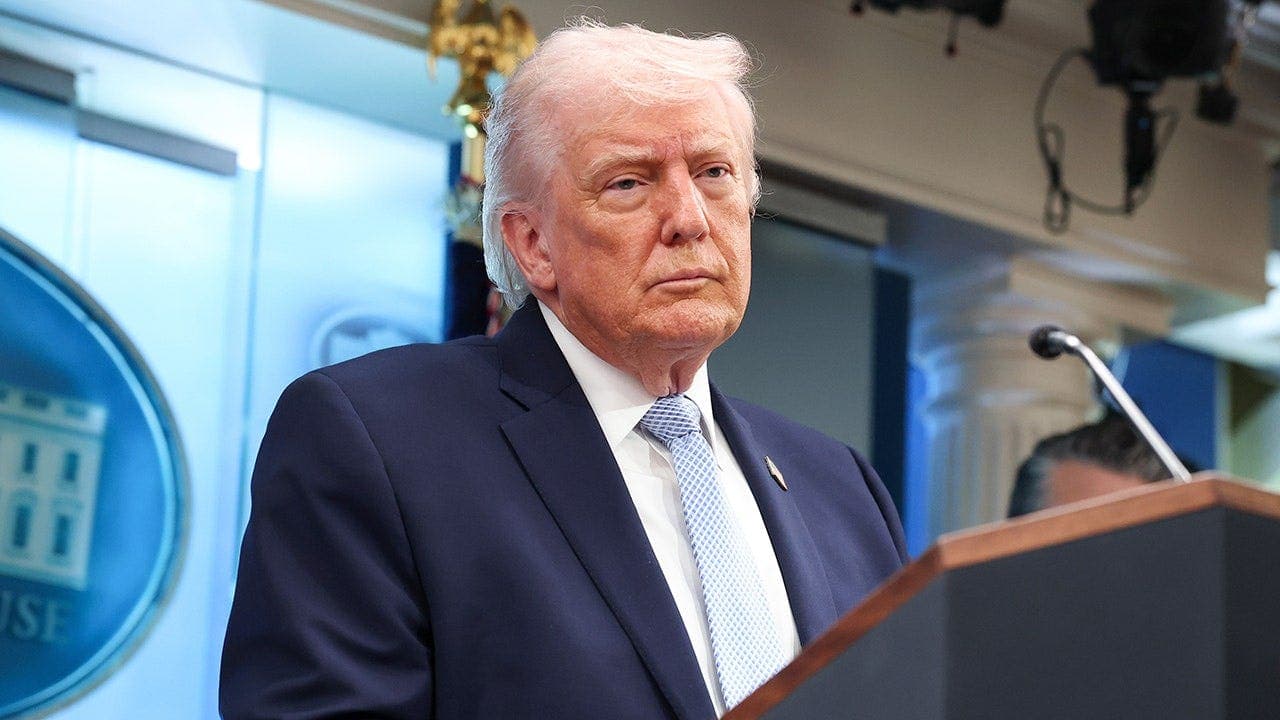
President Donald Trump delivers the State of the Union address in the House Chamber of the US Capitol on February 24, 2026. Jessica Koscielniak/Pool/Reuters Donald Trump Fighting disinformation Inflation Economy See all topics Facebook Tweet Email Link Threads Link Copied! Follow President Donald Trump made numerous false or misleading claims in his State of the Union address on Tuesday night.
Many of them were long-debunked falsehoods familiar from his rallies, interviews and social media posts. These include various lies disparaging the fairness of US elections, his false claim that he ended wars that were never actually wars or never actually ended, and his fictional “$18 trillion” figure for supposed investment in the US over the past year.
The subject on which he was most frequently inaccurate was the economy. Among other things, Trump overstated the performance of the economy during this presidential term to date, overstated the inflation he inherited from the Biden administration, used highly misleading figures when discussing gasoline prices, and wrongly asserted, twice, that foreign countries are paying the tariffs that are actually being paid by US importers.
Here is a fact check of some of Trump’s remarks:
Fact check: Trump falsely claims US has secured ‘$18 trillion’ in investments
Trump repeated his regular false claim that he has secured $18 trillion in investments in the US since returning to office, saying, “In 12 months, I secured commitments for more than $18 trillion pouring in from all over the globe.”
The $18 trillion figure is fiction. As of the night of Trump’s address, the White House’s own website said the figure for “major investment announcements” during this Trump term was “$9.7 trillion,” and even that is a major exaggeration; a detailed CNN review in October found the White House was counting trillions of dollars in vague investment pledges, pledges that were about “bilateral trade” or “economic exchange” rather than investment in the US and vague statements that didn’t even rise to the level of pledges.
Fact check: Trump’s misleading claims on gasoline prices
A gas pumping nozzle is seen at a Valero gas station on June 30, 2025, in Austin, Texas. Brandon Bell/Getty Images Trump claimed gas prices are “now below $2.30 a gallon in most states, and in some places, $1.99 a gallon.” But no state had an average gas price on Tuesday below $2.37 per gallon, according to AAA; only two states had an average below $2.50 per gallon. And while there are some individual gas stations selling gas for below $2 per gallon, they are scarce; Patrick De Haan, head of petroleum analysis for the firm GasBuddy, said during the speech that the firm found just four stations across the country below $2 (aside from special discounts) out of the roughly 150,000 stations the firm tracks, so about 0.003% of the total.
Trump could fairly say gas prices have fallen during this presidency. They have declined from a national average of $3.12 per gallon on his inauguration day in January 2025, according to AAA, to a national average of $2.95 per gallon on Tuesday.
In addition, Trump claimed, “And when I visited the great state of Iowa just a few weeks ago, I even saw $1.85 a gallon for gasoline.” We don’t know what Trump saw, but the average price for a gallon of regular gas in Iowa on the day of the January 27 speech was $2.57, according to data published that day by AAA – and Patrick De Haan, head of petroleum analysis for GasBuddy, told CNN at the time that GasBuddy found just four stations in the state selling for $1.97 per gallon (aside from special discounts) out of 2,036 total stations the firm tracks, so 0.19% of the total.
Trump was fact-checked on this subject by an attendee at the Iowa speech he was referring to. When he spoke of gas in Iowa being $1.95 or $1.85 per gallon, someone in the crowd shouted, “No, $2.63,” according to CNN reporter Steve Contorno, who was on scene. Contorno saw that the gas station right outside the venue where Trump spoke was selling for $2.69 per gallon.
Fact check: Trump falsely claims he inherited record inflation
Trump falsely claimed that when he gave his previous address to Congress early last year, he had “just inherited … inflation at record levels.” He added a bit later that former President Joe Biden and his congressional allies “gave us the worst inflation in the history of our country.”
Trump didn’t inherit the worst inflation in US history, and Biden never had the worst inflation in US history. The year-over-year inflation rate in Biden’s last full month in office, December 2024, was 2.9%, and the rate in the month in which Trump took over partway through, January 2025, was 3.0%; the most recent rate, for January 2026, is 2.4%. The rate did hit a 40-year high, 9.1%, in June 2022, but that was far from the all-time high of 23.7%, which was set in 1920. Regardless, the rate then fell sharply over Biden’s last two-and-a-half years in office.
Fact check: Trump touts declines in a smattering of grocery prices, but overall grocery prices are up
Trump accurately touted declines in the prices of a small number of grocery products or product categories during this presidency to date, mentioning eggs, chicken, butter and fresh fruits. But he did not acknowledge that overall grocery prices are up an average 2.1% since January 2025, nor that far more grocery products have gotten more expensive during this presidency than have gotten cheaper.
Trump also said, “And even beef, which was very high, is starting to come down significantly.” The average price of beef and veal did decline in January compared to December, by 0.9% (or 0.4% using seasonally adjusted figures), but it was still 15% higher than it was in January 2025.
Fact check: Trump’s baseless claim about the economy
President Joe Biden delivers his farewell address to the nation from the Oval Office of the White House, on January 15, 2025. Mandel Ngan/Pool/AFP/Getty Images/File Trump claimed that he inherited a “stagnant economy” from the Biden administration and that it is now “roaring like never before.” Though there is no firm definition of “stagnant” or “roaring,” the facts don’t corroborate the suggestion that he has presided over a massive economic boom since returning to office in January 2025. The US economy grew 2.2% in 2025, which was lower than in any year of the Biden presidency; there was 2.8% growth in 2024. (The fall 2025 government shutdown likely reduced growth in late 2025.) The unemployment rate, meanwhile, increased from 4.0% in January 2025 to 4.3% in January 2026.
The total number of jobs added in 2025, 181,000, was by far the lowest since 2020, the year the Covid-19 pandemic hit; about 2.52 million jobs were added in 2023 and about 1.46 million were added in 2024.
The year-over-year Consumer Price Index inflation rate did fall from 3.0% in January 2025 to 2.4% in January 2026, and Trump certainly has some other positive data points to cite. But his story about taking the economy from deceased to scorching is just not supported by the overall numbers.
Fact check: Trump falsely claims foreign countries are paying his tariffs
Trump repeated his regular false claim that tariffs are “paid for by foreign countries.” In fact, tariff payments are made by importers in the US, not foreign countries, and those importers often pass on some of their costs to consumers. While foreign exporters may sometimes drop their prices to try to keep their products competitive, various analyses have found that the overwhelming majority of the costs of the tariffs Trump has imposed this term are being covered by a combination of US businesses and US consumers.
In an analysis released in February, officials at the Federal Reserve Bank of New York wrote, “We find that nearly 90 percent of the tariffs’ economic burden fell on U.S. firms and consumers.” The nonpartisan federal Congressional Budget Office wrote in a February report that “the net effect of tariffs is to raise U.S. consumer prices by the full portion of the cost of the tariffs borne domestically (95 percent),” from a combination of price hikes by US businesses that are importing tariffed products and price hikes by US businesses that are facing less foreign competition because of the tariffs.