Totalenergies says 15% of output shutdown
French energy firm Totalenergies said 15% of its total gas and oil output has been shutdown amid the US-Israel war with Iran.
"Production has been shut down or is in the process of shutting down in Qatar, Iraq and UAE, representing approximately 15% of our total output," the company said. This output consists of about 10% of Totalenergies upstream cash flow.
However, the French company said the rise in oil prices has offset the losses in output incurred as a result of the war.
Lufthansa postpones resumption of flights to Dubai
Gerrnany's flag carrier, Lufthansa, has postponed its resumption of flights to Dubai until at least March 28.
Lufthansa had originally suspended flights to and from Dubai until March 15.
Dubai, a major financial hub and vacation spot in the Middle East, has been targeted by Iranian missiles and drones in retaliation for the US-Israeli military operationagainst Iran.
Dubai lies in the United Arab Emirates.
The UAE is home to a center used for US air combat, making it a target for Iran. In addition, the UAE has normalized its ties with Israel in August 2020 as part of the Abraham Accords, making it one of the most Israel-friendly countries in the Gulf region.
US CENTCOM says 6,000 targets hit in Iran
US Central Command, also known as CENTCOM, said 6,000 targets have been struck by the US military since the start of the Iran war, which the Pentagon calls "Operation Epic Fury."
CENTCOM said 90 Iranian vessels were damaged or destroyed in the operation, including more than 60 ships and over 30 minelayers.
The US military has used bombers, fighter jets, attack aircraft and destroyers, among other capabilities, in its attacks.
CENTCOM said it has targeted Iranian Revolutionary Guard Corps headquarters buildings and intelliigence sites, defense systems and missile facilities, along with other sites.
The Israeli military on Thursday evening said it had begun a "wave of strikes targeting Hezbollah terrorist infrastructure across Beirut."
Footage from Reuters and AFP news agencies showed a large explosion in the center of the Lebanese capital. AFP reported missiles hitting a building in the central neighborhood of Bashoura. The Israeli military had issued a warning beforehand that it would be targeting a building there.
Israel has carried out several strikes on Beirut targeting Tehran-backed Hezbollah since the war with Iran was launched nearly two weeks ago.
Earlier on Thursday, the Israeli military called on residents in a large swathe south of the Zahrani river of southern Lebanon to evacuate, warning of upcoming military operations.
Hezbollah has fired rockets and drones at Israel since the war with Iran was launched on February 28. Israeli Defense Minister Israel Katz said in a recent statement that if the Lebanese government cannot prevent Hezbollah attacks, Israel "will take the territory and do it ourselves."
According to Lebanese government figures, more than 600 people have been killed and over 800,000 displaced in Lebanon since the latest escalation began.
WATCH: UNESCO heritage sites under attack
In the ongoing US – Israeli War on Iran, several UNESCO world heritage sites have come under attack, some dating back to the 14th century.
US energy secretary says military 'not ready' to escort tankers in Hormuz
US Energy Secretary Chris Wright said military escorts for oil tankers in the Strait of Hormuz would have to wait until Iran's military capabilities are more degraded.
"It'll happen relatively soon, but it can't happen now. We're simply not ready," Wright told US broadcaster CNBC. "All of our military assets right now are focused on destroying Iran's offensive capabilities and the manufacturing industry that supplies their offensive capabilities."
Wright said he was skeptical of comments made yesterday by an Iranian official that oil would reach $200 a barrel if the conflict continued.
"I would say unlikely, but we are focused on the military operation and solving a problem," Wright said, adding that it was "quite likely" US military escorts could be seen in the Strait of Hormuz by the end of the month.
Iran's new supreme leader Khamenei gives first public statement
Iran's supreme leader Mojtaba Khamenei issued his first public statement on Thursday since being named head of the Islamic Republic after his father, Ali Khamenei, was killed in an Israeli airstrike on February 28.
Iran's supreme leader said attacks on Iran's Gulf neighbors would continue and called for keeping the Strait of Hormuz closed, and choking off global oil supply, as leverage.
Khamenei did not appear on camera, and his statement was read on state television by a news anchor.
Israeli intelligence has assessed Khamenei was wounded in the attack that killed his father and other family members, which was widely reported on Wednesday amid speculation about why he had not yet appeared in public or issued a statement.
Khamenei also vowed "vengeance" for those killed in the 13-day war launched by the US and Israel, including a strike on a girls school that killed at least 165 people.
To view this video please enable JavaScript, and consider upgrading to a web browser that supports HTML5 video
IEA says Middle East oil supply disruption 'largest in history'
The International Energy Agency (IEA) on Thursday said the ongoing war in the Middle East is "is creating the largest supply disruption in the history of the global oil market," as the agency slashed its oil supply growth forecast by more than half.
In its latest market report, the IEA, a Paris-based group of 32 nations, revised down its 2026 oil supply estimate to 1.1 million barrels per day from 2.4 million barrels.
It added crude production was currently down by at least 8.0 million barrels per day.
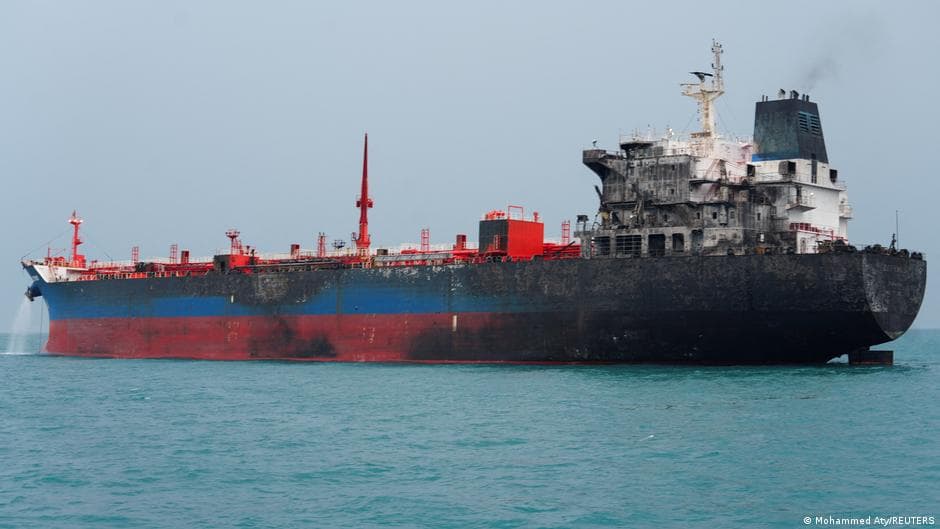
Since the US and Israel attacked Iran 13 days ago, the narrow Strait of Hormuz has become a choke point for some 20% of global oil supply. Oil tankers and refineries from major Gulf producers are being targeted, and production is being forced to shut down as shipments cannot leave ports.